









Sark is the smallest of the four main Channel Islands and arguably the most stubborn. Floating between England and France, it isn’t “frozen in time” (a lazy cliché); it simply looked at the 21st century, saw the traffic jams, and politely declined.
I came for three days and walked 37 kilometres. Not to “hit my steps,” but because if you don’t walk here, you don’t eat. By the end of day one, I had abandoned my city pace. By day three, I was waving at tractors like they were old friends.
The Tractor Commute
There is no dignified way to arrive on Sark. You take a ferry (usually a bumpy affair), and then you face “The Hill.”
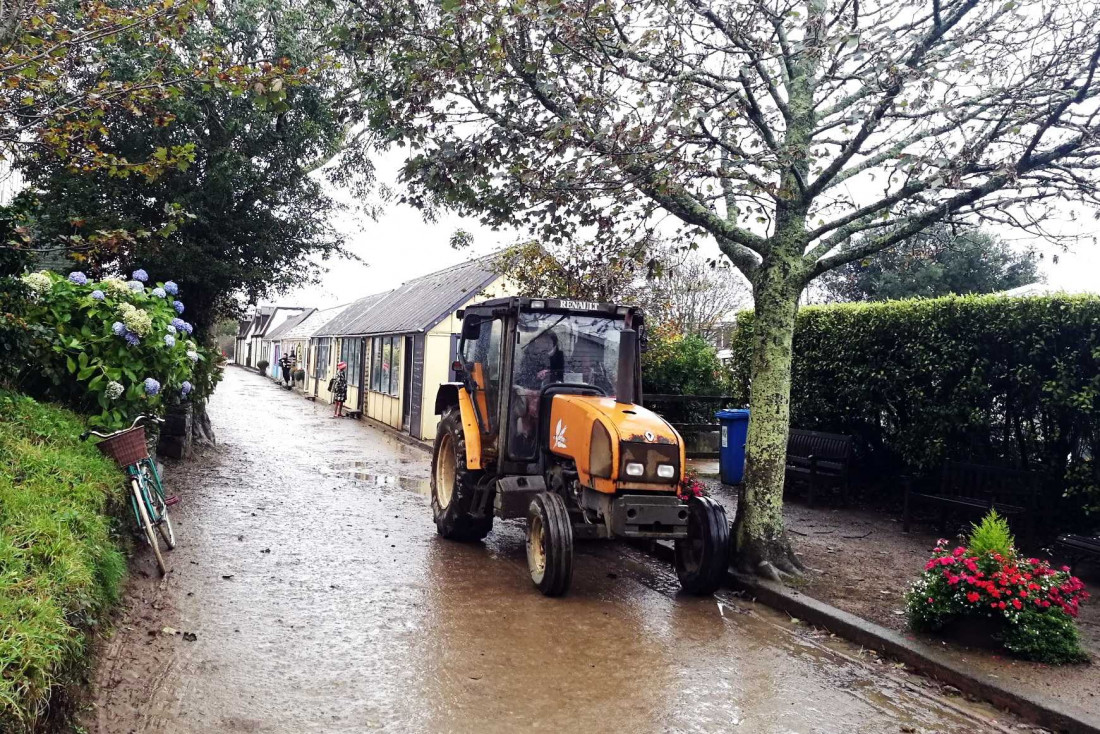
Since the harbour is at sea level and Sark Channel Islands is a plateau, you have two choices: walk up a steep woodland path or take the “Toast Rack”—a trailer pulled by a tractor. This isn’t a tourist gimmick; it is the island’s bus service.
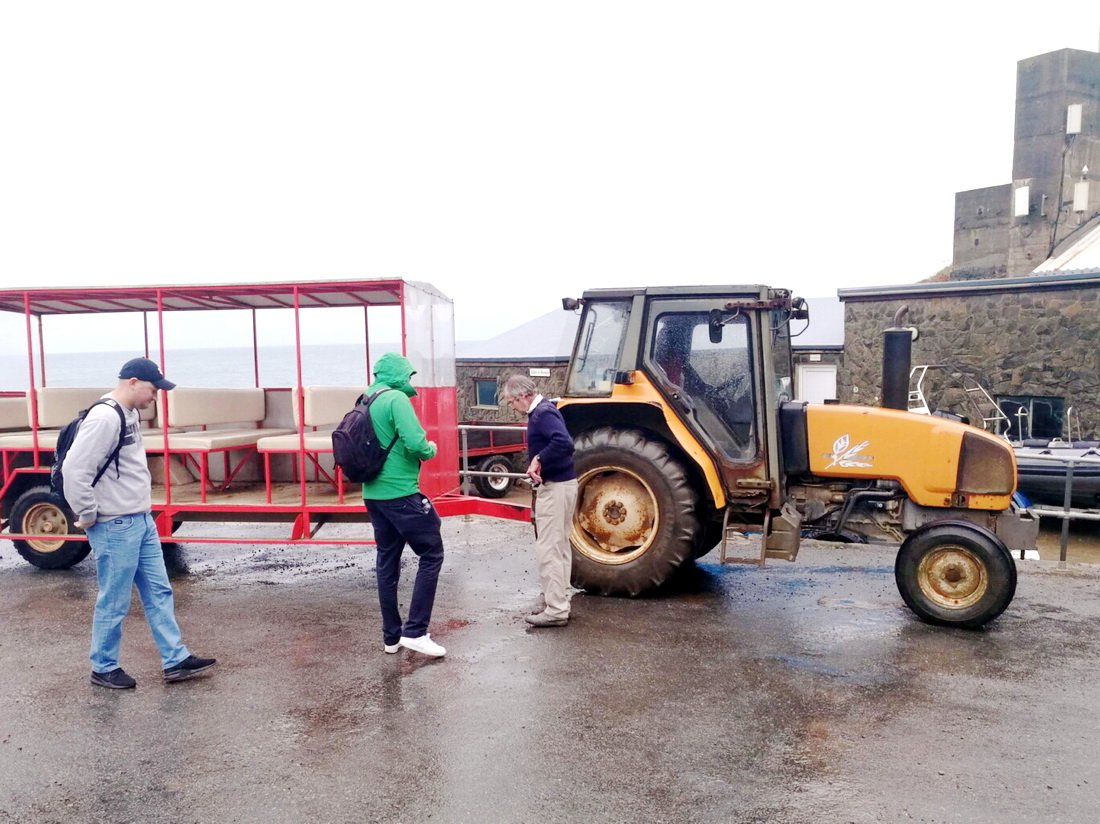
The Toast Rack. Sark’s answer to the Uber. It meets every boat, hauls you up the harbour hill, and is arguably the most reliable transport on the island.
The roads are dirt. In October, they are mostly mud. Yet, lilies grow in the ditches with a resilience that puts city gardens to shame.
The “High Street” consists of a post office, a grocery store the size of a living room, and a bank I never actually found. Every path eventually ends at a cliff edge.
The No-Car Club
Let’s be clear: when I say “no cars,” I don’t mean “very few cars.” I mean zero.
It is forbidden by law. There is no Uber, no delivery vans, and no secret stash of Land Rovers for the elite. Even the ambulance is a trailer towed behind a tractor—a sight that is equal parts terrifying and charming.
Sark Channel Islands isn’t primitive; it has simply replaced the engine with the leg. The silence this creates is startling. You don’t realize how loud the world is until you remove the background hum of tyres on asphalt.
The transport hierarchy is:
Tractors: The loophole. They are the SUVs, the taxis, and the moving vans of Sark. Get out of their way; they stop for no one.
Bicycles: The primary mode of transport. The massive pile of bikes at the school gate suggests a utopia where no one steals anything.
Horses: Mostly for tourists who want the “vintage” experience (or are too tired to walk).
You: Walking. A lot.
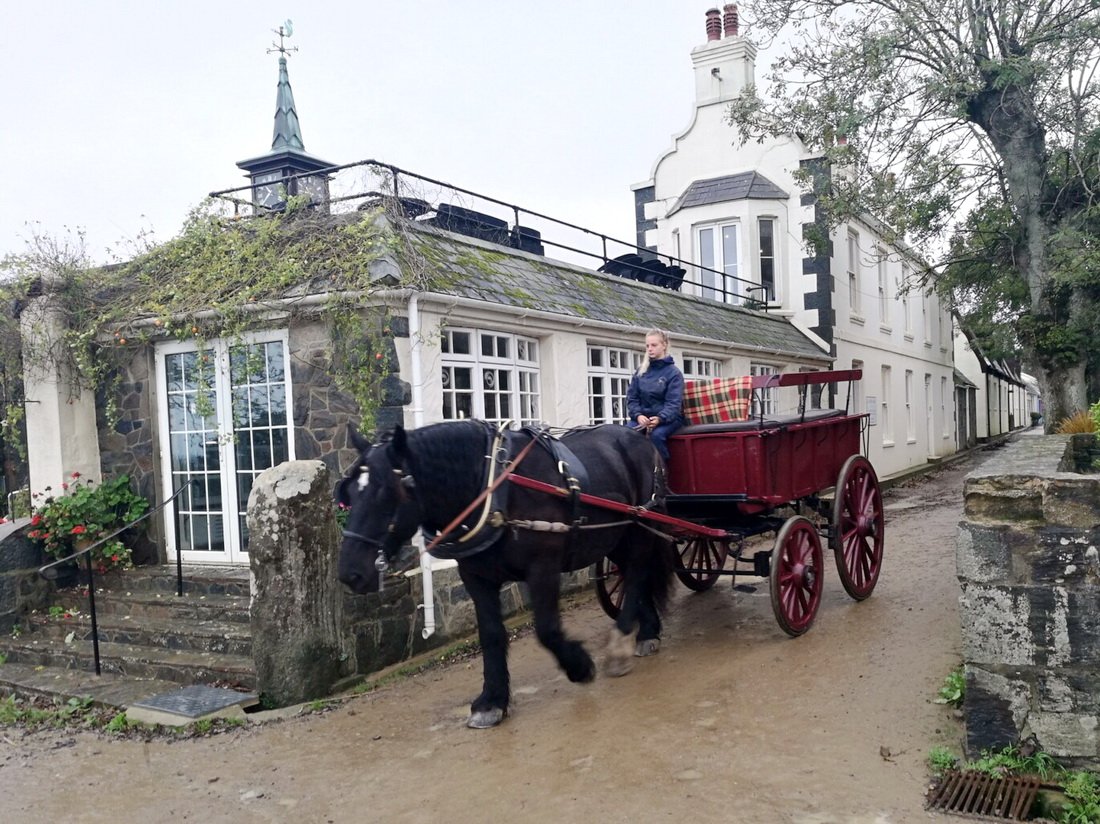
The rush hour on Sark. If you are stuck behind this, you are late.
Logistics: Crossing the Channel
Getting here requires commitment. You cannot fly to Sark; you must earn it.
Step 1: The Hubs
Fly to Guernsey (Aurigny / Blue Islands) or Jersey (British Airways / easyJet). Guernsey is closer and the boat is faster.
Step 2: The Ferry
From Guernsey: 45 minutes with the Isle of Sark Shipping Company.
From Jersey: 70 minutes with Manche Iles Express (seasonal).
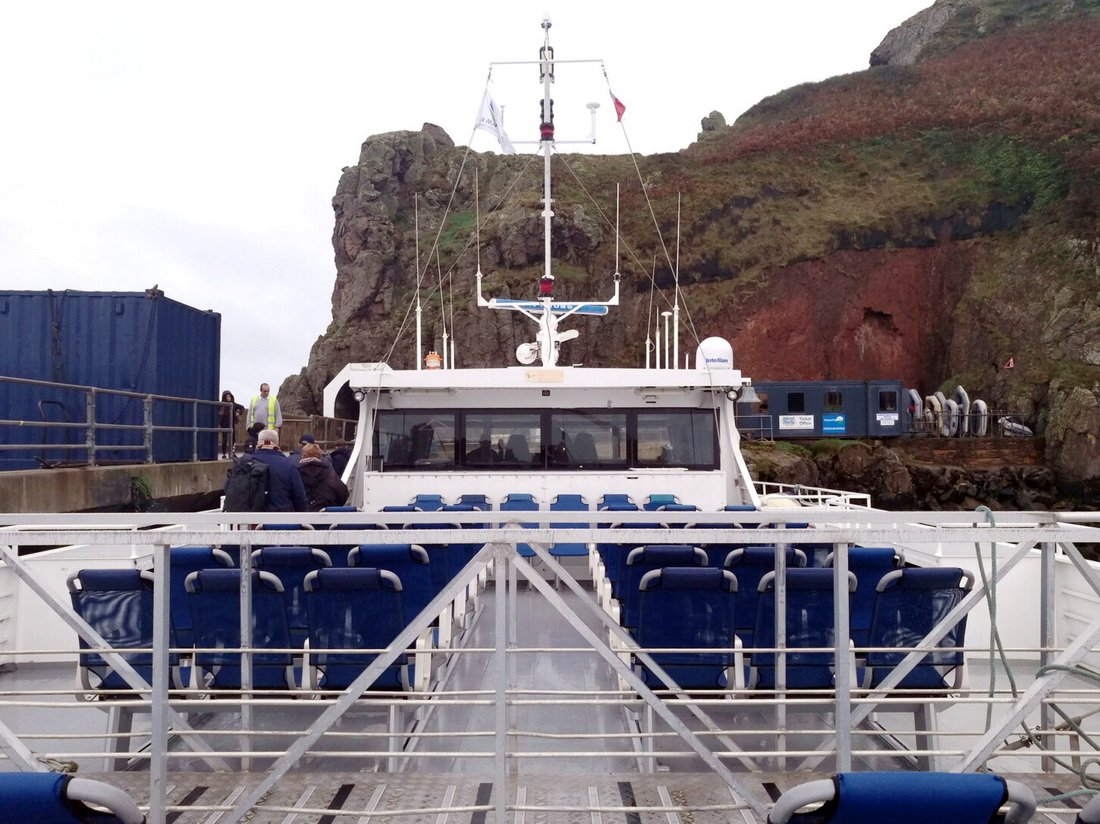
The lifeline. If the sea gets angry, this boat stays in the harbour, and you stay where you are.
When the Lights Go Out (Literally)
Sark is a certified Dark Sky Island. This sounds romantic until you try to walk home from the pub.
There are no streetlights. None. When the sun goes down, the island plunges into a darkness so absolute it feels physical. Locals navigate this void with supernatural confidence. I relied on a headlamp and mild panic.
But the payoff is above. Without light pollution, the Milky Way looks less like a smudge and more like a ceiling. I spent my evenings staring out of my cottage skylight, watching satellites chase sheep across the sky.
Sheep, Fish, and The Billionaires Next Door
Sark Channel Islands has about 500 residents. They are a mix of farmers, fishermen, and people who presumably moved here to escape something.
They grow food, run the school, and maintain a community spirit that is half “warm welcome” and half “survival mechanism.”
Then there is the neighbour. Just across a narrow stretch of water lies Brecqhou, a private island owned by the Barclay brothers (the billionaire twins behind The Telegraph).
They built a massive mock-gothic castle there. It sits visible from Sark’s cliffs—a fortress of privacy staring down a community of farmers. The contrast is sharp, ironic, and very Sark.
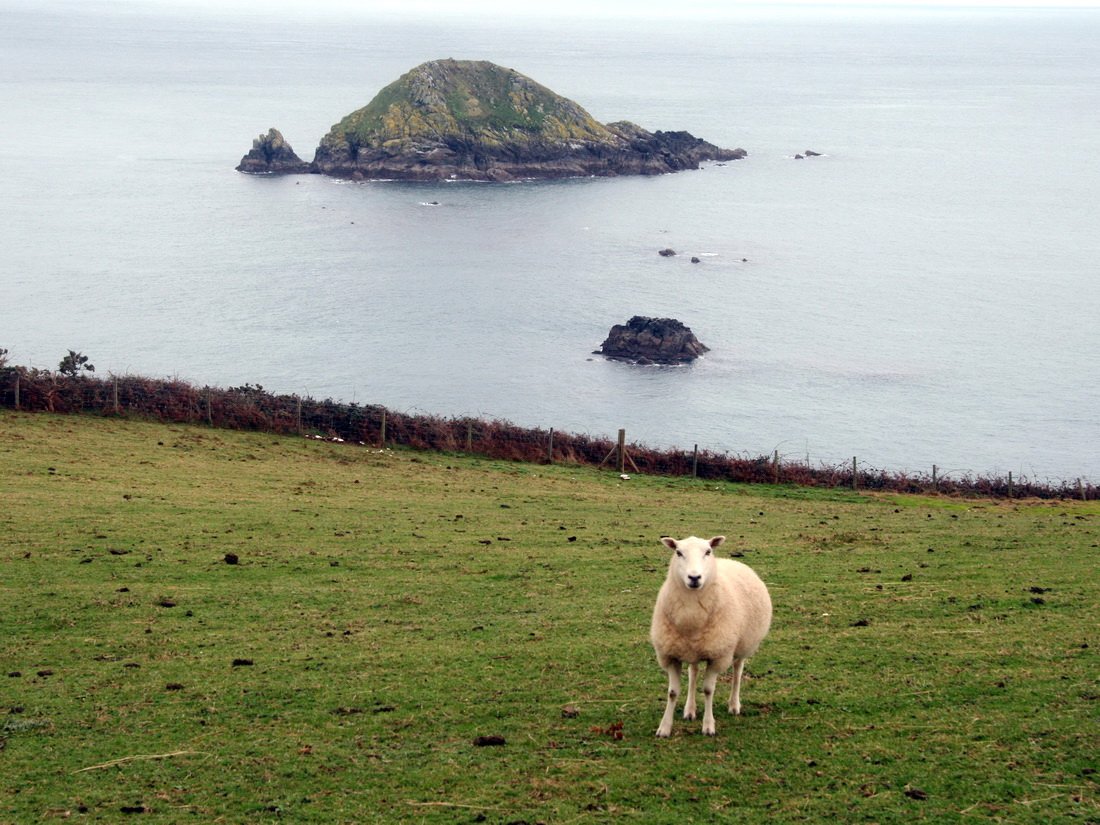
The locals. They have the best views and zero interest in the property market.
The Fire Drill
One evening, flashing lights cut through the darkness. Panic set in. Was the island burning?
No. It was Tuesday practice. The island’s fire engine is—you guessed it—a pump attached to a tractor.
Watching the volunteer crew manoeuvre agricultural machinery with emergency urgency was charming, yes, but also a reminder: out here, you make do with what you have.
Not Quite British
Sark is part of the Bailiwick of Guernsey. It is a Crown Dependency, which means it is not technically in the UK (or the EU). It makes its own laws and has its own quirks.
Take the postbox. In the UK, they are red. On Sark, it is gold. It was painted that way to celebrate a local Olympian, but it feels like a flex—a shiny reminder that things work differently here.
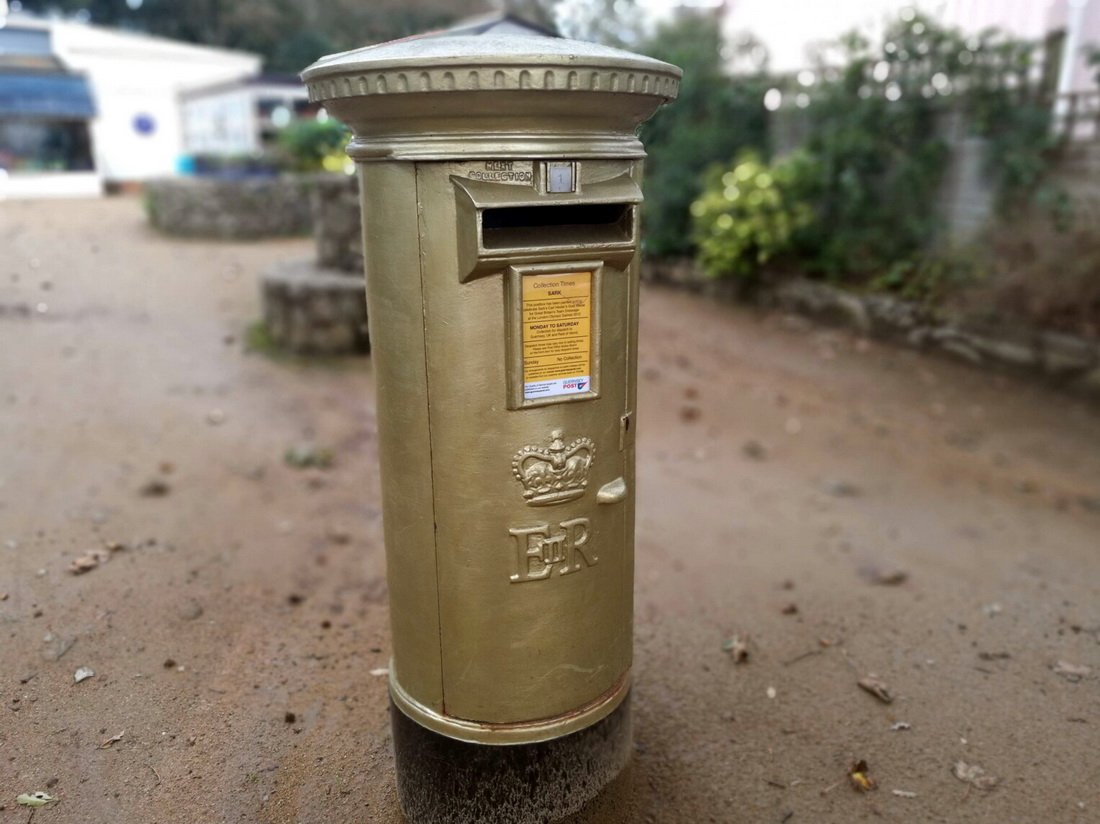
Not red, not British. Just gold and proudly Sark.
Island Economy: What to Buy
Shopping here is limited, expensive, and delightful.
- Sark Stamps: The island issues its own stamps. They are beautiful, and collectors love them.
- Caragh Chocolates: Handmade on the island. Rich, creamy, and worth the calories.
- Sloes: If you visit in autumn, pick them from the hedgerows (free gin flavouring).
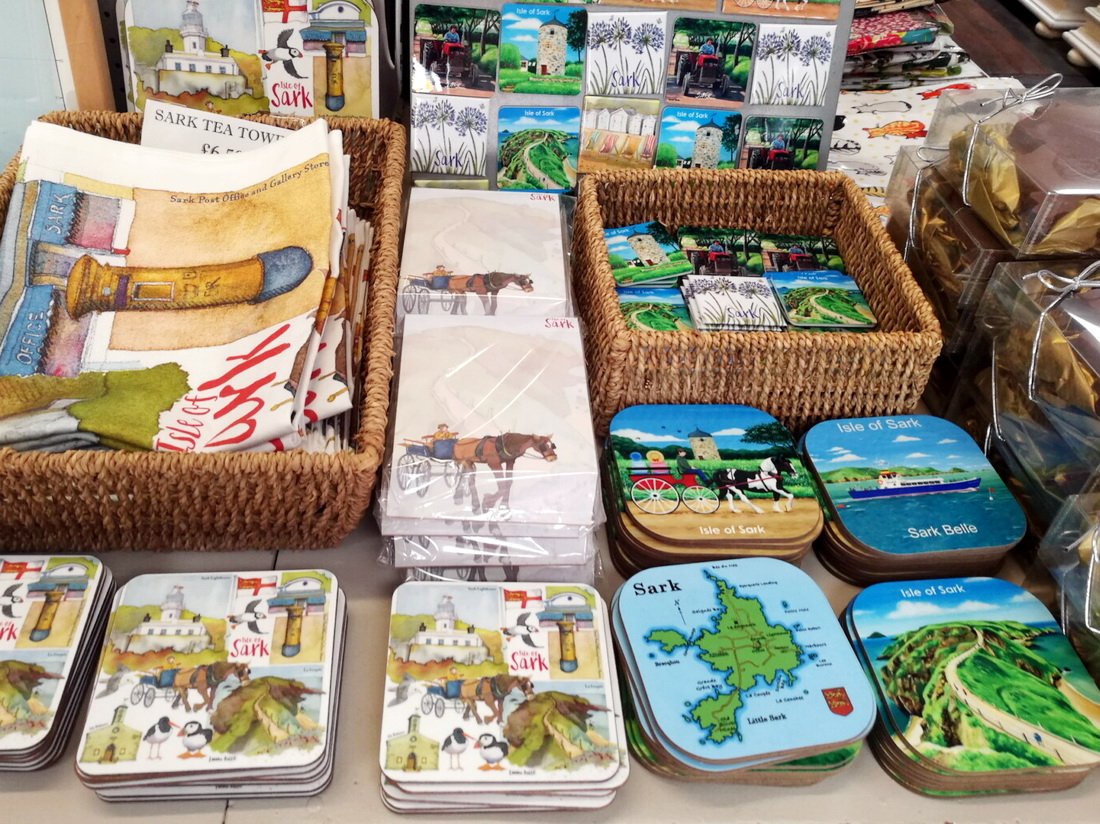
Souvenirs are few but sincere. If you want a dish towel with a tractor, this is your moment.
Walking the Edge
Sark is actually two islands—Big Sark and Little Sark—held together by a thread. That thread is La Coupée, and crossing it is the island’s rite of passage.
It is a concrete causeway, razor-narrow, with a 100-metre sheer drop on both sides. Before railings were installed in 1900, children reportedly crawled across it on their hands and knees during high winds to avoid being blown into the sea. Even today, walking it gives you a distinct wobble in your knees.
The coastal paths loop the entire island, offering views that would cost millions in Cornwall or the Côte d’Azur. But here, you don’t share them with crowds.
By day three, the walking changes you. You stop checking Google Maps. You start eating wild blackberries from the hedgerows. And because you’ve passed the same tractor driver three times, you start waving. The anonymity of the city evaporates here. You are seen.
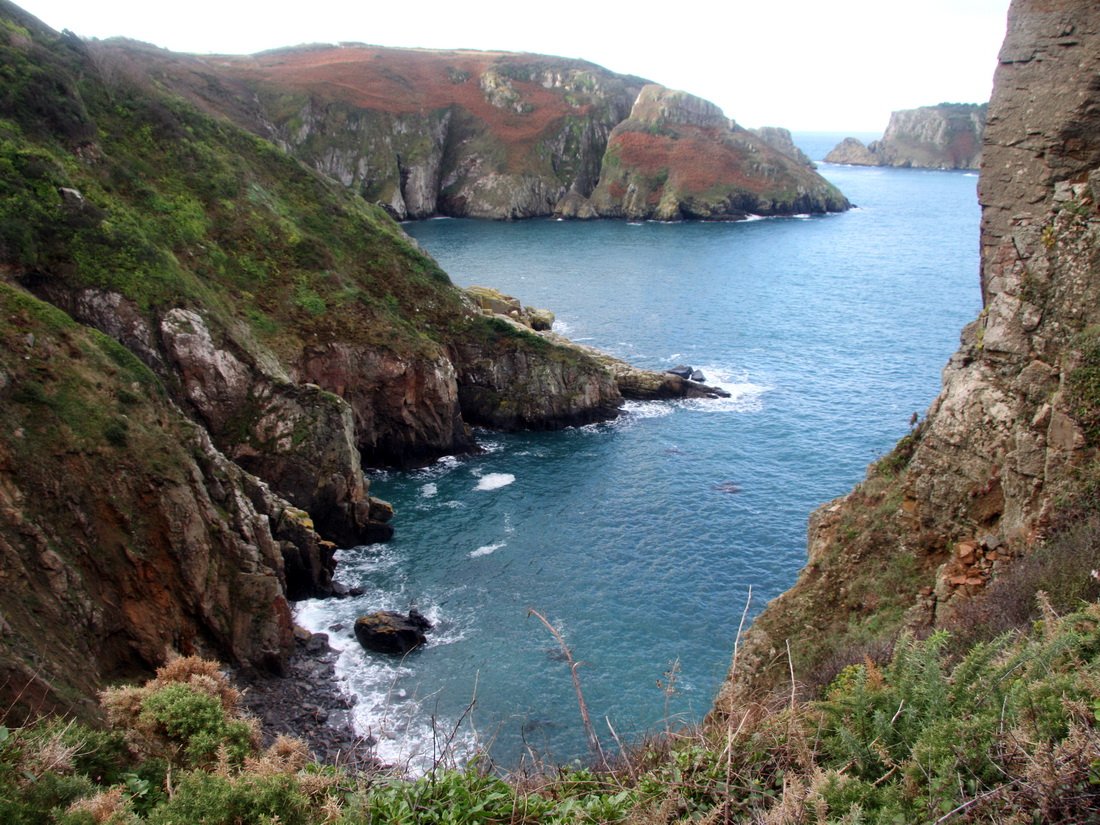
The coastal path. No fences, no safety signs, just you and the Atlantic.
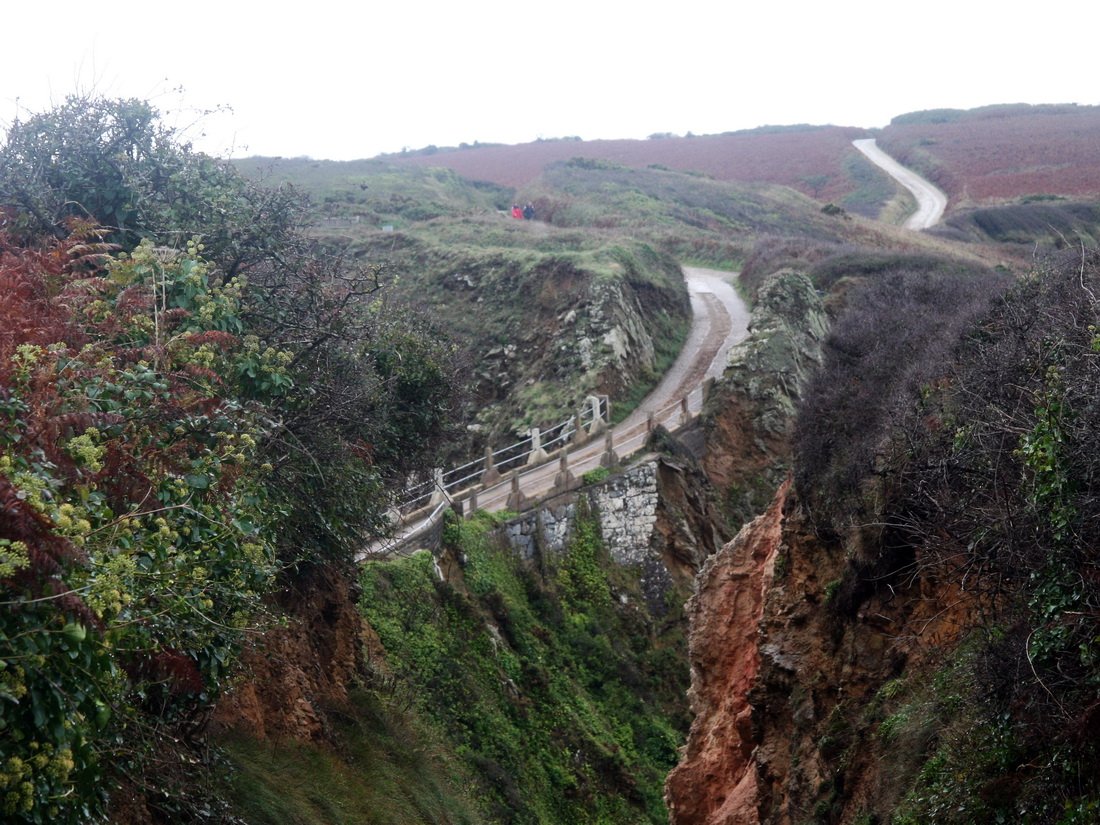
La Coupée. Connecting Big Sark and Little Sark. Don’t look down if you have vertigo.
Sark Essentials
- La Seigneurie Gardens: A pocket-sized botanical wonder. Formal, grand, and slightly incongruous.
- La Coupée: The narrow ridge road. Don’t look down if you have vertigo.
- The Prison: The world’s smallest active prison. It has two cells. It is mostly used for drunk tourists.
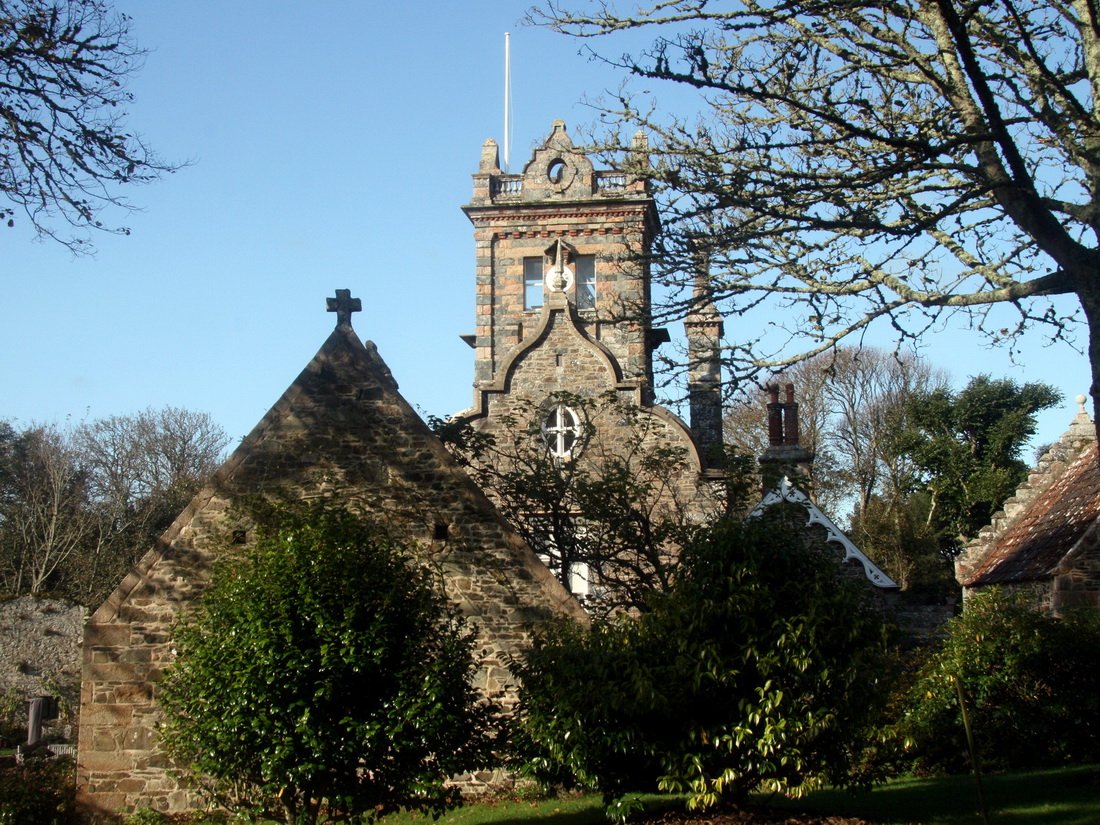
La Seigneurie. Clipped hedges and a sense of ceremony in the middle of the ocean.
The Price of Escape
After three days of silence, the seduction sets in. You start looking at the stone walls and wildflowers and thinking: I could live here. I could write a novel here.
Then you look at the real estate listings.
Do not mistake “rustic” for “cheap.” Real estate on Sark is eye-watering. Because the island is so small and building rules are strict, scarcity drives the market. A weathered stone house here can cost more than a luxury apartment in a major European capital.
On Sark, you don’t pay for amenities. You pay a premium for what isn’t there: no noise, no crime, and no neighbour. Peace, it turns out, is the ultimate luxury good.
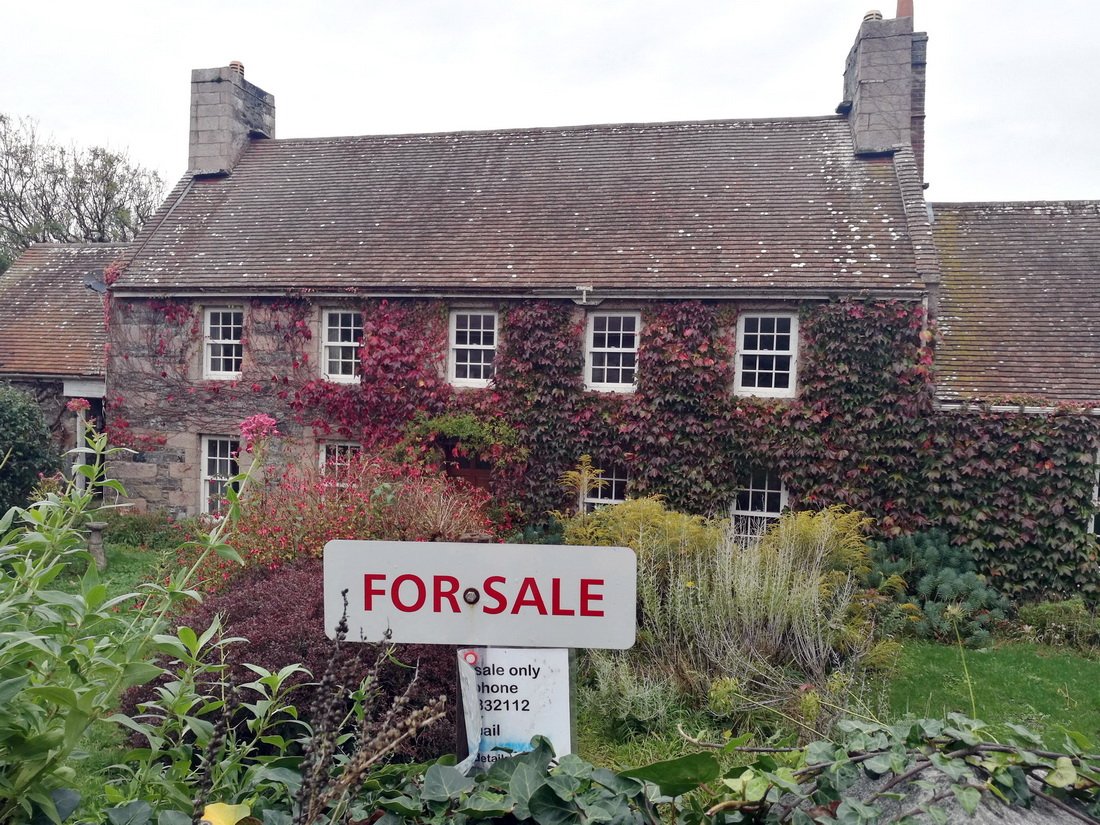
A dream with a price tag. Real estate signs here hang around for years, waiting for someone wealthy enough to buy the silence.
Travel Notes
Planning Your Sark Escape
The Verdict. Sark isn’t for everyone. If you need nightlife, room service, or paved roads, go to Jersey. But if the 21st century feels too loud, this island is the antidote. Pack a torch, lower your gears, and accept that for a few days, a tractor is the most important vehicle in your life.

