










Milan is a city of acceleration. It is an engine that runs on deadlines, espresso, and ambition. But twenty-five kilometres south, the engine stops.
The Certosa di Pavia is the opposite — a place built for silence. Standing in front of its marble facade, you might mistake it for a royal palace. It has the scale of a fortress and the detailing of a wedding cake.
But this is a deception. Behind the lavish Renaissance facade lies a world built for isolation.
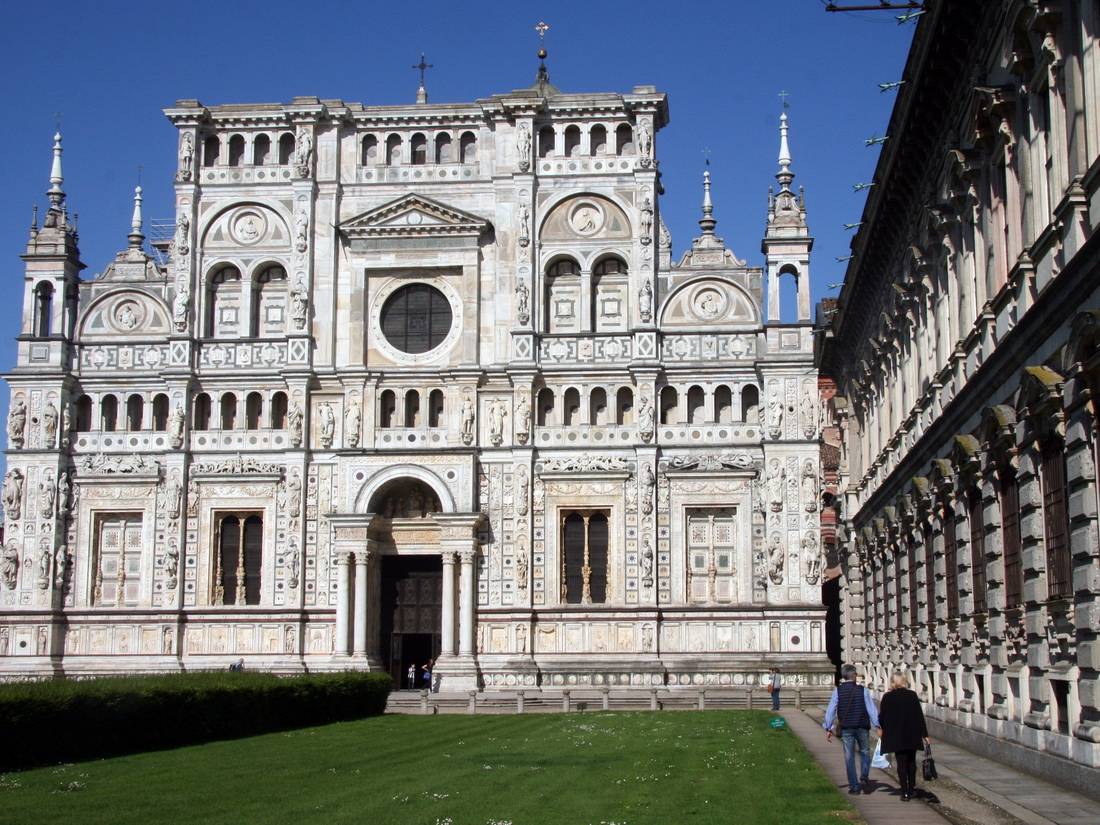
Buying Heaven. Built by the Dukes of Milan to atone for their sins, the exterior looks less like a monastery and more like a royal palace.
The Architecture of Guilt
In Italian, a Certosa is a charterhouse—a monastery for Carthusians, an ancient order of hermits dedicated to solitude and absolute silence.
But this monastery exists because of a worldly sin. Gian Galeazzo Visconti, the ruler of Milan, founded the Certosa di Pavia in 1396 not only for God, but also to ease his conscience.
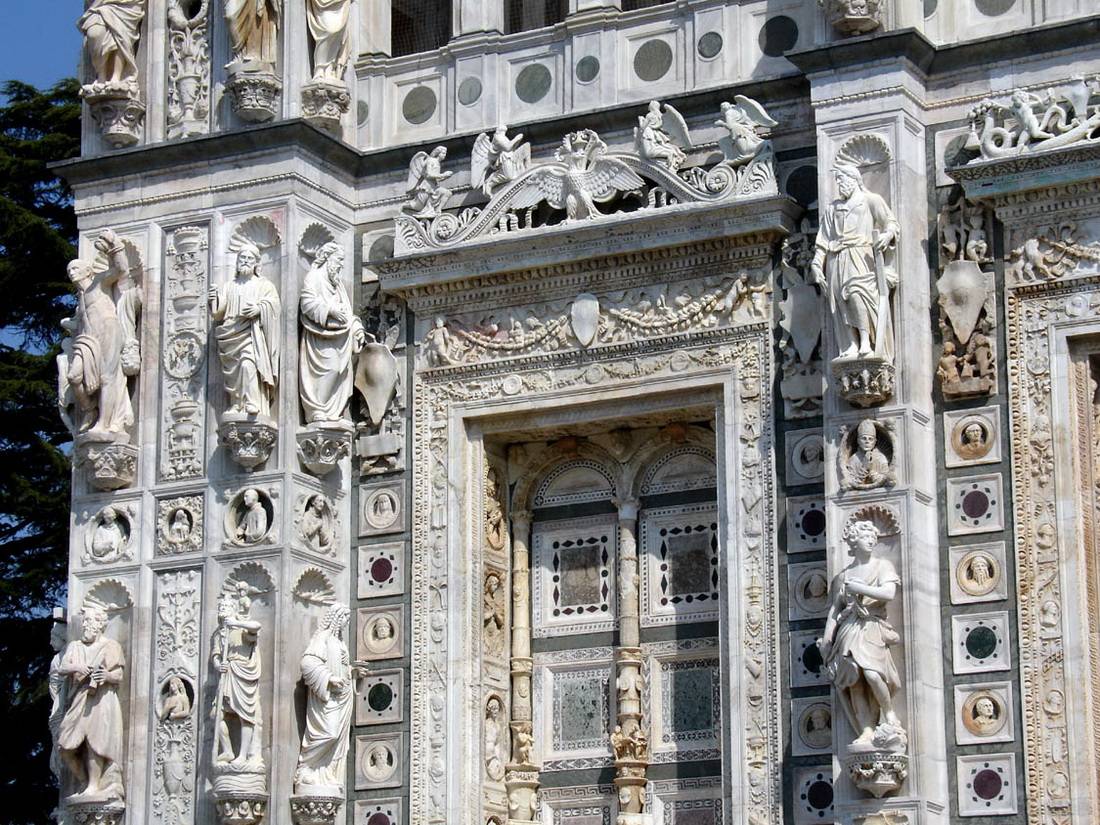
Obsessive Detail. Every inch of the entrance is carved with a density that borders on panic—an attempt to impress God with sheer craftsmanship.
The result is an architectural paradox. The outside is a screaming display of wealth and power, designed to impress the public.
The inside is a rigorous grid of cloisters and cells, designed to erase the ego of the monks living there. It is one of the few places in Lombardy where the Renaissance obsession with beauty meets the medieval obsession with the soul.
The Silent Factory
This is not a museum where you look at dead objects behind glass. It is a living space. While the original Carthusians are gone, a tiny community of fewer than ten Cistercian monks still inhabits this massive complex.
They are the reason the place feels alive. Stepping into the courtyard, I expected the stale smell of old stone. Instead, the air carried the scent of fresh-cut grass and beeswax. Everything felt carefully maintained — quiet but not abandoned.
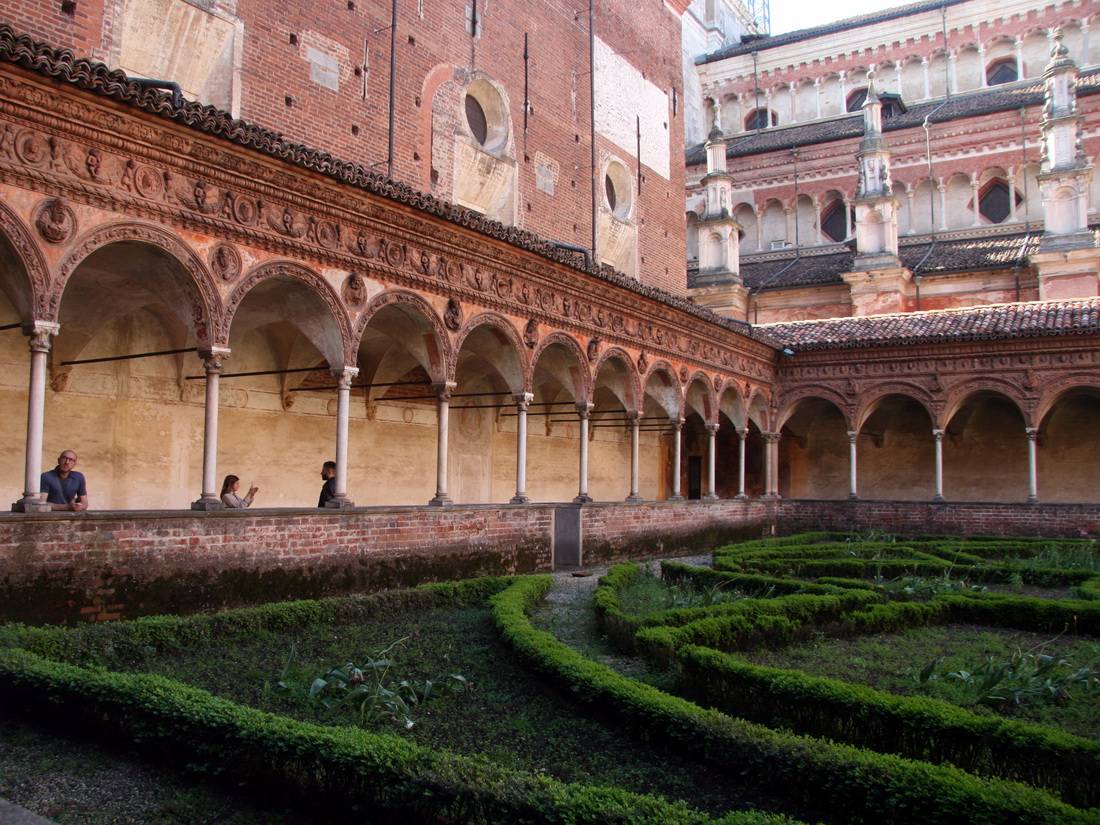
Cultivated Silence. The monks didn’t just build a church; they built a self-sufficient ecosystem. This garden is the quiet centre of the monastery.
Centuries ago, the monks here terraformed the marshy land around Pavia, introducing agricultural techniques that made the region famous for rice.
Today the tradition continues. Instead of plastic souvenirs, the monastery shop sells Carnaroli rice from the surrounding fields — a reminder that this landscape was shaped by centuries of monastic agriculture.
The Monk With the Keys
To access the inner sanctum—the locked cloisters and the cells—you must join a group tour. This creates a fascinating theological loophole.
For the duration of the tour, the monk leading the group is “exempt” from the rule of silence. But do not mistake this for socialising. For him, speaking to tourists is an obedience—a mandatory service to the community, a duty as functional and unromantic as scrubbing the floors or working the register in the rice shop.
Crowds gather here because the Certosa sits in a rare travel sweet spot: it feels like a secret discovery, yet sits on a cheap commuter train line.
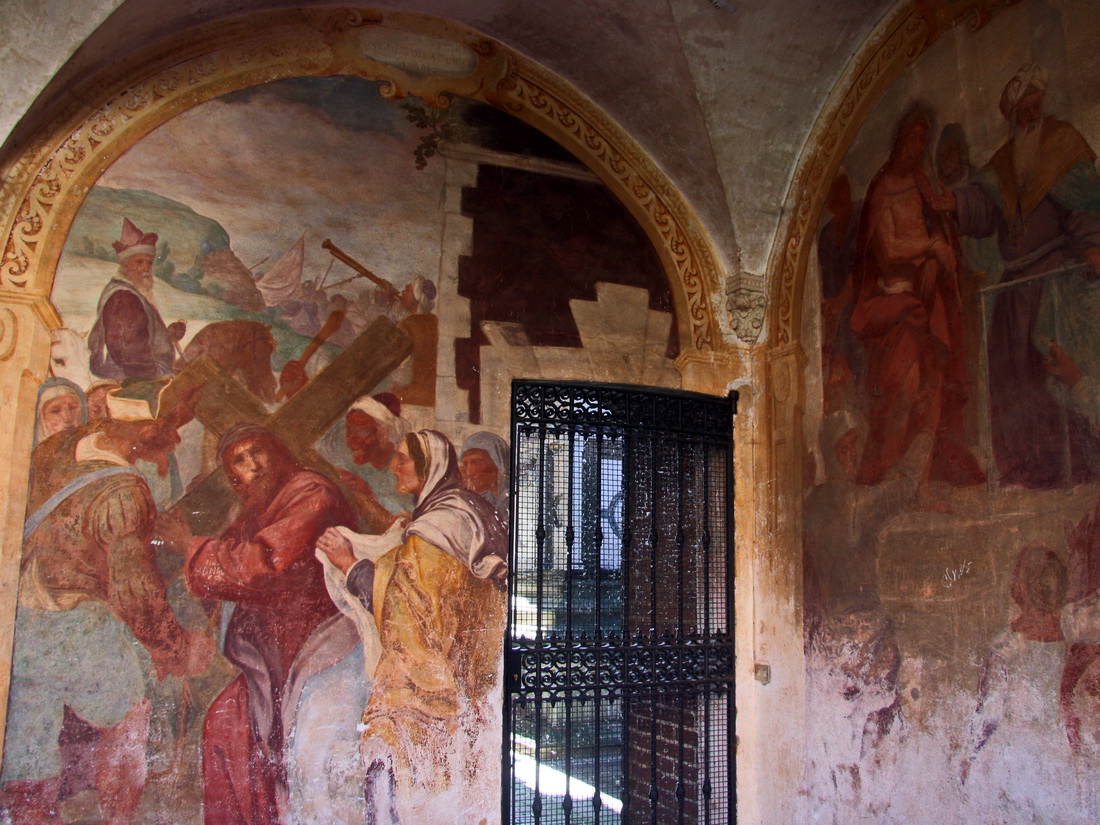
Locked Beauty. To see the frescoes in the inner sanctum, you need a guide with a key. Without the tour, these gates stay closed.
The monk manages this popularity with military efficiency. He moves fast, rattling a heavy ring of iron keys, unlocking centuries-old gates just long enough for you to pass. He speaks (usually only in Italian) with the tone of a man who has other work to do.
A City of Solitude
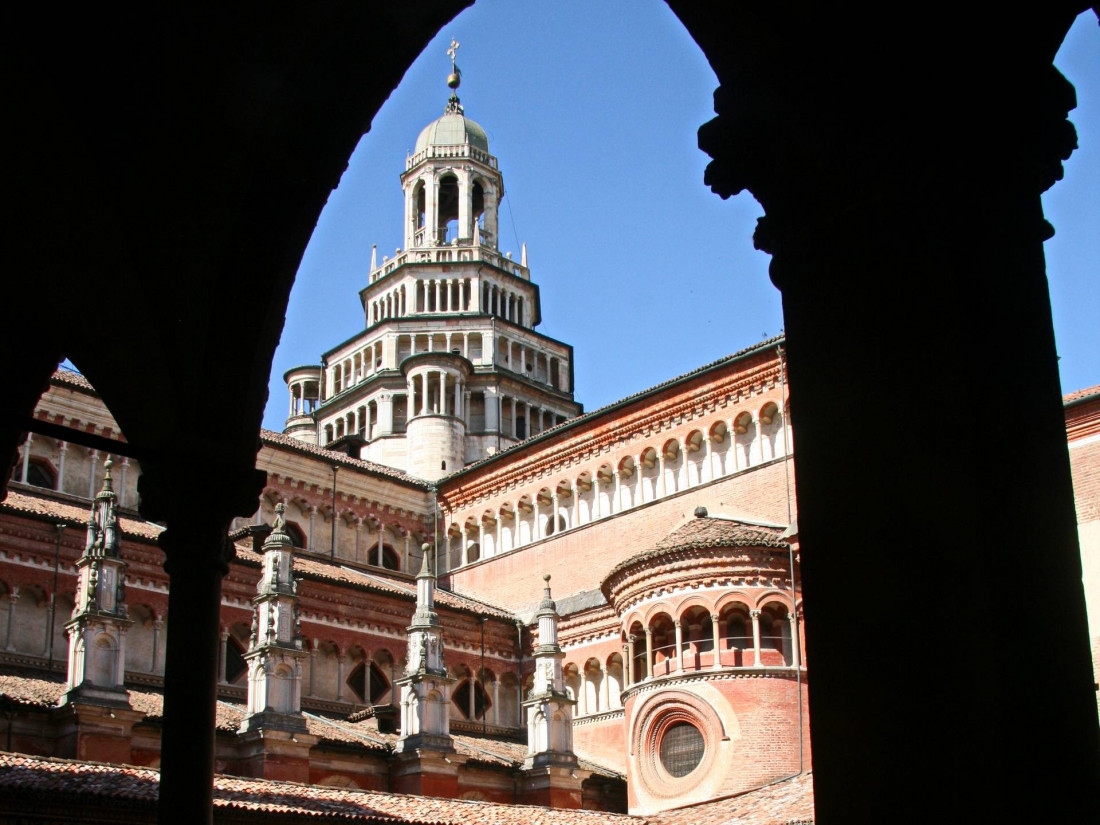
The tour leads you through the Great Cloister, and this is where the logic of the Certosa reveals itself. It is a vast square of green, ringed by small, identical houses.
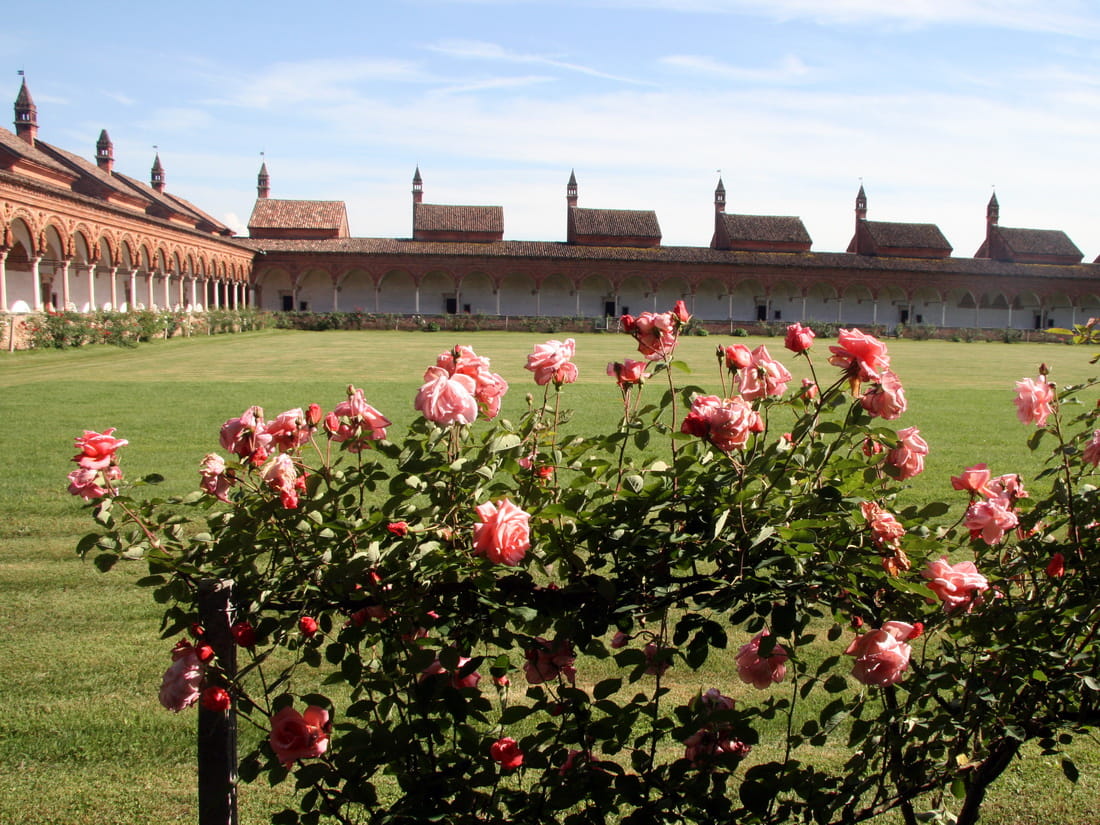
The Logic of Isolation. Each chimney belongs to a separate cell—a private house with its own garden, connected only by prayer and a food hatch.
Each monk lived in a two-story unit with a personal bedroom, a study, and—crucially—a private garden. They were alone together.
Look closely at the walls next to the cell doors. You will see small, L-shaped hatches. These were “turnstiles” for food. A lay brother would place a meal in the hatch and rotate it, allowing the monk inside to eat without ever seeing a human face or speaking a word. It was a life of perfect efficiency, where every architectural detail served the vow of silence.
Today, walking these corridors feels like stepping out of time. The silence feels dense, as if centuries of prayer have settled into the walls. I found myself walking slower, trying to soften my stride. In such a loud world, making noise here felt almost like an act of vandalism.
Travel Notes
Certosa di Pavia: Practical Essentials
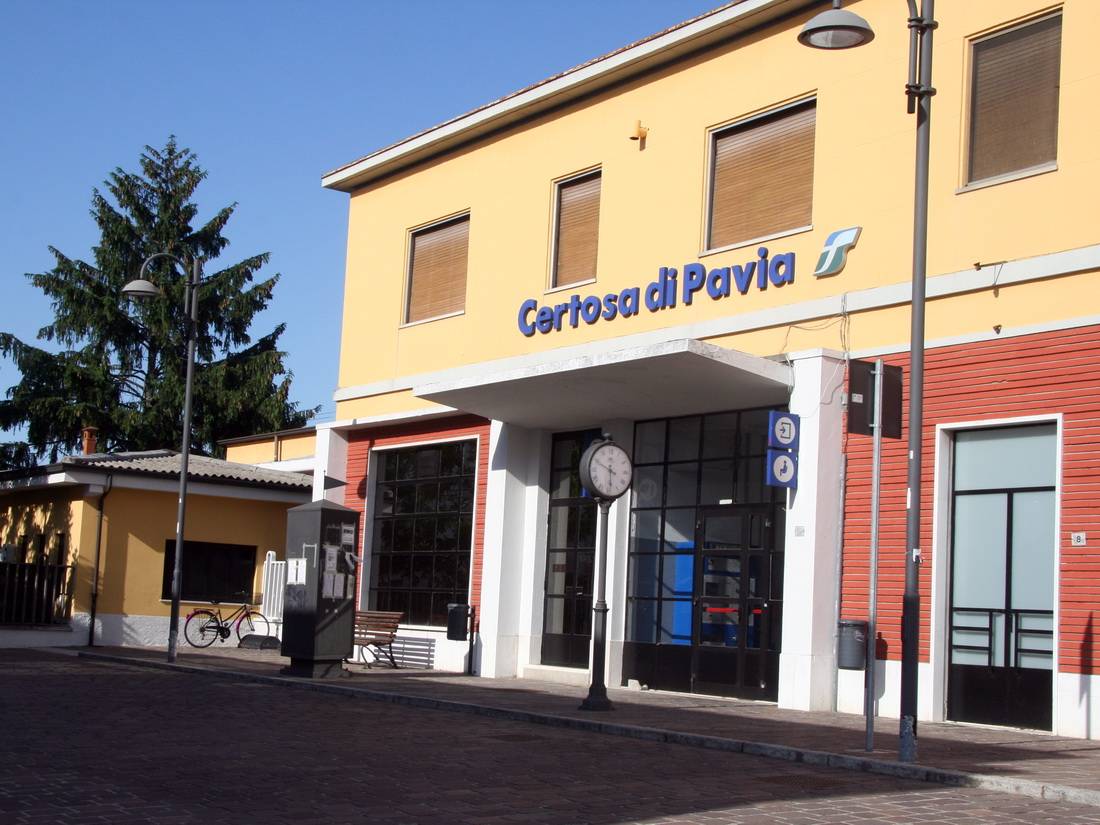
The Portal. The station is tiny, quiet, and unstaffed. Don’t expect a grand arrival—just a short walk along the monastery wall.
Mark Your Landing Spot: Most tourists stay in Milan, distracted by the Duomo and the shopping galleries. They miss the Certosa, which is a mistake. This is not just a church; it is a time capsule of silence that feels almost shocking after the chaos of the city.
It is a place to reset your hearing. But once the silence becomes too loud, you need nature. Lake Como is the perfect counterweight—replacing the enclosed stone gardens with open water and mountains. Read my full Lake Como travel guide →

