












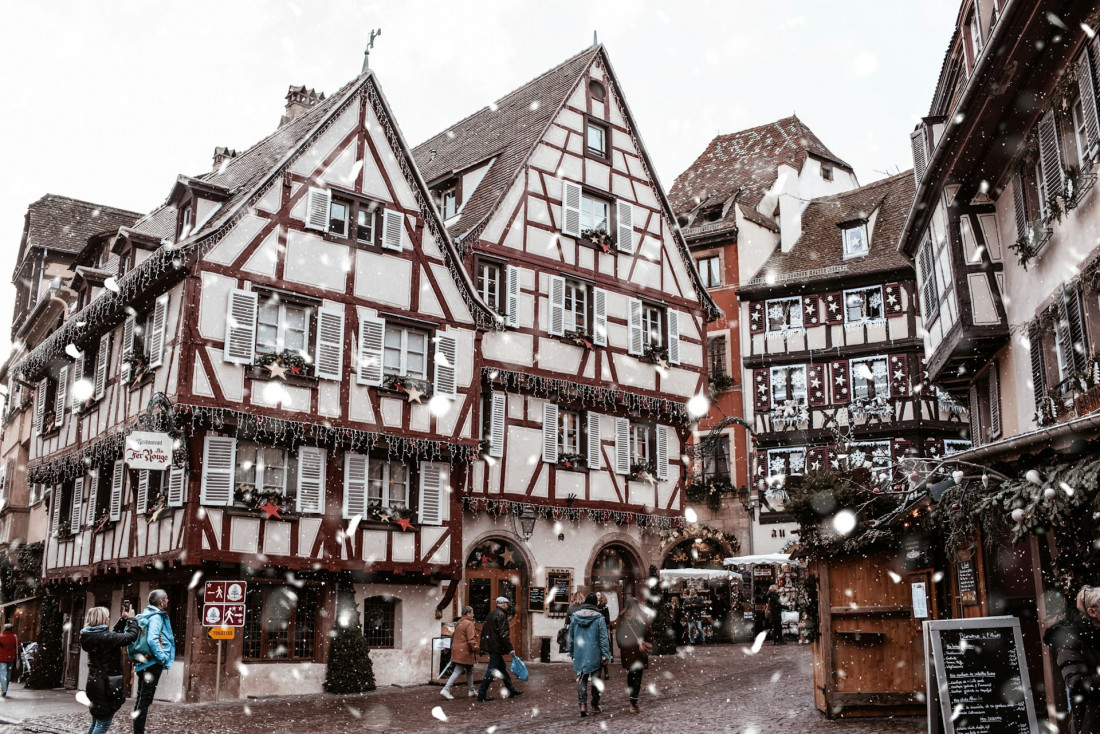
I mostly knew Colmar from summer postcards: flowers spilling over balconies, canals lined with pastel walls. But in December and January, it assumes a different reputation as one of the most aggressively festive towns in France. I arrived on 30 December, half expecting the seasonal layer to have thinned out.
It hadn’t.
Colmar in winter is hard to view as a functioning town. The streets are too neat, the timbered façades too carefully dressed. After a while, you stop looking for cracks in the illusion. By the end of a winter day here, teddy bears seem to outnumber anything resembling ordinary life.
In Brief
- Time: 6–8 hours (day trip).
- Dates: Markets close ~29 December; physical decorations remain until mid-January.
- Transport: Direct train from Strasbourg or Basel (30–45 mins).
- Base: Strasbourg.
What to Expect: Teddy Bears and Uneventful Arrivals
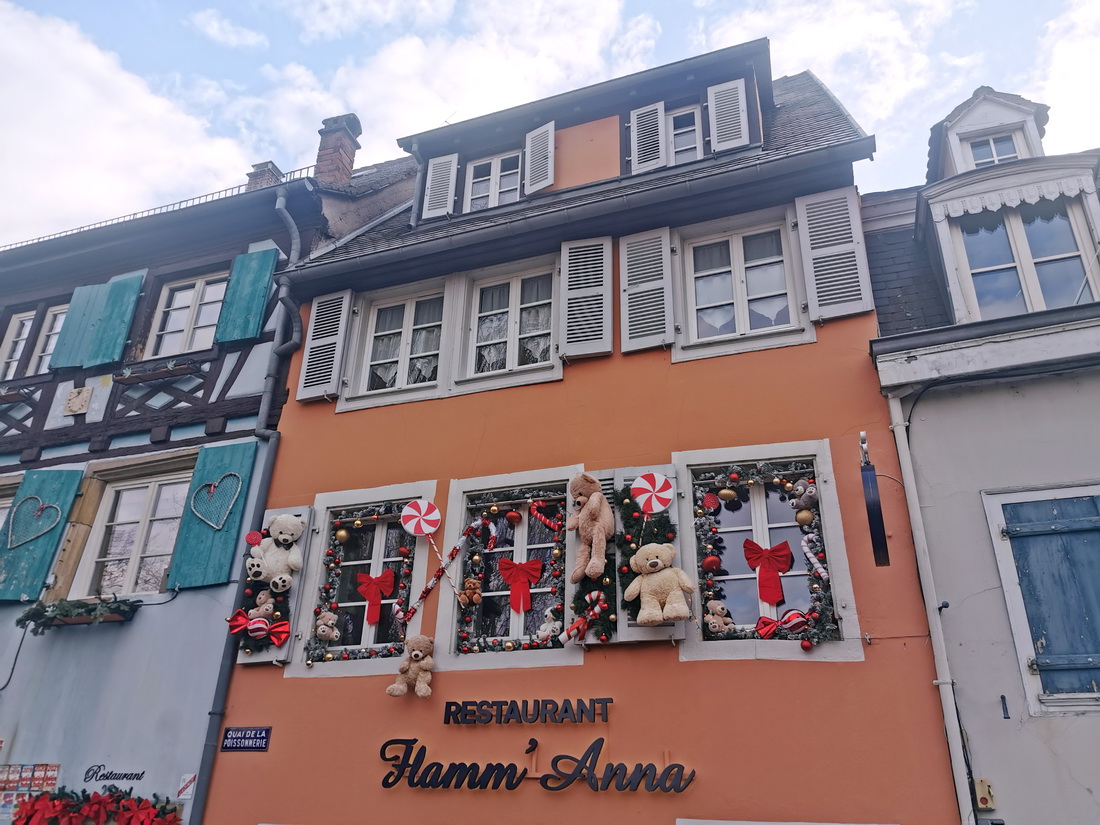
16th-century half-timbering downgraded to convenient scaffolding for the local plush population.
The walk from the station initially feels surprisingly ordinary. You pass normal streets at a standard pace, completely devoid of sparkle. It is just enough time to wonder whether the fairy tale is a marketing fabrication. Then you reach Little Venice, and the structural pattern of the town reveals itself.
At first, the decorations are discreet. One bear in a window, another positioned above a door. But a few steps later, the repetition takes over. Plush bears, wooden bears, drawn bears.
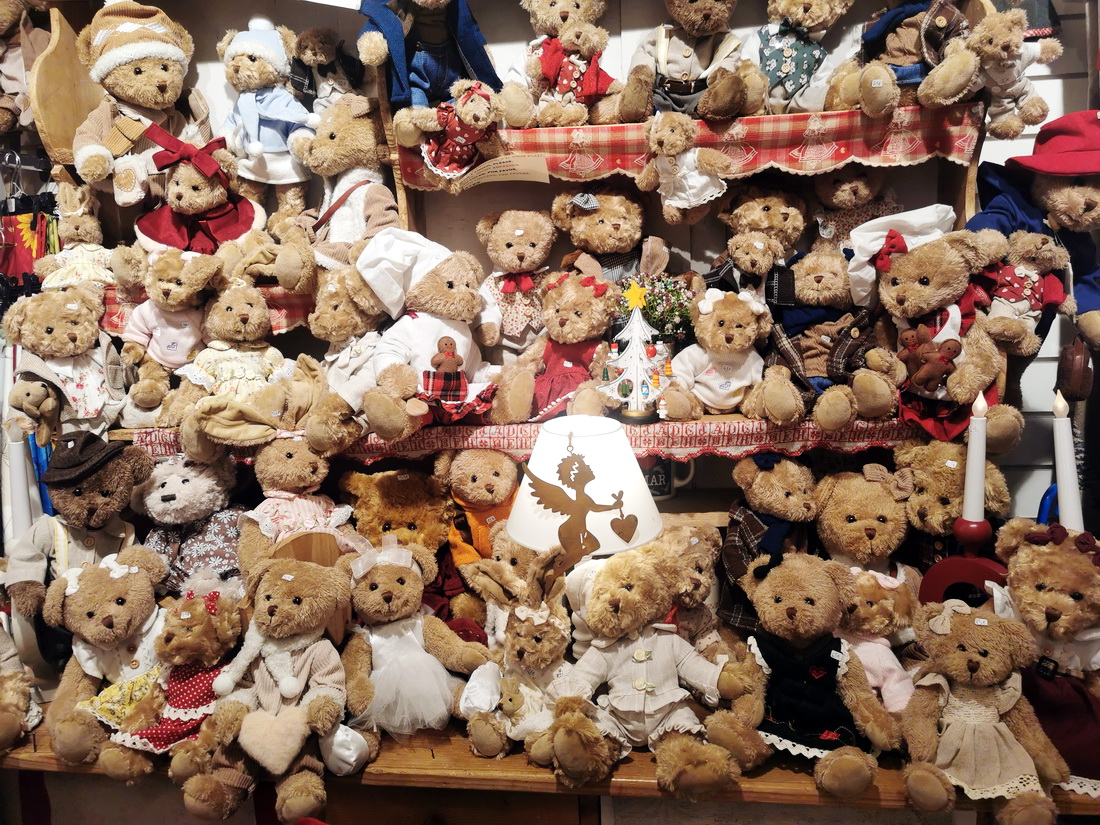
At this level of density, you are no longer shopping. You are just trying to escape without knocking over a platoon of identical ornaments.
You eventually stop counting. Not because there are too many, but because the counting itself stops making sense. While there are trees, snowmen, and garlands, they act as secondary props. The bears hold the visual composition together, quietly linking one street to the next. One of the most surprising things about Colmar in December is realising that cosiness here stops being an atmosphere and starts behaving like municipal infrastructure.
If you are planning a trip around the holidays, keep in mind that the wooden food and craft stalls usually disappear just before the New Year. However, the sheer volume of physical decorations remains intact well into January. Since dates shift slightly each year, verify via the official website.
Navigating the Reality: Crowds, Cheese, and the Search for Breathing Space
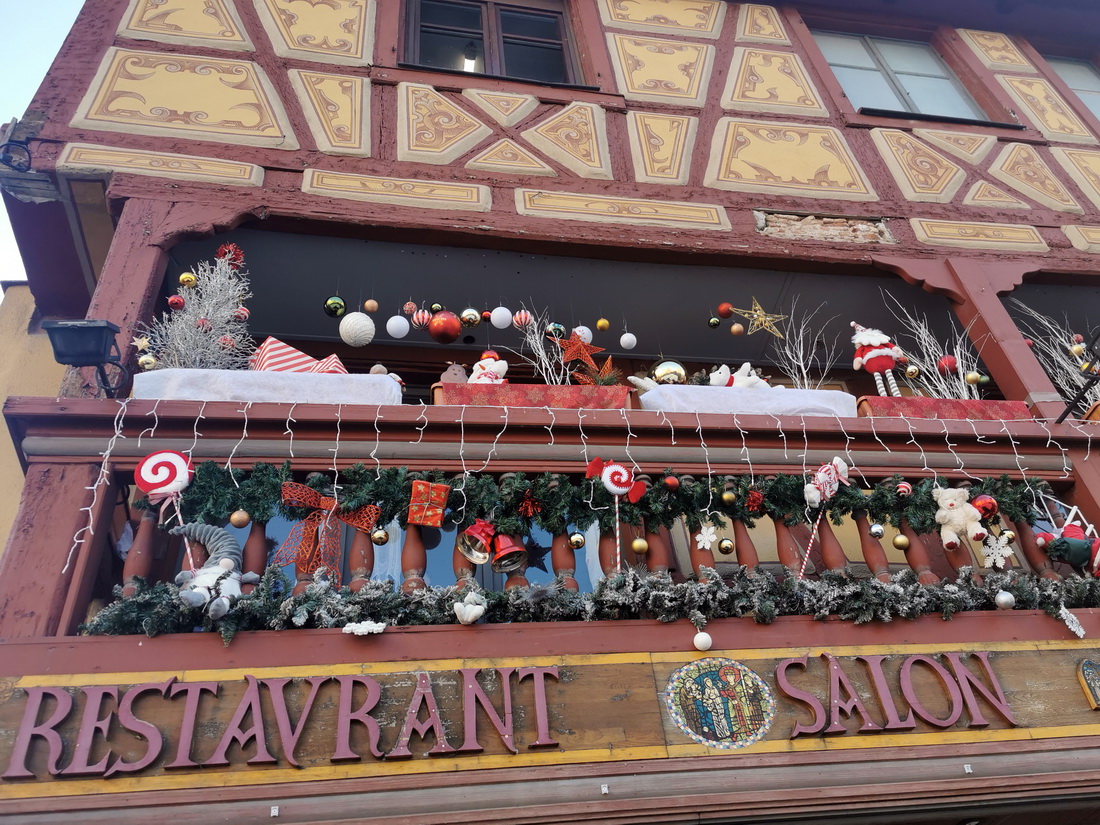
There is clearly a strict local ordinance against leaving a single square metre of balcony un-festooned.
Crowds are the main drawback of visiting Colmar in December. Even arriving on 30 December, when you might hope for a post-holiday lull, some streets around Little Venice were reduced to slow-moving queues of photographers.
If the town is this packed after Christmas, I can only imagine the peak weekends leading up to it. People constantly stop dead in their tracks, staring open-mouthed at a particularly dense balcony display. You will spend as much time standing still as walking, so dress strictly for the cold.
Even the indoor spaces offer little respite. The covered market in the centre is packed to the brim. The stalls selling local cheese are particularly successful at drawing a crowd, and I found myself paying a premium for a wedge of Munster that announced its presence long before I opened the bag. By lunchtime, the queues for a slice of kougelhopf or hot mulled wine are often just as impressive.
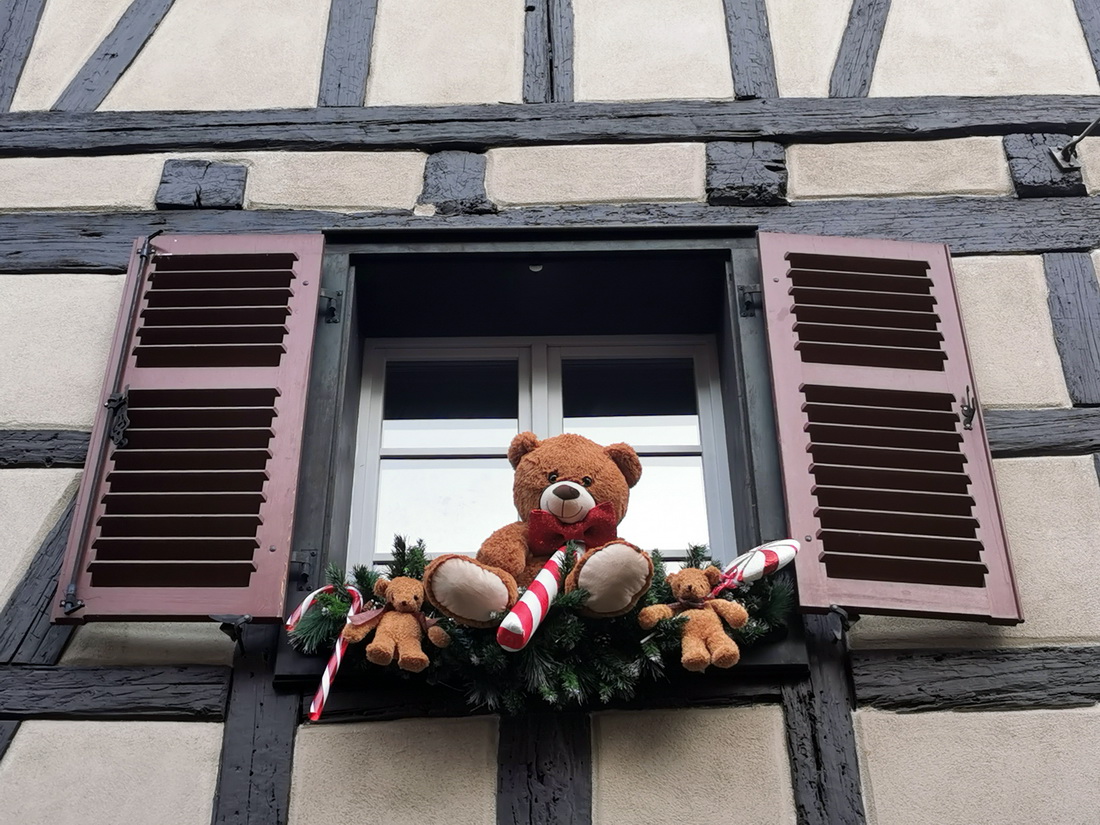
Even on the “quiet” residential streets, you are kept under constant surveillance by someone’s festive window display.
If the festive density and the slow pace of the crowds get overwhelming, there are a few escapes. Even the slightly dusty Toy Museum had a small queue for tickets, though I thoroughly enjoyed my visit there. Alternatively, the Unterlinden Museum offers a necessary, austere visual counterweight to the streets outside (and free entry if you have the Pass’Alsace).
The Architecture of Cosiness: Is it Too Much?
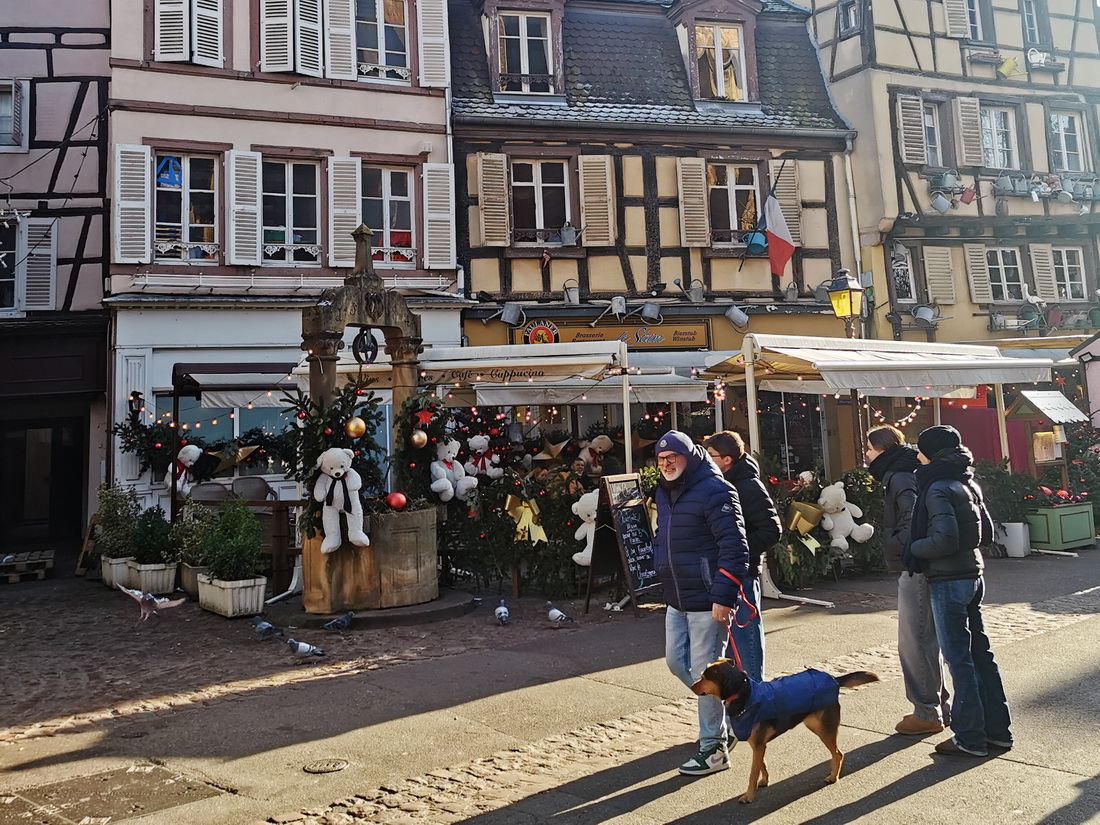
This isn’t a town square anymore; it’s a trap specifically designed to halt pedestrian traffic and force you to reach for your camera.
The density of the streets doesn’t escalate; it simply settles. You step onto a small square and people stop, phones raised. Instinctively, you assume this must be the geographical peak of the decorations. Then you turn a corner, and there is another square. Equally dressed. Equally prepared.
Eventually, Colmar stops behaving like a city entirely. Step inside one of the Christmas shops, and the aesthetic logic tightens. Ornaments cluster by colour, then subdivide by theme. The variations are stacked so closely together that the minute differences simply turn into a blur of ornament. It is less about browsing and more about careful navigation, trying not to brush against the merchandise.
Nothing competes, and nothing interrupts. Each façade outside feels finished, resolved, and already approved by some unseen committee.
Somewhere in the middle of all this staging, one house broke the rhythm. It was an old, carefully restored building. Quiet. Solid. Beautiful. No lights, no garlands, no bears. I stopped there longer than anywhere else that day. Stripped of the decorations, the physical reality of the house became present. For the first time in hours, nothing was trying to perform.
Then I moved on. The bears were waiting around the corner.
The Evening Shift: Turning the Lights On
The illusion gets a second wind at dusk. When the streetlights and facade illuminations switch on, the entire visual composition changes, and you inevitably want to see it all over again. And you do, because by then it is time to head back.
Walking back to the train station in the dark, the circular nature of the staging becomes obvious. For the final fifteen minutes of the journey away from the centre, the magic abruptly drops off. There is no fairytale madness out here—perhaps just a modest, solitary string of lights glowing in an otherwise ordinary window. The city lets you go.
Is Colmar Worth Visiting in December?
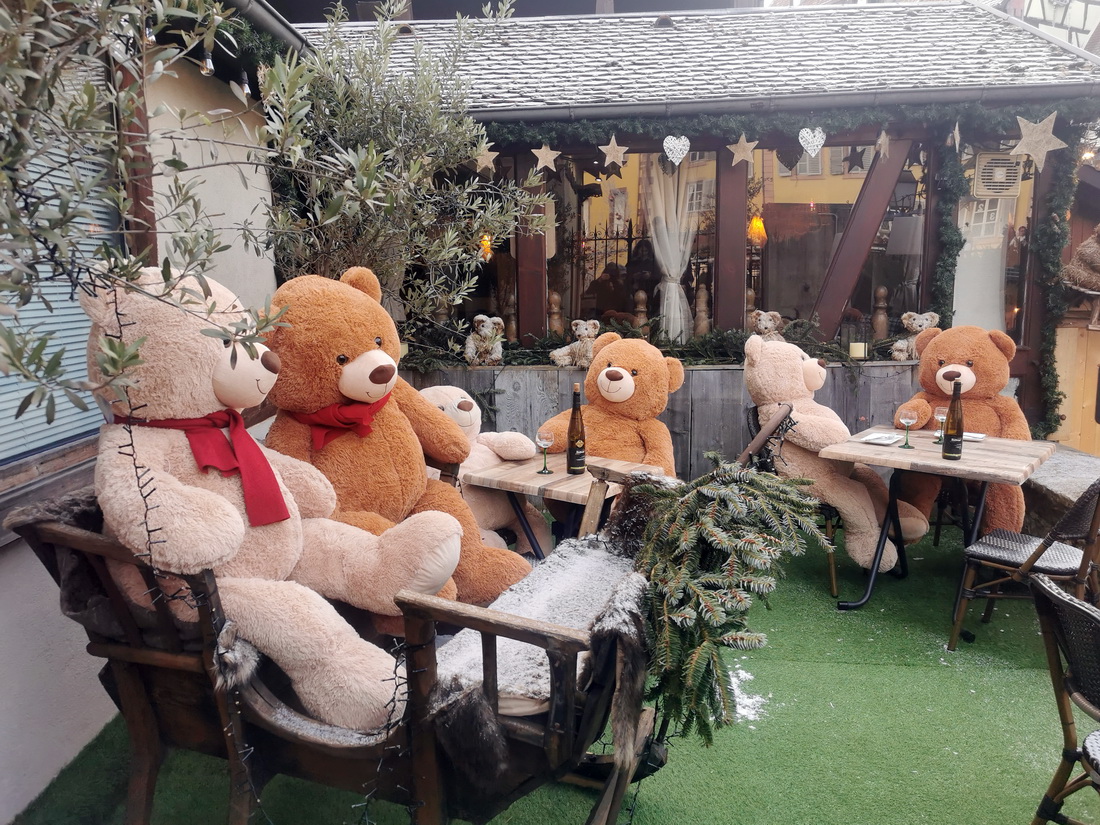
Even the cafés join the performance, reserving the best outdoor seats for customers who will never order a coffee.
The short answer is yes, but with caveats.
If you are looking for pure, unadulterated Christmas spirit and enjoy a certain level of pleasant kitsch, Colmar is spectacular. It leaves a lasting impression and provides endless photography opportunities.
However, if you are a refined artistic soul who suffers in crowds and prefers unvarnished historical authenticity, this might not be your environment. Unlike Strasbourg, Colmar in December feels almost entirely focused on the festive season, organising itself strictly around the tourist gaze.
This sheer, unbroken intensity is exactly why visiting for the day, rather than staying overnight, was the right decision for my itinerary. Back in Strasbourg, the historical fabric still breathes. If you are planning a trip, staying near Strasbourg’s rail hub is the sharpest strategy (check my breakdown of the best hotels near Strasbourg Station). From there, your options are wide open, ranging from an Express Walk with a Local for quick context to a full Day Tour from Basel.
Mark Your Landing Spot: Colmar works exactly as intended. It delivers amazement with precision and excess, then lets you go. It’s perfect for one winter day — for looking, for being impressed, and then for leaving before the stage directions wear you out.

