













The regional trains run like clockwork. As Strasbourg thins out, the conductor’s announcements switch effortlessly from French to German. Crossing the Rhine, the landscape doesn’t change much… but the atmosphere tightens. Less than an hour and a quick transfer later, the train doors hiss open, and you are deep in small-town Baden-Württemberg.
On the way into Germany, police walked through the carriage checking documents. It was routine, almost bored—which somehow made the border feel more tangible than any sign ever could. On the way back, nobody checked anything. The crossing had already happened.
Gengenbach: The Dilemma of the Bakery Window
Gengenbach met me just after 9:30 with the heavy, comforting scent of warm yeast drifting into the cold streets.
The town is small—you can cross the centre in ten minutes—but it refuses to be rushed. It doesn’t just allow you to pause; it demands it. I found myself stuck in front of a bakery window, paralyzed by a low-stakes dilemma: the salt-crusted Laugenbrezel or a glazed poppy-seed Schnecke?
In Gengenbach, you have time for that choice. You have time to watch the sugar glaze settle.
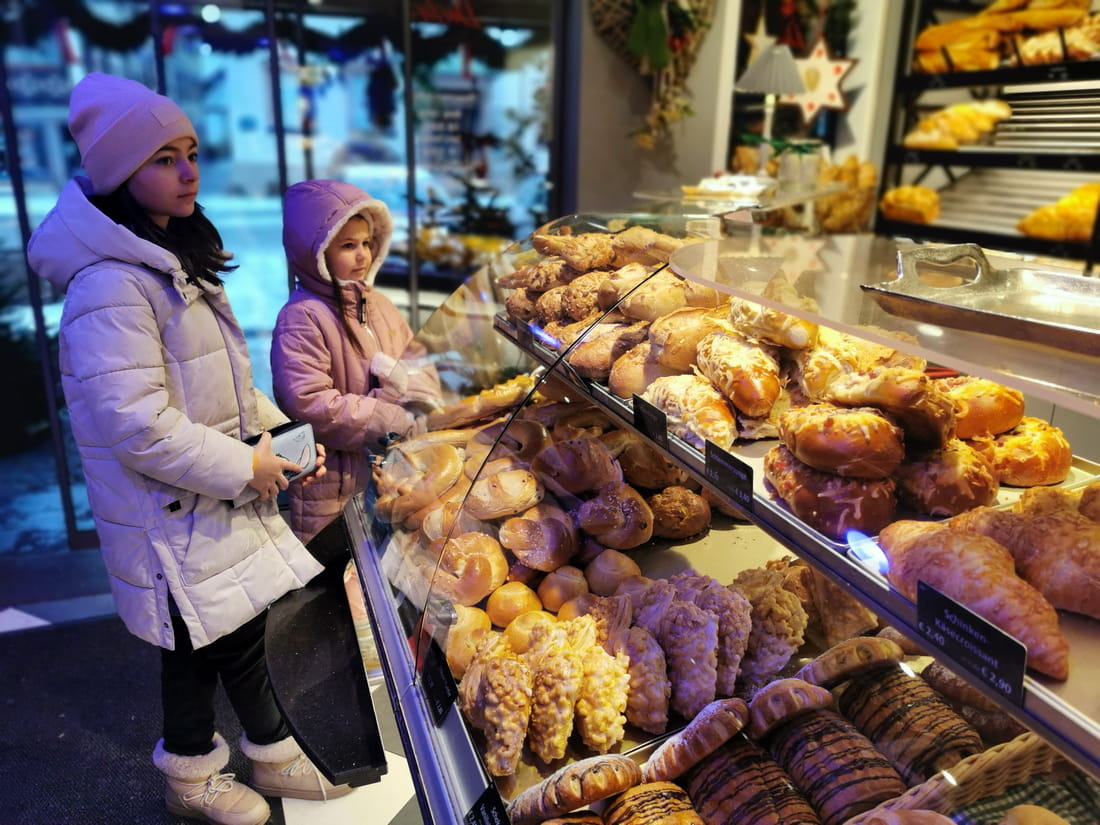
The paralysis of choice: Locals and visitors alike get stuck in front of bakery windows.
Once a free imperial city in the 13th century, the town feels contained, slightly inward-looking. You turn a corner past half-timbered houses that look like ink strokes on white paper, and inevitably, you end up back at the market square.
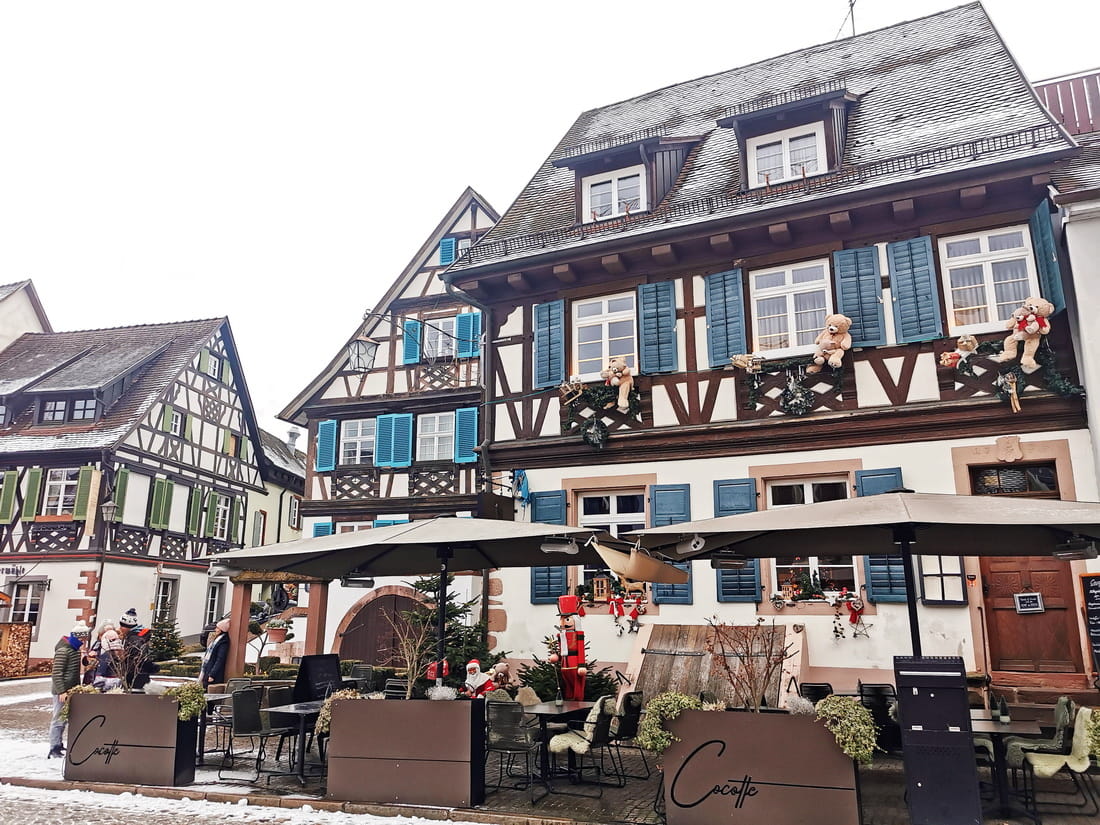
Silent observers: The town is so inward-looking that even the windows have their own audience.
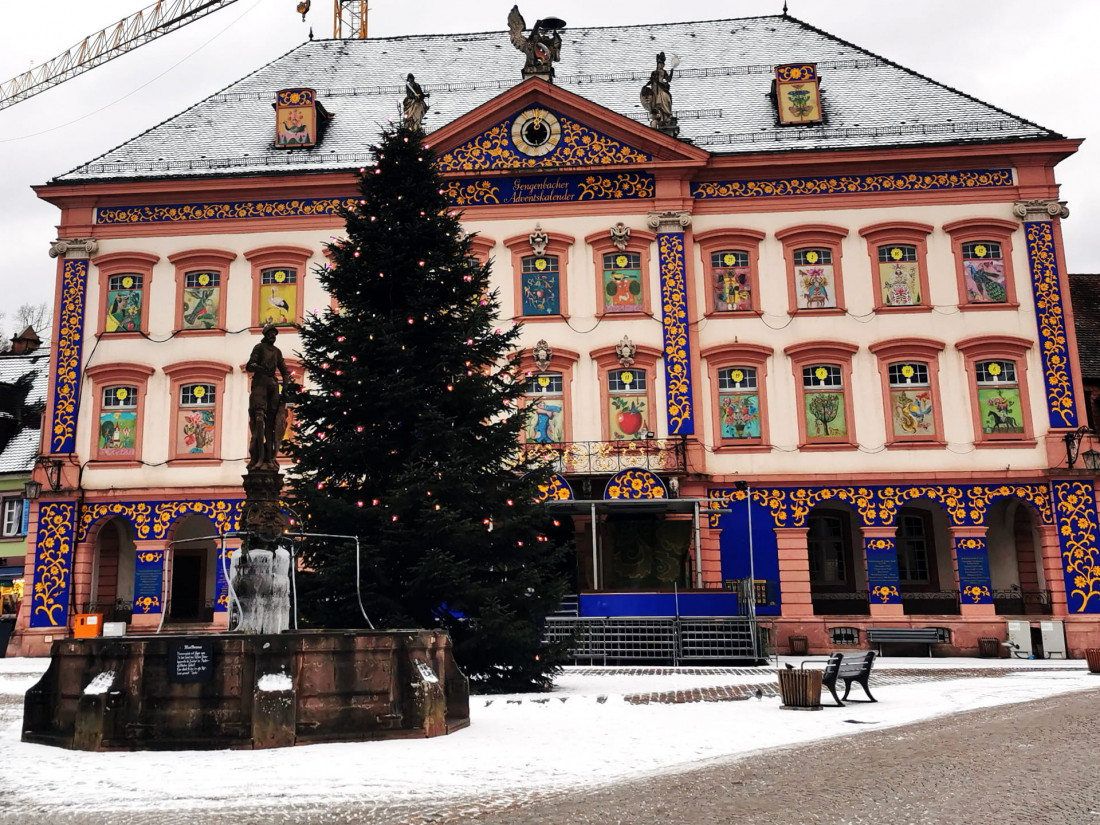
The Rathaus stands without performance. In December, it becomes the world’s largest Advent calendar: twenty-four real windows lit from inside. That’s why it looks strange on postcards—the light comes from within, not layered on. Outside Advent, the windows return to just windows. The calendar is what temporarily gives the facade its role.
I didn’t see the evening version, but even in daylight, it worked. There are a few small museums scattered—including Haus Löwenberg, an aristocratic mansion with a mix of local history and modest, slightly eccentric exhibitions. They suit the place: specific, quiet, easy to walk past if you’re not paying attention to the details on the stone facade.
Gengenbach felt like a town that would be glorious in summer—not just because of flowers, but because the pace of life here is deliberate. Winter simply stripped that quality down to its essentials.
The Seven-Minute Shift
Seven minutes on a local train—barely enough time to settle into your seat—and the tone changes completely.
Offenburg: The Town in Use
Offenburg feels more direct. Indeed, it hits you immediately with the noise of commerce: supermarkets, chain stores, trams, and people moving with purpose. A medieval trading town at heart, it prioritizes function over admiration.
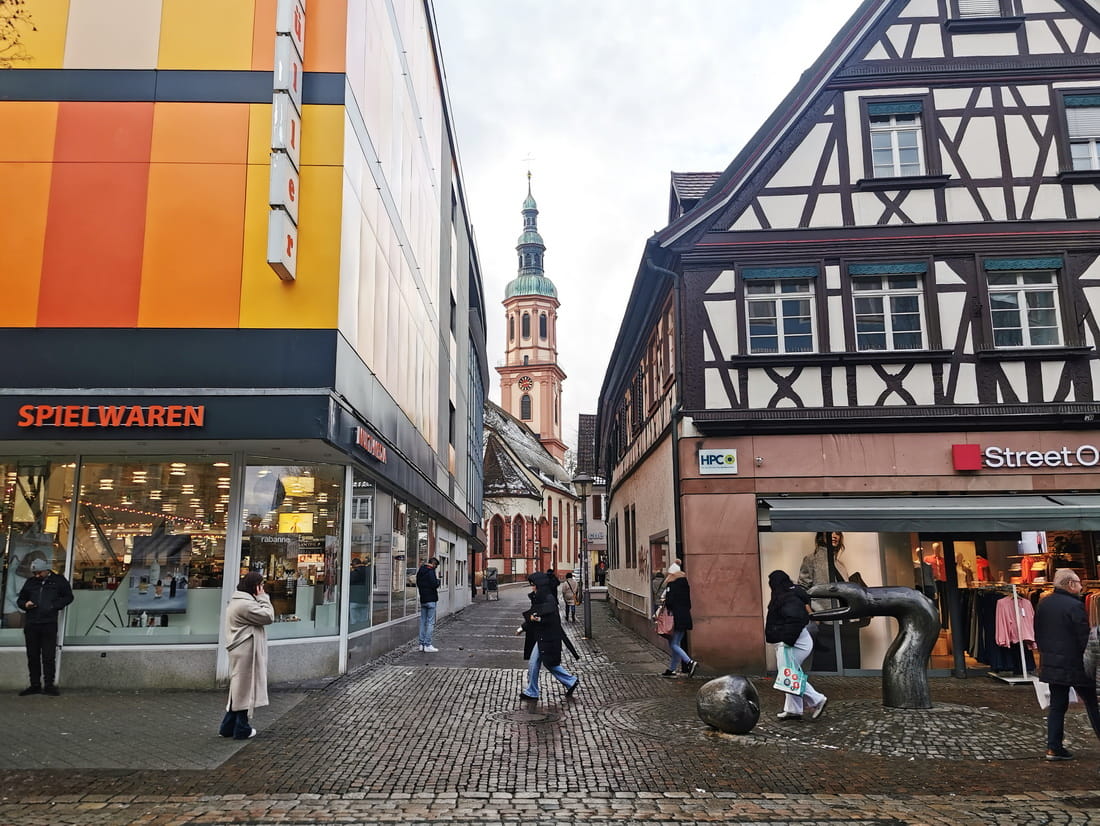
The unromantic rhythm of the border: Modern drugstores stand side-by-side with historic facades. This is where visitors from Strasbourg stock up on daily essentials.
Walking through the pedestrian zone, I realized I was hearing almost as much French as German. Inside drugstores like DM and Müller, families from Strasbourg were filling baskets with basics—shampoo, toothpaste, detergent—at half the French price. This is the unromantic rhythm of the border: a weekly pilgrimage for essentials. It grounded the town for me. Gengenbach is where you go to escape reality; Offenburg is where you stock up on it.
Yet, on the Rathaus square, that seriousness loosens.
The Werres Birds stand right in the middle—bronze figures on rotating discs, part bird, part fantasy creature. They aren’t static art. Children climb onto them, spinning the heavy bronze until the birds tilt and wobble, looking mildly irritated but oddly alive. The sound of metal grinding on metal and the shouts of kids arguing over whose turn it is cut through the polite German air.
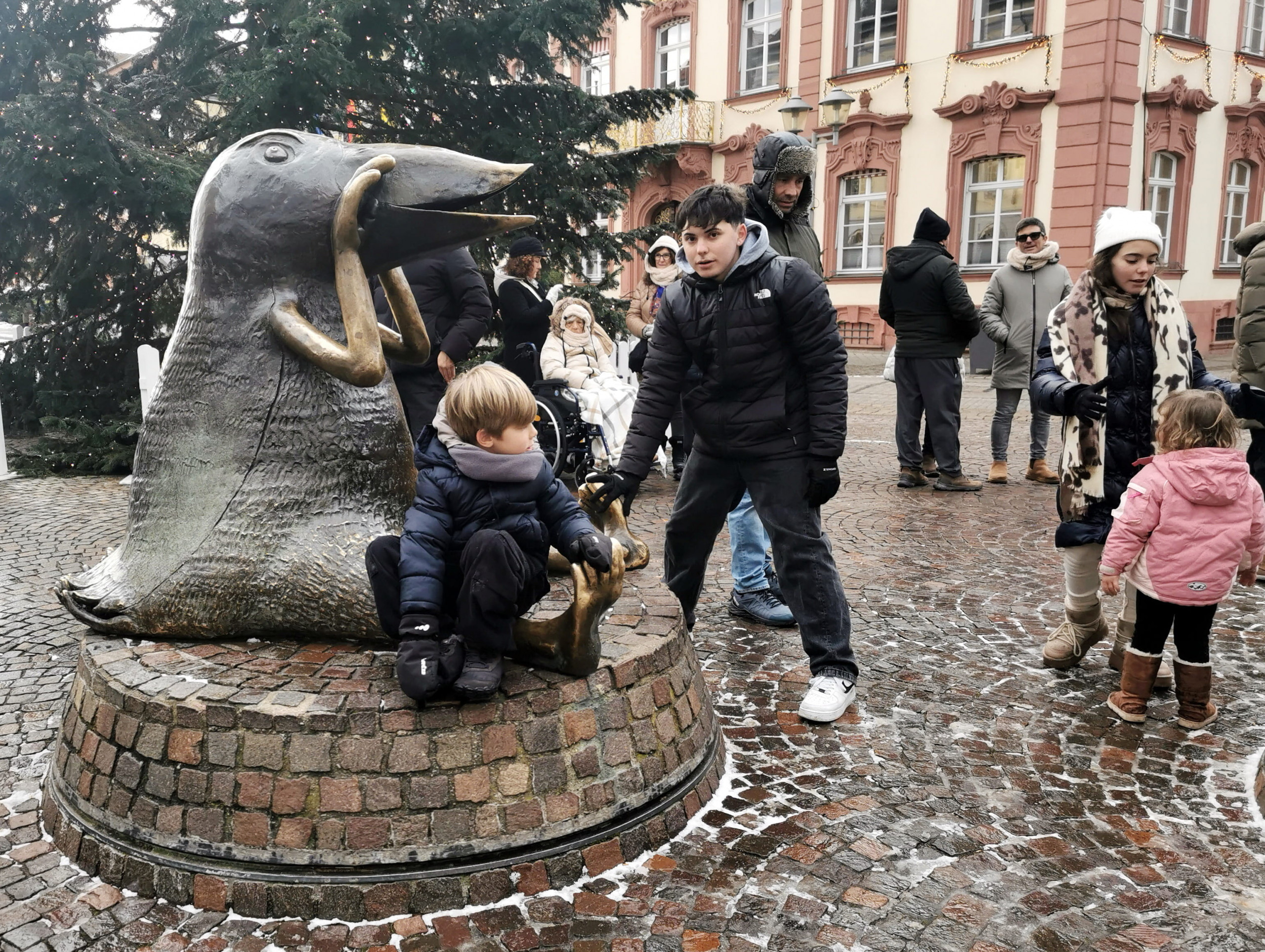
The spinning Werres Birds disrupt the polite order of the square, inviting children to play and pedestrians to steer around them.
They’ve been here since 1988, created by artists Ingrid and Dieter Werres. They don’t just mark the space; they disrupt it. Their spinning wings seem to slice through the orderly surroundings, forcing the pedestrian flow to curve around them.
A hidden cultural weight
Offenburg has a hidden cultural weight, too. It is the hometown of Aenne Burda, the publisher behind Burda Moden—a magazine that democratized fashion across Europe. Long before online shopping, it offered printed sewing patterns that women didn’t just browse but actively worked with. Clothes were cut, stitched, worn. The magazine existed to be handled, much like the town itself.
The cafés around the square were full, mostly with locals engaged in animated conversation over strong coffee. It felt like a living room for the region, not a display case for tourists.
Back to Strasbourg
By mid-afternoon, I crossed back to France. The contrast stayed sharp in my mind: Gengenbach, where you stand still to choose a pastry; Offenburg, where you dodge spinning bronze birds and shoppers laden with discount toiletries.
Seven minutes between them. That turned out to be enough distance to find a whole other world. Accessing these parallel realities is easy because Strasbourg functions as a transit machine. To plug into that machine efficiently (and hop borders like this), check my recommendations in Where to Stay in Strasbourg: A Logistical Guide.
Travel Notes

