















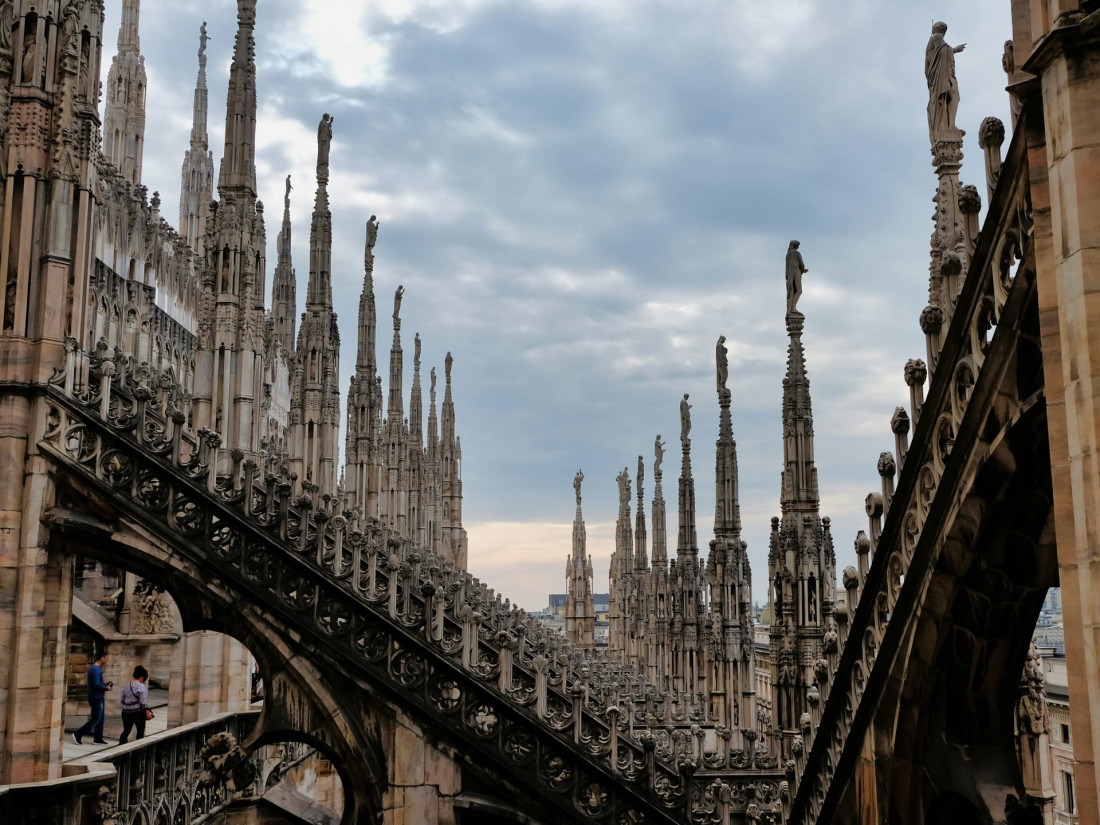
Piazza del Duomo in Milano is a mechanism of noise, selfie sticks, and aggressive commerce. But fifty meters up, the mechanism stops. This isn’t just a viewing platform, but a separate topography suspended in the sky—a landscape of white stone that feels less like architecture and more like geology.
It feels like a marble quarry rearranged into a cathedral. This is Candoglia marble—rare, pink-veined, and dug from the Alps. It was dragged here, block by heavy block, over six centuries.
The interior is a dark cavern designed to force humility. It makes you feel small. The rooftop operates on a different logic. It lets you walk through the skeleton of the building, treating you as an insider rather than a spectator.
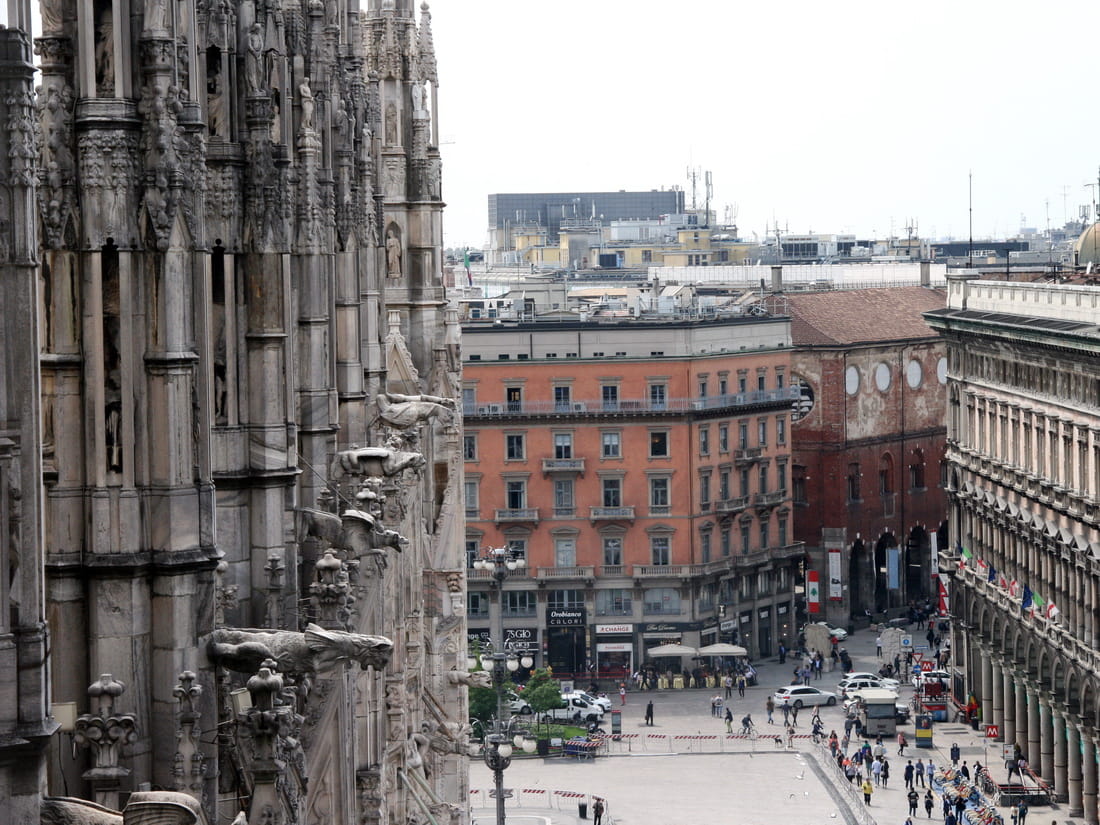
The Vertical Escape. Looking down from the marble silence of the roof to the “chaotic theatre” of the streets below.
The Forest of Stone
The density hits you first. You don’t just look at the roof; you walk through it. The path winds between flying buttresses—massive stone ribs that hold the cathedral together.
Anywhere else, architects would hide these structural elements. Here, artisans covered them with spires, crockets, and ornaments. The result creates the sensation of walking through a petrified forest.
It is disorienting in the best possible way. You stand fifty meters above the ground, yet walls, arches, and corridors surround you. It feels like a secret city built on top of the real one, complete with its own alleys and a silent population.
An Obsession with Detail
As you move deeper into the terrace, the sheer obsessive nature of the place reveals itself. The Duomo holds over 3,400 statues. The majority of them stand up here, invisible to the crowds on the street.
This brings a surprising realisation: the creators never intended much of this beauty for human eyes. Before elevators and modern tourism, only the maintenance workers—the Veneranda Fabbrica—saw these details.
Sculptors carved the intricate faces of saints, dragons, and biblical scenes for the sky, or for God. Or perhaps they simply followed a perfectionist urge they could not stop.
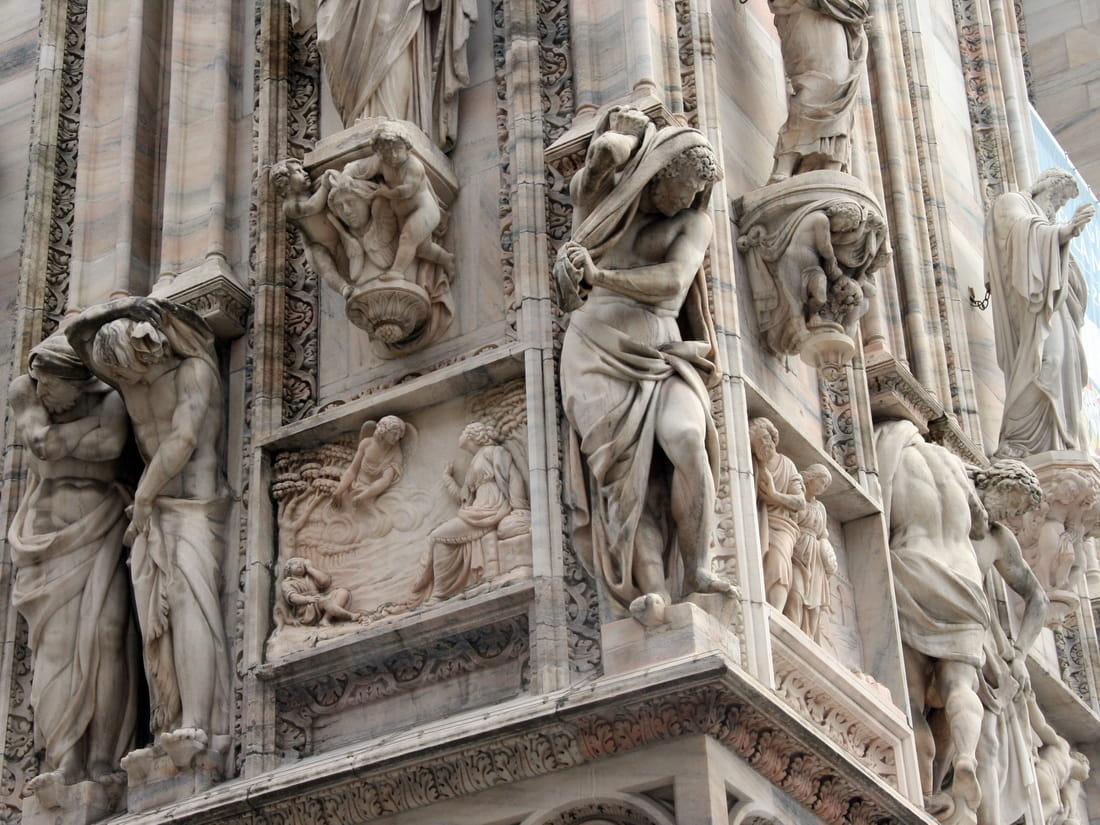
Art for the Sky. Many of the Duomo’s 3,400 statues were carved for heights where no one but the maintenance workers—or God—would ever see them.
Look closely, and you will see that the cathedral is still alive. It is not a finished monument but a constantly evolving organism.
Rain has worn some statues smooth over centuries. Modern artisans have replaced others, leaving them crisp and new. You might even spot a carved boxer or a tennis racket among the Gothic saints—modern easter eggs left by stone carvers in the 20th century.
A Piazza in the Sky
Eventually, the stone corridors open up onto the main central terrace. Everyone stops at this moment.
It feels like a piazza in the clouds. The roof slopes gently, the marble feels warm under the sun, and the golden Madonnina watches over it all. On a clear day, the view stretches to the snow-capped Alps. This reminds you that Milan is, at its heart, a northern city.
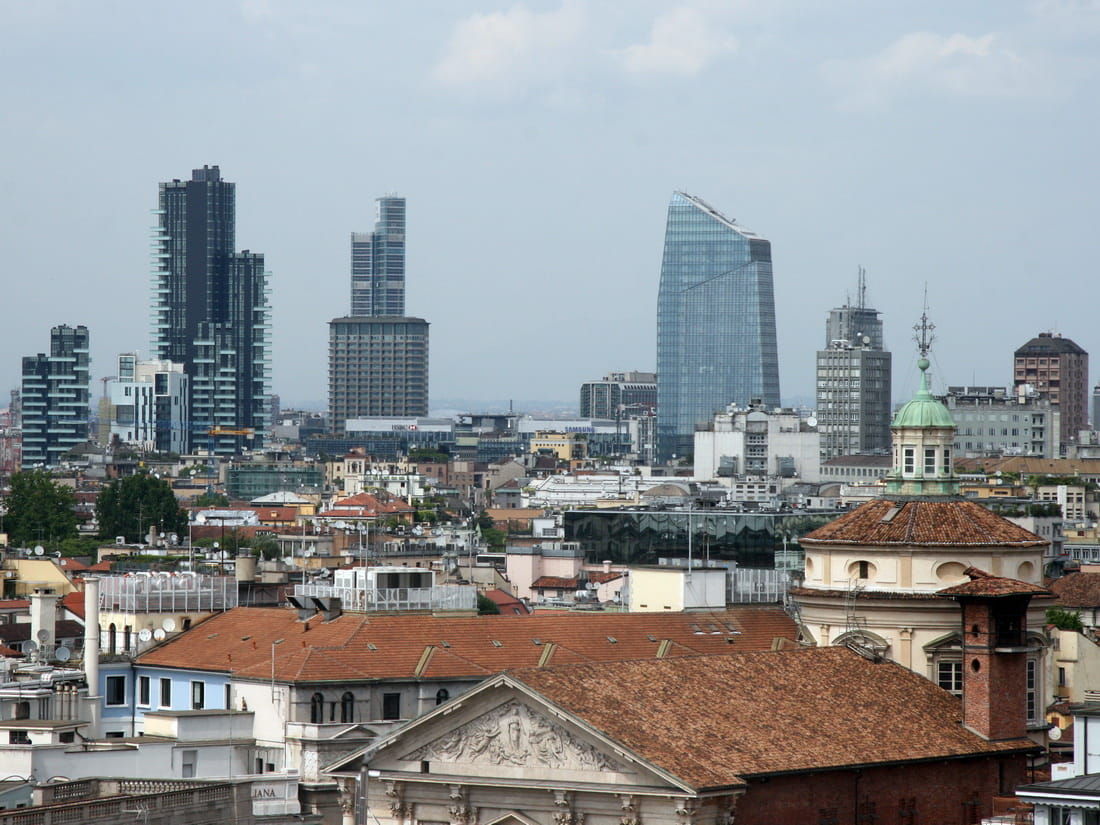
A Dialogue of Ambition. The view captures the contrast between the historic city centre and the modern glass towers of Porta Nuova rising in the distance.
But the real view lies in the contrast. You stand amidst 14th-century Gothic spires. Just across the skyline, the glass towers of Porta Nuova rise like their modern grandchildren. It is a dialogue between two eras of ambition.
This is why the ticket price feels irrelevant by the time you leave. You haven’t just paid for a view of Milan. You have walked through the physical proof of an impossible ambition. Men moved a mountain by hand, carved it into lace, and left it open to the sky.
Travel Notes
Milan Duomo: Practical Essentials
The Verdict: Milan is a city of performative busy-ness. Everyone is running, selling, or posing. The Duomo rooftop is the only vertical escape from this theatre.
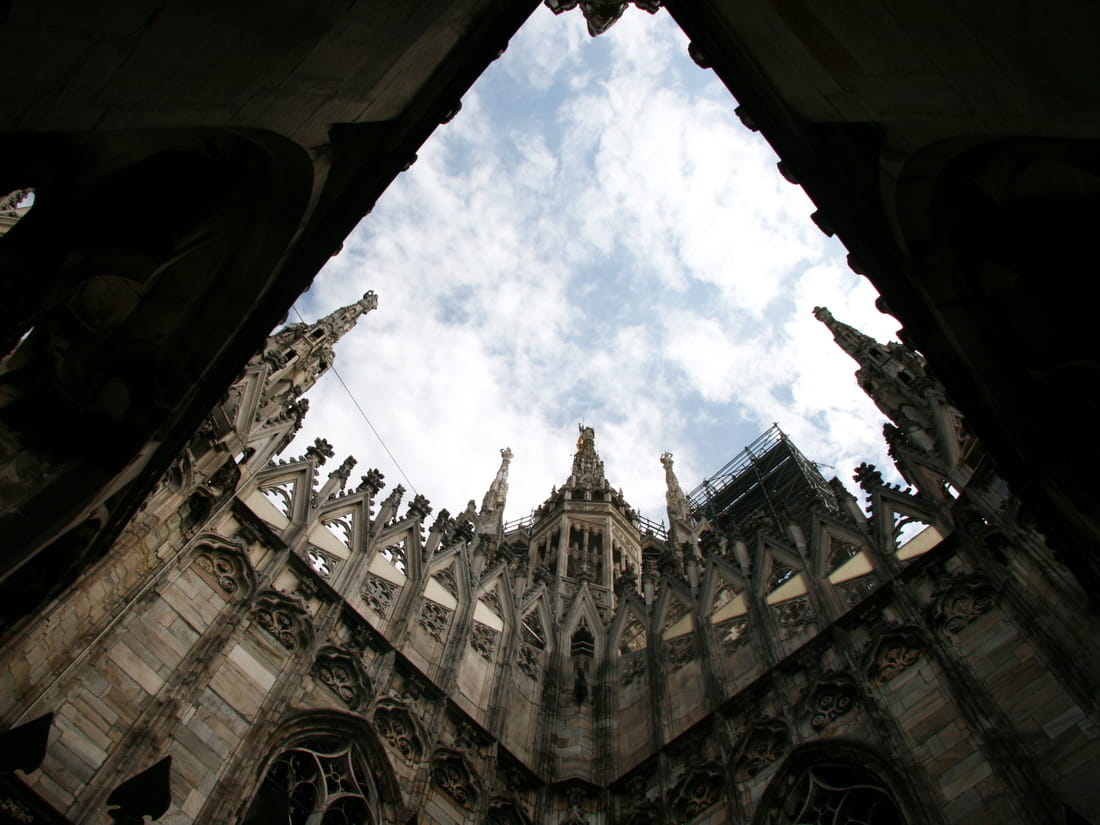
The Escape. Looking up from the terraces, where the heavy stone finally gives way to the open sky.
Yes, it is a tourist trap in the literal sense—you are trapped in a line with thousands of others. But once you step onto that marble slope, the cynicism dissolves. It is the one place where the city’s frantic energy cannot reach you.
If this hour of silence wasn’t enough, you need to leave the city entirely. Milan is the mechanism; the lakes are the off-switch. The train to Como takes less than an hour, replacing the stone forest with real mountains. Read my full Lake Como travel guide →

