
















You walk through an Italian city centre and the pattern starts repeating: suits, flowers, bottles of Prosecco, and those green wreaths sitting proudly on people’s heads. It’s not a costume. It’s a graduation uniform.
In university towns like Bologna or Padua, graduation season spills into the city centre. The famous Italian graduation laurel wreath is not just an academic milestone here; it is a performance that spills out of the universities and takes over the city centre.
Why People Wear Laurel Wreaths in Italy
This is the logic behind the street spectacle — why do people wear laurel wreaths in Italy as if it’s a public title.
The object itself creates an immediate visual link to the past. It is the same symbol worn by Dante (in paintings) and Caesar (in marble). The etymology is direct: laureate comes from laurus. The laurel wreath has signalled victory since Ancient Greece and Rome (and it still does).
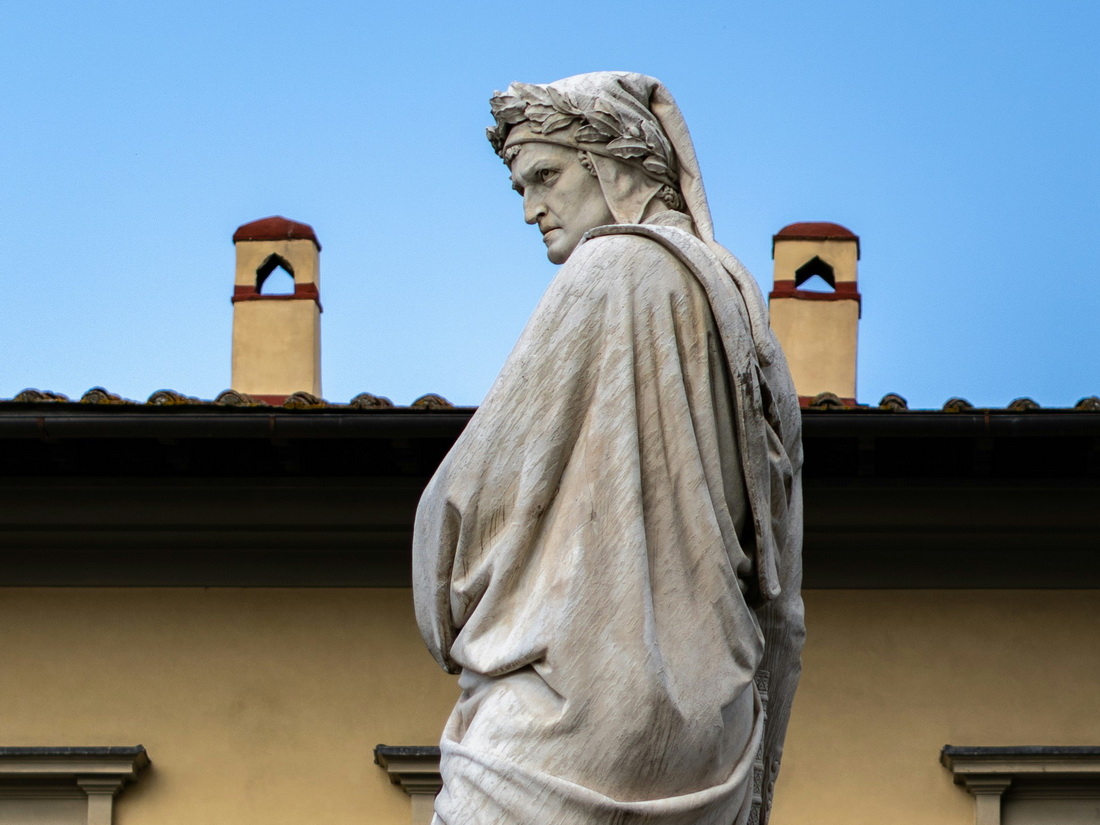
The Poet’s Crown. Dante Alighieri wearing the traditional laurel, establishing the link between wisdom and the green wreath long before modern universities existed.
But in the context of a modern city, the wreath serves a different function. It marks the wearer as untouchable. For 24 hours, the graduate is a king or queen, permitted to be loud, messy, and publicly intoxicated. The wreath frames the face, but it also excuses the behaviour.
The Business of Glory
Behind the historical symbolism lies a rigid supply chain. Italy produces nearly half a million corone di alloro annually. This is not a backyard operation; it is a specific agricultural niche, with farms in central and southern Italy shipping tons of fresh branches north to meet the academic demand.
Walk past a florist near a university district during graduation week, and you won’t see leisurely artistry. You will see an assembly line. A typical florist prepares these in bulk, turning ancient symbols into fast-moving consumer goods.
A standard wreath costs between €30 and €45. The price fluctuates not based on the “glory” achieved, but on the accessories: satin ribbons, dried berries, or gold lettering. It is a strange ephemeral asset — bought, worn for six hours of photos and drinking, and then either dried on a shelf or discarded the next morning along with the empty Prosecco bottles.
The Chromatic Code
At first glance, the crowds look uniform. But there is a strict colour-coding system at play, tied together by the ribbons.

The classic look. While faculties have specific colours, red ribbons remain the universal symbol of completing the degree.
Red is the default — a catch-all for “good luck” and the festive colour of graduation itself. But if you look closer, you can decode the crowd via the ribbons. Green for Sciences. White for Literature. Blue for Law.
In some cities, the wreaths evolve from elegant accessories into chaotic sculptures featuring chilli peppers, mini liquor bottles, or feathers. It is a visual hierarchy. The wreath tells you not just that they finished, but what they survived.
The Ritual of Humiliation
Graduation in Italy is rarely a silent affair. The silence belongs to the library; the piazza belongs to the noise.
In the Veneto region, you will see the papiro — a large poster featuring a caricature of the graduate and a rhyming biography written by friends. It is usually crude, sexually explicit, and brutally honest. The graduate must read it aloud, often while drinking wine as a penalty for stumbling over words.
It is a fascinating paradox. The university confers the highest honour (the degree), while the friends confer a necessary dose of public humiliation to keep the ego in check.
Travel Notes


