














On paper, visiting Strasbourg after 25 December is considered a mistake. The famous markets close, the crowds vanish, and the “Christmas Capital” begins to pack up. But the city doesn’t “die” during this limbo week; it simply stops performing.
The lights stay on, the museums keep working, and for the first time in a month, the streets become walkable again — without the crowd management.
I arrived just as the cleanup trucks were hauling away the kitsch. But the postcard version wasn’t what I was after. I wanted to see what happens when the adrenaline fades. This supposedly “wrong” week turned out to be the moment Strasbourg finally feels real.
Sleeping outside the postcard
I chose not to stay in the centre. My base was in Schiltigheim, just north of the city. I found a 17th-century conversion on Airbnb. The building started life as barns and storage, but the apartment itself was spacious, modern, and even had a lift.
I had my own entrance from the courtyard, and the neighbourhood felt lived-in, not curated. At 08:00, my host would leave for work; on days when I was heading out of the city, we stepped outside at the same time. It gave the week a quiet domestic rhythm that no hotel can fake.
Every morning began with a ritual: the 10-minute bus ride into Strasbourg (tickets via the CTS app). It felt like crossing a border between a village and a metropolis. This small commute gave the days a structure. You aren’t just in the scenery; you are travelling to it. It felt like crossing a border between a village and a metropolis. This small commute gave the days a structure. You aren’t just in the scenery; you are travelling to it.
For a deeper analysis of Schiltigheim and how it compares to the city’s other operating zones, read my guide on Where to Stay in Strasbourg.
Petite France: Architecture Stripped Bare
In summer, this district drowns in red geraniums; it is the cover of every brochure. In late December, the flower boxes hold only frozen dirt and withered stalks. The houses are naked.
I came here expecting the famous Strasbourg Christmas excess—facades crawling with white teddy bears, baubles, and lights. Surprisingly, I found cold stone. Without the distraction of flowers or festive clutter, the houses felt exposed, heavy, and severe.
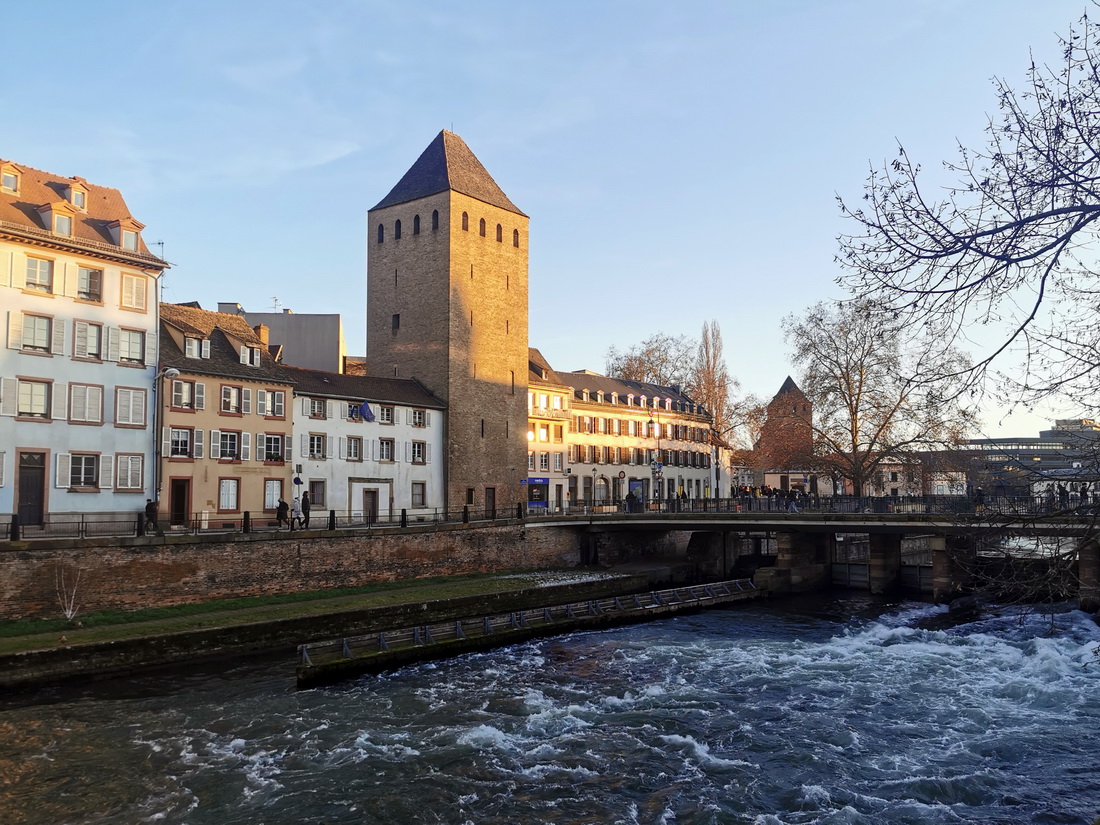
Golden hour at the Covered Bridges: Architecture that doesn’t need decoration.
The lack of visual noise amplifies the sound. The only constant here is the water rushing through the locks. It is a churning, industrial sound—a reminder that this wasn’t built as a Disney set.
The district’s name comes not from patriotism, but from the Hospice des Vérolés, built here in the 16th century to treat soldiers with the “French disease” (syphilis).
Standing by the churning water, the winter gloom suited the backstory far better than the summer flowers.
The Ungerer Museum: Satire Instead of Sugar
On the morning of December 31, faced with a city recovering from a month of commercial joy, I made a choice that felt appropriately counter-intuitive. I skipped the classic museums and went to the Musée Tomi Ungerer.
Ungerer is an Alsatian legend — an illustrator whose work is sharp, satirical, and occasionally dark. It was the perfect antidote to the lingering sweetness of the holidays. I spent an hour there, absorbing a different kind of Alsatian culture — one that bites back.
One drawing stopped me: a swastika with human legs, offering flowers, while crosses with winged arms raised a champagne glass. The caption: «Always greeted with open arms.» Alsace, the land that kept getting embraced to death.
From there, I walked to Strasbourg Cathedral (Notre-Dame de Strasbourg). Inside, the massive space swallows sound and scale in a way the streets never can. I waited for the Astronomical Clock at midday.
On most days, it’s the city’s main attraction — a small crowd gathers for the mechanical procession of the apostles. Today it wasn’t theatre. It was pure engineering: precise, clicking, slightly stubbornly old-fashioned. In a week without schedules, it gave the day a temporary centre.
A New Year without a countdown
Midnight at Place Kléber was the anti-climax I didn’t know I needed. There was no stage. No celebrity host. No orchestrated countdown. Just people standing close together in the freezing air — couples, families, strangers speaking French, German, and English.
Fireworks burst over the rooftops, lighting up the square. People hugged, laughed, and slowly dispersed. The moment didn’t try to be historic; it just was.
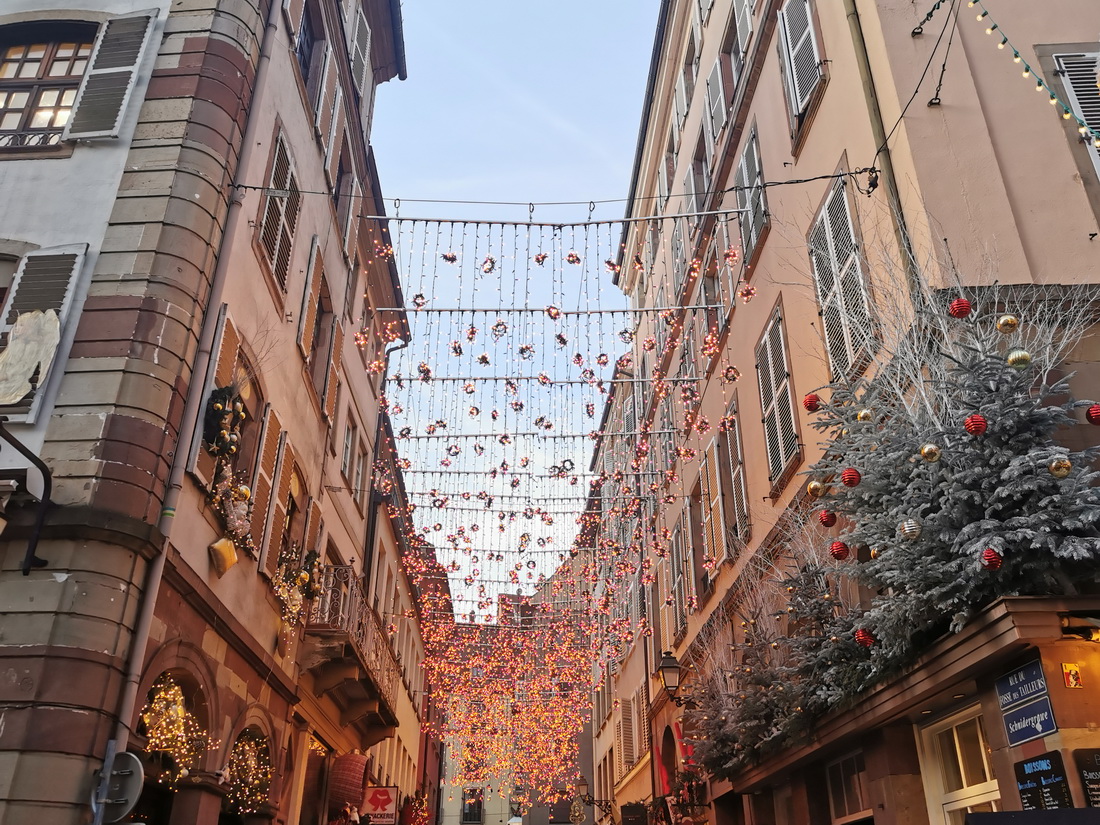
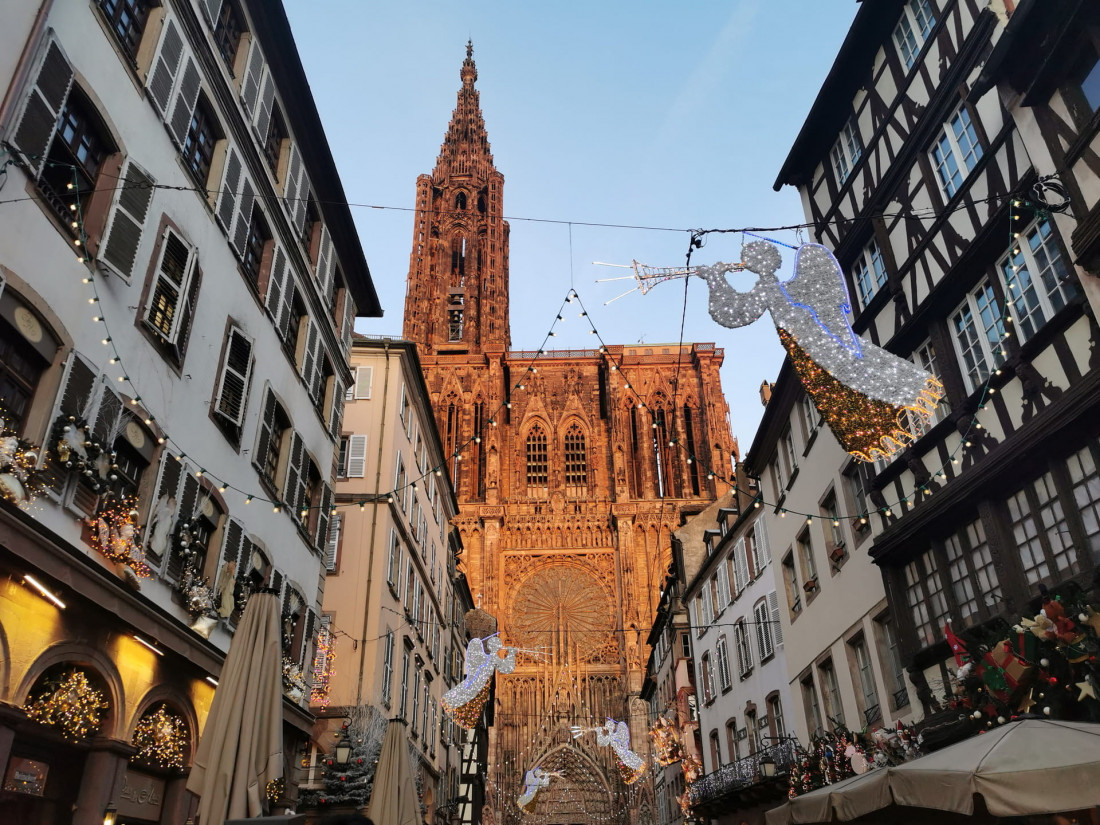
The streets leading to the Cathedral, still dressed in their winter best.
As the temperature dropped to -4°C, a surreal scene unfolded near the cathedral. A small sweets shop was still open, glowing like a lantern in the dark stone street. Inside, it was a riot of colour.
Huge open bins were piled high with bright candies, waiting for customers to help themselves.
I grabbed a scoop and filled a bag with sweets I didn’t need, just to participate in the collective relief of finding light in the middle of a winter night.
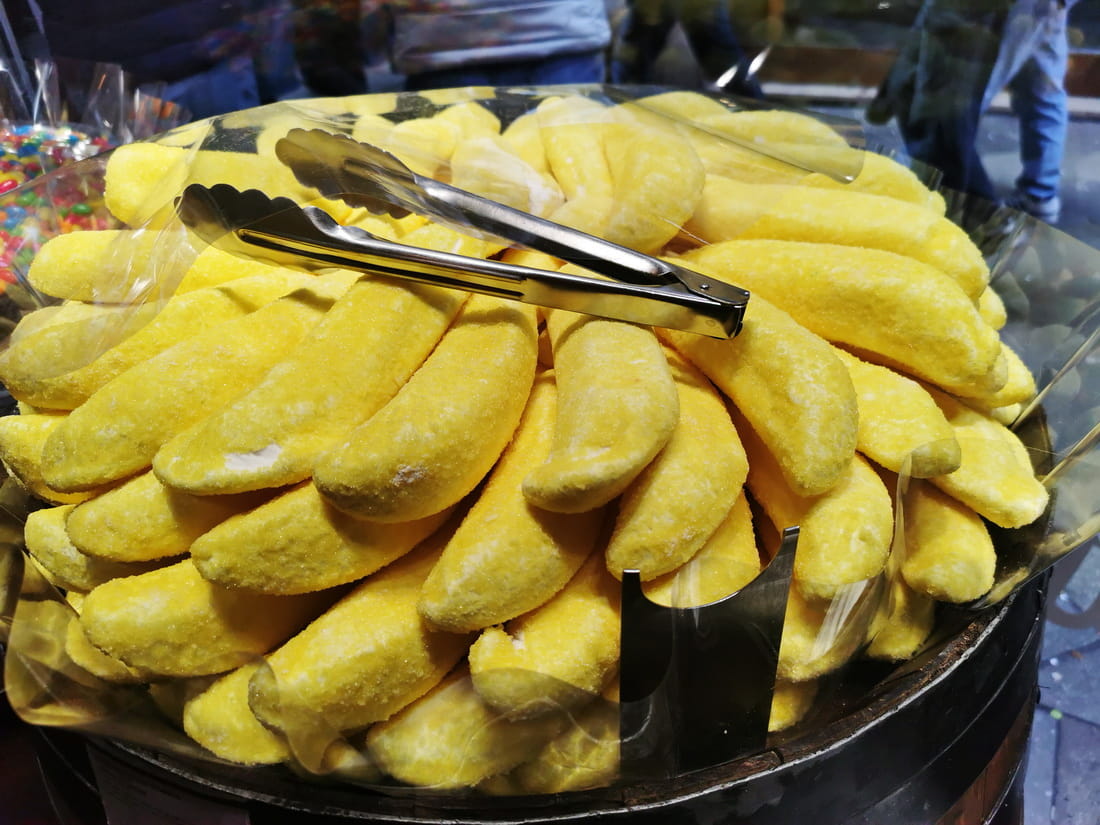
Artificial sunshine. On a freezing night, this shop wasn’t selling sugar; it was selling color and warmth.
At the counter, the woman didn’t ask what I wanted—I had already chosen. She just smiled and said, «Bonne année», as if we were old neighbours. I answered in clumsy French. She switched to German, then laughed and tried English.
Three languages in five seconds — the whole border region in one exchange.
January 1: The city resetting
The first day of the year started in the European Quarter (home to the European Parliament). Wide streets, modern glass, absolute silence. A palate cleanser.
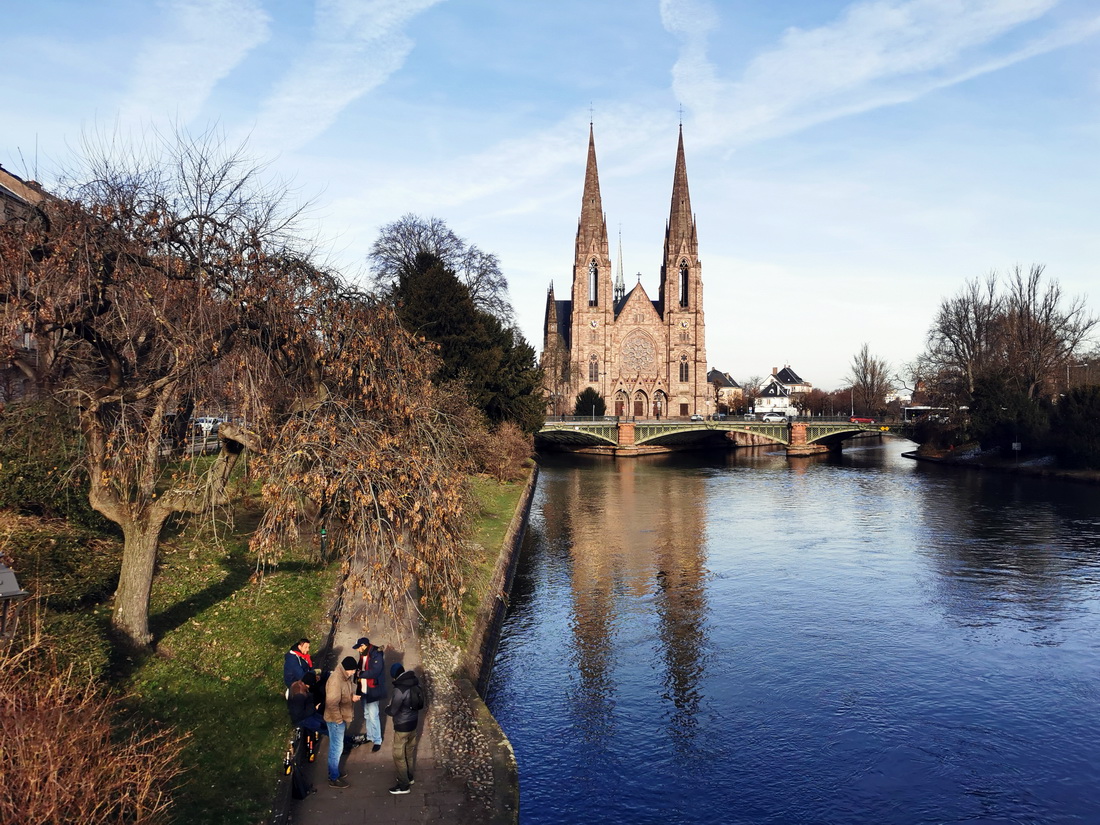
Walking through the Imperial Quarter: Winter sun and open space.
From the modern emptiness, I walked through the grand Imperial Quarter, where the river widens and the skyline opens up. Eventually, I returned to the old town and ended up in a restaurant whose name I’ve forgotten but whose noise I still remember.
It was packed. Two floors of buzzing conversation, clinking glasses, and heavy food. I ordered duck with braised cabbage and a Kir Royale (sparkling wine with blackcurrant liqueur). A sommelier might frown at the pairing, but it was the flavour of the day: sparkling and grounding at the same time.
After days of quiet walking, that noisy, warm room was Strasbourg’s unofficial answer to the “dead city” myth.
Beyond the city limits
Strasbourg isn’t just a destination in late December — it’s a base with unusually good escape routes. Even during the holiday lull, the trains keep running (on a reduced holiday schedule), which means you can treat the city like a quiet home port and still collect contrasts.
Germany is for fairy-tale timber frames: Gengenbach looks like a model village assembled with tweezers. Nearby Offenburg feels more ordinary — which, after weeks of festive performance, is oddly refreshing.
France is for contrast: Sélestat feels lived-in and calm, while Colmar doubles down on curated winter perfection. Seeing them back-to-back makes Strasbourg’s stripped-down version look even more honest.
Switzerland is for a clean reset: Basel delivers that sharp Swiss order and precision — a different mood entirely, less gingerbread, more geometry.
But the best part was always the return. Coming back to the stillness of Schiltigheim each evening felt like exhaling after holding your breath.
Travel Notes
Post-Christmas Itinerary: The “Void” Week
The Verdict: Travelling during this limbo week stripped Strasbourg down to its essentials. There was no fear of missing out — because there was nothing to miss. The events were over. The pressure was off.
I didn’t experience Strasbourg at its most impressive. I experienced it at its most readable. For a first visit, seeing the city without its mask turned out to be the greatest luxury of all.

