














Planning a trip to Estonia around June 23rd? Good timing. You are about to stumble into the country’s most intense collective obsession.
It is called Jaanipäev — Estonia’s version of Midsummer (St. John’s Day). But don’t let the saint’s name fool you. This is a thoroughly pagan celebration of the Summer Solstice, fueled by huge bonfires, smoke, and a night that technically never happens.
The holiday doesn’t gently arrive; it takes over. About a week before the date, the country enters an unofficial national shutdown.
Office productivity drops to zero, and supermarkets build literal walls of charcoal bags. Everyone pretends they are working, but mentally, the entire nation is already sitting on a log by a fire.
The Concept: The White Night
Officially, Jaanipäev marks the longest day of the year. In Estonia, at this latitude, “night” becomes a technicality. The sun sets late, lingers in a milky twilight for a couple of hours, and rises again. It never truly gets dark.
This lack of darkness triggers a sort of Nordic mania. People stay awake, dance, and refuse to go indoors because it feels physically impossible to sleep when the sky is still blue.
While Christmas is a holiday for family and privacy inside the house, Jaanipäev is for community and chaos outside.
The Ritual: The Cult of Fire
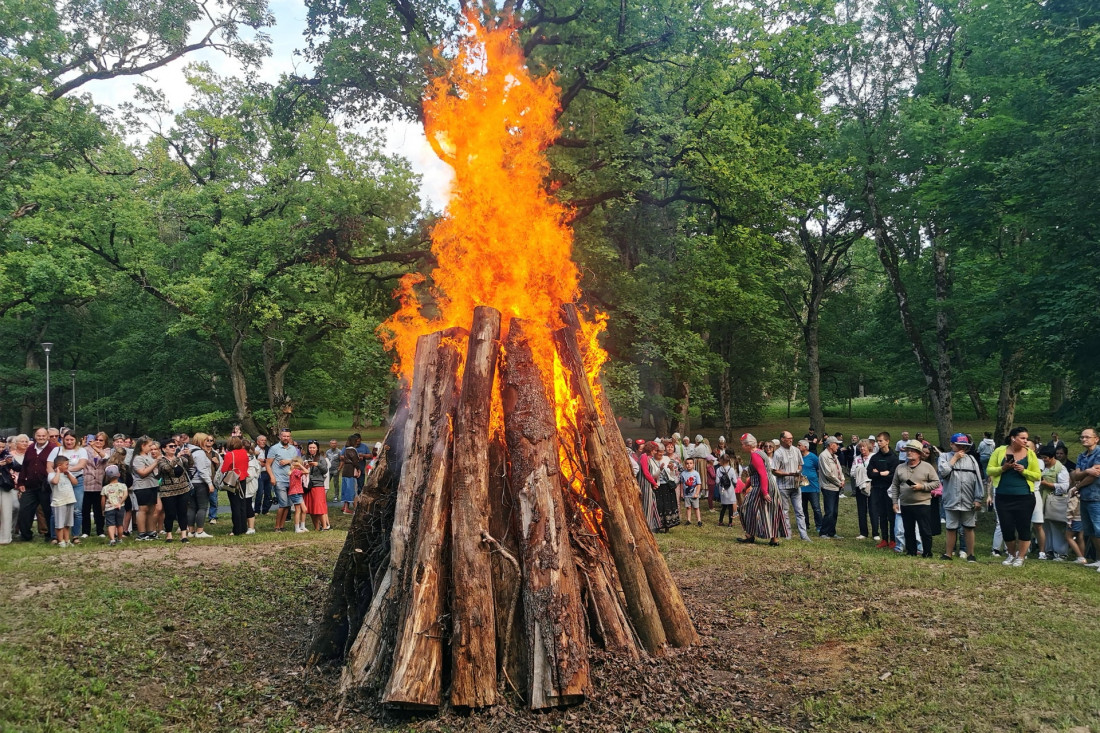
The centrepiece of the event is the bonfire (Jaanituli).
This isn’t just a campfire; it is often a massive pyre. In villages, communities spend days piling up old wood to build the biggest fire possible.
The tradition dictates that you must not sleep on this night—you must sit by the fire until dawn to ensure health and luck for the coming year.
In the past, people jumped over the fire to purify themselves. Today, this usually happens only later in the night (often aided by beer), which makes it less of a ritual and more of a safety hazard. But the core idea remains: the fire must burn until the sun returns.
The Menu: The Bucket Strategy
If you walk into an Estonian supermarket in June, you will see refrigerators stacked floor-to-ceiling with white plastic buckets.
This is the fuel of Jaanipäev: Shashlik (marinated meat skewers). It is a Soviet legacy that has been fully adopted and upgraded as a national tradition. The marinade varies—kefir, vinegar, mineral water—but the format is non-negotiable.
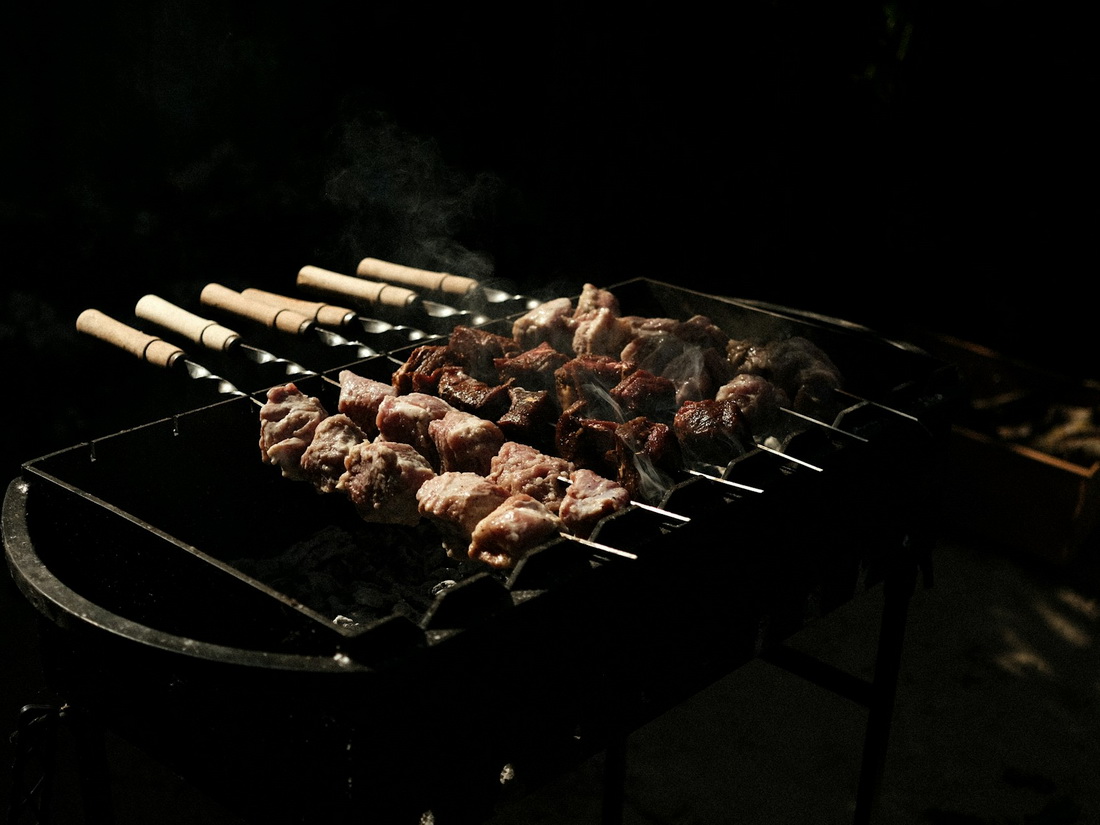
The Midsummer Smoke. A national scent that clings to your clothes and your memory.
On this night, the air in Estonia consists of 20% oxygen and 80% grilling smoke. It is simple, primal cooking. No fancy plating, just meat on a spit, eaten with bare hands or a plastic fork.
Where to Celebrate Midsummer in Estonia
The best thing about Midsummer in Estonia is that it happens everywhere.
The Countryside
If you want the purest version of Midsummer in Estonia, go rural. Every village square, seaside meadow, and backyard gathering will have a fire. If you are staying at a guesthouse, ask your hosts — they will likely invite you to the local bonfire.
Tallinn (Open Air Museum)
If you are stuck in the capital, the city itself will feel like a ghost town. Your best bet is the Estonian Open Air Museum. It hosts a reconstruction of a traditional village celebration: huge bonfires, folk dancers, swings, and a safe, family-friendly atmosphere.
The Islands
For a deeper cultural dive, head to Kihnu or Saaremaa. On the islands, the traditions are preserved with more rigor. You might see locals in national costumes riding vintage motorcycles (especially on Kihnu) and singing songs that haven’t changed in centuries.
Logistics: How to Survive
Estonian summer is a beautiful lie. It looks sunny on Instagram, but the reality requires preparation.
The Mosquito Situation
This is war. The combination of forest, twilight, and warmth makes Jaanipäev prime time for mosquitoes. Do not rely on hope; rely on strong spray, or—to do it the true Estonian way—douse yourself in lavender oil.
The Temperature Drop
It might be 25°C at noon, but it can drop to 12°C at midnight. Since you’ll be parked by a bonfire until 04:00, bring proper layers: a fleece or wool sweater, and something windproof on top. To survive Midsummer in Estonia, pack for both summer and fake summer.
Gastronomy Notes
The Midsummer Menu
The Verdict: Jaanipäev is the most “Estonian” experience you can have. It strips away the digital, modern veneer of the country and reveals its pagan roots.
It is a night where time stops. There is no darkness, no sleep, and no rush. Just fire, smoke, and a whole nation collectively deciding that for one night, the sun is the only clock that matters.
If you are spending more time in the capital before the city empties out, check my Complete Guide to Tallinn.

