










Author’s Note: Having just survived a six-hour marathon from 18:00 until nearly midnight on the ground at the Raadi Manor Park celebration in Tartu in 2026, I can confirm that the reality of this holiday is far more grounded than the travel brochures suggest. I attended the festival entirely solo, and it was a very comfortable, generally safe experience. Here is the unfiltered, pragmatic truth about Midsummer.
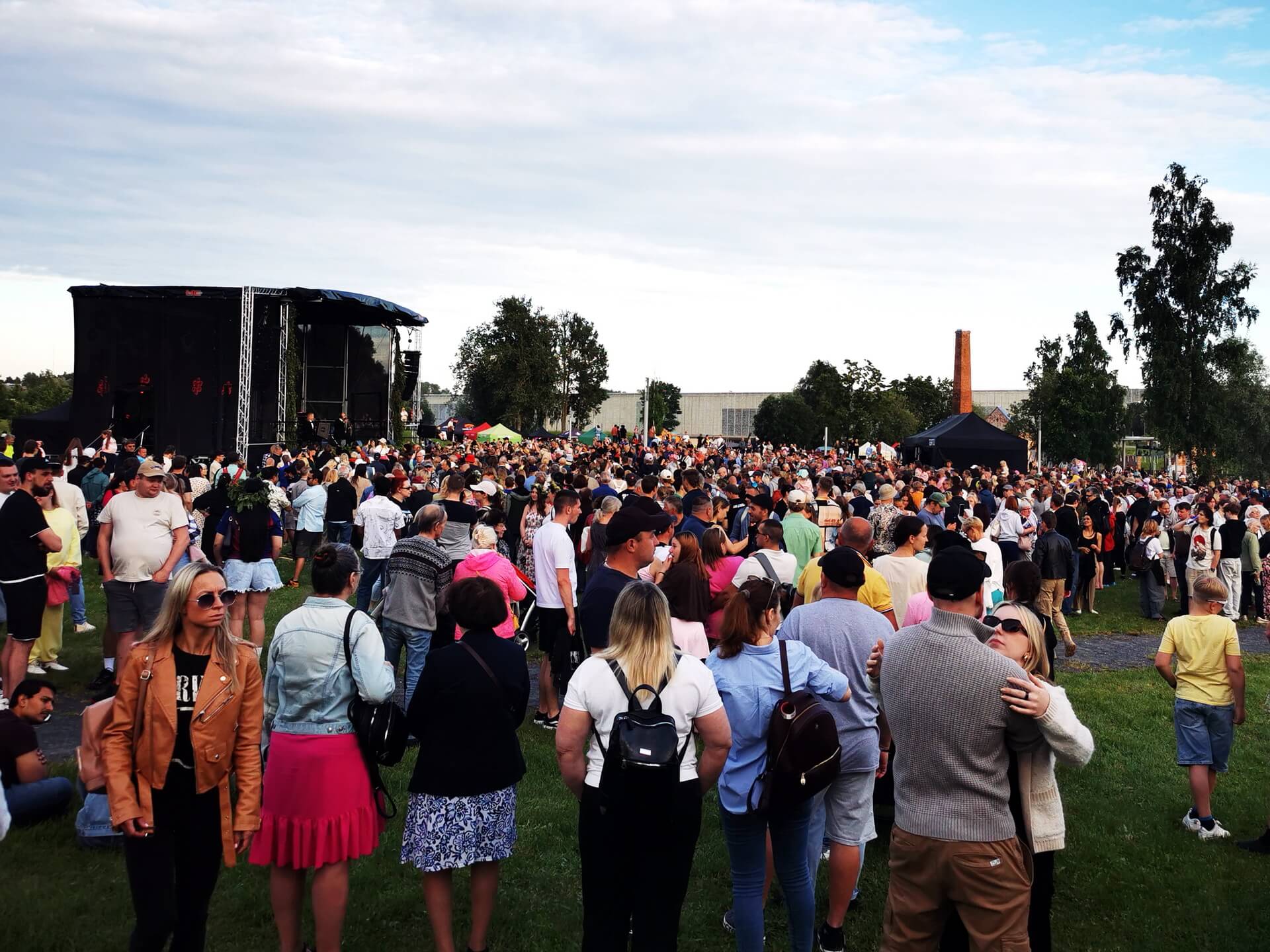
Midsummer celebrations in Tartu draw thousands of people, turning the Raadi Manor Park into a buzzing, open-air festival space long before the main bonfire is lit.
Jaanipäev (Midsummer) in Estonia is a deeply atmospheric mix of pagan fire worship, meat-centric feasting, and the persistent myth of an all-night party. While folklore insists you must stay awake by the flames until dawn, fast-burning wood, unpredictable weather, and the disorienting beauty of the white nights dictate the actual event.
Jaanipäev (Midsummer) in brief
- What is it: Estonia’s biggest summer holiday on 23 June, featuring massive bonfires, live folk music, and outdoor festivals.
- Where to go: For most international visitors without a car, Tallinn and Tartu are the two easiest large-scale options.
- Survival rule: Pack layers because the weather is a roulette, bring mosquito repellent, and expect the cities to be completely dead on 24 June.
The History and Traditions of Jaanipäev in Estonia
Before planning your trip, you should know why the entire country essentially closes down. Jaanipäev is technically tied to the summer solstice – the longest day of the year. Historically, it was a pagan excuse to light massive fires, ward off evil spirits, and ensure the autumn harvest did not fail.
When Christianity arrived, the church tried to slap a “St. John’s Day” label on it, but the pagan roots were far too stubborn. Today, the holiday is a brilliant, slightly chaotic mashup. You will still see women wearing hand-woven flower wreaths, and locals will earnestly tell you that finding a blooming fern in the forest on this night brings immense wealth – usually after their third cider.
Midsummer Estonia: Essential Times and Temperatures
To understand the logistics of an Estonia June holiday, you need hard numbers and a healthy dose of realism. Around 23 June, the sun sets at approximately 22:40, but true darkness never arrives. Civil twilight continues until around 03:30, making this one of the defining features of an Estonian Midsummer. Evening temperatures are usually comfortable early on but often fall to 11 to 15 degrees by midnight.
You also must prepare for the rain roulette. If a downpour starts at 18:00, do not expect the festival to be cancelled. There is virtually nowhere to hide in the open parks, but the crowd simply puts on raincoats, pops up umbrellas, and keeps celebrating. Pack a waterproof layer.
Where to Celebrate Jaanipäev in Estonia
Estonians celebrate Jaanipäev on the evening of 23 June. Travel blogs often romanticise the holiday, telling tourists to find a local family or head to a remote island.
Expectation: You need to find a remote village and a local family to experience a real Midsummer.
Reality: Chasing an authentic village fire means dedicating a massive chunk of your itinerary to travelling deep into the province and arranging a rural overnight stay. Tallinn and Tartu offer massive, authentic, and highly organised public bonfires that are far easier to navigate.
Jaanipäev in Tallinn: The Open Air Museum Experience
If your itinerary keeps you in the capital, do not worry about missing out. Travellers remaining in the city often find the centre feels like a ghost town, as Jaanipäev is fundamentally a countryside exodus. (If you are curious about navigating the capital beyond the holiday, read my pragmatic guide to the actual city of Tallinn). However, you have a brilliant option right on the city limits: the Estonian Open Air Museum.
The museum hosts a stunning reconstruction of a traditional village celebration. You get the huge bonfires, lively folk dancers, giant wooden swings, and a wonderfully warm, family-friendly atmosphere. It is the perfect way to experience the historical spirit of the holiday without the headache of rural travel.
Getting to the venue is easy. It is a 20 – 25-minute ride from the city centre; buses 21 and 21B from the Balti Jaam train station drop you right at the main gate. Despite the holiday, the buses run perfectly. Entrance to the museum for the event costs around 12 euros – a small price to pay for a perfectly executed festival.
Jaanipäev in Tartu: What to Expect at Raadi Manor Park
If you do not know any locals, Tartu is arguably the easiest place in Estonia to experience a large, authentic Jaanipäev celebration without a car. The largest public event takes place at Raadi Manor Park, a sprawling, slightly wild green space set against the backdrop of an old manor’s ruins.
The event is hosted by the Estonian National Museum, and entry is completely free. This guarantees high-level organisation and a curated festival feel, while still drawing a crowd of several thousand people.
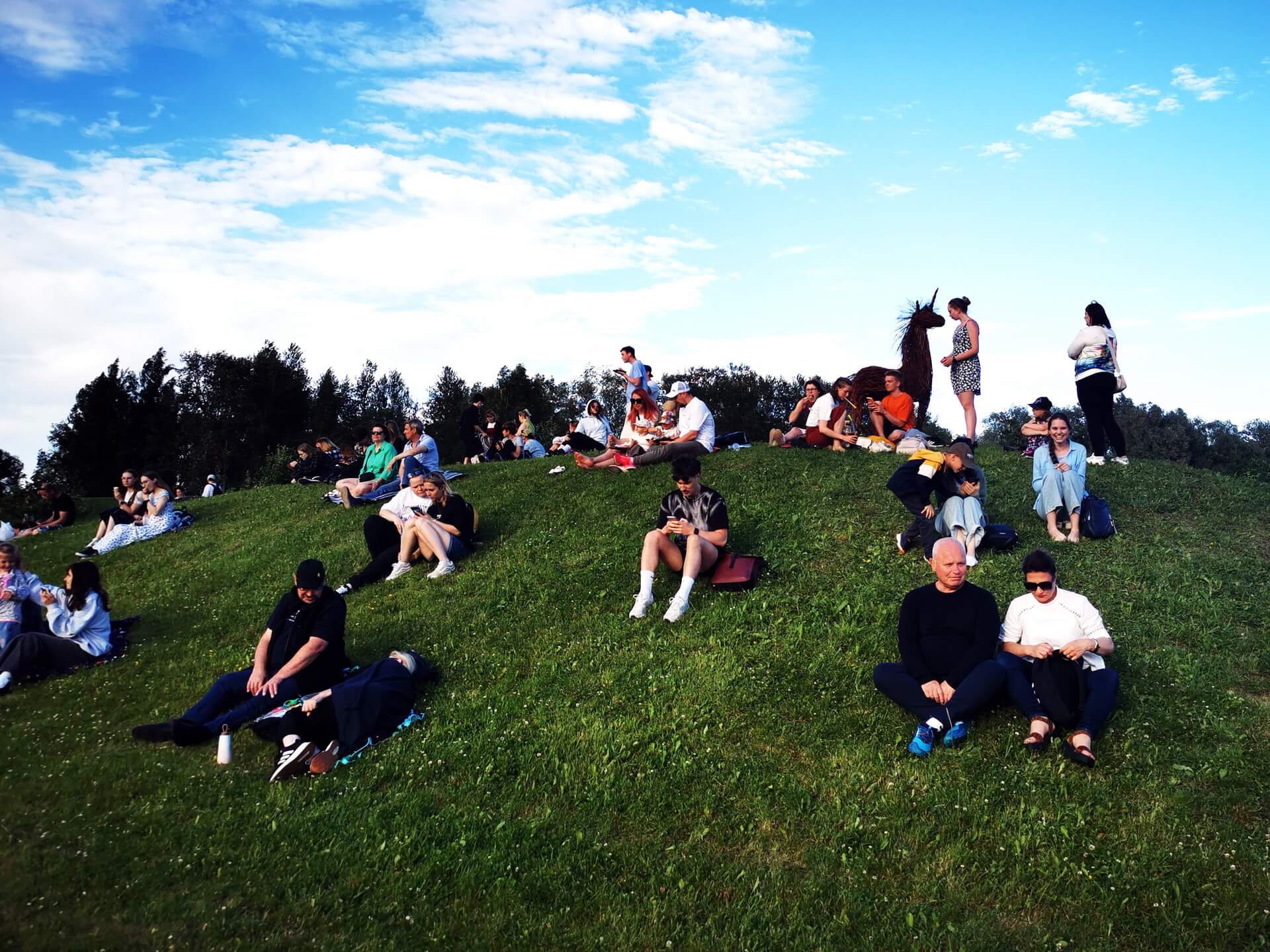
The natural slopes of Raadi Manor Park serve as a perfect amphitheatre for festival-goers to gather and soak in the midsummer atmosphere.
Getting There and Where to Stay
Reaching Tartu is a comfortable two-hour Lux Express bus or train ride from Tallinn. It is technically possible to catch a late-night bus back to the capital after the fire, but it requires strict planning and exhausting late-night logistics.
The smarter move is to stay overnight. Book a hotel near Town Hall Square (Raekoja plats) so you have a central base. However, do not leave this until the last minute – I booked my accommodation about two months in advance, which is the absolute minimum if you want a decent room during the holiday rush.
Local Transport and Park Facilities
To reach the park, catch a local city bus from the centre or take a 25-minute scenic walk. Organisers deploy massive banks of portable toilets across the park, but with a crowd this size, expect a queue regardless of the time. Late at night, when the local buses stop running, you can easily walk back to the centre along with the dispersing crowd, or grab a Bolt taxi, though expect a slight surge in prices.
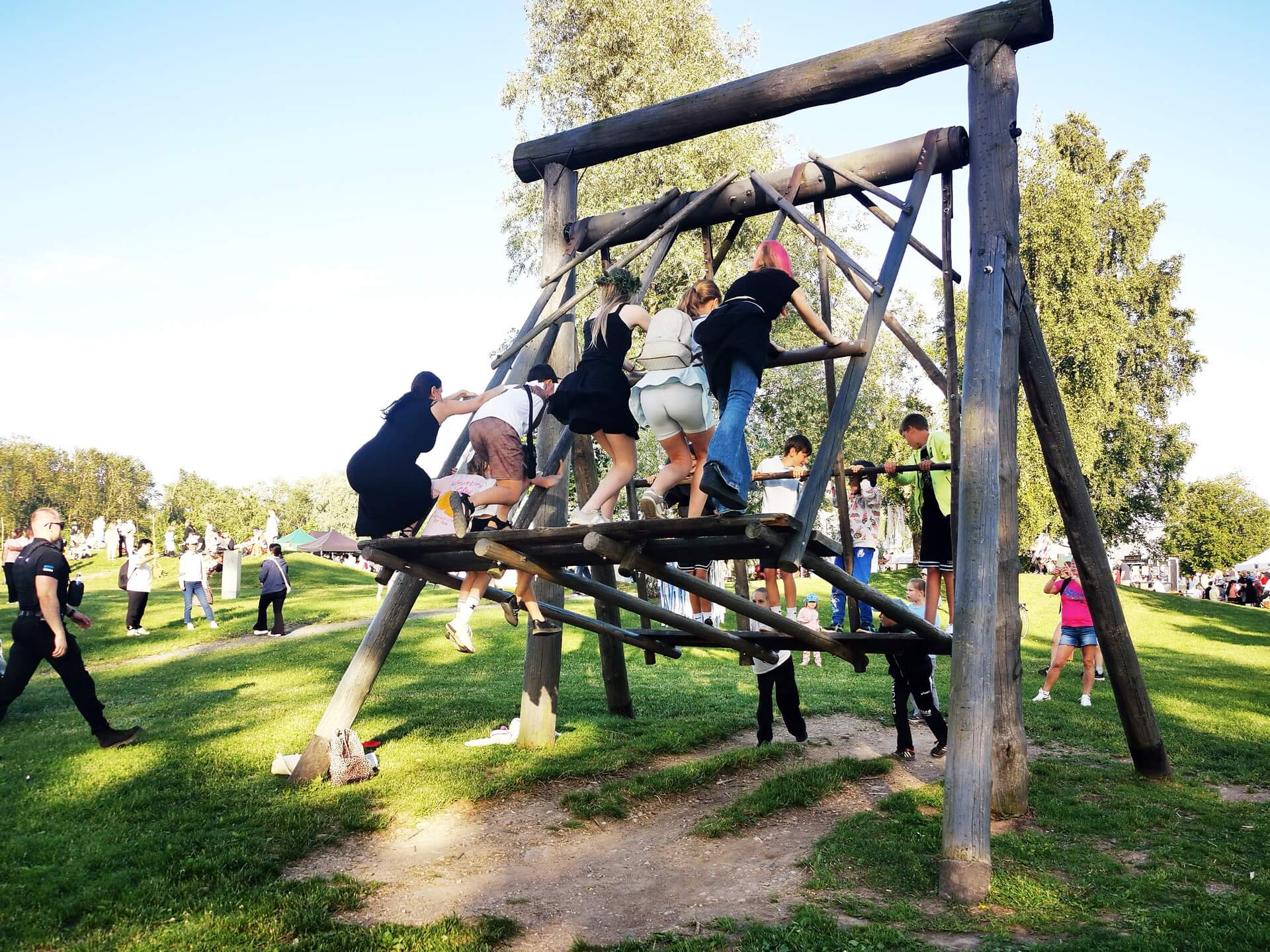
The traditional külakiik (village swing) operates on pure collective momentum and zero safety harnesses. Jump on at your own risk.
The Daytime Fair and Estonian Food
The festival kicks off at 11:00 with a daytime fair focused strictly on regional and handmade goods. Rather than cheap souvenirs, you will find independent artisans selling heavy knitted garments, traditional embroidery, original jewellery, and jars of local farmer’s honey.
Food tents operate from the very beginning of the day, and the menu is uncompromisingly heavy: pork shashlik, grilled sausages, potatoes, rice, and grilled vegetables. (If you are curious about local dining habits, you can read my Estonian Food Guide). I chose to eat dinner at home beforehand and simply bought a local ice cream at the park for 4 euros.
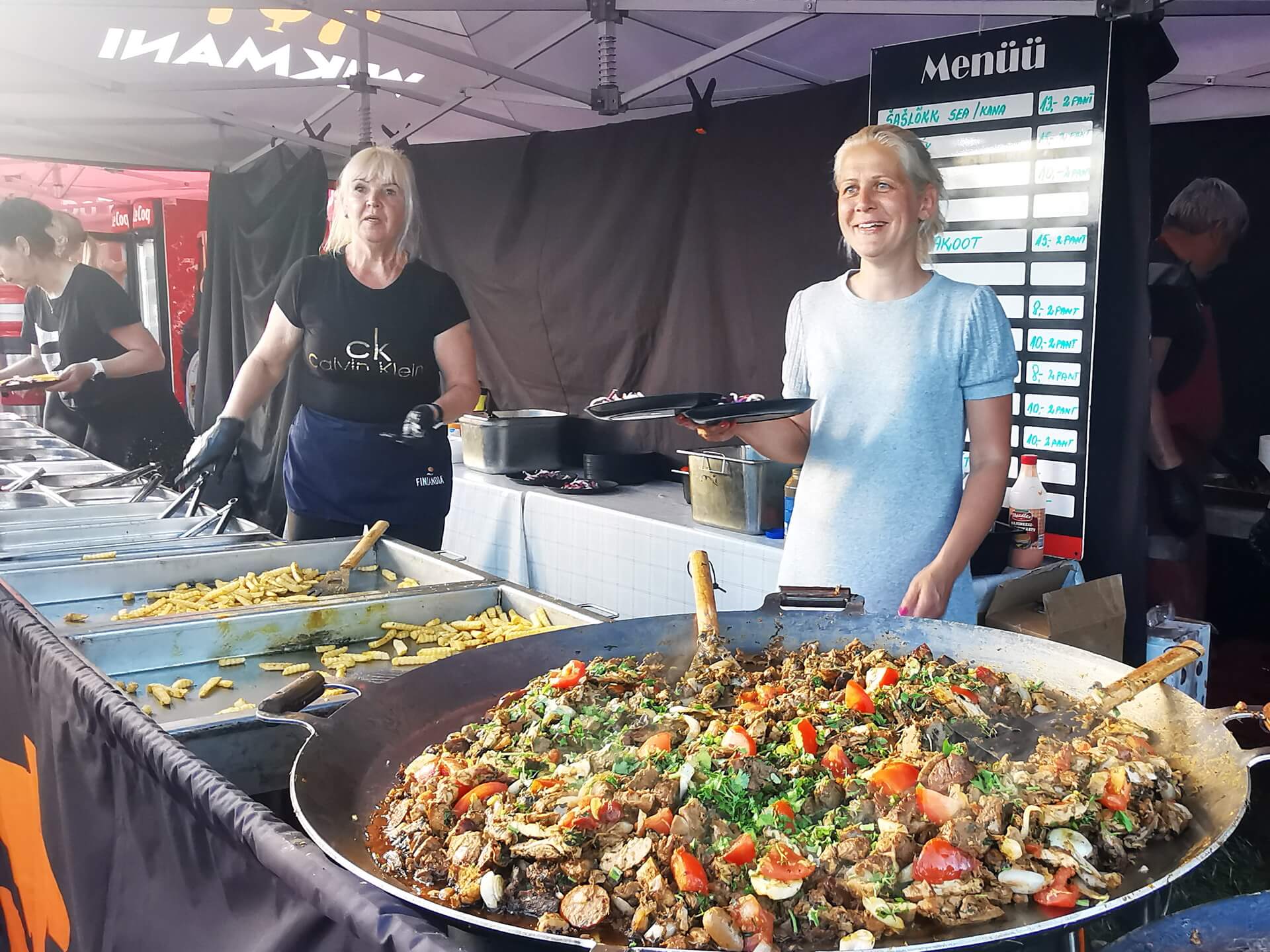
The festival diet is uncompromising. Expect giant pans of meat, potatoes, and just enough vegetables to pretend the meal is balanced.
The Bonfire and Evening Atmosphere
By early evening, the massive park area transforms into an open-air playground. The acoustic landscape is a wild mix: the sharp sounds of live music from the main stage clash with the rhythmic creaking of the giant wooden village swings (külakiik) being pumped by a dozen adults simultaneously.
Drinks involve a specific deposit system. I spent exactly 10 euros: 5 euros for a 0.33-litre local beer and another 5 euros for a 0.33-litre mead. You pay a 2-euro deposit for a reusable plastic cup with every purchase. Return the cup to the designated collection tents, get your deposit money back.
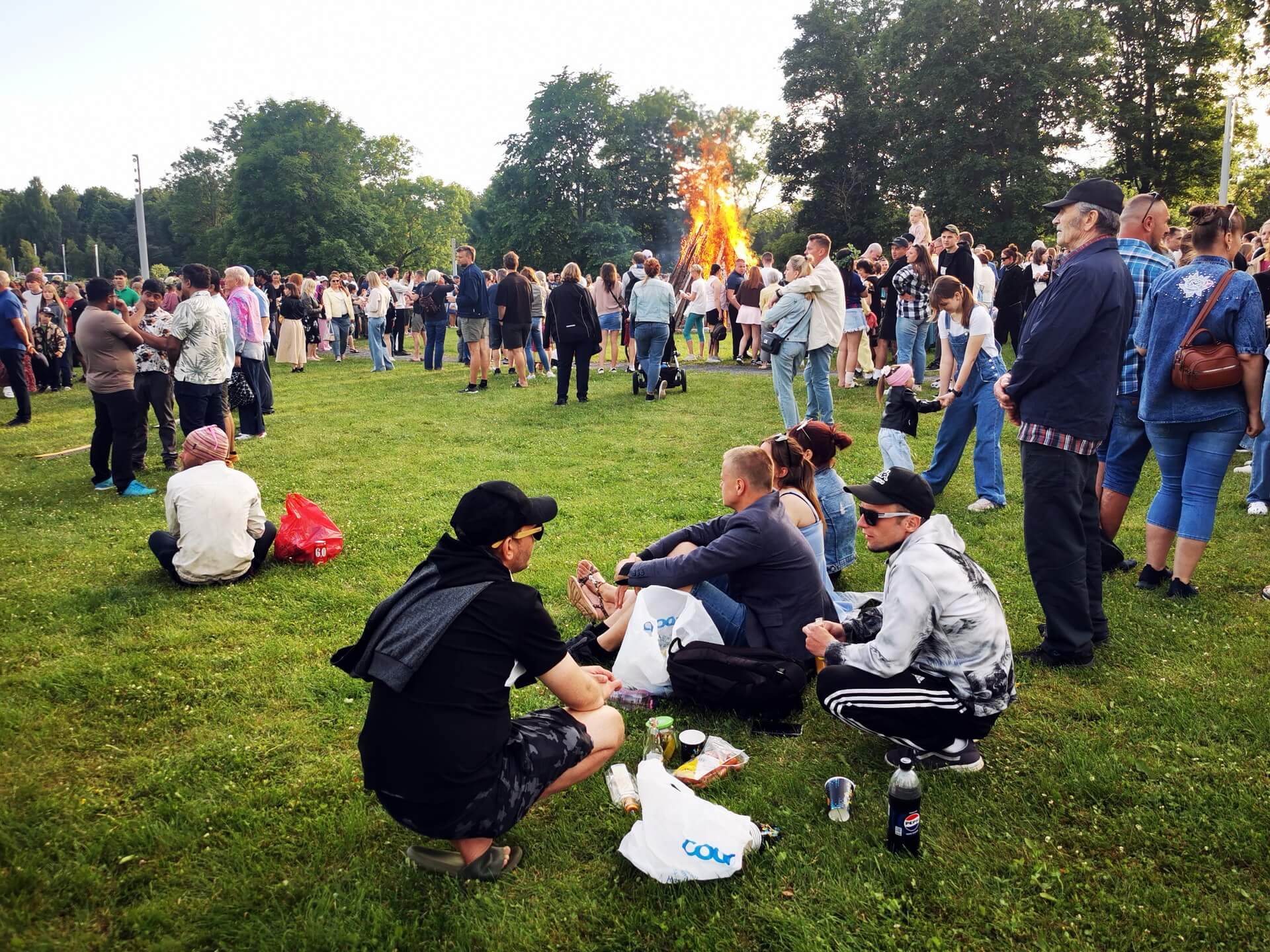
Seating is strictly BYOB – bring your own blanket. By 20:30, the grass is packed with people casually watching the flames slowly burn down to embers.
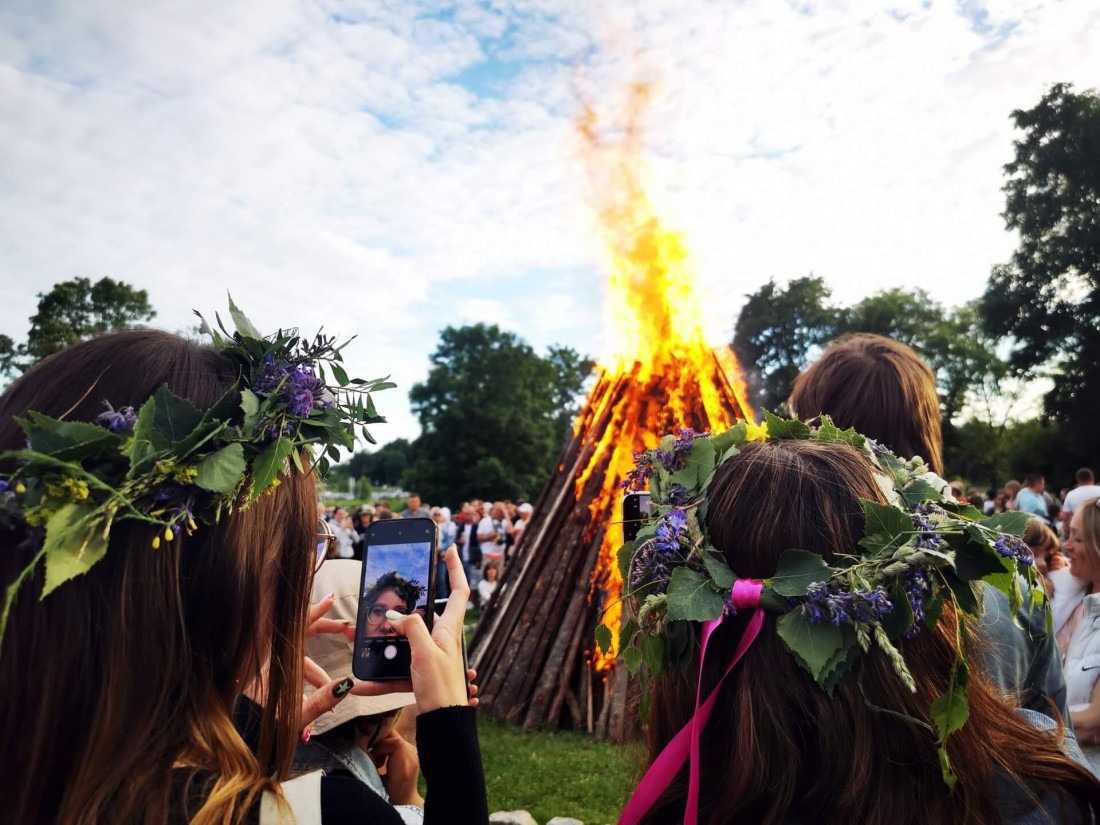
With several thousand people in attendance, seating is highly improvised. Dress comfortably. The vast majority wear jeans and layers designed for sitting on dirt, though you will inevitably spot a few optimists wearing traditional flower crowns. As a solo traveller, I felt completely at ease. Grab a beer, find a spot on a hay bale, and enjoy prime people-watching.
Expectation: Midsummer is a wild, heavily intoxicated pagan rave.
Reality: Despite the alcohol, public celebrations remain remarkably relaxed and family-friendly. You will see children playing, grandparents dancing, and students drinking beer, all sharing the same space peacefully.
The White Nights Timeline: After Midnight
When they light the massive pyre at 20:00, the initial crowd reaction is hypnotic. The sheer radiating heat physically forces the front row to retreat. However, the spectacle of the roaring flames is relatively short-lived. The massive wooden structure burns fast, typically reducing to a mountain of glowing embers within two and a half to three hours.
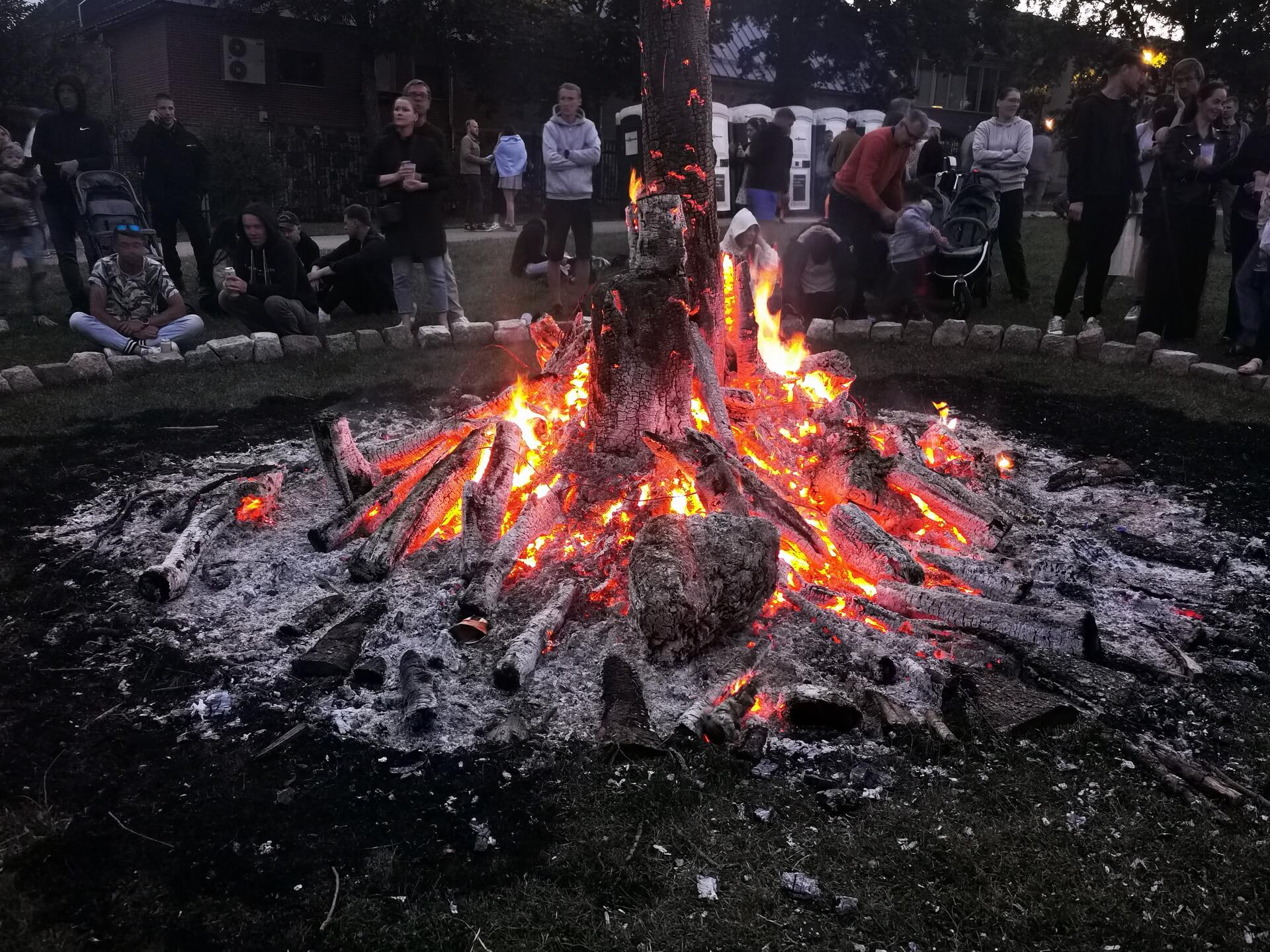
The reality of a fast-burning pyre. By 23:00, the towering inferno is gone, leaving behind a glowing mountain of embers that serves as a quiet visual backdrop for the real party.
Expectation: People huddle around the glowing embers until the sun comes up to stay warm.
Reality: The fire quickly becomes little more than a glowing visual backdrop. Live music plays continuously, and people spontaneously organise themselves to dance Estonian folk dances, stamping their feet on the grass.
By midnight, as the cold sets in and the strange twilight of the white nights peaks, a clear demographic shift occurs. The sensible majority begin to fold up their blankets and drift away. The celebration does not end, though. The live folk music gives way to a youth disco, and the remaining crowd takes over the field. If you are not looking to dance to standard club tracks in a cold park at 02:00, midnight is your cue to head back to your hotel.
Surviving the Daylight Hours: 23 and 24 June
You must factor in one critical reality for your itinerary: Estonian cities go into hibernation for two days. By the afternoon of 23 June, the centre feels noticeably deserted.
When you wake up on 24 June, the city operates on a skeleton schedule. Practically all museums shut their doors. While standard chain supermarkets often switch to limited holiday hours, a highly reliable option is the supermarket inside Kaubamaja, which remains open and offers an excellent selection, albeit at slightly higher prices. Cafés and restaurants either open much later in the afternoon or do not unlock their doors at all.
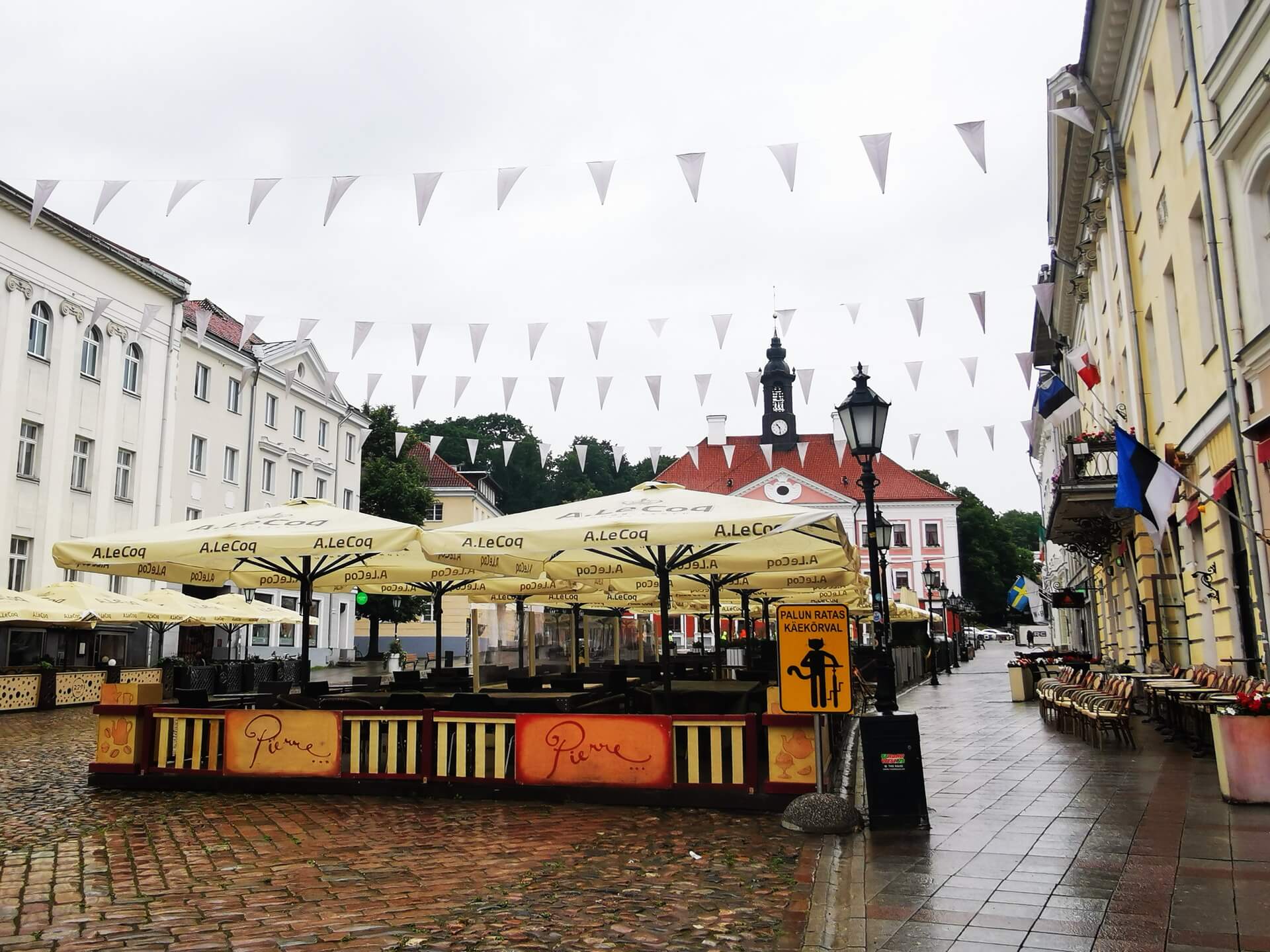
The post-holiday reality. By the morning of 24 June, the typically lively Town Hall Square in Tartu transforms into an empty architectural showcase, with most cafes firmly shut.
Transport, thankfully, is not an issue. Intercity buses and trains run on their normal schedules, and because most locals are recovering in the countryside, the carriages are wonderfully empty and quiet.
Use the daylight hours strictly for walking. The empty city centre becomes an excellent architectural showcase without the usual foot traffic. Walk along the Emajõgi river, explore the eccentric wooden houses in the Supilinn neighbourhood, or take a quiet stroll through the Botanical Garden, where the peonies and roses are beautifully in bloom at this time of year.
What Surprised Me Most About Jaanipäev
The fire is just an icebreaker for unironic folk dancing. When the live music kicks in, people of all ages – from toddlers to grandparents – spontaneously start dancing in perfect sync. It is a brilliant, entirely unpretentious display of living culture where students, parents with infants, and the elderly all share the same space.
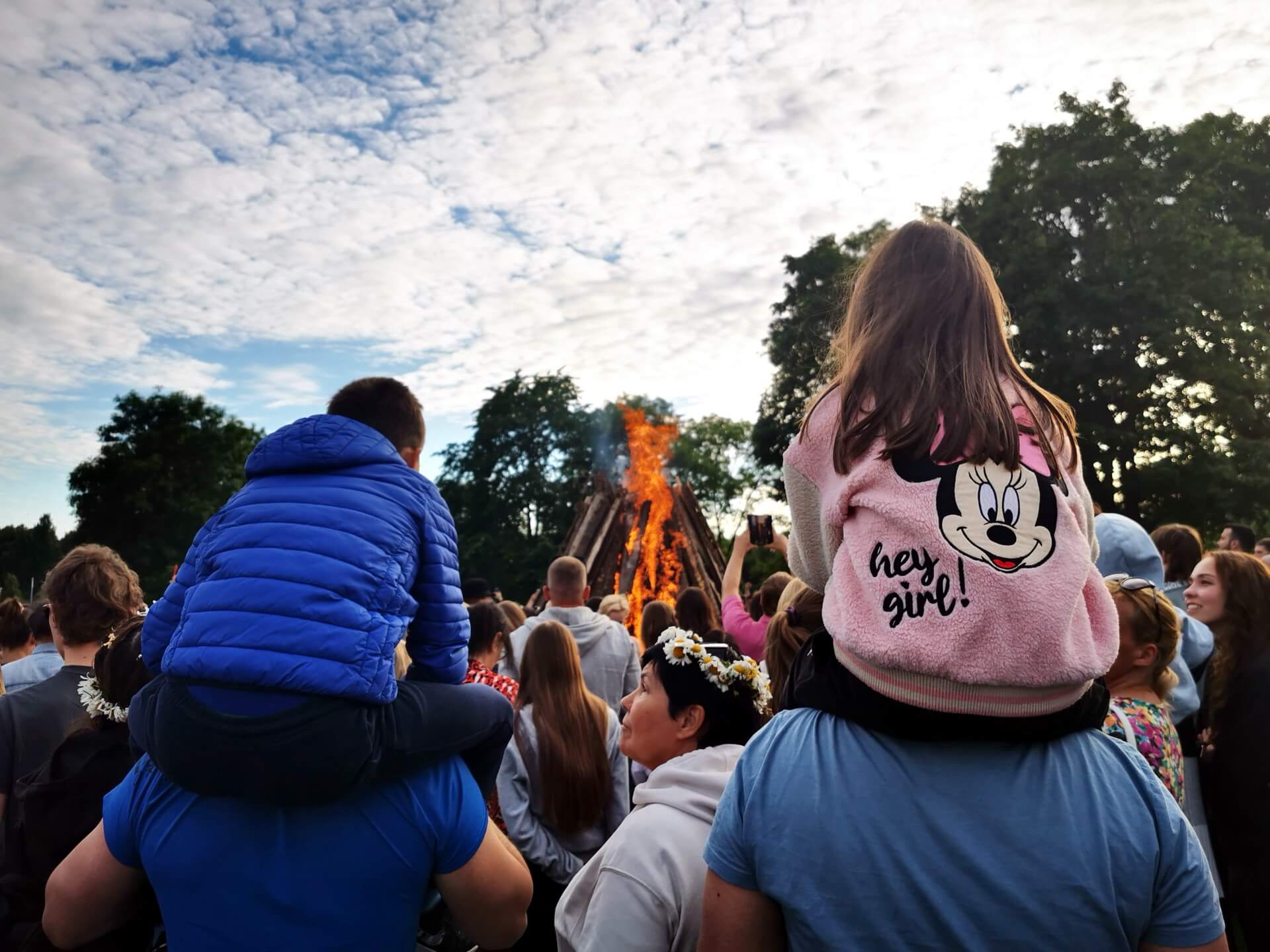
By 22:30, as the white nights keep the sky perfectly bright, the gathering around the bonfire becomes a chaotic, charming mix of toddlers, teenagers, and pensioners.
The post-holiday silence is absolute. You might read that things close on 24 June, but experiencing the complete emptiness of otherwise busy city centres is striking. Treat the deserted streets as an architectural exhibition.
The festival diet is fiercely carnivorous. The public food scene is overwhelmingly dominated by meat-eaters, specifically pork shashlik and sausages. If you want artisanal or plant-based options, you need to bring your own snacks.
The mosquito roulette is real. You might not see a single mosquito all evening, but the insect situation is entirely unpredictable. Jaanipäev happens at peak mosquito season. Pack strong spray, or do it the Estonian way and use lavender oil.
Other Notable Estonia Bonfire Festivals
While Tallinn and Tartu are the most accessible, they are not the only options. If you plan to rent a car and have more time, major celebrations also take place in Pärnu, the folk-music capital of Viljandi, and across the island of Saaremaa, where village fires often burn right next to the sea.
Strategic Comparison: Estonian Jaanipäev vs. Latvian Solstice
Travelling the Baltics in late June offers a brilliant calendar overlap. While both Estonia and Latvia officially celebrate their national Midsummer holidays on the 23rd and 24th of June, the deeply authentic Latvian festival at Turaida Castle strictly follows the astronomical solstice, taking place on 21 June.
This means you can easily experience both events in one trip without a schedule clash. Curious about how the neighbours celebrate? Read my full field guide to the Latvian Solstice at Turaida Castle to see how their ancient circle dances compare to the Estonian village swings.
Is Jaanipäev Worth Visiting for Tourists?
If you imagined Jaanipäev as a mystical night spent quietly watching the sunrise, reality may surprise you. It is louder, smokier, colder, and far more ordinary than the legends suggest. Yet, this is exactly what makes it worth experiencing.
You are not watching a sterile tourist performance; you are participating in the exact same chaotic, authentic, and deeply traditional celebration as every other local in the country.

