










While the mainland is perpetually busy building the future, this six-square-kilometre patch of sand in the Baltic Sea remains strictly analogue.
The island’s seventy-five residents haven’t slipped into a different century; they are simply focused on the physical reality of island survival—a lifestyle that outlasted the Swedes, the Tsars, and the Soviet border patrol.
I went there not for the silence and mushrooms, but to see how a community functions when the bridge to the modern world is just a small, weather-dependent boat.
Prangli Island in Brief:
- Location: 30 km from Tallinn (including a 9 km sea crossing).
- Transport: 60-minute ferry (Wrangö) from Leppneeme Port.
- Time needed: Full day (6–8 hours, strictly dictated by the ferry schedule).
- The vibe: Off-grid isolation, raw pine forests, Soviet mechanics.
- Highlights: Natural gas fire, Eestirand mass grave, wallpapered church, and surviving a vintage GAZ truck ride.
Prangli Island Highlights: Village Life and Isolation
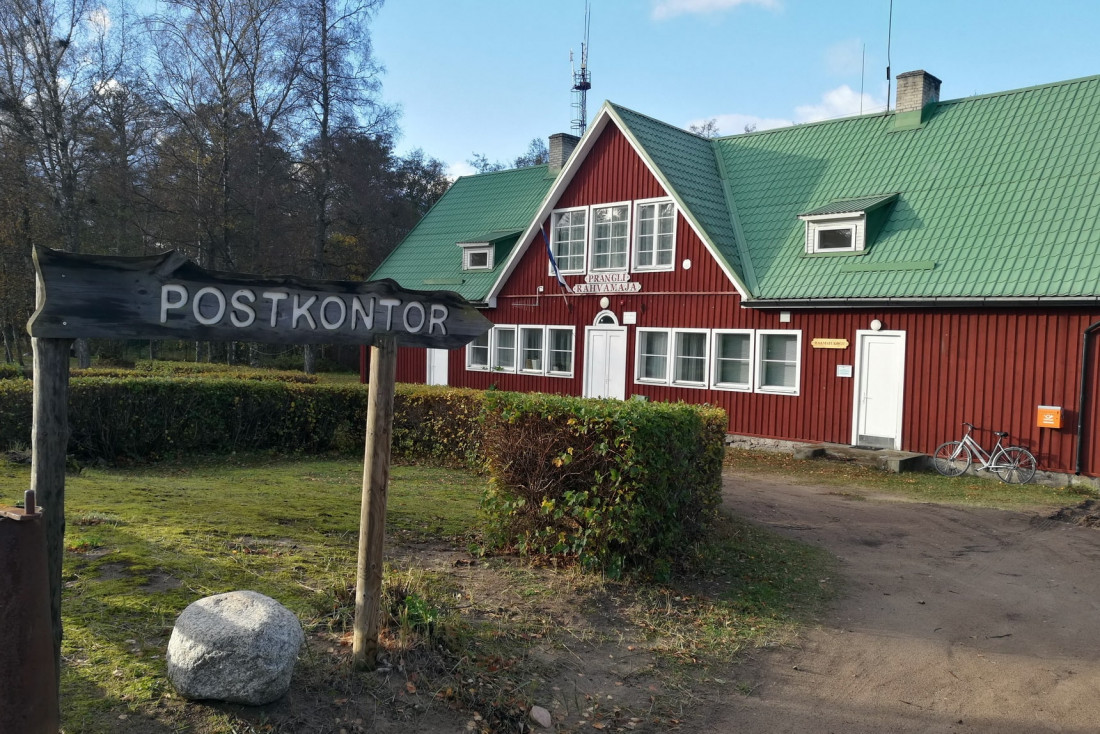
The island’s infrastructure is a lesson in minimalism. You will find no redundancy here. The “centre” is a single intersection containing the shop, the school, and the community hall.
Prangli’s Only Shop
The shop (pood) isn’t a charming boutique; it is a vital lifeline. In a city, a shop offers choice. Here, it maintains supply lines. The shelves stock rubber boots next to chocolate because when the ferry stops running in a storm, you need both.
The shop closes early, and the island economy does not cater to whims. If you have specific dietary needs, bring supplies from the mainland.
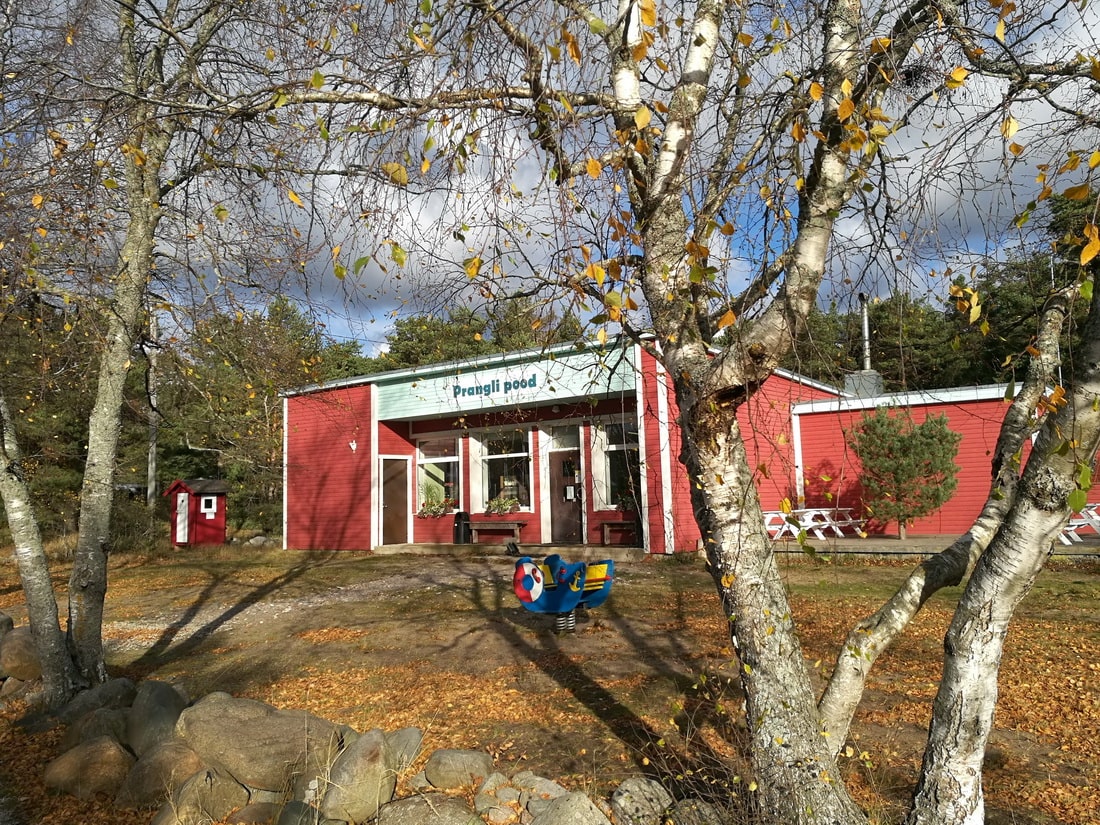
The logistics of isolation: Prangli’s only shop serves as the pantry, hardware store, and news agency for the island’s 75 residents.
Practical Faith: The Wallpapered Church
Even religion is practical. The wooden church, built in 1848, features papered walls. Not frescoes, not stone – wallpaper. It looks less like a cathedral and more like a grandmother’s living room.
The congregation chose this domestic solution for thermal reasons, not aesthetic ones. Prangli lacks the resources for stone grandeur, so they made God comfortable instead.
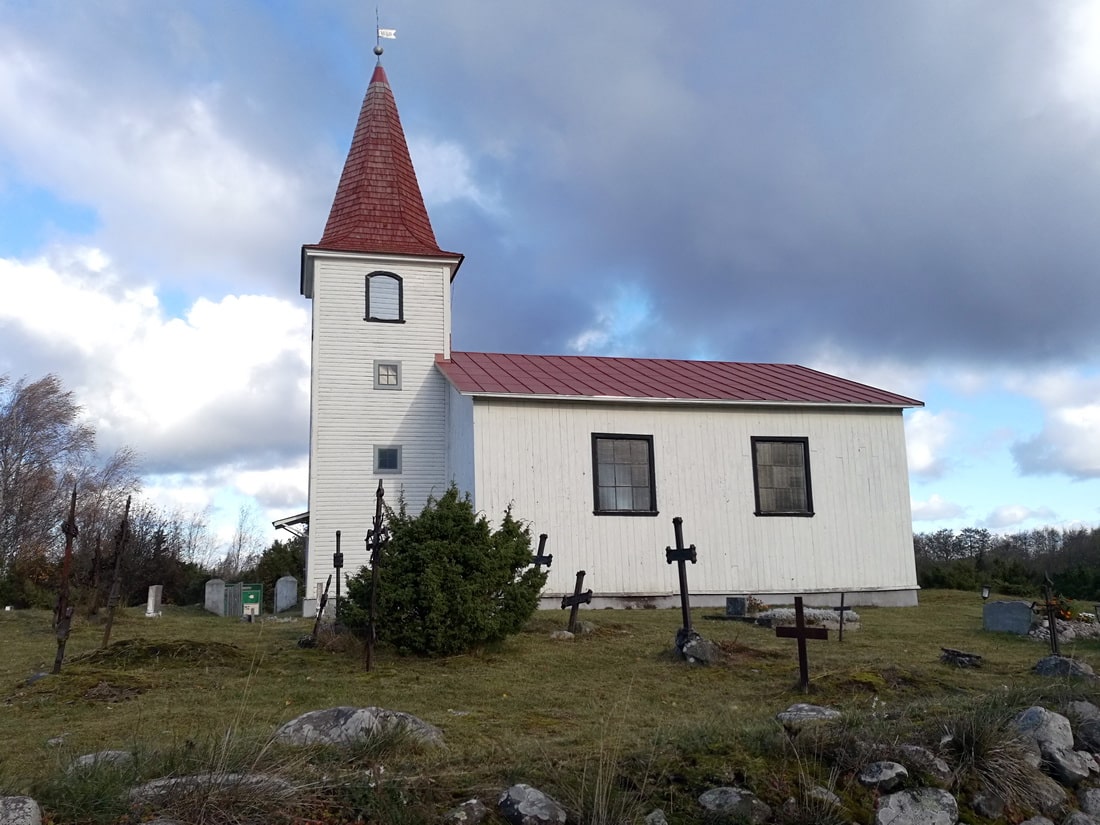
The church is built of wood and lined with wallpaper – a domestic solution for a harsh Baltic climate.
Things to Do on Prangli Island: Gas Fires and Soviet Relics
Top Things to Do on Prangli Island
- See the natural gas fire burning in the forest on Prangli Island
- Visit the Eestirand memorial and mass grave
- Ride a Soviet GAZ truck between the harbour and villages
- Cycle across the island’s flat dirt roads
- Walk the empty pine forests and shallow beaches
The Eternal Gas Fire in the Forest
The island’s most defining feature is an industrial accident that became a landmark. In the forest, a fire burns directly from the ground.
In the 1950s, Soviet geologists drilled here looking for oil. They found natural gas instead. The pressure was too low for commercial extraction, so they simply capped the pipe and left. The seal failed long ago.
For decades, this “eternal flame” has served as Prangli’s open-air kitchen. A frying pan sits permanently on the rocks. It is the ultimate symbol of the island: taking a piece of discarded Soviet waste and turning it into a place to fry eggs. You will find no safety rails or ticketing booths here; it is literally an open fire in a forest, so exercise common sense.
Pine Forests and Migratory Birds
But Prangli isn’t just a Soviet scrapyard. The isolation that complicates daily routines also preserves the silence. Thick, springy moss covers the forest floor and swallows the sound of your footsteps. On the western shore, the sandy beaches remain shallow, and the water warms up faster than anywhere else near Tallinn.
It is a quiet, unmanicured beauty – smelling strictly of pine resin and salt. In spring and autumn, the only traffic jam on the island happens in the sky, as millions of migratory birds use Prangli as a rest stop.
Dark Tourism in the Former Restricted Zone
It is hard to reconcile the quiet pine forests with the island’s heavy past. For fifty years, this area operated as a closed military zone—but its history holds darker elements than just Soviet border paranoia. Beyond the rusted infrastructure of the Cold War, Prangli bears the literal graves of a much bloodier conflict.
Life on a Monitored Perimeter
During the Soviet occupation, Prangli served as the northern border of the USSR. Unlike typical closed military bases, Prangli remained a living community—albeit a heavily monitored one. You could still swim and use the shore, but the coast was fundamentally a strictly controlled geopolitical frontier.
Locals needed permits to move around, and evening curfews dictated beach access. Soviet authorities even forbade families from fishing together in the same boat – they assumed that a full household on the water wasn’t looking for fish, but making a run for Finland.
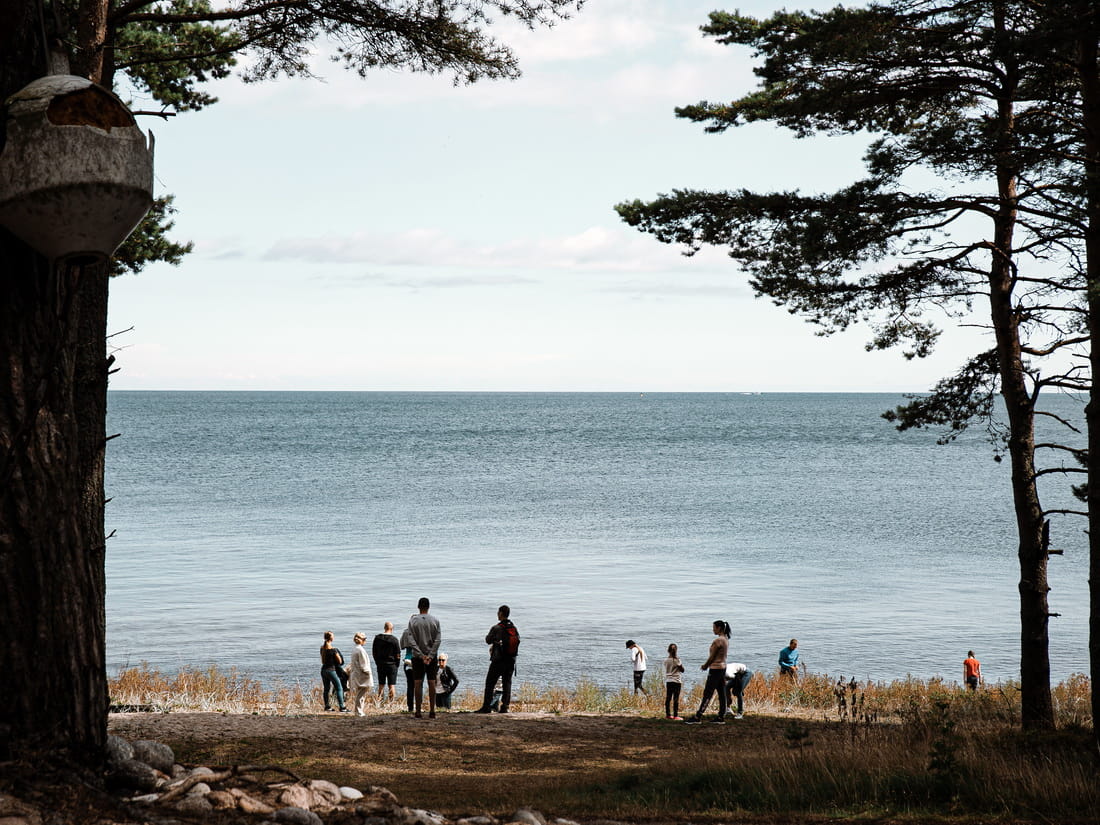
The view to the North. For fifty years, staring at this horizon was a political act – looking for Finland. Today, it’s just a view.
The Eestirand Mass Grave
The physical scars remain. You can find the collapsed roofs of military bunkers and the rusted remains of trucks that the moss has simply absorbed.
The most sobering site is the mass grave in the forest – a memorial to the Eestirand, a steamship carrying Estonian men whom the Soviets forced into the army.
German planes bombed and grounded the ship here in 1941. The white wooden crosses stand in uniform, silent, and stark lines, marking the resting place of men who never had a choice in the conflict that claimed them.
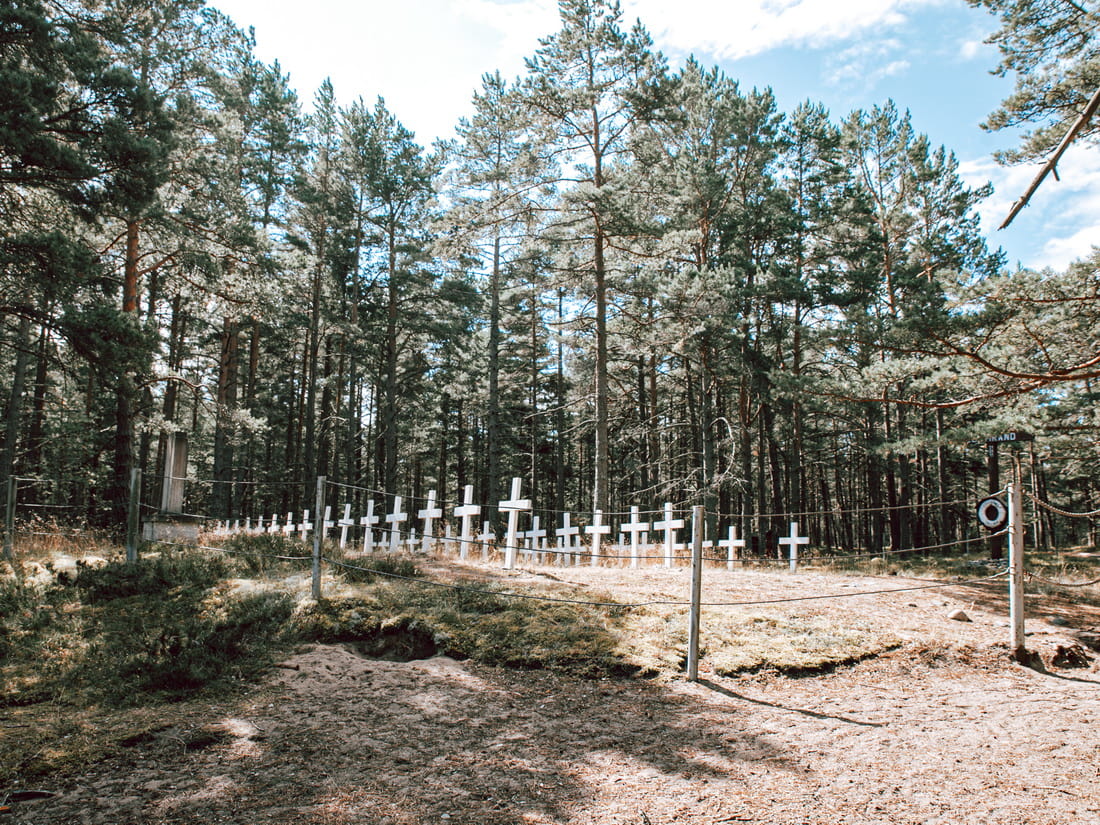
Silent history. The mass grave of the Eestirand victims lies deep in the forest, marked only by uniform crosses and pine needles.
Getting Around Prangli: Soviet Mechanics and Utilitarian Travel
Once you step off the passenger ferry at Kelnase harbour, the logistics shift from maritime to strictly mechanical. The island spans roughly six kilometres from end to end, connected by a network of flat dirt roads where modern ride-sharing apps are useless, and durability is the only metric that matters.
Riding the GAZ-53 Trucks
Transportation on Prangli defies the vehicle inspection laws of the mainland. The roads belong to Soviet-era GAZ trucks and sidecar motorcycles that run on duct tape and prayer.
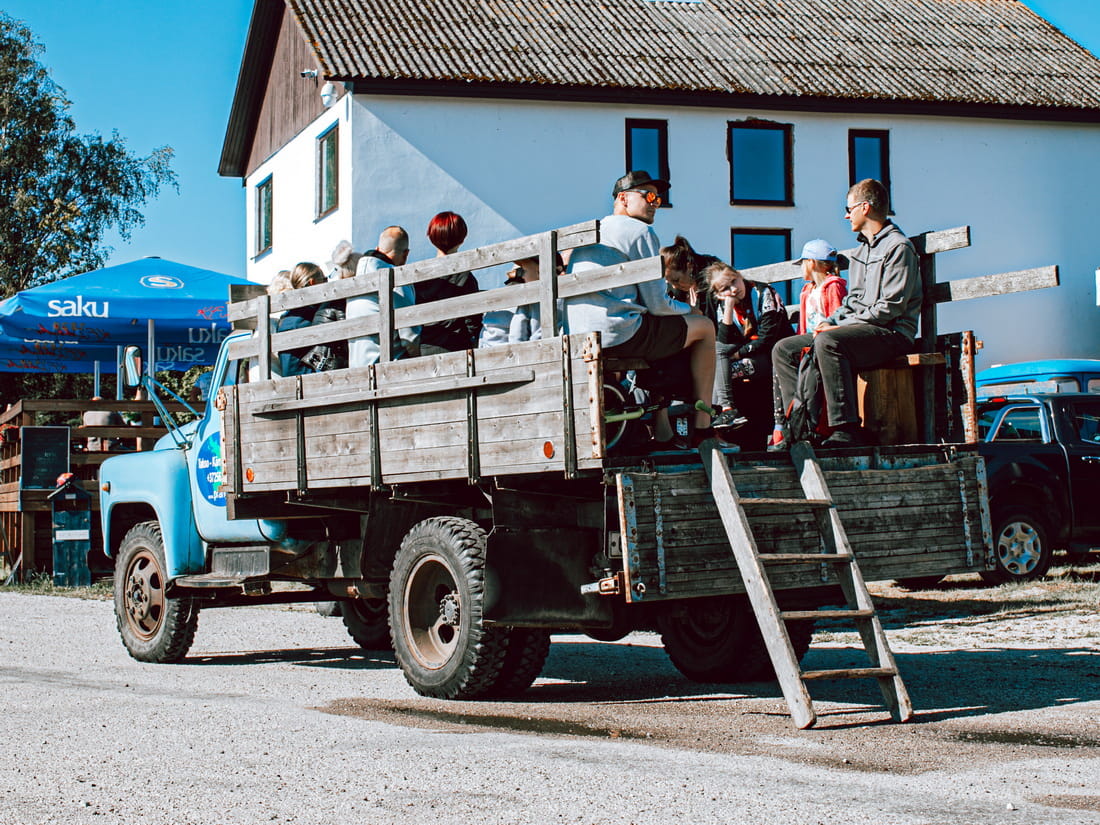
Public transport, Prangli style. This Soviet GAZ-53 isn’t a museum exhibit; it’s the daily mechanical shuttle between the port and the villages.
Islanders keep these vehicles on the road out of pure pragmatism, not nostalgia. When the Soviet era ended, this heavy machinery was simply left behind. Instead of paying high shipping costs to transport modern cars across the sea, locals just repurposed the leftovers. It is the ultimate form of island recycling: if it can haul firewood and survive a dirt road, it stays in service.
Navigating by Bicycle
If you prefer navigating yourself, you can rent bicycles at the Kelnase harbour. Cycling offers the most efficient way to cover the 6 km distance between the north and south points.
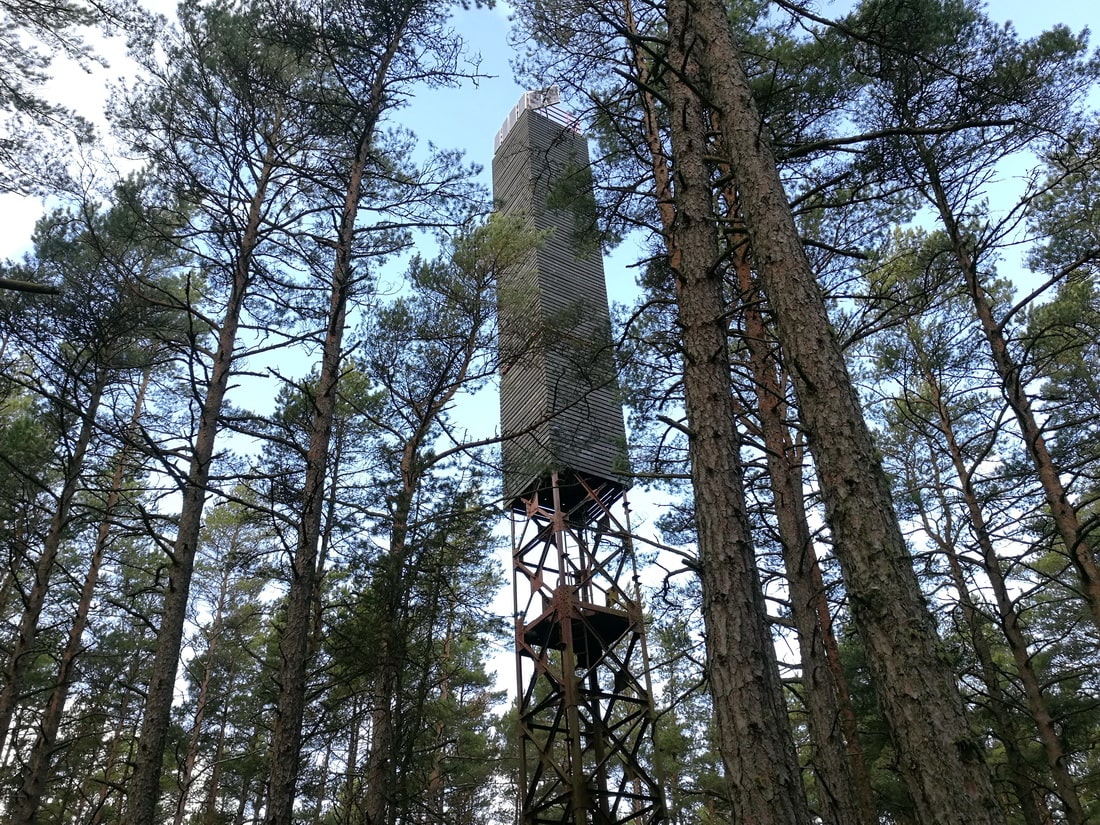
Destination: North. The lighthouse isn’t a romantic stone tower; it’s a utilitarian steel skeleton rising above the pines. It is the primary goal for cycling day-trippers.
How Military Paranoia Preserved the Island
The irony of the Soviet occupation is that it inadvertently acted as an aggressive conservationist. Because the military designated the entire coast as a restricted border zone, state planners could not plaster the beaches with massive concrete sanatoriums.
Guns and watchtowers, rather than environmental zoning laws, kept the heavy construction industry out.
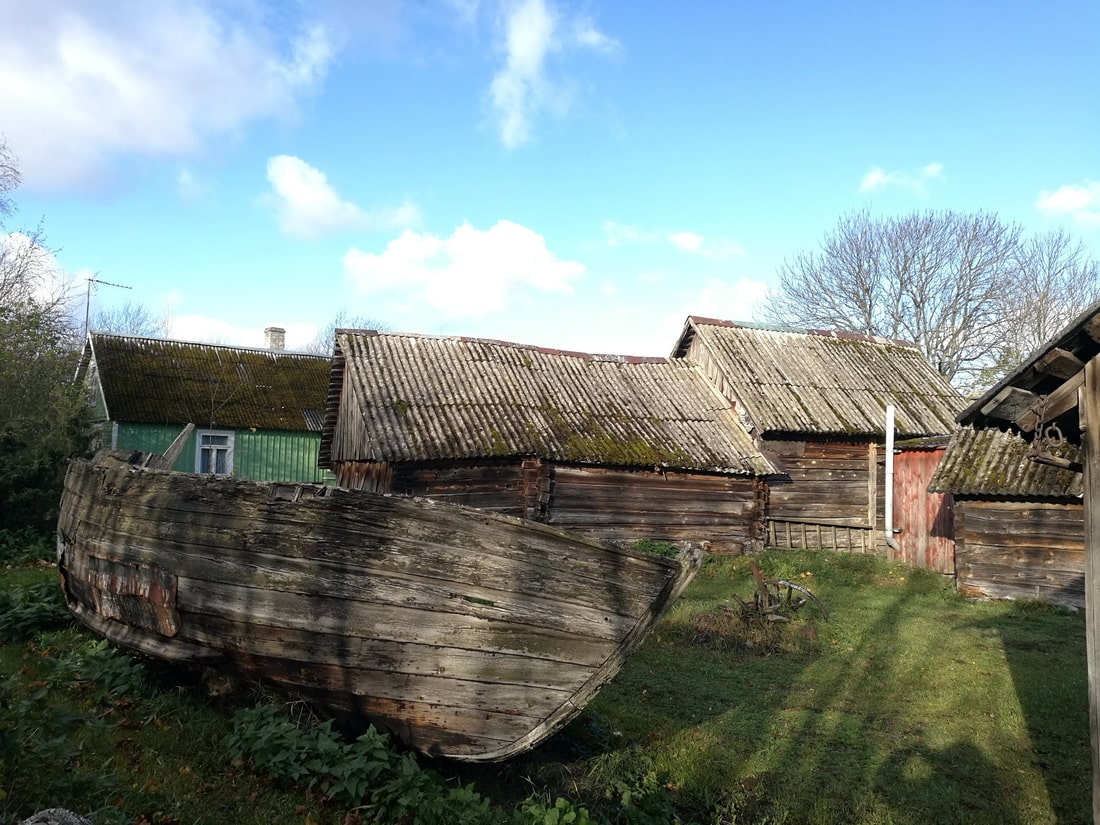
Some boats still catch the summer flounder; others simply rot back into the physical landscape.
The Myth of the Dying Fishing Village
Summer on Prangli does not mean a tourist invasion. While the harbour sees a modest influx of yachties arriving for smoked flounder and cold beer, the island never morphs into a crowded resort. The visitors who bother to take the ferry are a specific breed—people actively seeking out dirt roads and isolation rather than beach clubs.
But the biggest misconception is about the locals themselves. It is tempting to romanticise the island as a fading retirement home for old fishermen, but that is simply inaccurate. Prangli is a functioning, year-round community. Several young couples live here permanently, which keeps the local school open and active.
Furthermore, despite the reliance on vintage GAZ trucks and chopped firewood, this is still Estonia: the Wi-Fi connection is predictably excellent. This isn’t a place where residents are trapped by circumstance. For the people who live here, it is just normal life. They genuinely like the quiet isolation, actively choosing to chop wood and watch the ferry leave over dealing with the relentless pace of the mainland.
How to Get to Prangli Island from Tallinn
Getting there isn’t difficult, but it does require you to actually look at a clock. You will be taking the passenger ferry Wrangö (operated by Sunlines) from Leppneeme Port. The ship is an ice-class vessel, meaning it runs year-round unless the Baltic Sea decides to throw a severe autumn tantrum.
Though it is only 9 kilometres of water, factor in about a 30-kilometre total journey from central Tallinn.
The Timetable Trap
In summer, ferries sail three times a day from Monday to Saturday, and four times on Sundays. But here is the catch: the exact departure hours shift depending on the day of the week. Tuesday’s schedule will not help you on Friday.
Check the official Sunlines website and buy your return ticket before you even leave your hotel in Tallinn. You want to lock down a solid six-to-eight-hour window on the ground before the island effectively shuts down for the night.
The Bus vs. The Bolt
If you want to take public transport, fine. It is cheap. But the Viimsi buses run roughly once an hour, leaving you exactly zero room for error.
The standard route from Tallinn goes like this:
- Catch Bus No. 1 from the Viru Keskus terminal to the Mõisapargi stop (about 25 minutes).
- Walk over to the nearby Poe stop.
- Wait for the local V5 bus to drop you at Leppneeme Port (15 minutes).
Always check your connections on Google Maps before heading out. If you miss that hourly V5 bus, you won’t even get the dramatic satisfaction of watching your ferry sail away. You will just be stranded at a suburban intersection kilometres from the water, frantically checking the price of an emergency taxi.
Frankly, unless you love transport stress, splitting a Bolt straight from central Tallinn to the port is a much smarter investment from the start.
If deciphering local bus schedules to the port sounds exhausting, booking a full-day guided tour handles the transport details, including ferry tickets and guided travel around the island.
For travellers building a wider Baltic itinerary, this isolated outpost offers a stark contrast to other popular day trips from Tallinn, or the busy, urban hop of the Tallinn to Helsinki day trip.
The Tallinn Island Showdown: Which One Should You Visit?
If it is your absolute first time in Tallinn and you only have 48 hours, skip the islands entirely. The medieval Old Town, Kadriorg and the Telliskivi creative city will easily consume your weekend.
However, if you have an extended stay, or you are a repeat visitor tired of tripping over cobblestones, the coastal islands offer a brilliant escape. Here is how they stack up:
- Aegna (The Quick Picnic): The closest and easiest to reach from central Tallinn. It is essentially a wild pine forest floating near the city. Great for a few hours of hiking and a beach picnic, but it lacks any real community or historical infrastructure. You go here for the trees, not the culture.
- Naissaar (The Forested Fortress): A massive former naval base that nature is slowly reclaiming. You visit Naissaar to explore abandoned sea mines, overgrown Soviet military installations, and a quirky narrow-gauge railway. You can also climb its lighthouse—though expect a strictly utilitarian concrete pillar rather than a romantic 19th-century stone tower. While it has a handful of permanent residents and comes alive for summer cultural events, its overarching vibe is that of a wild, historical time capsule rather than a traditional village. If navigating through military ruins sounds like your kind of detour, here is exactly how to plan a day trip to Naissaar.
- Prangli (The Living Artifact): The only northern island with a year-round, functioning village. Choose Prangli if you want to see how a self-reliant Baltic community actually survives. It offers the best mix of dark history, weird Soviet mechanics, and raw nature, all wrapped in a living, breathing settlement.
Mark Your Landing Spot: Is a Prangli Island Day Trip from Tallinn Worth It?
Absolutely, provided you appreciate the aesthetic of isolation. It serves as an excellent Baltic island day trip for slow travel, long walks in empty pine forests, and seeing physical, unpolished history. However, if your ideal excursion involves curated museum exhibitions, slick infrastructure, or boutique dining, stick to the mainland.
The Practical Side
Is Prangli Island worth visiting?
Yes, if you appreciate slow travel and unpolished history. You will find a stark contrast to Tallinn here: there are no curated exhibitions or boutique cafes, just empty pine forests, weird Soviet relics, and a self-reliant island community.
How do you get to Prangli Island from Tallinn?
The only regular public route is the passenger ferry Wrangö (operated by Sunlines) from Leppneeme Port. The sea crossing is about 9 kilometres and takes 60 minutes. The ship is an ice-class vessel, making the connection reliable year-round, but you must always check the seasonal timetable in advance.
How long do you need on Prangli Island?
A full day trip (roughly 6 to 8 hours on the ground) provides enough time to explore the highlights, walk the forests, see the natural gas fire, and eat lunch before catching the evening ferry back. Your time will be strictly dictated by the boat’s departure schedule.
How do you get around the island?
Most visitors explore on foot, rent bicycles directly at the Kelnase harbour, or rely on the local public transport — Soviet-era GAZ trucks that rattle down the dirt roads between the port and the villages.
Can you stay overnight on Prangli Island?
Yes, but options remain highly limited. You can book one of the few cabins available on the island. Because inventory is extremely low, you must book well in advance. If you prefer not to gamble with availability, keep your base in Tallinn.
Are there shops or restaurants on Prangli?
There is one local shop (pood) that sells basic necessities and closes early. During the summer, a harbour restaurant opens, serving fresh smoked fish and drinks. Outside of the peak season, you must bring your own food from the mainland. While card payments are generally accepted, carrying a bit of cash is always a smart backup on an island.


