













Tourism boards desperately want you to believe Tallinn is a marzipan-scented medieval fairy tale. Do not fall for it. Behind the pristine 14th-century facades and the seasonal workers wearing tights to sell roasted almonds, this is a deeply pragmatic, slightly introverted city. It survived a revolving door of empires and responded to the Soviet collapse by simply coding its way into the 21st century.
To actually understand Tallinn, you need to look past the Gothic cosplay. The real city is not a museum piece; it is a sharp collision between historical trauma, heavy stone, and hyper-modern efficiency. You can navigate out to the repurposed industrial shipyards on a highly efficient public transit network, but inside the defensive walls, the aggressive 14th-century cobblestones will systematically dismantle the wrong choice of footwear.
Before you book anything, read my unfiltered verdict on whether the city is actually right for your travel style: → Is Tallinn Worth Visiting?
The Route: Outward from the Core
This guide starts inside the fortified walls, simply because the medieval epicentre is unavoidable. But we will not linger. The route systematically pushes outward – moving past the obligatory tourist bottlenecks toward coastal lighthouses, reclaimed submarine shipyards, and the echoing concrete of Soviet brutalism.
The Medieval Core: Surviving Tallinn Old Town
Tallinn’s Old Town (Vanalinn) is undeniably spectacular, yet it operates as a highly engineered tourist bubble. The architectural density is phenomenal, but the ground-level reality involves navigating tightly packed cruise ship groups, generic amber shops, and restaurants charging a premium simply for existing inside the 14th-century defensive walls. Treat this zone tactically: admire the heavy stone engineering, hit the essential targets, and then successfully escape to the actual city.
1. Tallinn Town Hall Square (Raekoja plats)
Logistics: The absolute epicentre of the Old Town. Unavoidable. Town Hall website | Pharmacy website.
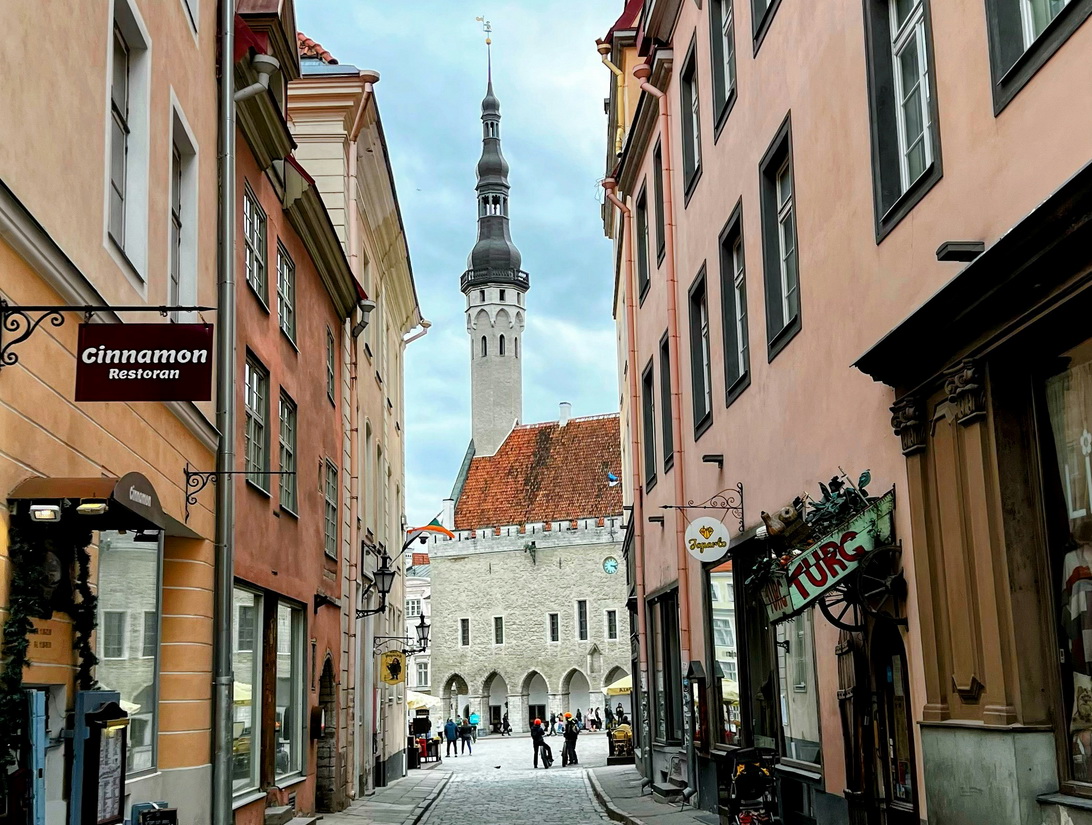
The approach to the Town Hall. The cobblestones here are heavy and unforgiving – choose your footwear pragmatically.
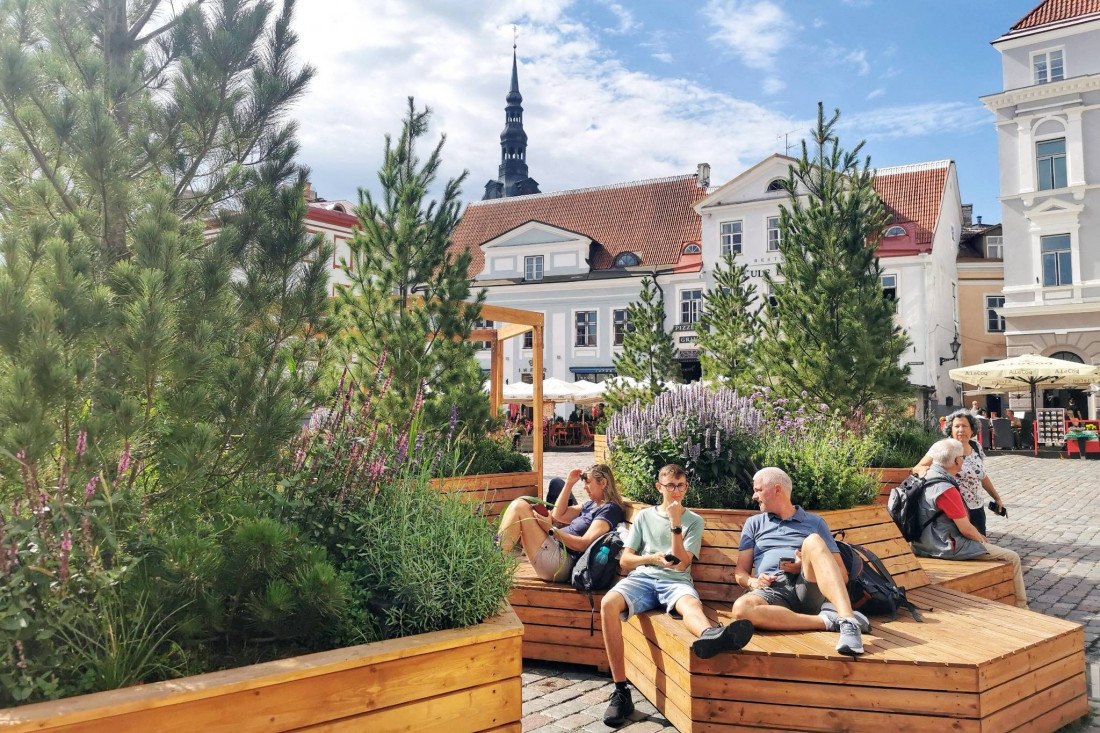
The medieval street grid inevitably funnels everyone here. The 600-year-old Town Hall (Raekoda) is the only surviving intact Gothic town hall in Northern Europe. In summer, the municipality drops heavy wooden planter-benches into the centre to break up the vast expanse; in winter, it is consumed by the main Tallinn Christmas market.
The Easter Egg
Somewhere near the centre of the square, embedded in the cobblestones, is a circular metal plate that looks suspiciously like a manhole cover. This is the compass rose. You do not need to execute a theatrical 360-degree spin to use it. Stand on the plate and simply scan the rooflines from left to right: starting with the Town Hall spire on your immediate left, your sightline will catch all five of the Old Town’s main churches, finishing with the final spire on your right. It is a brilliant piece of medieval urban planning, provided you can actually locate the plate under the summer terrace furniture and heavy foot traffic.
The Reality Check
- The Terrain: The cobblestones around the square are smooth, uneven, and will actively punish flat-soled shoes. If you are walking multiple kilometres today, this is where proper structured footwear – think Keen or Columbia walking shoes rather than canvas sneakers – proves its absolute worth.
- The Restaurants: You will read endless blog posts warning you that the square is a tourist trap. The reality is purely financial: the food is fine, but you pay a 50% to 100% premium simply for the Town Hall view. An €8 – €10 beer here costs €4.50 just outside the walls. Sit down on the periphery strictly for the visual backdrop; for actual culinary value, walk 200 metres to Rataskaevu street.
- The Town Hall Pharmacy (Raeapteek): Operating since 1422. Enter strictly for the 15th-century painted ceilings and bizarre historical exhibits (dried toads, unicorn horn powder). It is free, and there is nothing here you cannot absorb in under ten minutes.
- The Tactical Budget Hack (III Draakon): Built into the Town Hall itself, this dimly lit tavern feels like a gritty rebellion against the overpriced tourist traps outside. In reality, it is a high-volume budget operation owned by the exact same hospitality cartel that runs the premium-priced Olde Hansa. However, as a tactical move, it is flawless. Step inside, spend under €5 on a genuinely good lentil soup, and get the heavy medieval atmospheric payoff without dropping €70 on a packaged medieval food tour. Drink straight from the clay bowl – no spoons allowed. The staff lean into a hostile peasant persona and will bark if you hesitate. It is a corporate gimmick, but a highly effective one.
2. Oleviste Church (St. Olaf’s)
Logistics: Tower open April to October. €10 entry. 258 steep, uneven steps. No elevator. Official website.
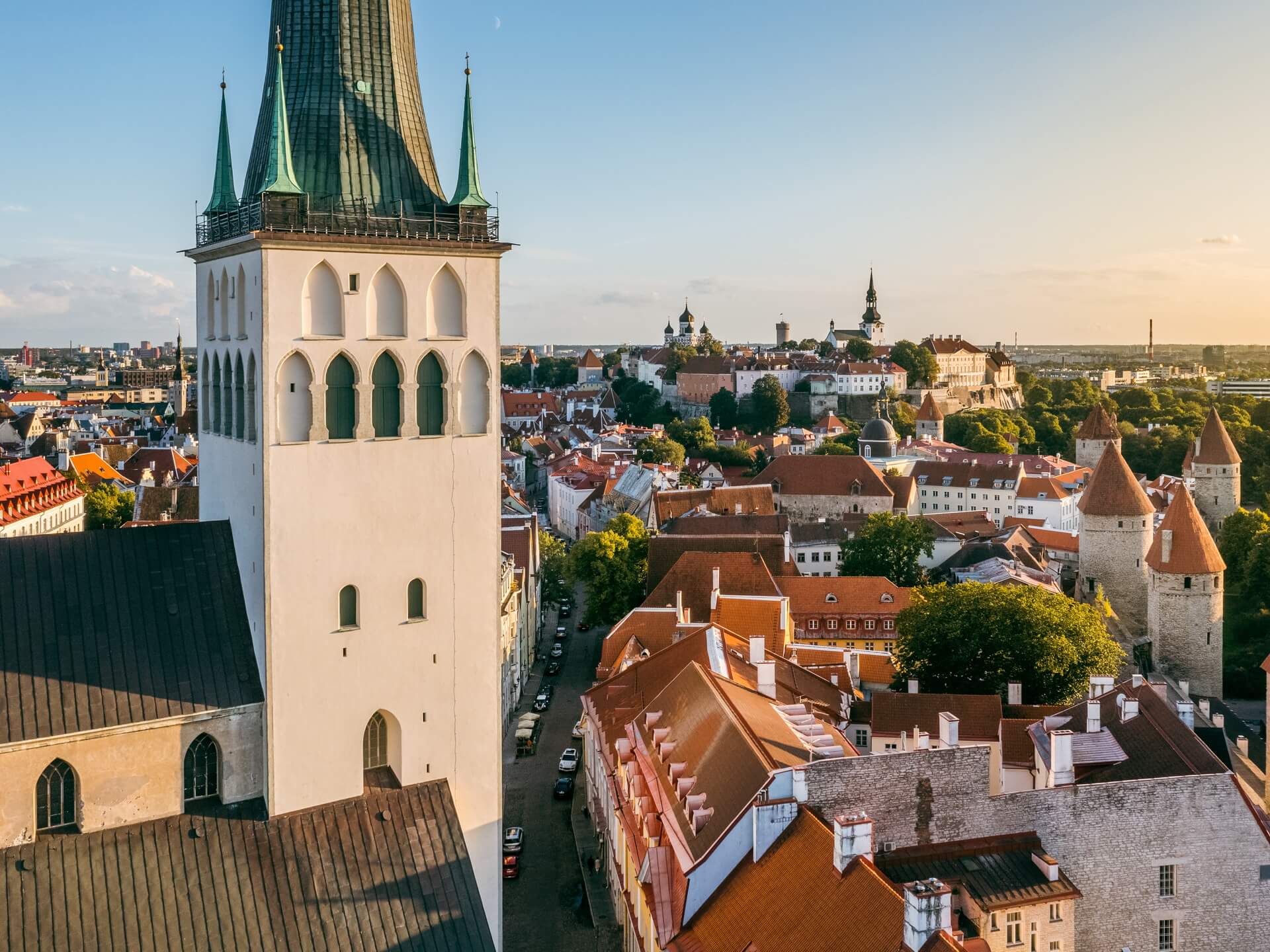
St. Olaf’s 123-metre tower anchoring the northern end of the Old Town. Photo: Kaupo Kalda
St. Olaf’s 123-metre copper spire is the geographical anchor of the Old Town. In the 16th century, it operated as a navigational beacon for the Baltic trade routes. Today, the stark Baptist interior on the ground floor offers little visual reward; the value of this location lies strictly in the tower.
The Reality Check
- The Ascent. To reach the top, you must navigate 258 uneven stone steps up a tight spiral core. The primary logistical challenge is not the vertical climb itself, but the two-way traffic—you will frequently need to press yourself flat against the stone wall to let descending tourists pass.
- The Platform. The observation deck is just a narrow, sloped ring wrapped around the base of the spire. You get an unobstructed aerial view of the medieval core on one side and the passenger port on the other, but the exposure is absolute. With only a wire fence for protection, the Baltic wind up here does not just blow – it actively tries to tear your phone from your hands.
- The Alternative. The €10 entry fee is justified for the view, but the physical toll is real. If your knees are already negotiating with you, do not force it. Skip Oleviste and walk 10 minutes across the Old Town to Niguliste Museum instead, where a modern glass elevator delivers a comparable skyline view with zero physical effort.
3. The Estonian Children’s Literature Centre
Logistics: Free entry. Closed Sundays and Mondays. A quiet refuge located just steps away from Oleviste Church. Official website.
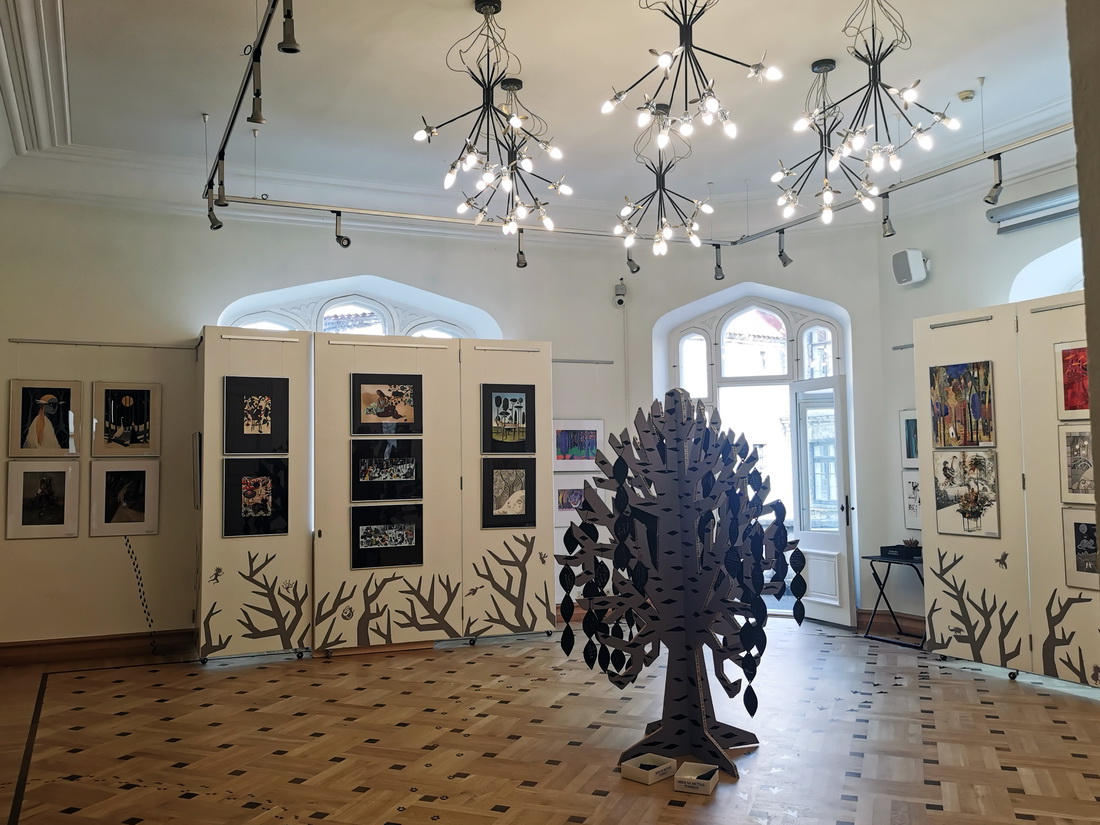
Tucked into a medieval townhouse, this centre is a rare example of a quiet, non-commercialised interior in the Old Town.
Ignore the name if you are travelling without kids, but manage your expectations regarding scale. Located in a preserved medieval townhouse, this is a compact visual detour rather than an expansive museum. The permanent exhibition occupies just a couple of small rooms, focusing on Estonian graphic arts, vintage ABC primers, and Edgar Valter’s Pokuraamat — a cultural touchstone involving sentient grass mounds. The temporary illustration exhibitions vary in quality, but the permanent archive holds genuine graphic value.
The Reality Check
- The Navigation. As soon as you walk through the front door, you will see a small book and souvenir kiosk straight ahead. Do not stop there yet. Turn immediately left and head up the stairs to reach the actual exhibition spaces.
- The Souvenirs. On your way out, inspect that entrance kiosk. It is one of the few places in the Old Town where you can buy genuinely high-quality, locally produced books, albums, and postcards that completely bypass the generic aesthetic of the main tourist strips.
- The Tactical Retreat. Treat this building as a tactical retreat. If you have just descended the 258 steps of Oleviste Church and the wind or the crowds are peaking, step inside. It is free, climate-controlled, completely silent, and requires less than 15 minutes to take in.
4. Niguliste Museum (St. Nicholas’ Church)
Logistics: €15 entry (covers the museum and the lift). Free with the Tallinn Card, but strictly single-use. Open Tuesday to Sunday, 10:00 – 18:00. Official website.
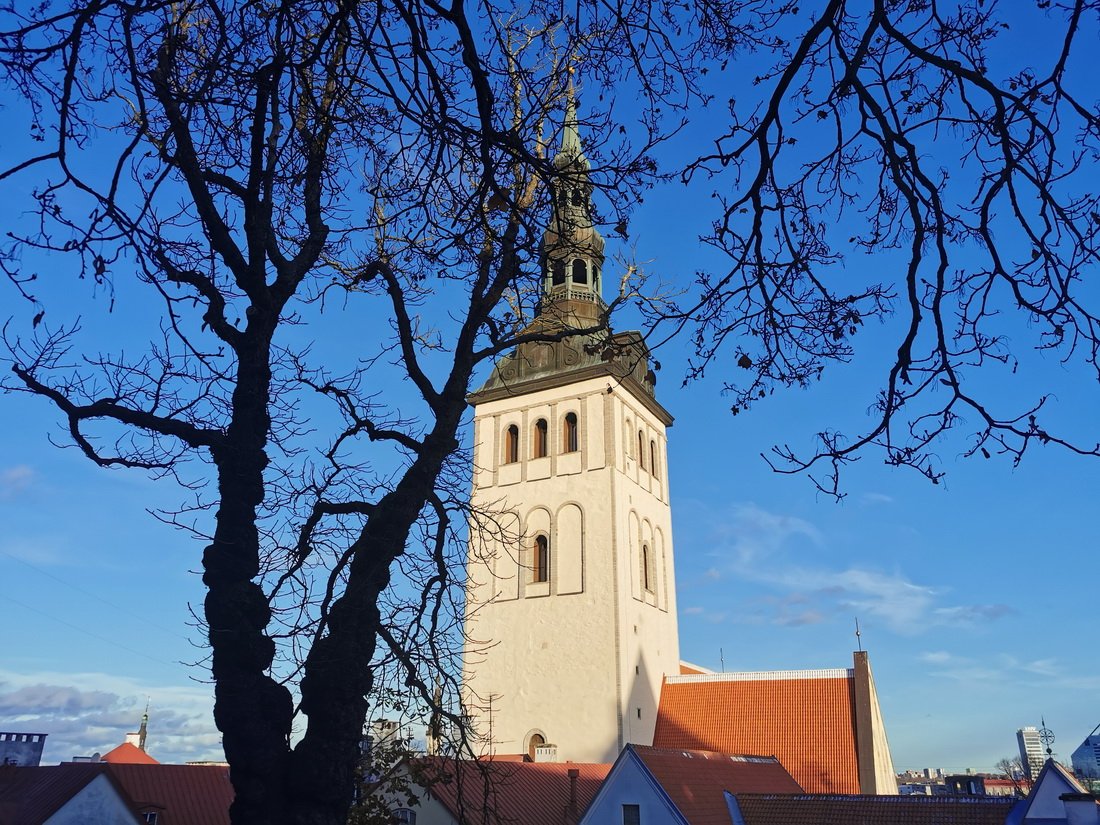
From this angle in the Danish King’s Garden, the church spire looks entirely medieval.
Niguliste deceives you right at the door. Despite the heavy Gothic footprint, no religious services happen here. The original nave was incinerated during the March 1944 air raids, and the current iteration is a clinically clean, climate-controlled branch of the Art Museum of Estonia. The primary magnet is Bernt Notke’s Danse Macabre – a massive, morbid 15th-century canvas where grinning skeletons drag the medieval elite toward their graves. It is dark, compelling, and essentially the 1400s equivalent of a viral meme. Beyond the altarpieces, there is a vault of historic guild silver (the Hõbevarakamber) downstairs, and weekend organ recitals that vibrate right through the floorboards.
The Reality Check
- The Tower Hack. Refuse to suffer Tallinn’s lung-burning medieval stairs? This is your loophole. A sleek glass lift runs straight up the spire. It is weather-sealed and, crucially, fully wheelchair-accessible. Photography note: You are shooting through thick, highly reflective glass. Mash your lens directly against the pane or wear dark clothing to kill the internal glare.
- The Price Tag. €15 is hard to justify for a two-minute lift ride. Pay it only if you plan to absorb the medieval art or catch an organ concert. Got a Tallinn Card? It’s a no-brainer.
- The Security Check. Staff are notoriously strict. Bags and water bottles are banned in the nave. Dump them in the ground-floor lockers immediately, or expect a very public scolding before you even reach the altar.
5. Navitrolla Gallery
Logistics: Müürivahe 11, a five-minute walk from Niguliste. Free entry. Open Tue – Sat, 12:00 – 16:00. Official website.
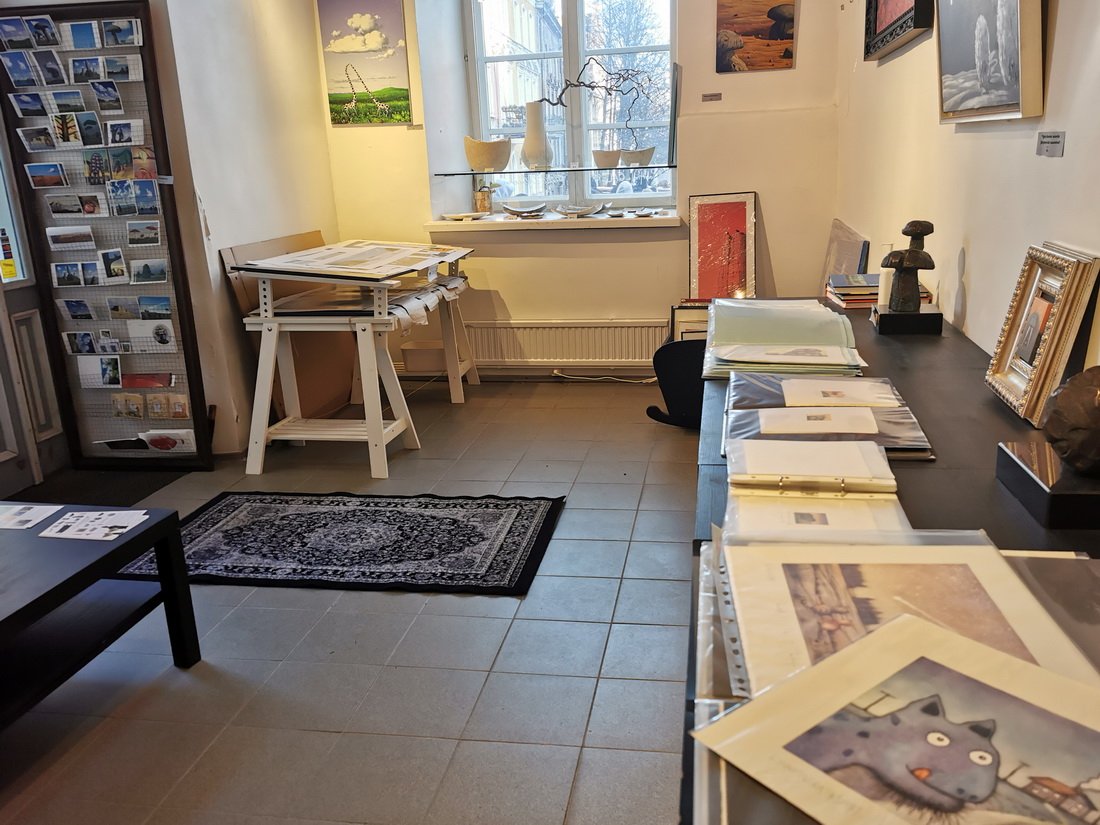
The gallery acts as a retail space for Estonia’s most ubiquitous surrealist. A highly effective visual palate cleanser after heavy Gothic architecture.
Navitrolla is Estonia’s most commercially omnipresent artist. His brand of pastoral absurdity is inescapable, splashed across everything from the hulls of Tallink ferries to supermarket snack packaging. Inside his dedicated gallery, however, you get the undiluted experience: a cohesive universe of pastel-toned surrealism featuring giraffes navigating snowy Estonian landscapes, oversized mushrooms, and sheep seemingly caught in moments of existential dread. It is bizarre, unfailingly charming, and defiantly unpretentious.
The Reality Check
- The Time Window. Be highly aware of the restrictive four-hour opening window. You cannot leave this for an evening stroll or an early morning coffee run; it requires a deliberate midday detour.
- The Vibe & Inventory. Drop any expectations of a hushed fine-art space. This functions as an accessible, high-end retail outlet. While large original pieces are mounted on the walls for those with serious budgets, the floor is entirely set up for relaxed browsing of prints, calendars, and merchandise.
- The Takeaway Opportunity. Postcards remain the ultimate, zero-clutter souvenir. Grab a handful of Navitrolla prints here – they cost almost nothing, pack completely flat in a carry-on, and represent a genuinely unique, slightly mad slice of modern Estonian pop culture that you will actually want to look at when you get home.
6. Estonian Maritime Museum (Fat Margaret Tower)
Logistics: Pikk 70. Entry €15. Free with Tallinn Card. Summer: 10:00 – 19:00 daily. Winter: Tuesday to Sunday 10:00 – 18:00 (closed Mondays). Official website.
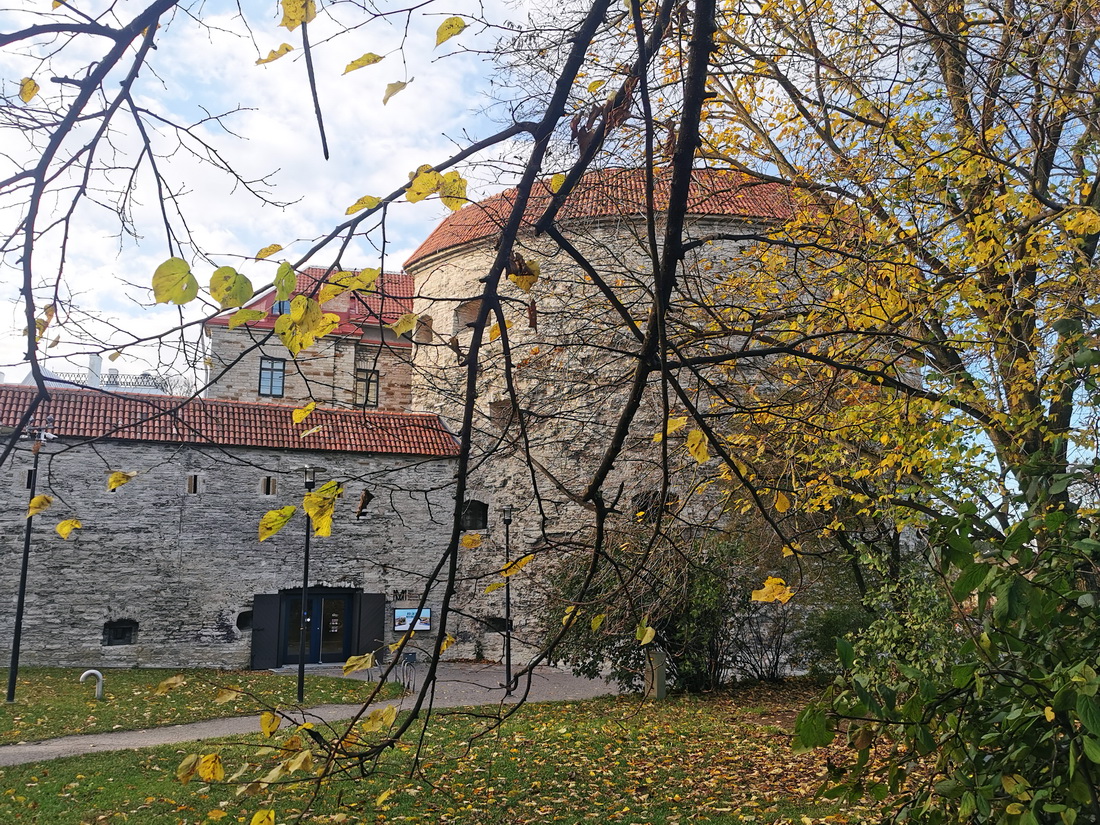
Fat Margaret’s 16th-century walls guard the northern gate. Inside: less medieval tavern, more 700-year-old shipwreck.
Fat Margaret (Paks Margareeta) sounds like a dockside pub, but it is a squat 16th-century coastal defence tower with walls five metres thick. You are standing before the Great Coastal Gate (Suur Rannavärav) – a massive fortification complex that once acted as the primary maritime entry to the city. While the upper floors are packed with navigational tools and model ships, the true draw is the central atrium. The tower was recently gutted and rebuilt around the Tallinn Cog – a 700-year-old merchant shipwreck discovered in 2015. It is a raw, massive relic of the Hanseatic trade network that defines the entire vertical space.
The Reality Check
- The Sibling Rivalry. Do not confuse this with the Seaplane Harbour (Lennusadam). Both deal with maritime history, but Fat Margaret focuses on the dry, tactical reality of Baltic trade: infrastructure, gear, and archaeological finds. If your goal is to climb inside a 1930s submarine, head to the Seaplane Harbour instead.
- The Accessibility. Unlike most defensive structures in the Old Town, the recent gut-renovation made this tower fully wheelchair and stroller friendly, featuring modern lifts and tactile models.
- The Roof. Let the lift handle the ascent. The open-air deck is the real reason to pay the entry fee – it offers an unmatched vantage point of the medieval rooflines and the port. It is the best spot for a clear view of the northern fortifications, particularly when the wind is low.
- The Exit Strategy. Do not skip the ground-floor shop. It offers a solid, highly curated selection of sea-themed souvenirs and high-quality prints. If you are tired of generic magnets, this is the place to buy local design pieces that haven’t been mass-produced for the airport transit zone.
7. Museum of Photography
Logistics: Raekoja tänav 6 (behind Town Hall). €8 / free with Tallinn Card. Open Wed – Sun (summer: 11:00 – 18:00; check winter hours). English translations. Check current exhibitions.
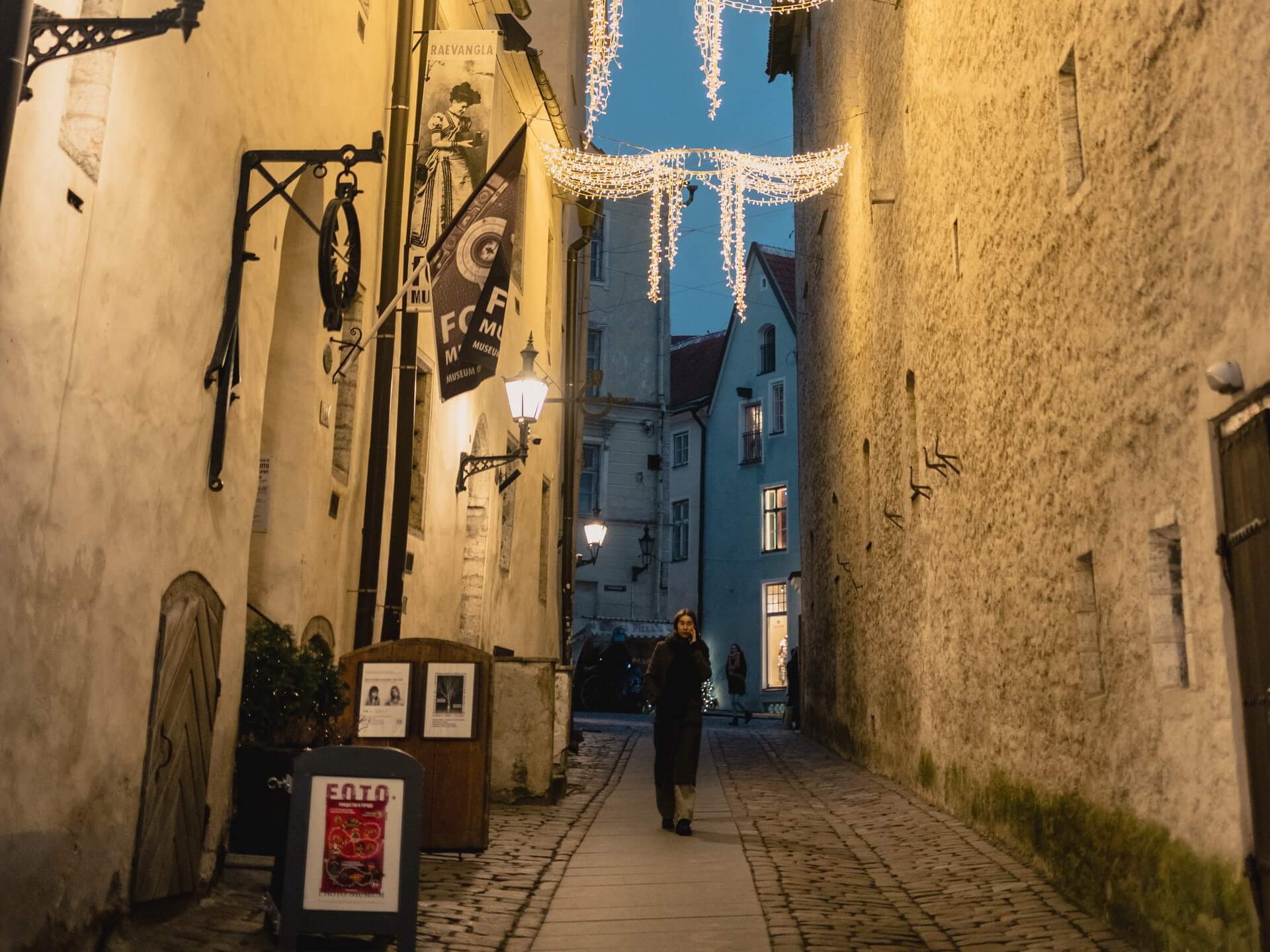
The approach along Raekoja street. The banner hanging above the entrance reads Raevangla – literally “Town Jail”. Photo: Rasmus Jurkatam
Occupying the former Town Jail, this museum chronicles local photographic history from 1840 to 1940. The permanent collection traces the technical evolution of the craft, shifting from heavy 19th-century gear toward 20th-century mass production. The standout artifact is the Minox subminiature camera—an early functional espionage staple invented in Estonia in 1936 before its large-scale production shifted to Riga.
The Reality Check
- The Value Proposition. Despite official claims of a comprehensive archive, the permanent hardware display is surprisingly sparse. It largely consists of a single room of cameras, many of which are standard models easily found in amateur collections across Europe.
- The Architecture & Accessibility. The building itself is arguably more engaging than the static exhibits. It retains a genuinely medieval layout with steep, winding stairs and a maze of tight rooms. If you have mobility issues or are travelling with young children, this museum is a skip.
- The Deciding Factor. Do not pay the €8 entry fee solely for the permanent exhibition unless you are a dedicated historian of camera mechanics. Your experience here depends entirely on the rotating contemporary exhibitions held on the upper floors. Check the museum website beforehand—if the current temporary theme does not interest you, walk past.
8. Tallinn KGB Prison Cells
Logistics: Pagari 1. Entry €8 (combined ticket with Vabamu available). Summer (May – September): 10:00 – 18:00 daily. Winter (October – April): Wednesday to Sunday 11:00 – 18:00. Official website.
In the 1940s and 50s, Pagari 1 was Tallinn’s most feared address. From the street, the elegant 1912 Art Nouveau facade looks like any other high-end residential block. Down in the basement, however, the Soviet secret police ran their local headquarters. Today, the History Behind the Lock exhibition documents the lives of those who resisted the occupation. The NKVD used these cells to isolate, interrogate, and torture detainees. Many died within these walls; survivors were typically shipped to the Patarei sea fortress or the Gulag network. This is not a chamber of horrors for the thrill-seeker; the site focuses on the quiet resilience and solidarity of those held inside.
The Reality Check
- The Expectation Gap. Do not come here looking for KGB kitsch or Cold War theatrics. You will leave disappointed. This is a raw, bare-bones memorial site that demands effort; you must actually read the testimonies to grasp the human cost.
- The Scale. Do not expect a sprawling complex. The museum is a suffocating basement corridor and half a dozen cells. You can walk through it in two minutes—the 30-minute estimate depends entirely on your willingness to engage with the archives.
- The Contrast. Look up when standing outside. Since Estonia’s re-independence, the upper floors of the building have been renovated into some of the most expensive luxury apartments in Tallinn. A jarring reminder of how quickly the past is whitewashed.
9. Tall Hermann Tower (Pikk Hermann)
Logistics: Mostly exterior viewing (open on select national holidays). Accessed via the Governor’s Garden, left of the pink Parliament facade. Parliament website.
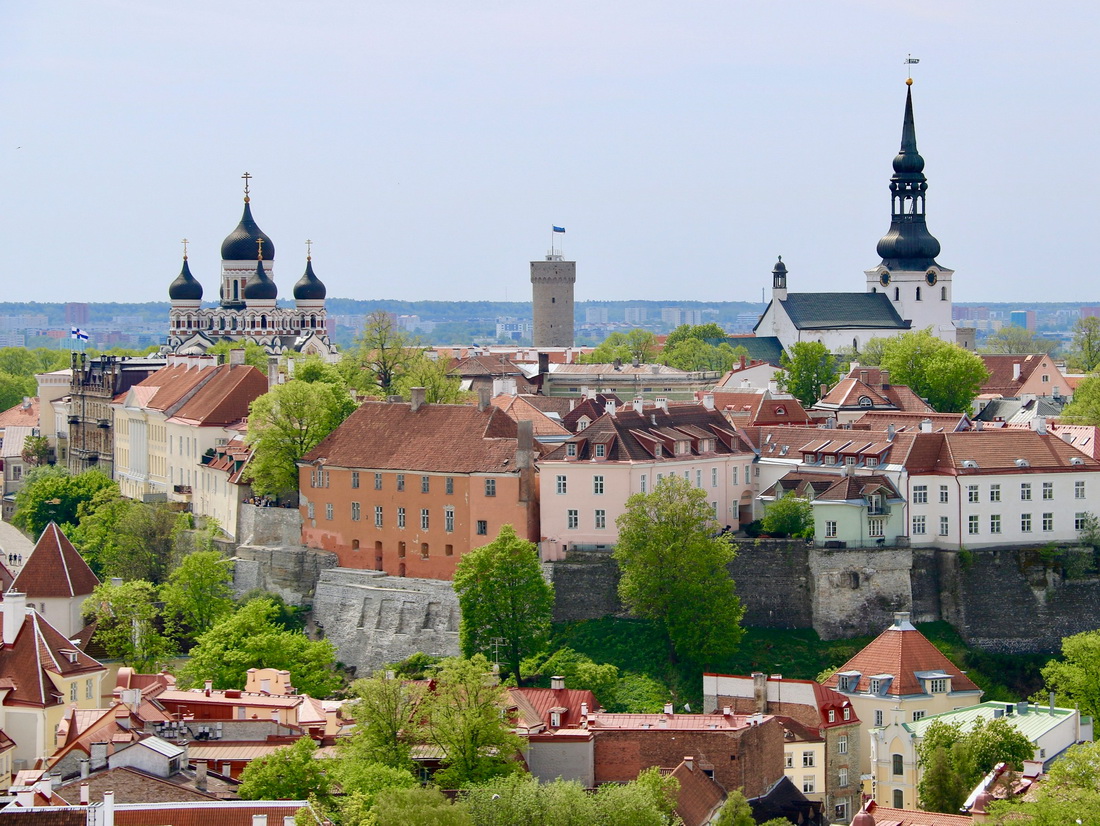
Estonia’s most symbolic flagpole – and no, you usually cannot go up.
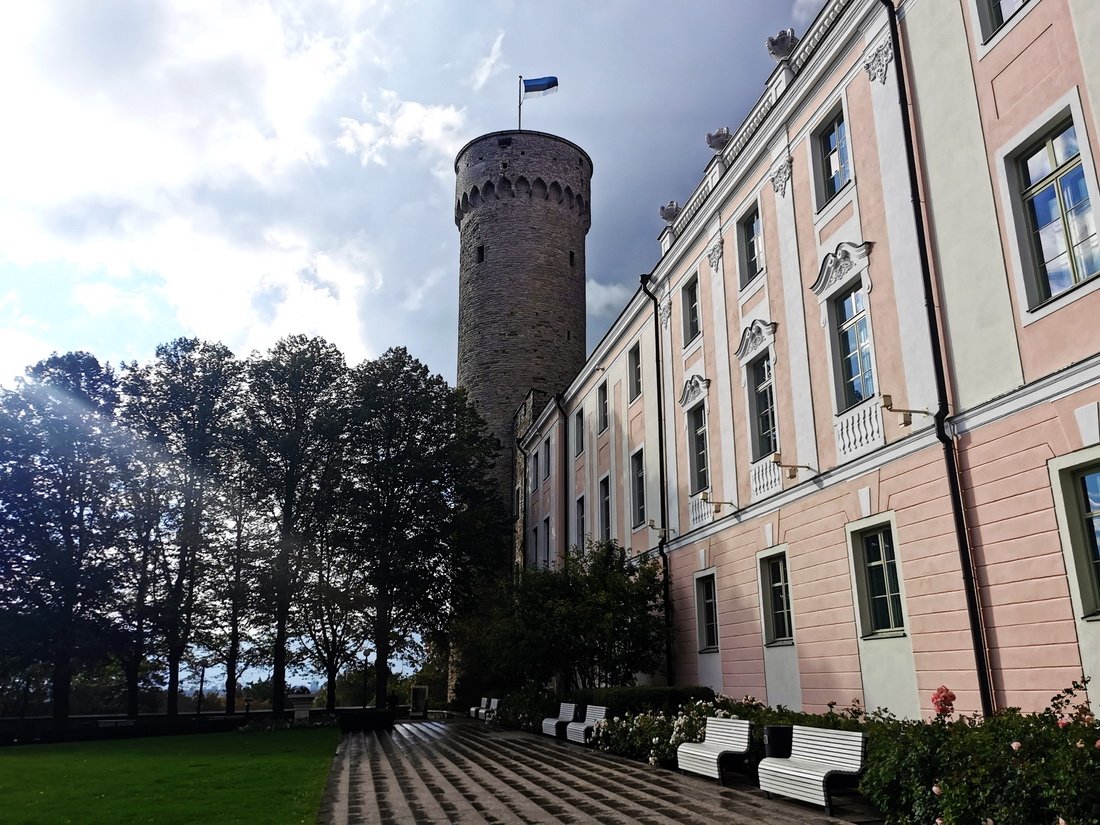
Blink and you will miss it – the garden path to Tall Hermann sits opposite the Alexander Nevsky Cathedral.
Pikk Hermann is the southwestern cornerstone of Toompea Castle. Built in the late 14th century, this 45-metre stone cylinder was originally a heavily fortified watchtower and the castle’s last line of defence. Its lower section consists of solid stone, designed to withstand siege engines, while the upper floors housed guards scanning the horizon. Today, it functions as the definitive marker of Estonian sovereignty. The daily flag protocol is absolute: the tricolour is raised to the national anthem at sunrise (no earlier than 07:00) and lowered at sunset (but no later than 22:00) to the unofficial anthem, Mu isamaa on minu arm. It is a brutal piece of medieval military engineering playing the role of the state’s main flagpole.
The Reality Check
- The Access Problem: The interior is restricted parliament property. Entry is permitted only on specific national holidays, such as Flag Day (4 June) or the Day of Restoration of Independence (20 August). The smartest tactical move is to arrive by 07:00 for the flag-raising ceremony; this timing significantly increases your chances of securing entry. If you show up at 10:00, you risk finding the capacity already maxed out and being turned away. If you secure entry, prepare for a single-file grind up 215 stone steps.
- The Governor’s Garden. Since you cannot go inside the tower, use the garden at its base for its best practical purpose – escaping the crowds. It overlooks the railway tracks rather than the Old Town, so tourist groups ignore it entirely. A perfect spot for a quiet break.
- The Photo Trap. Do not bother taking photos right at the base – you are simply too close to the tower to get a decent angle. For the classic postcard shot, head down to Toompark (Snelli pond) or view it from Falgi tee for a dramatic low-angle perspective.
10. Estonian Museum of Applied Art and Design (ETDM)
Logistics: Lai 17. Entry €9. Wed – Sun, 11:00 – 18:00. Official website.
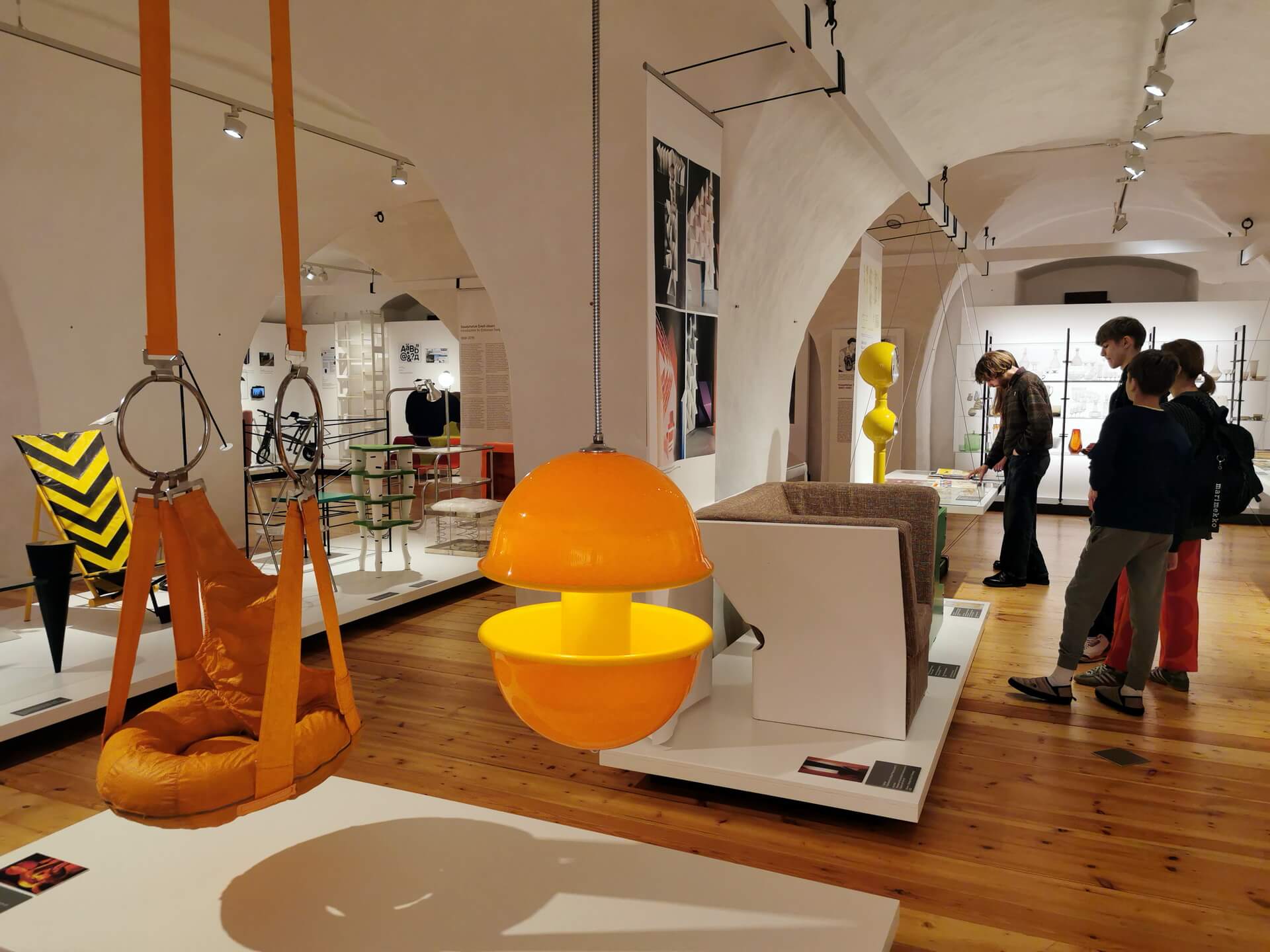
The stark visual contrast between heavy 17th-century vaulted ceilings and bright 20th-century retro-futurism makes the ETDM one of the city’s most compelling exhibition spaces.
Housed in a massive 17th-century storehouse, the ETDM is the ultimate aesthetic palate cleanser when you hit your limit with cobblestones and medieval folklore. The permanent collection packs a century of Estonian domestic design – from 1920s functionalism to Soviet-era retro-futurism – into a dense, highly visual space that requires zero reading of exhausting historical plaques.
The Reality Check
- Spatial Engineering. The physical layout is as clever as the exhibits. Capitalising on the vaulted ceilings, the curators constructed a viewing gallery along the inner perimeter. Do not just walk the main floor; head up the stairs to inspect the monumental textiles and high-wall installations from an elevated vantage point.
- The Ground Floor. The permanent collection is upstairs, but the lower level hosts rotating contemporary shows. Check the calendar first – these temporary exhibitions (typically modern jewellery or experimental design) frequently outshine the main museum.
11. The Dome Church (Toomkirik)
Logistics Toom-Kooli 6. Church entry by donation, tower around €7. Tue – Sun, 10:00 – 16:00 (hours vary by season). Tower closes during bad weather or services. Official website.
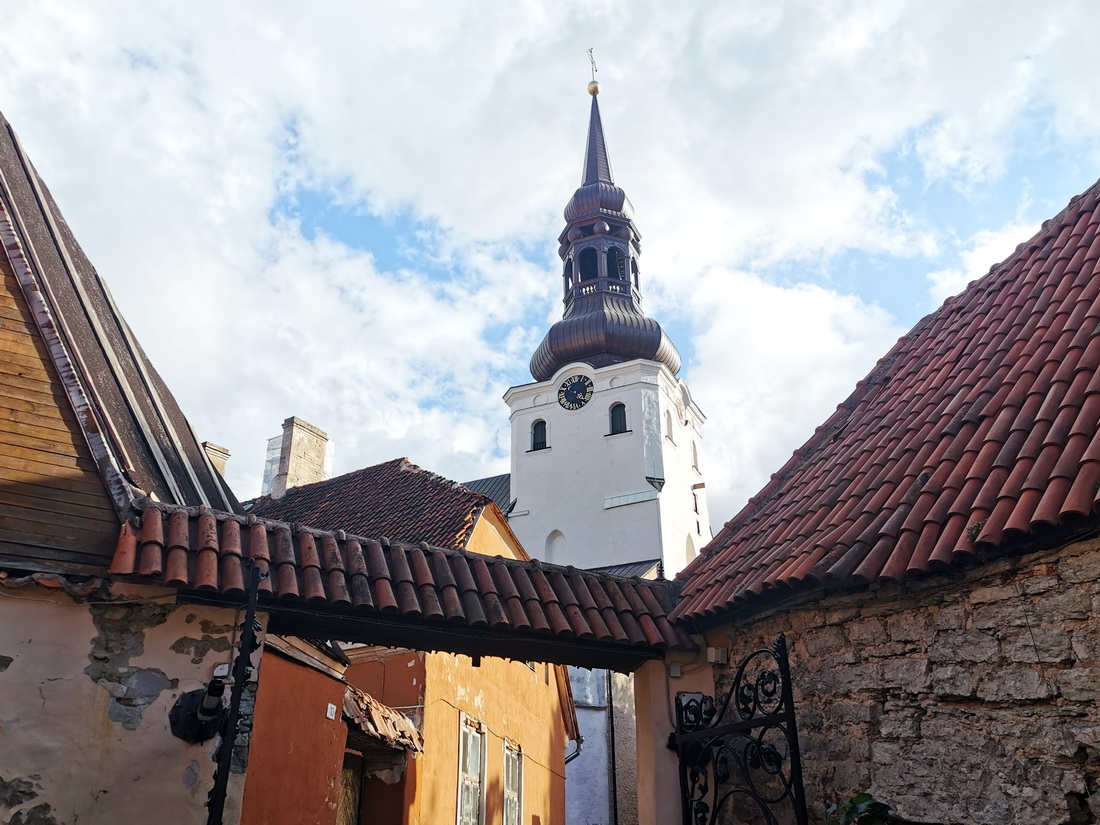
The modest exterior belies a dense historical archive within.
St. Mary’s Cathedral, originally established in 1233, is the oldest church in mainland Estonia, though much of what you see today is a reconstruction following the catastrophic Toompea fire of 1684. Its interior functions less like a conventional place of worship and more as a heavy wooden necropolis for the Baltic-German elite. The walls are densely packed with oversized coats of arms and epitaphs spanning the 17th to 20th centuries.
The cathedral serves as the final resting place for prominent military commanders and explorers who shaped the region – most notably Adam Johann von Krusenstern, who led the first Russian circumnavigation of the globe. In stark contrast to these solemn monuments, a decidedly more unconventional burial lies right under your feet as you walk in: Otto Johann Thuve, a notoriously heavy-drinking local Casanova, asked to be buried at the threshold so that the boots of devout parishioners might slowly trample away his sins.
The Reality Check
- The Crowd Factor. Located squarely on the main tourist artery of Toompea, the nave is regularly swarmed by cruise ship groups. Treat the ground floor as a quick, efficient architectural walk-through rather than a space for private reflection.
- The Tower vs. The Free View. Do not skip the bell tower just because the free Kohtuotsa and Patkuli platforms are nearby. Those lookouts face outward toward the Lower Town and the sea. The 69-metre Toomkirik tower – a Baroque addition from 1779 – provides the only accessible vantage point looking directly down onto Toompea itself. It offers a spectacular bird’s-eye view of the castle, its courtyards, and the labyrinth of upper-town roofs. It is well worth the climb unless the weather turns foul.
12. Alexander Nevsky Cathedral
Logistics: Lossi plats 10. Free entry. Daily 08:00 – 18:00 (may close during services). Official website.
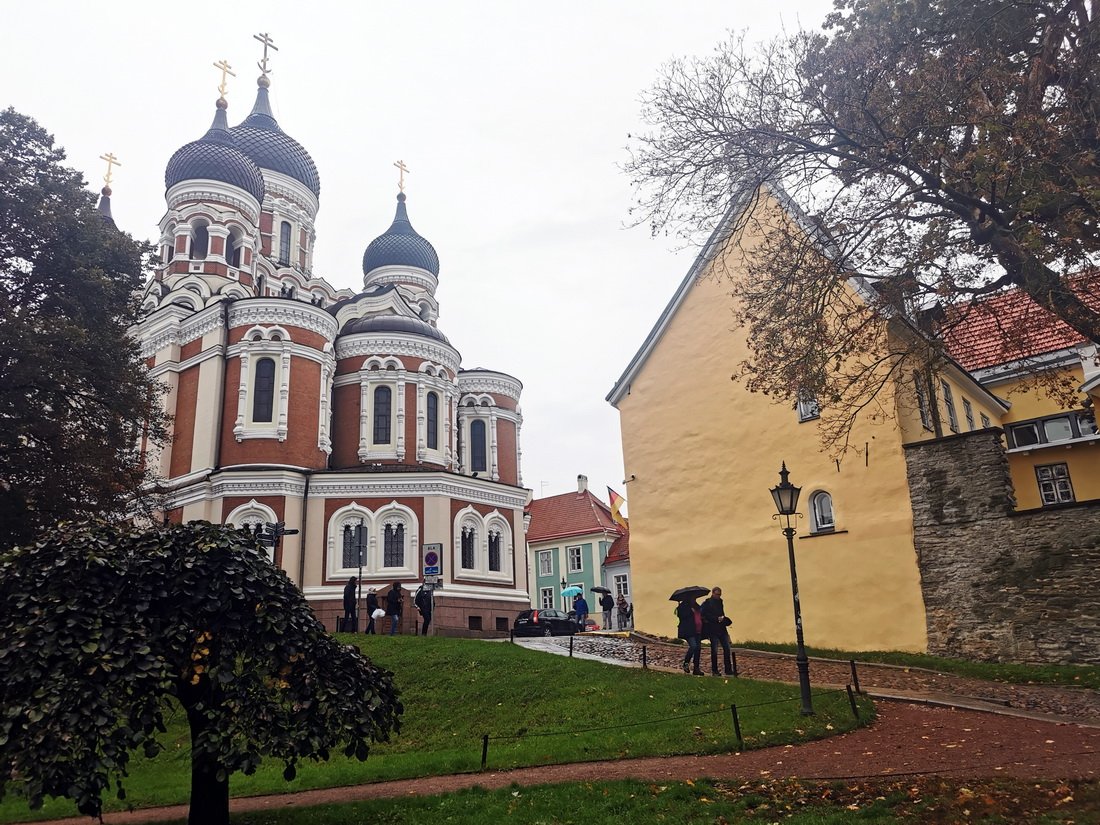
While the main facade draws the heavy crowds, stepping into the rear alleyways reveals how the cathedral’s massive footprint physically wedges into the older medieval street grid.
The Alexander Nevsky Cathedral is a visual anomaly in Tallinn’s medieval landscape. With its black onion domes and heavy golden crosses, it does not blend into the Baltic Gothic skyline – it disrupts it. Built between 1894 and 1900, the cathedral was designed as a bold statement of Russian imperial presence and dedicated to the military hero Saint Alexander Nevsky. Despite early 20th-century political proposals to demolish the building and erase the symbol, the structure survived. Today, beautifully restored, it is an inescapable part of the city’s silhouette. Inside, the space is opulent and dense: intricate mosaics, gilded icons, the soft glow of candles, and the heavy fragrance of incense create a genuinely sacred atmosphere.
The Reality Check
- The Protocol. This is an active church, not a museum. Entry is free, but the rules are absolute: covered shoulders and knees, heads covered for women (a simple hood works), no hats for men, and strictly no photography. Do not test this. The church attendants are famously uncompromising and will loudly and publicly reprimand anyone who pulls out a phone.
- The Flow. Expect steady foot traffic, but you will rarely hit a genuine bottleneck unless a cruise ship group is blocking the doors or it is a major religious holiday. If a service is underway, stand aside and keep quiet.
- The Perspective. Skip the front facade and walk around the back alleyways. Seeing this heavy Russian Revival structure jammed right against the austere medieval limestone captures Tallinn’s layered history better than any placard.
13. Danish King’s Garden
Logistics: Accessible via Lühike jalg or directly off Lossi plats. Free entry. Open 24/7.
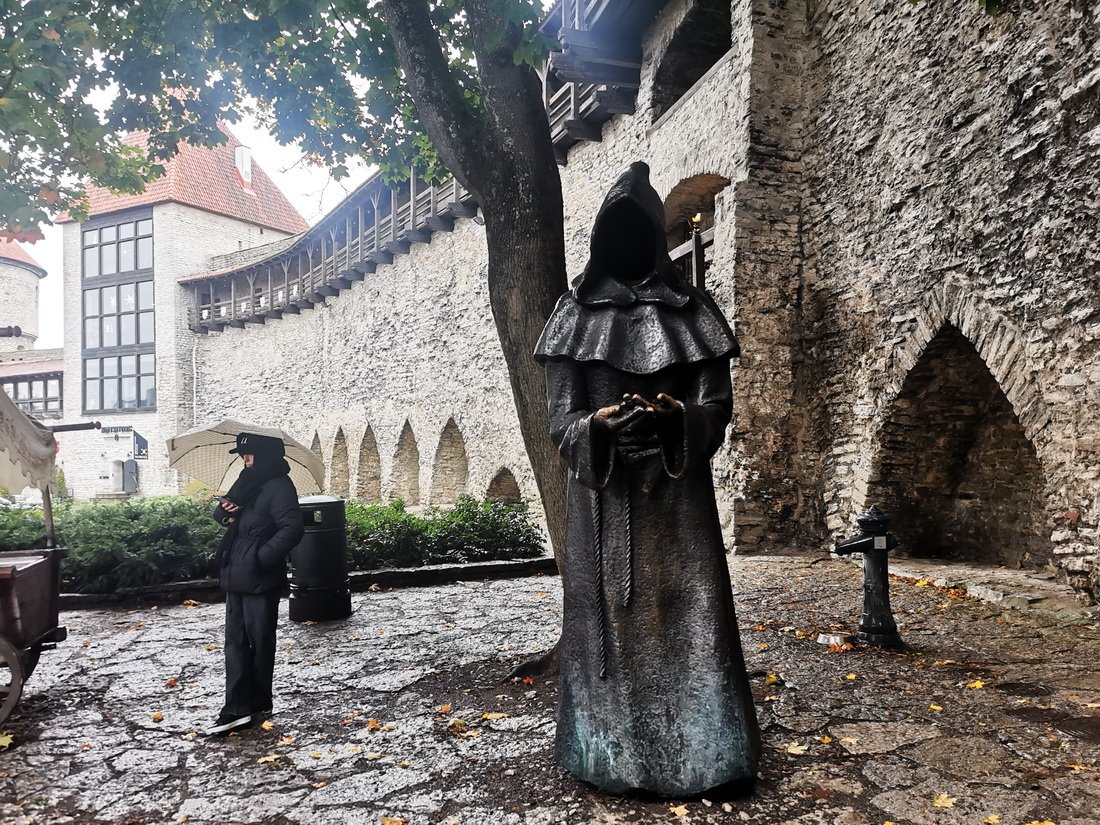
The oversized bronze monks were intended as haunting historical art. In practice, they serve as highly effective choke points for walking tours.
The Danish King’s Garden (Taani Kuninga aed) is a masterclass in false advertising: tucked between the medieval defensive walls and the Lower Town, it offers virtually zero garden. Local tourism boards cling to the legend that the Dannebrog – the Danish flag – miraculously fell from the sky right here in the 13th century. The current reality is far more utilitarian. Visually anchored by three faceless bronze statues, the narrow space is relentlessly soundtracked by buskers whose amplified covers echo aggressively off the surrounding stone. It is a loud, densely packed thoroughfare that feels entirely devoid of the medieval serenity visitors often expect.
The Reality Check
- The Navigation. Finding this paved plot requires a deliberate detour. You either duck through the heavy stone archway off Lossi plats, or survive the steep, uneven cobbles of Lühike jalg coming up from the Lower Town.
- The Bottleneck. The space is physically tiny, and the bronze monks act as black holes for walking tours. You will spend most of your time here dodging elbows as people jostle for photos in the narrow passage.
- The After-Hours Shift. Because the area is completely open, the only logical move is to come back after dark. Stripped of the daytime crowds, the underlit, faceless monks cast giant, unsettling shadows against the defensive walls. The space finally gains a sense of atmosphere once the noise dies down and you have the cobbles to yourself.
14. Kiek in de Kök Museum and Bastion Tunnels
Logistics: €16 (Free with Tallinn Card or pre-registered Museum Sundays). Open Tue – Sun. Museum website.
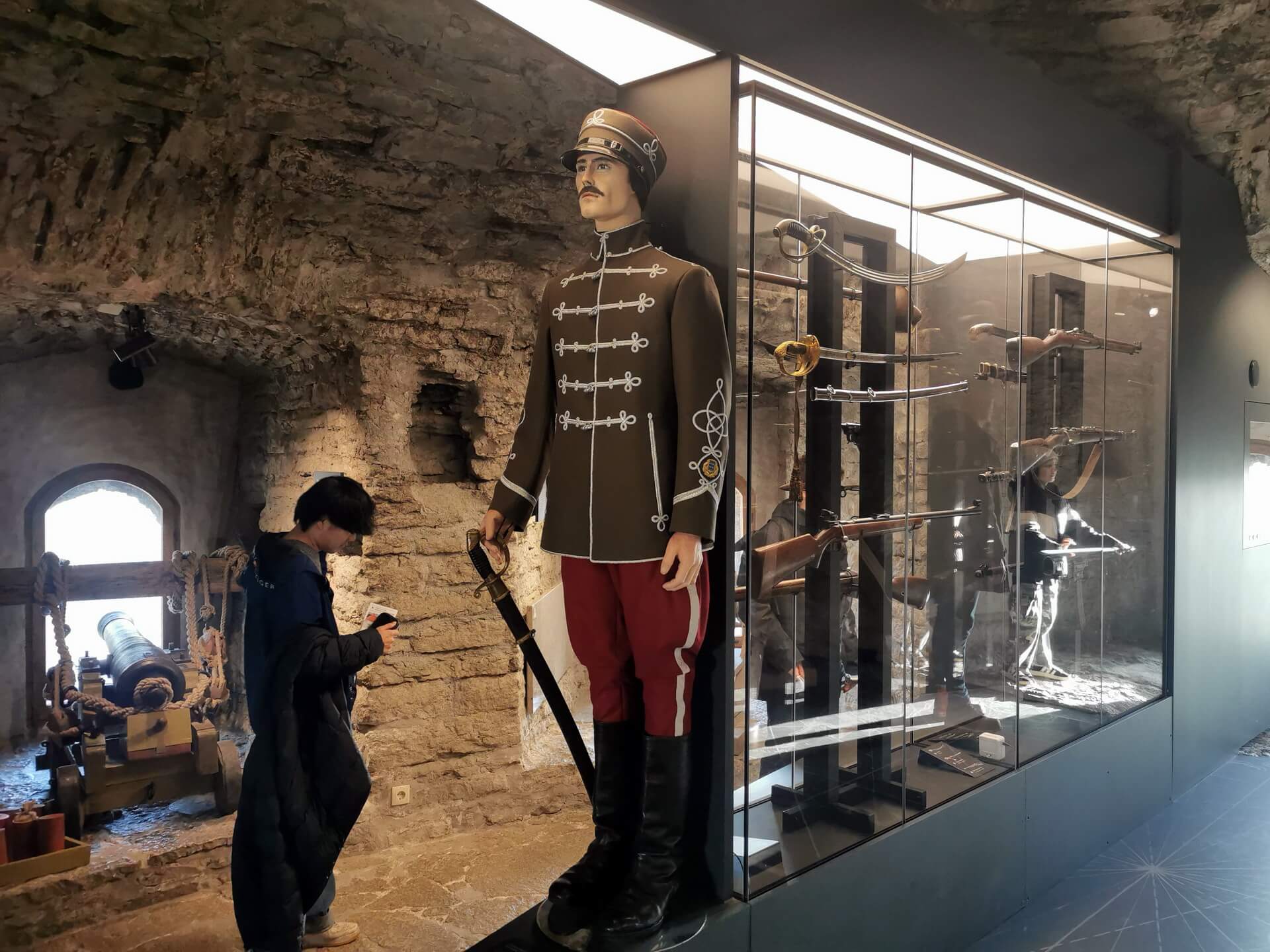
The above-ground floors offer a highly sanitised, traditional look at medieval and early modern military history.
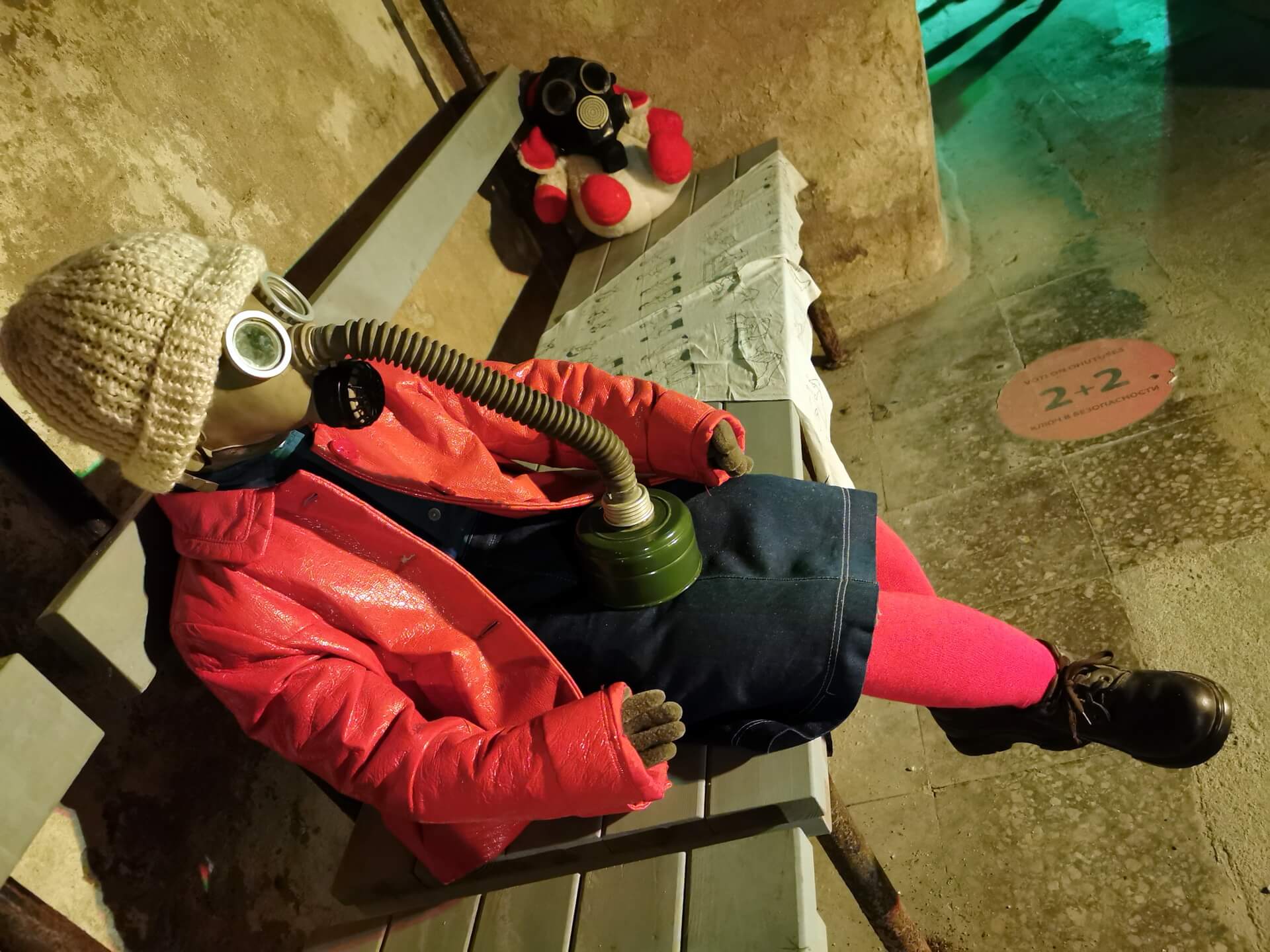
The subterranean reality. The Bastion Tunnels abandon medieval romance entirely in favour of Cold War survivalism.
Kiek in de Kök (Low German for “Peek into the Kitchen”) earned its name because 15th-century guards could literally look down the chimneys of the Lower Town. Today, the six-storey artillery tower has traded its military menace for interactive touchscreens. It is packed with hands-on exhibits that successfully keep children distracted, though the sheer volume of multimedia can feel sharply at odds with the fact that you are standing inside a brutal medieval killing machine.
The real reason to pay the entry fee lies underground. Originally dug by the Swedes in the 1600s, the Bastion Tunnels serve as a grim architectural timeline. You transition abruptly from 17th-century defensive passages into a functional Cold War fallout shelter, and finally into a bleak exhibit on the 1990s, when these abandoned corridors served as an underground city for Tallinn’s homeless. It is heavily sanitised for modern tourists, but the jarring shift from medieval posturing to genuine 20th-century paranoia is undeniable.
The Reality Check
- The Subterranean Climate. The tunnels sit at a persistent +8°C year-round. It is not a damp, dripping horror-movie cave, but it is effectively a massive stone refrigerator. Bring a jumper. The novelty of staring at brittle Soviet gas masks wears off rapidly when your teeth are chattering.
- The Pacing and Space. You are not legally required to commit to the exhausting 1.5-hour audio guide slog. If you simply want the atmospheric whiplash of walking through different eras, you can march through the broad, dimly lit corridors in 20 minutes. The passages are wide enough to keep claustrophobia at bay, and there are spots to sit when the concrete fatigue sets in.
- The Maiden Tower Café. Neitsitorn is physically attached to the museum complex and offers genuinely spectacular views over the city. Naturally, it is perpetually packed. Expect a vicious battle for a table, and remember you are paying a premium for the historical panorama, not for any culinary revelations.
If you notice a sudden shift in tone from here onward, you are not crazy. I am currently rewriting the second half of this itinerary to match the ruthless pragmatism of the first. The remaining locations (Rotermanni, Telliskivi, etc.) still contain solid logistical data, but their descriptions are waiting for a final editorial scrub. Check back soon for the fully unvarnished version.
Near the Old Town: The Transition
For the last 20 years, Tallinn’s centre of gravity has been shifting outward. Districts like Rotermann, Telliskivi, and the area surrounding Balti Jaam are no longer just “fringe” zones or transit hubs – they are as dense, crowded, and essential as the medieval core.
These spots are not a decompression chamber for the Old Town; they are where the city actually operates. You will find the same density of crowds here as inside the walls, but it is a functional mix of locals and visitors – and thankfully, entirely devoid of medieval costumes.
15. Rotermann Quarter
Logistics: Located right between the Old Town and the passenger port. Pedestrian only. Official website.
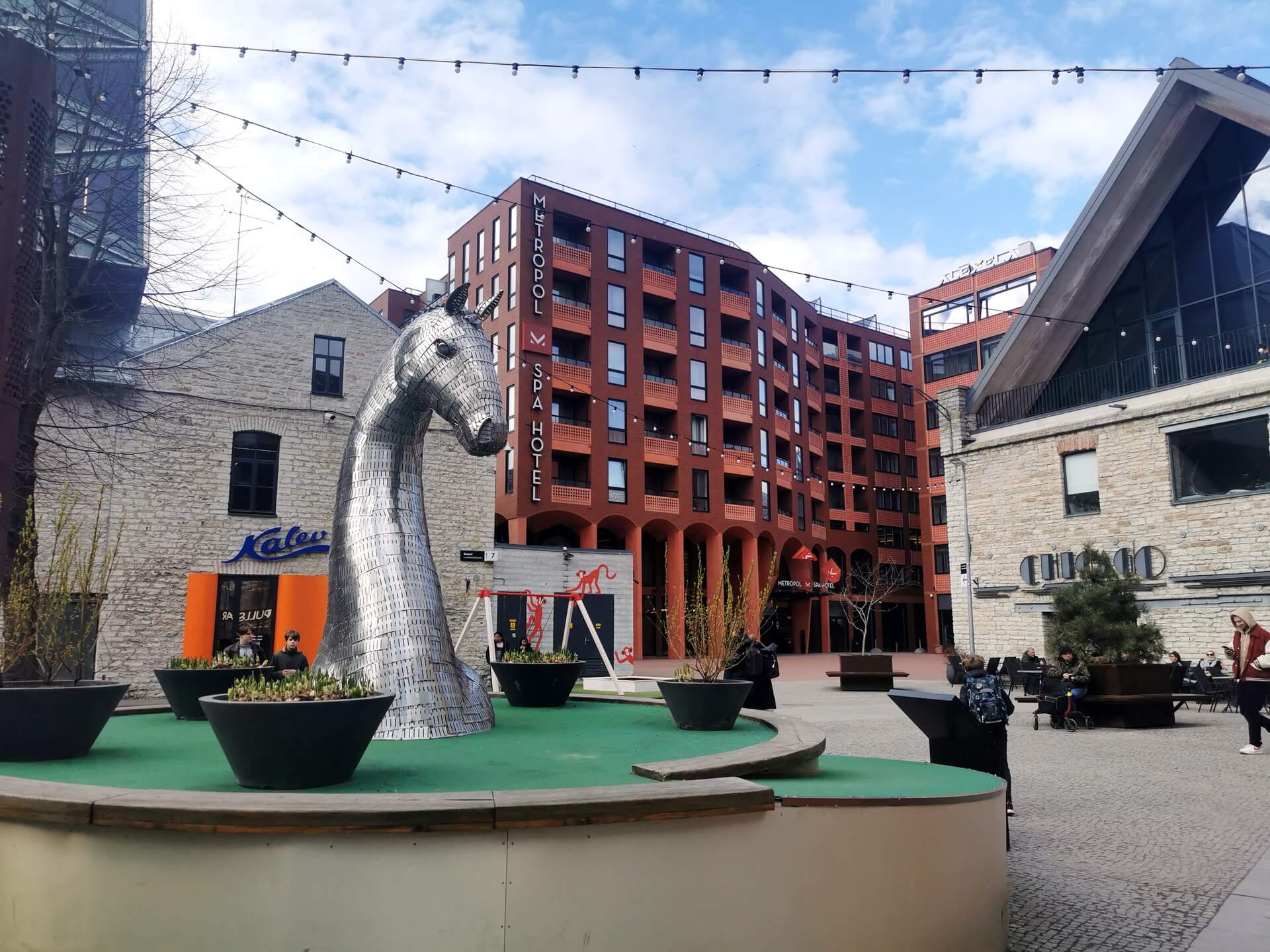
The central square of the Rotermann Quarter; use the metal horse sculpture as your primary navigational landmark.
Just steps from the Old Town walls, the Rotermann Quarter is a violent pivot from medieval stone to 21st-century urbanism. Originally a 19th-century industrial powerhouse churning out flour, spirits, and macaroni, the district was nationalised during the Soviet era. While a state bread factory limped along, the bulk of the area was left to rot as a decaying warehouse zone – a physical collapse so profound that its crumbling infrastructure served as the post-apocalyptic backdrop for the 1979 sci-fi film Stalker. The developers fully embraced this grim heritage, naming one of the district’s main pedestrian corridors Stalkeri käik (Stalker’s Alley). Today, those ruins have been repurposed into Tallinn’s premium lifestyle hub. The design is deliberately aggressive: heavy glass, Corten steel, and sharp geometry stand in total defiance of the nearby fairytale core.
The Reality Check
- The Price of Scenery: You are paying for the backdrop, not the utility. Cafés here carry a premium rent – if you are strictly here for the visuals, grab a coffee elsewhere. You can walk the main axis in under ten minutes..
- Winter Configuration: In December, the square hosts the city’s “alternative” Christmas tree. It is significantly quieter than the Town Hall Square, though the aesthetic is polarizing – it won’t be to everyone’s taste, but it remains a distinct perspective on modern Tallinn that is worth a look.
- The Kalev Flagship: Skip this if you are just buying standard chocolate or marzipan bars – you can get the exact same items in any local supermarket. Step inside only if you specifically need loose truffles or ready-made gift sets.
15. Balti Jaama Turg
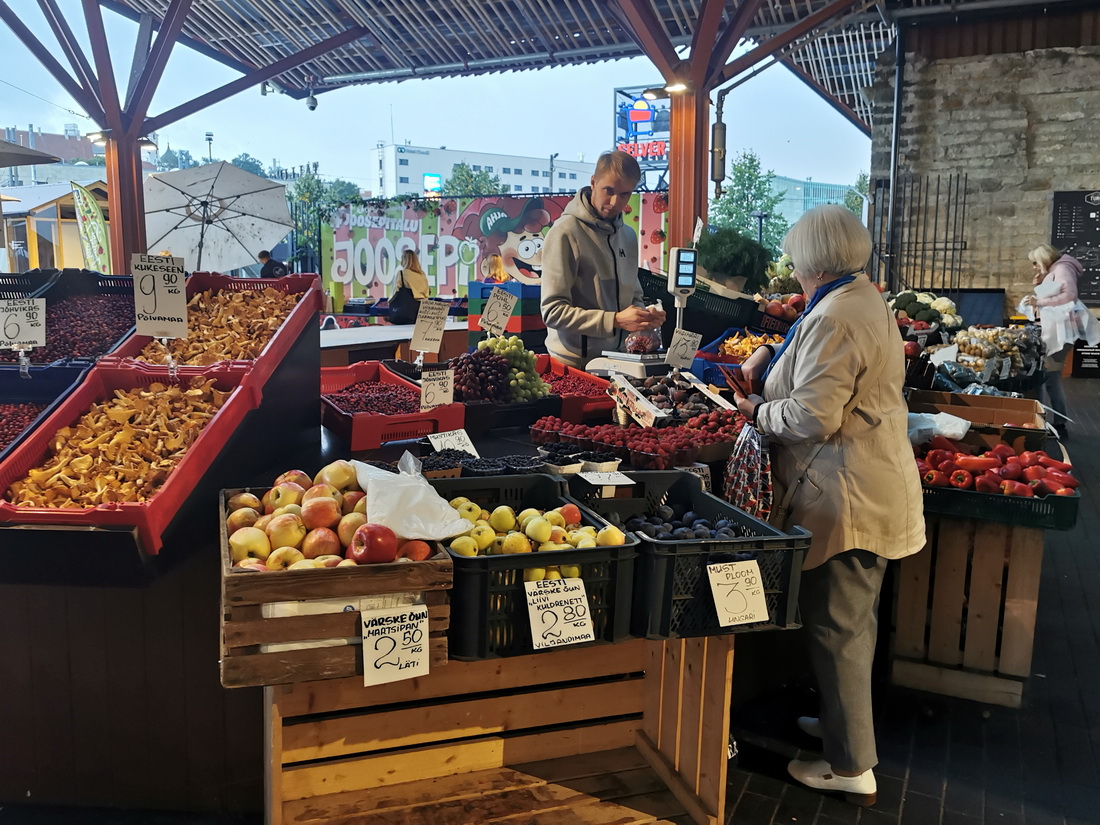
Outside Balti Jaama Turg – berries, chanterelles, and everyday Tallinn life.
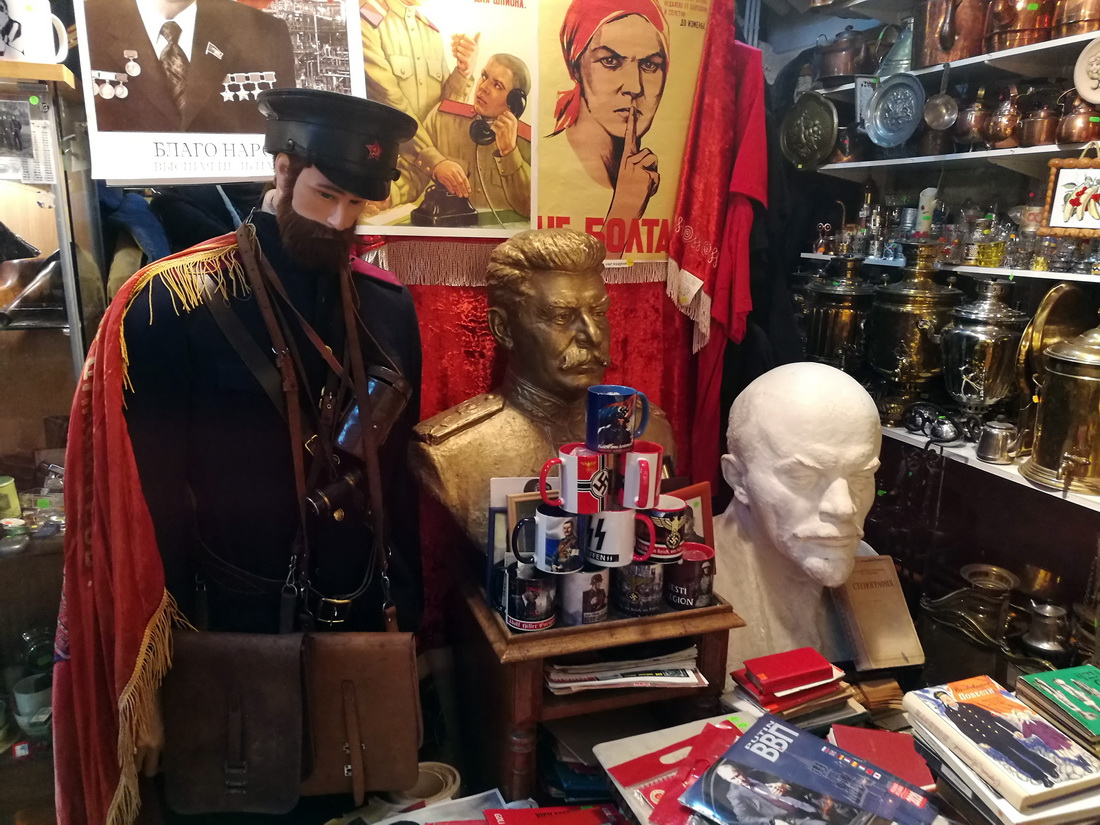
Upstairs at Balti Jaama Turg — antiques, Soviet kitsch, and other grandmother-approved oddities.
Part market, part time machine, Balti Jaama Turg is Tallinn’s most lovable chaos. Just behind the train station and five minutes from the Old Town, it brings together fresh food, street snacks, antiques, and the occasional Soviet oddity.
Downstairs: berries, mushrooms, smoked fish, dumplings, crepes, caviar — and plenty of quick lunch options. Office workers from nearby studios and shops pop in for a bite between meetings.
Upstairs: vintage glassware, military medals, tinsel-covered Christmas memories, and every kind of indoor shoe your grandmother could dream of. It’s like rummaging through several Estonian grandmothers’ attics at once — in the best way.
Give yourself time. You’ll probably leave with both a snack and something you didn’t plan to buy.
🎫 Free to enter. Open daily. Go hungry.
16. Telliskivi Creative City
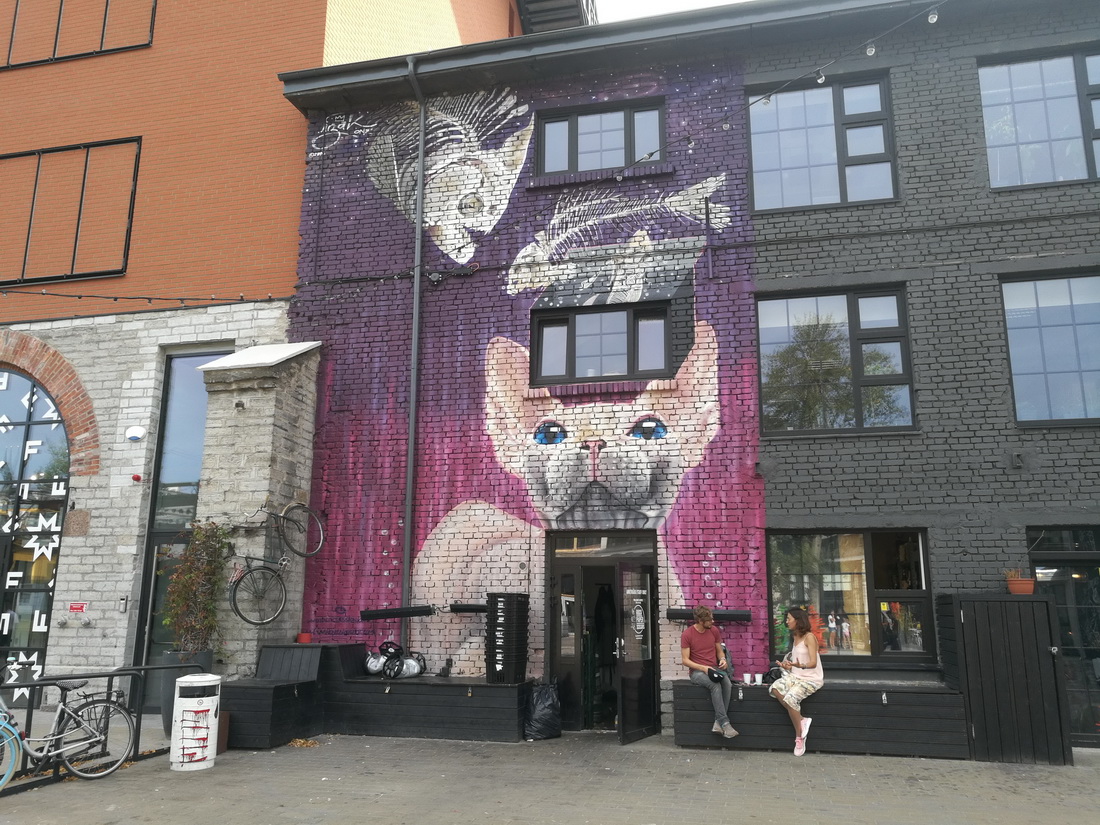
Where the art is bold, the coffee strong, and no chair matches another.
Once a cluster of old industrial buildings, now a colourful maze of cafés, studios, vintage shops, and street art. Telliskivi Creative City is where Tallinn lets its hair down — or shaves it off and dyes it pink.
Murals cover entire buildings. One café is inside a train carriage, another spills into a courtyard with mismatched chairs and dogs napping under tables. There’s always something on: pop-up galleries, design fairs, poetry slams, or just a DJ doing their thing at 2 in the afternoon.
It’s the kind of place where no one cares how you’re dressed — just grab a coffee and soak it all in.
Free to wander. Best during lunch or golden hour, when everything hums.
17. Vabamu Museum of Occupations and Freedom
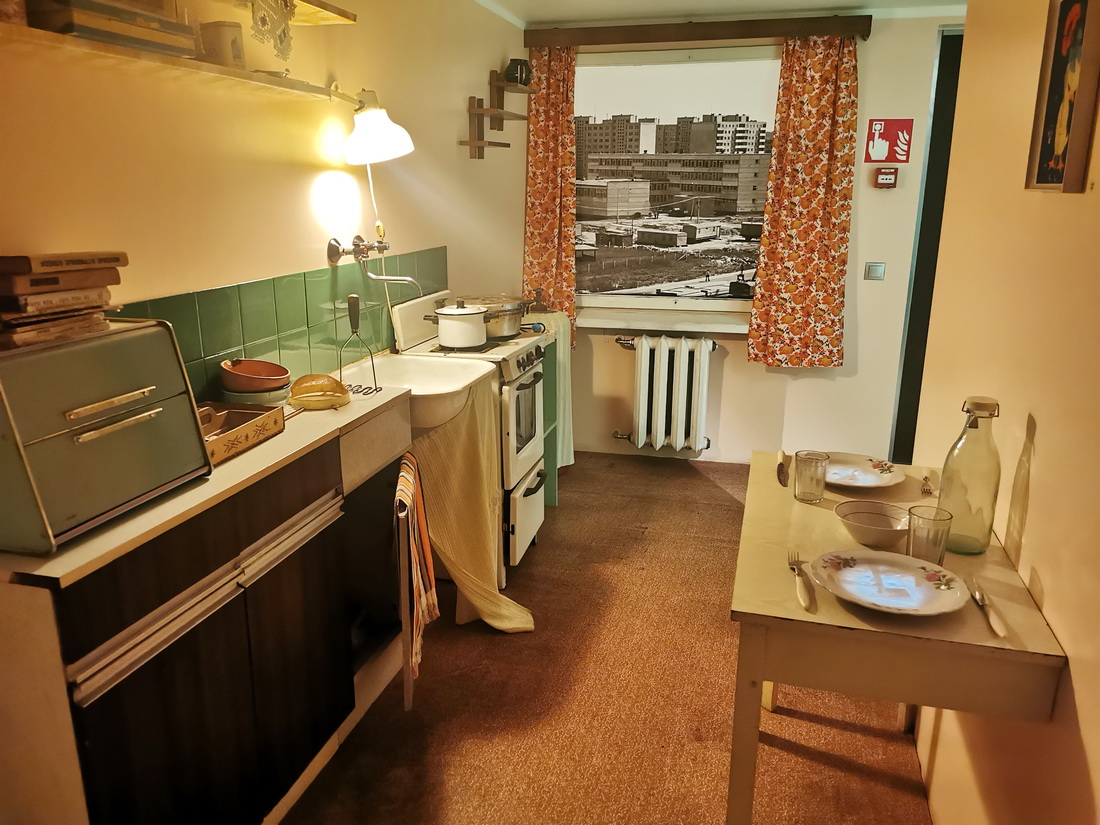
A Soviet-era kitchen — everyday life, frozen in time
This museum doesn’t try to impress with quantity — it stays focused, thoughtful, and quietly powerful. Vabamu tells the story of Estonia’s 20th century through personal voices: diaries, letters, interviews, and the everyday objects that people held onto through occupation, deportation, and return.
You’ll see a few Soviet relics — a kitchen, a prison door, a soda vending machine — but it’s the stories that stay with you. One room plays phone calls from survivors. Another invites you to stand under a glowing map of exile routes.
It’s a very specific kind of museum — more about listening than looking. If you’re not in the mood for heavy history, you might find it hard-going — but if you’re in the mood, it’s deeply moving.
Entry €11. Open daily. Give yourself at least an hour — more if you like to take your time.
The Furthest Stops
18. Cruise Harbour
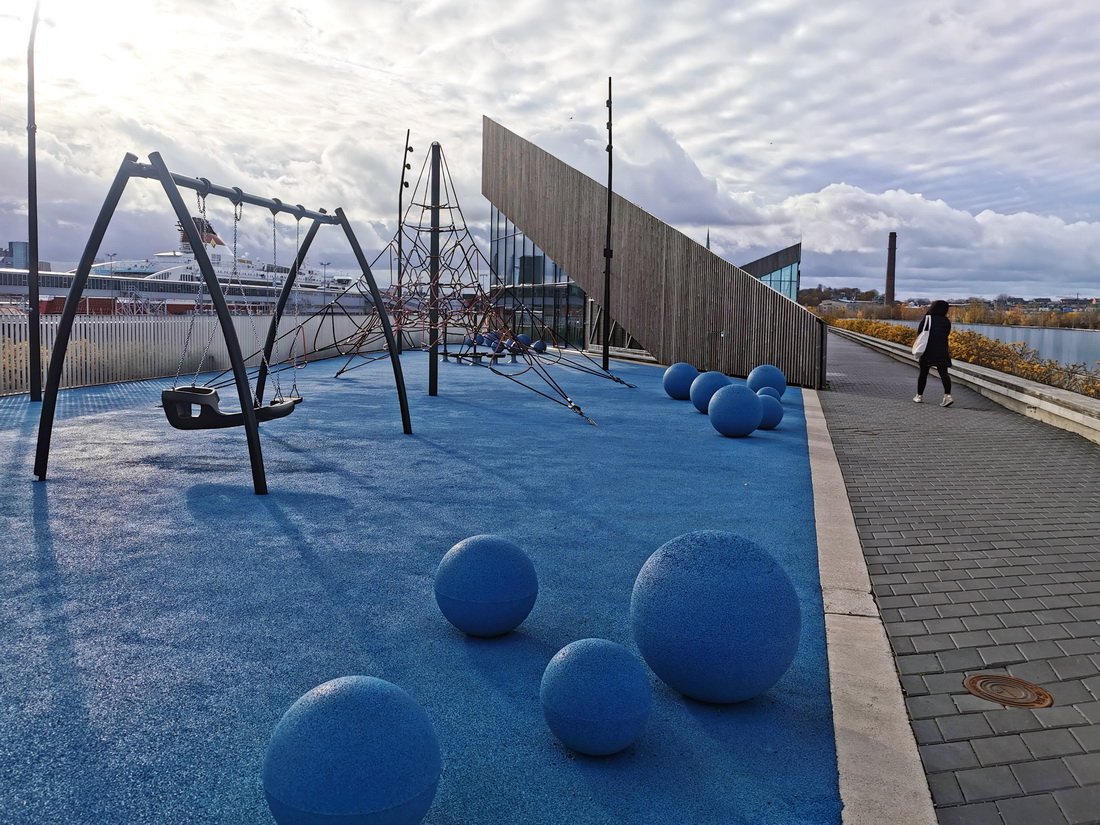
Eco-glass, sea breeze, and a rooftop made for walking.
You don’t need a cruise ticket to enjoy Tallinn’s Cruise Harbour — the terminal doubles as a public space, with some clever eco-tech built in. Solar panels on the roof, sea-sourced heating below, and a long wooden promenade curving overhead like a boardwalk in the sky.
It’s 850 metres of open-air walking, with views of the sea, the ferries, and Tallinn’s skyline behind you. Great for a sunny day — and very windy, always.
There’s not much to do except walk and look, but that’s the charm. A bit of future-facing design in a city that still wears cobblestones.
🎫 Free to visit. Best in good weather. Hat not recommended.
19. Kadriorg
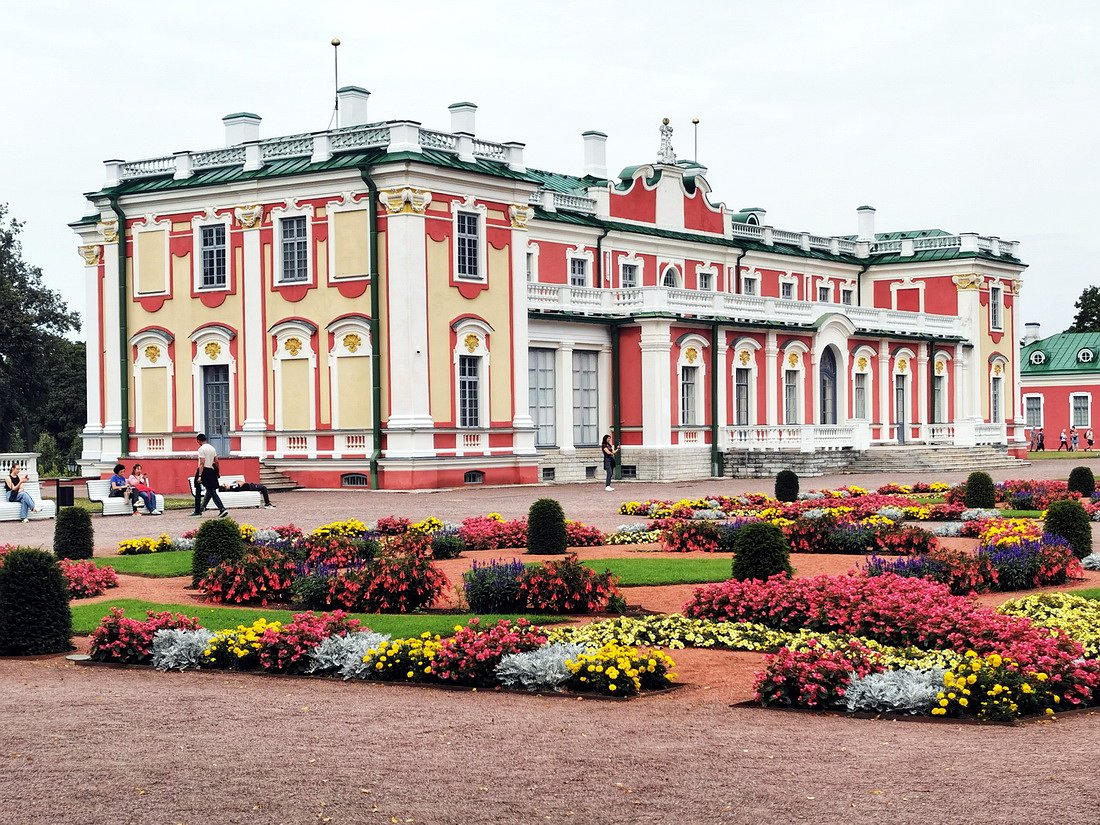
Kadriorg Palace garden in full bloom — Tallinn showing off a little.
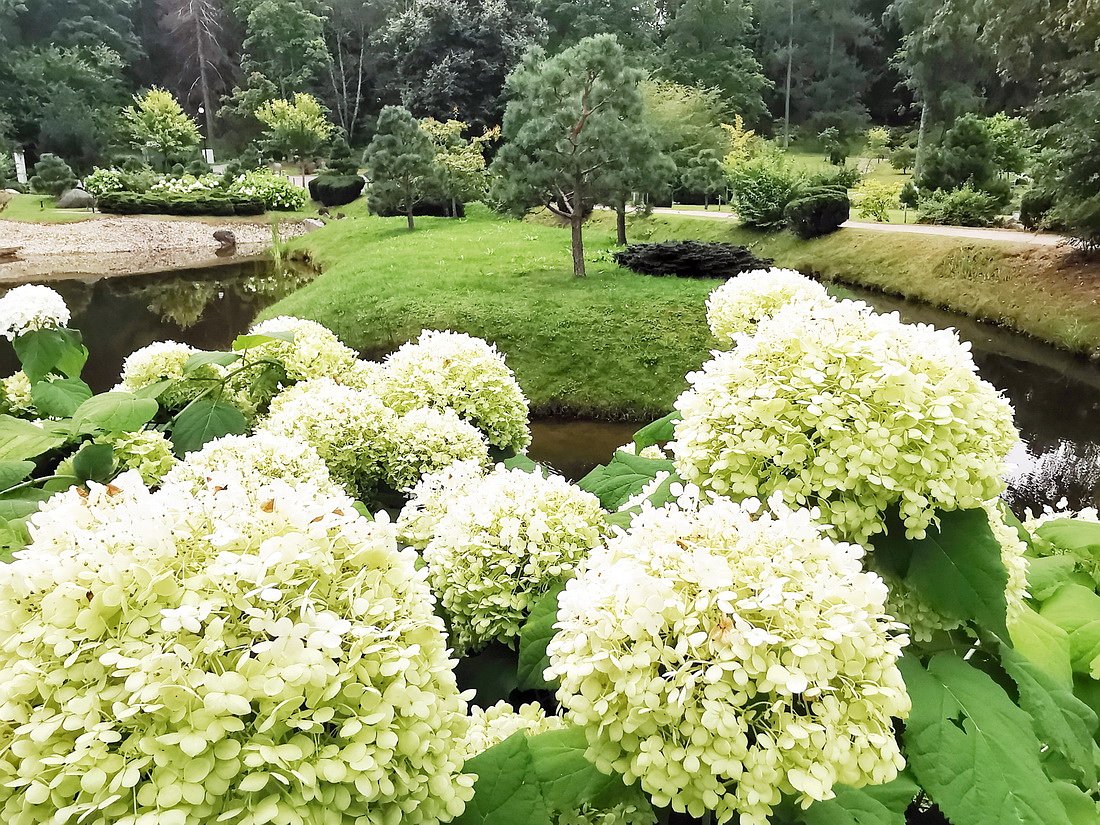
The Japanese Garden in Kadriorg — quiet, green, and full of hydrangeas.
When Tallinn needs a breather, it goes to Kadriorg. Just east of the city centre, this leafy district is all wooden villas, swan ponds, chestnut trees, and the odd palace built for a Russian empress.
For a deeper look at the district — its wooden villas, hidden museums and a walking route through the park — see → my Kadriorg Tallinn guide.
The star is the Kadriorg Palace, commissioned by Peter the Great for Catherine I. It now houses part of the Art Museum of Estonia — but many visitors just come for the baroque gardens, full of flowers, fountains, and perfectly clipped hedges.
A short stroll away: the Swan Pond, a quiet Japanese garden, a rose terrace, and modern contrast in the form of KUMU — a bold, glassy art museum that looks like it landed from the future (in a good way).
🎫 Palace and KUMU both require tickets. The park is free. Come for the art, stay for the trees and birdsong.
20. Tallinn Lower Lighthouse
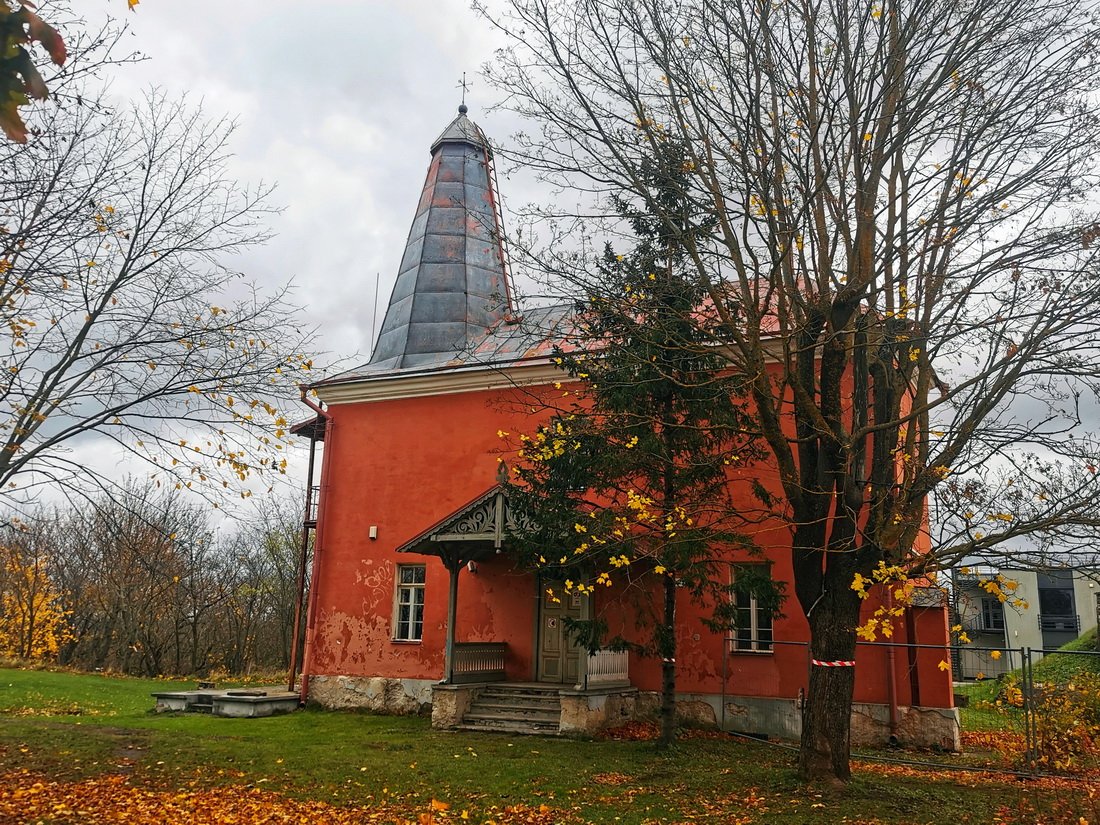
Tallinn’s Lower Lighthouse — quietly doing its job since 1806.
You won’t find it in most travel guides — but if you’ve got even mild lighthouse curiosity, this one’s worth a detour. Tucked into a small rise behind KUMU, the Tallinn Lower Lighthouse (Kadrioru alumine tuletorn) has been guiding ships into the bay since 1806.
It’s 42.4 metres tall, painted in red and white, and still working — in tandem with its twin, the Upper Lighthouse, about a kilometre away. The path up is short but steep, with birdsong and sea air for company.
You can’t go inside (at least not yet — the city has future plans), but if you’re the kind of person who collects lighthouses like others collect fridge magnets, this one’s for you.
🎫 No entry, but fully visible from the outside. Five minutes’ walk from KUMU — follow the uphill path just to the left of the museum.
21. Lennusadam Seaplane Harbour
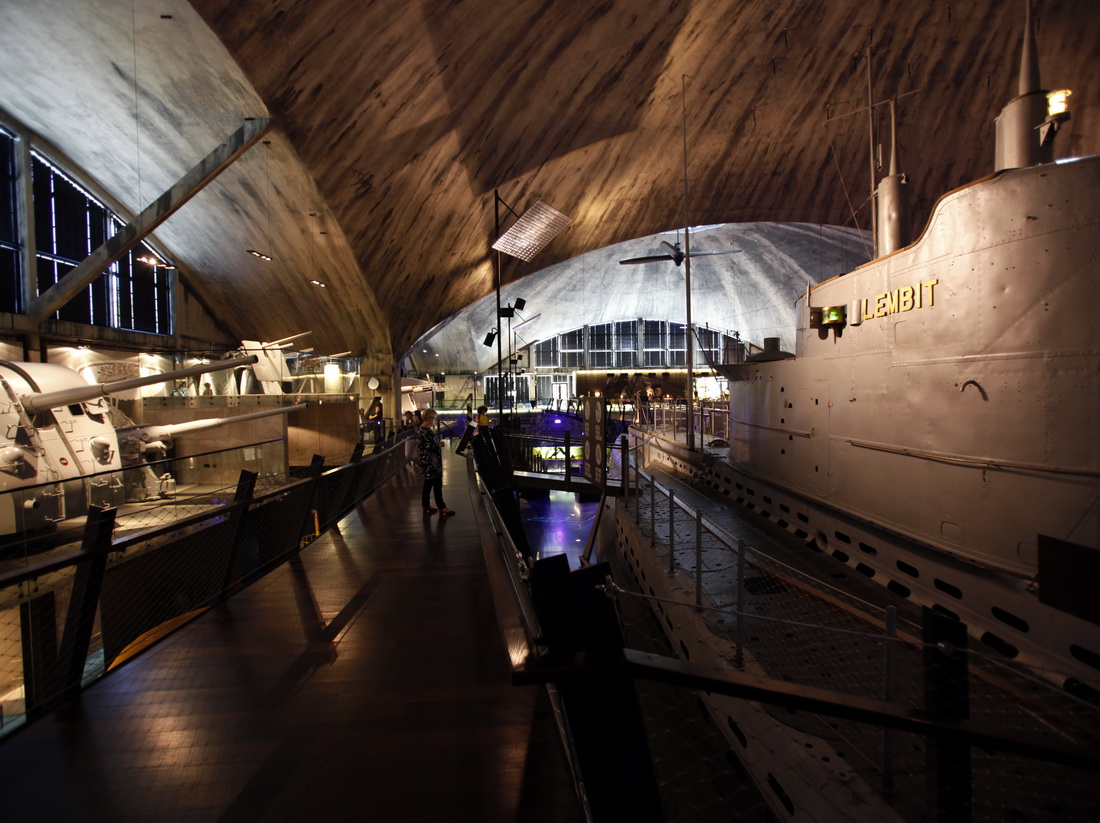
On the right: Lembit, a real submarine you can climb into and get mildly claustrophobic in. Photo: Paul Kuimet
If the Maritime Museum in Fat Margaret is all stories and models, then Lennusadam is where the big kids play. This vast harbour hangar holds ships, planes, simulators — and Lembit, a real submarine you can climb through like a tin can with periscopes.
But before the wow-factor sets in, take a moment with the medieval shipwrecks — small in number, but absolutely fascinating. These are real Baltic finds from centuries ago, and they quietly anchor the entire museum in local history.
Further in: steam icebreakers, sea mines, model ships, and interactive corners where you can steer, launch, and sink things (virtually, of course). Weirdly fun — especially if you’re the press-every-button type.
🎫 Entry €15. Open daily. Give it at least 2 hours — more if you start playing.
22. Noblessner Port
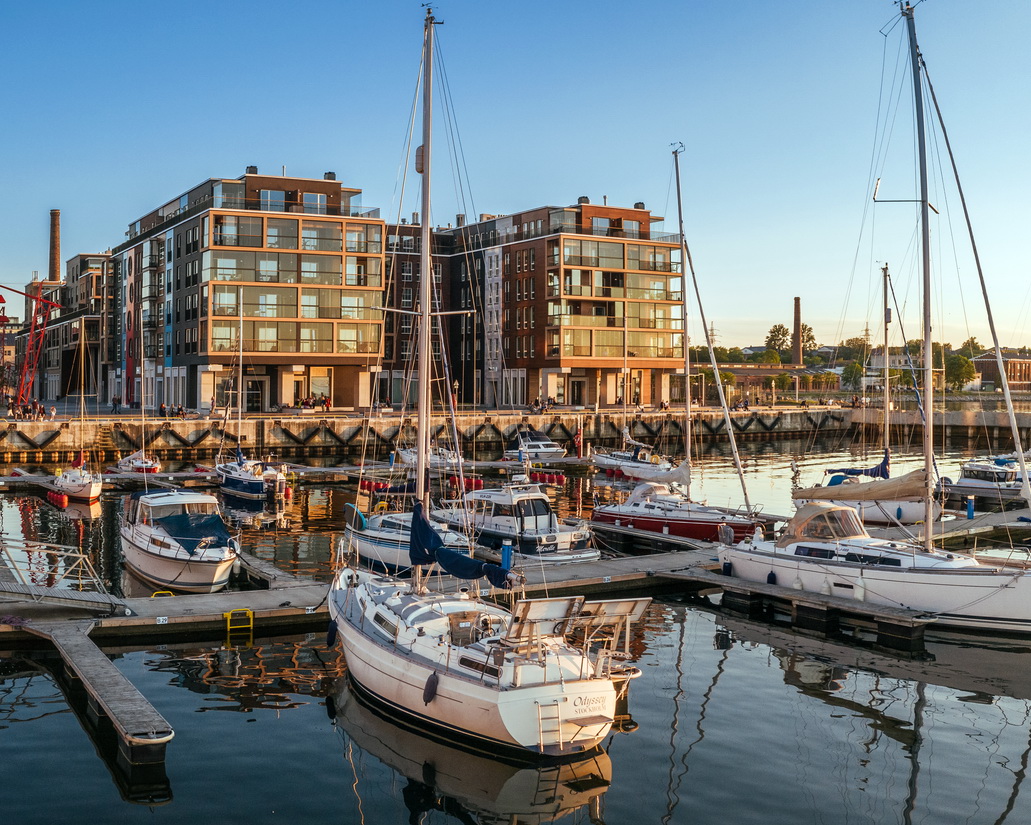
A warm day well spent wandering around Noblessner. Port. Photo: Kaupo Kalda/VisitEstonia
What used to be a submarine factory is now Tallinn’s trendiest little port. Think colourful buildings, a yacht marina, stylish cafés, and just enough seagull drama to remind you you’re by the sea.
There’s not much to “do” — and that’s the point. People come here to stroll, have a long lunch, and peek into small design shops. In summer, terraces fill up fast. In winter, there’s usually a weirdly creative Christmas tree standing proud in the wind.
Families love the big dinosaur sculpture near the water. And if you’re curious about how virtual reality explains invention (yes, really), check out the Proto Invention Factory in one of the old halls.
🎫 Tickets €16–20 depending on age and extras.
Outskirts and Escapes
23. Beach and Monastery in Pirita
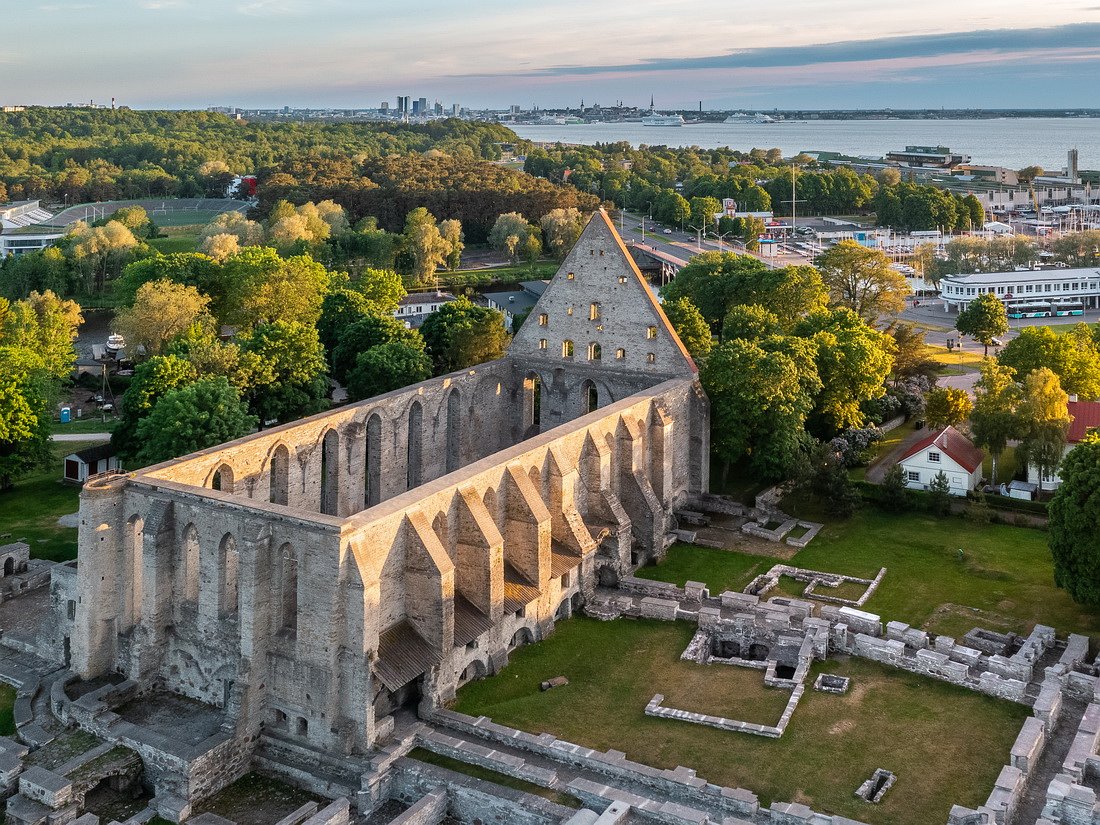
Once home to monks and nuns — now a great place to roam the ruins. Photo: Kaupo Kalda/VisitEstonia
When locals need sun, sea, or just space, they head to Pirita. It’s Tallinn’s breeziest district — a mix of quiet houses, forest paths, a long sandy beach, and one seriously photogenic ruin.
The Pirita Convent, founded in the early 1400s, was once the largest in Livonia. Today, only the walls and tall stone arches remain — but that’s part of the charm. Wander through grass-covered aisles, and you’ll hear almost nothing except the wind and your own steps. In summer, concerts are sometimes held right in the ruins.
The beach is just down the road — clean, calm, with shallow water and changing cabins. Come in July, and you’ll find half of Tallinn here with ice creams and sun hats.
🎫 Entry to the convent ruins €4. Getting here takes about 15 minutes by bus from the centre.
24. Botanical Garden
Tallinn’s Botanical Garden is one of those places where time gently stretches. In summer, the lawns are full of tulips, peonies, irises, and roses. People come more than once — the blooms change weekly, and the mood shifts with them.
The paths curve through trees, ponds, rock gardens, and shaded benches. It’s never too crowded, and there’s always a corner to be alone with your thoughts (or your picnic).
In winter, the greenhouses take over — full of palms, cacti, and tropical humidity. Every March, the orchid show steals the spotlight with hundreds of varieties blooming at once like it’s a floral fashion week.
🎫 Entry €6. Open daily. Bus stop: Kloostrimetsa. Plan for at least 90 minutes — more if you like getting lost among petals.
25. Tallinn TV Tower
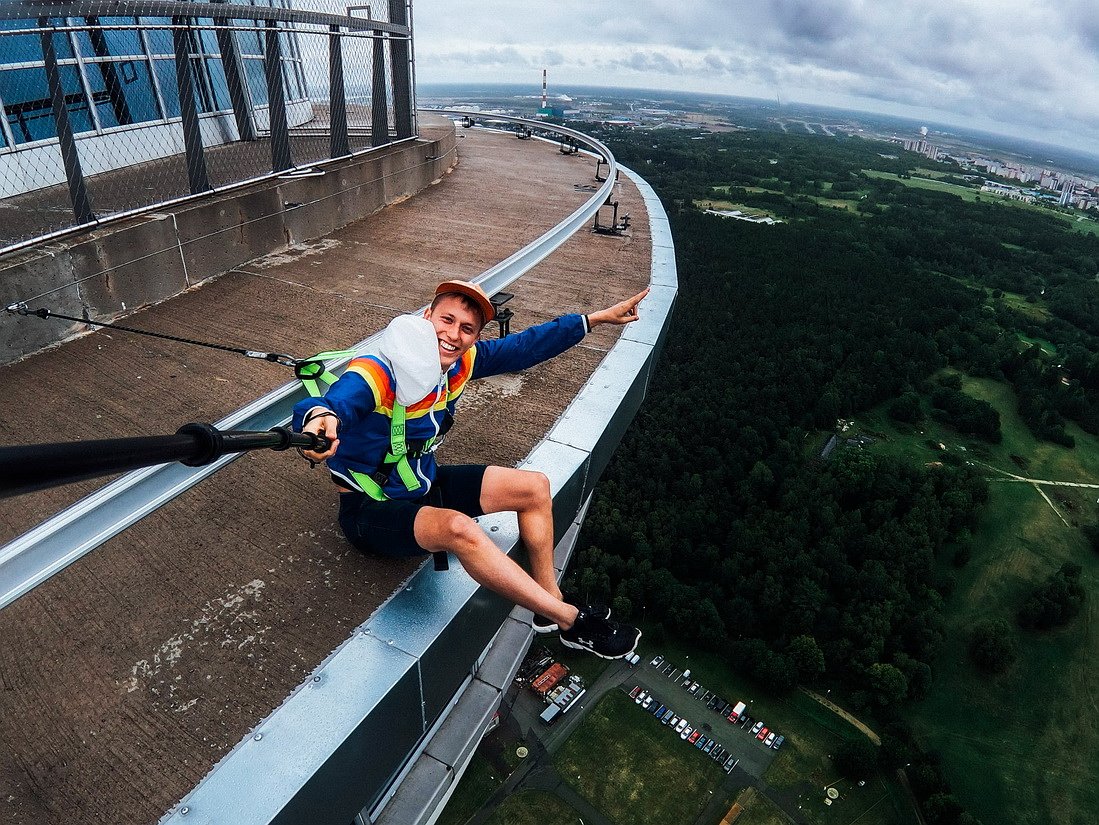
The view’s great — if you’re not afraid of heights. Photo: Jorden Tually/VisitEstonia
Tallinn’s tallest building isn’t in the centre — it’s out by the forest, where the TV Tower rises 314 metres above sea level. Built for the 1980 Moscow Olympics, it now offers the best panorama in town, plus a few surprises.
The observation deck sits at 170 metres — Tallinn in miniature, the sea in the distance, and forest in every direction. There’s a small café, a glass floor panel for brave souls, and rotating exhibitions on Estonian science and space dreams.
Feeling bold? You can walk the edge of the terrace in a safety harness — 22 floors up, wind in your face, nothing but glass behind you. Not for everyone, but unforgettable if you’re that kind of tourist.
🎫 Entry €18. Terrace walk extra. Open daily. Best on a clear day — or at sunset, if you’re lucky with the light.
26. Open-Air Museum in Rocca al Mare
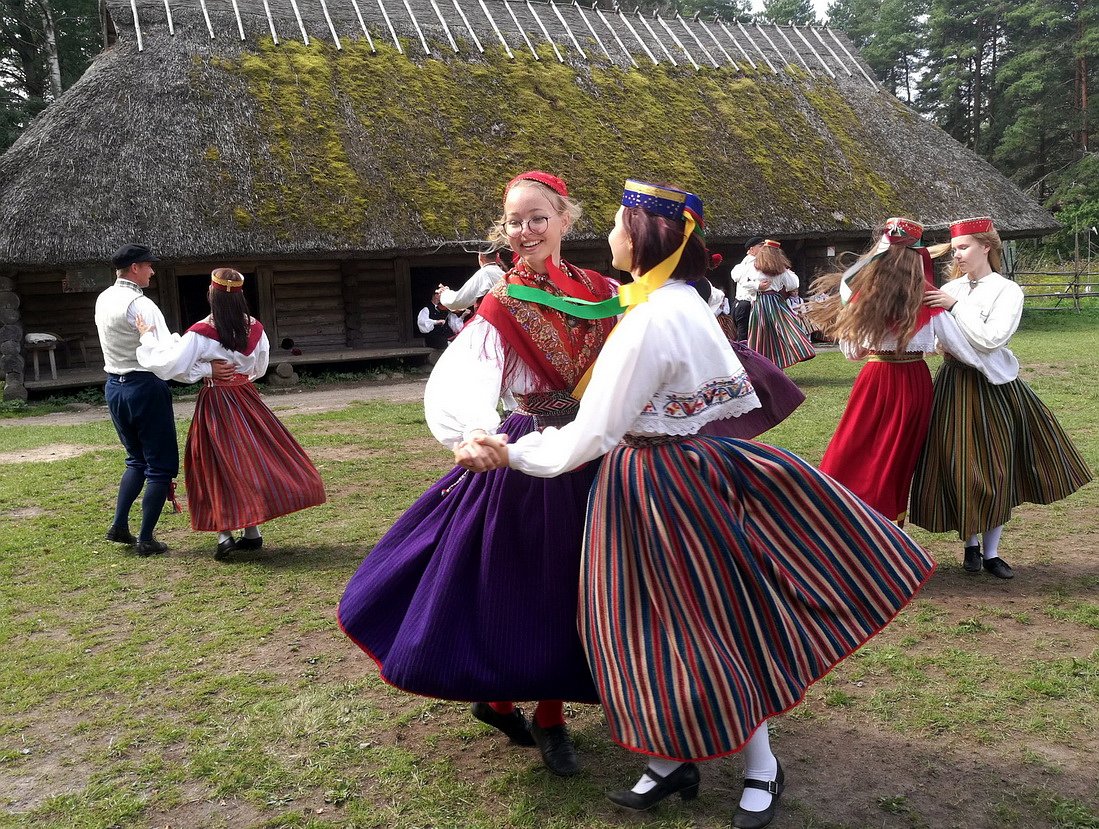
Folk dancing in the forest — and yes, you can join in.
Like stepping into a quiet village from a few centuries ago — but with buses and Wi-Fi just outside. The Estonian Open-Air Museum in Rocca al Mare spreads across a coastal forest and brings together around 70 historic buildings: farmhouses, windmills, a wooden chapel, a schoolhouse, and swings big enough to launch you back to the 1800s.
Some houses are open to explore. Others smell faintly of smoke and old stories. Staff in folk costumes might be baking bread, carving spoons, or simply greeting you like a long-lost neighbour.
In summer, concerts and events fill the grounds. In winter, it turns into a snow-dusted village with chimney smoke and near silence — just you and the creak of old wooden steps.
🎫 Entry €12. Open daily. About 25 minutes from the centre by bus.
27. Glehn Park & Castle
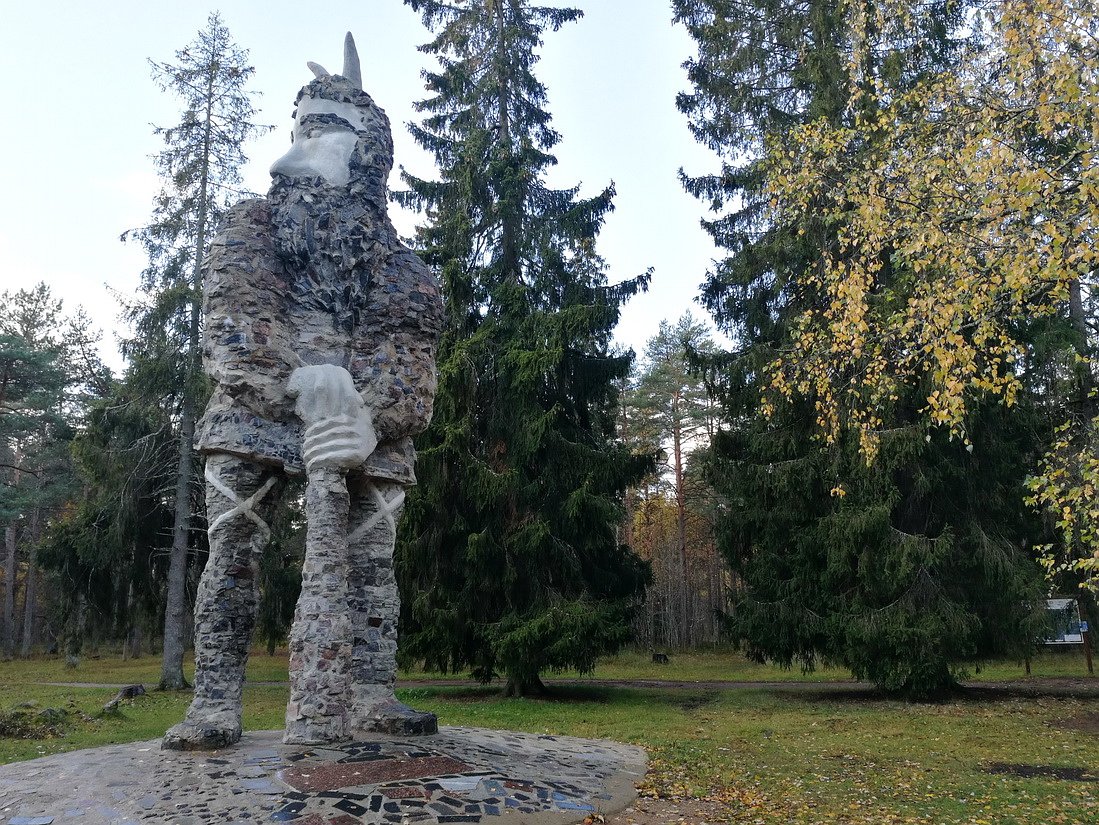
Kalevipoeg keeping watch in the woods — slightly heroic, slightly bewildered.
If Tallinn ever had a slightly eccentric forest uncle, he’d live here. Glehn Castle, built in the late 1800s by landowner Nikolai von Glehn, hides in a quiet hilltop park near Nõmme — with statues, towers, and that charming sense of “what exactly is going on here?”
The castle itself is closed to visitors — it belongs to Tallinn University of Technology now — but the park around it is open and full of oddities: a round observatory that looks like it wants to fly, a heroic statue of Kalevipoeg (the Estonian mythical giant), and a granite crocodile lounging in the grass like it owns the place.
In autumn, the whole area glows golden. Locals walk their dogs here. Kids climb the statue. The forest does its thing.
🎫 Free to explore. About 30 minutes from the centre by bus.
Tallinn From Above: Where to Find the Best Views
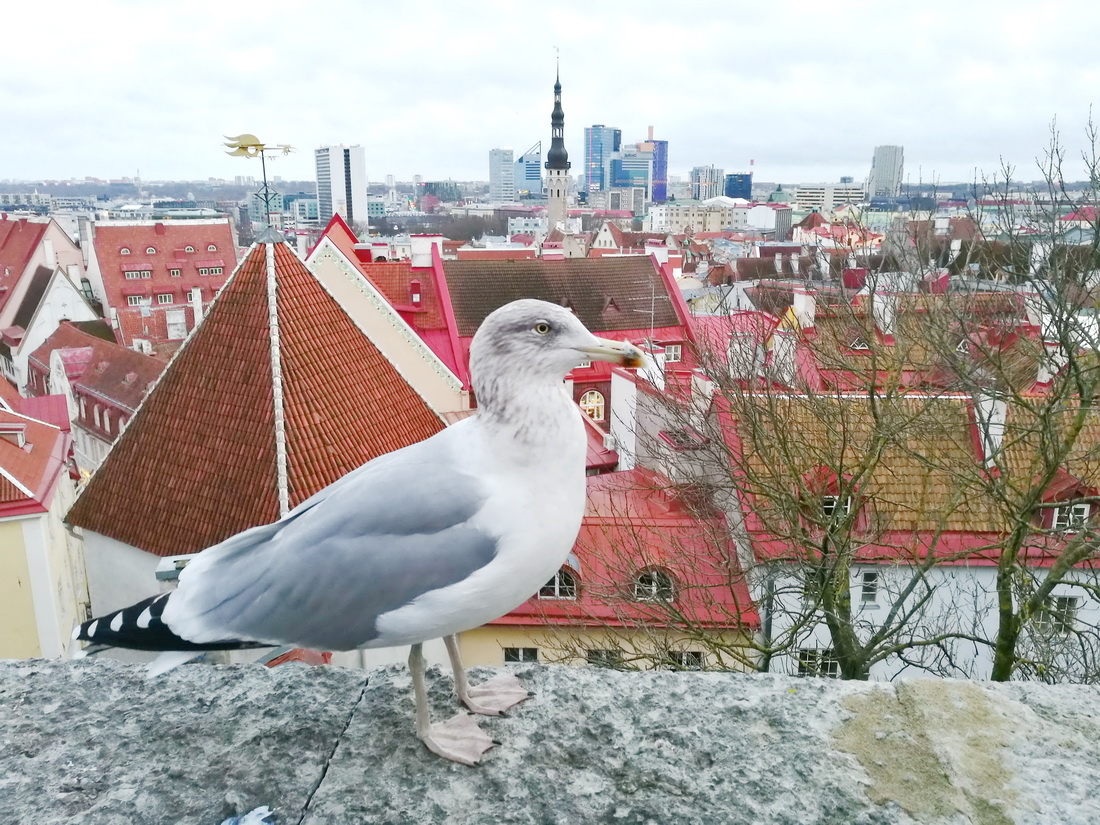
Local resident at the Kohtuotsa viewing platform – always ready for a photo.
Tallinn looks fantastic from above — and the good news is, most of its best views are just a short climb (or elevator ride) away. Here are a few favourites worth pausing for:
Kohtuotsa Platform
The postcard view. Located on Toompea Hill near the Alexander Nevsky Cathedral, this spot lines up spires, red rooftops, the sea, and even the glassy skyline of modern Tallinn — all in one frame. Expect crowds, especially at sunset, and a seagull who knows how to pose.
Patkuli Platform
Just a few minutes’ walk from Kohtuotsa — and usually a little quieter. The view is more traditional: city walls, turreted towers, and the Gulf of Finland in the distance. To get there, you can stroll down Rahukohtu Street or climb the 157 old stone steps from below.
St. Olaf’s Church (Oleviste kirik)
The climb is a workout — 232 spiral steps — but the view from 124 metres up is worth every one. No glass, just a wire fence and strong Baltic wind. Open April to October, weather permitting.
🎫 Entry €5. Card or cash accepted.
Niguliste Church Tower
Prefer not to sweat for your skyline? Take the glass elevator inside St. Nicholas’ Church and enjoy a fully enclosed viewpoint. It’s part of the art museum, so you’ll need a ticket — but it’s the easiest way to enjoy Tallinn’s rooftops with zero effort.
🎫 Entry €12 (includes museum and tower). Free with Tallinn Card.
Tallinn TV Tower
For the highest viewpoint in Estonia, head out to the TV Tower near the Botanical Garden. The 170-metre platform offers a broad panorama — more forest than church spires, but still stunning on a clear day. Bonus: a glass floor panel for brave souls.
🎫 Entry €18. Terrace walk extra.
Typical Prices in Tallinn: What to Expect
Tallinn once had a reputation as a very cheap destination. That is no longer entirely true. Prices have gradually moved closer to the rest of Northern Europe, although the city still feels noticeably more affordable than nearby Scandinavian capitals.
To give a quick idea of everyday costs in central Tallinn:
-
-
-
- Coffee in a café: €3.50–4.50
- Casual lunch: €10–16
- Dinner in a mid-range restaurant: €20–35
- Museum ticket: €8–15
- Public transport ticket: €2
-
-
Many of Tallinn’s best experiences cost nothing at all. Walking through the Old Town, climbing viewpoints, exploring Kalamaja or strolling along the seaside parks can easily fill a day without much spending.
For a full breakdown of current prices — including supermarkets, daily budgets and where the city feels expensive — see my →Is Tallinn Expensive for Tourists in 2026?
Where to Buy Groceries in Tallinn?
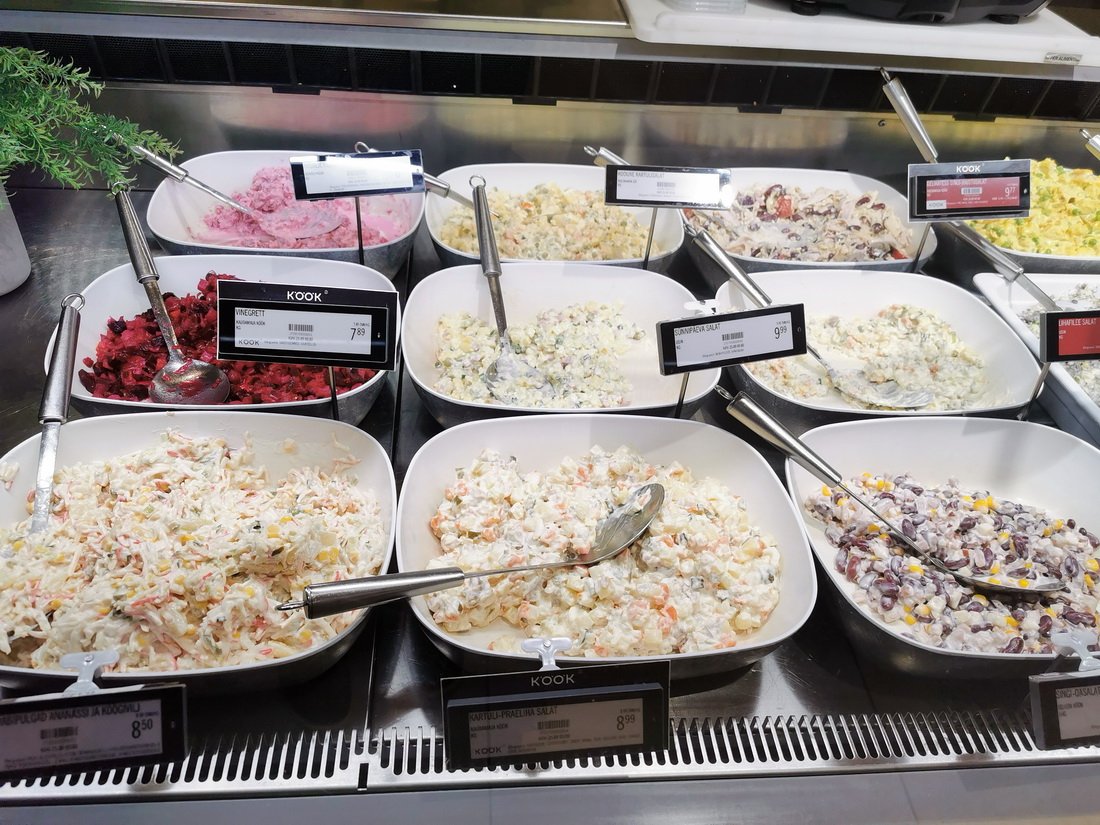
Ready-made salads and meals at the Viru Keskus supermarket — Tallinn’s fast and filling lunch solution.
Tallinn has no shortage of supermarkets — Selver, Prisma, Rimi, Maxima, Lidl. Prices don’t differ wildly, but for the budget-conscious: Lidl and Rimi tend to be cheaper, while Selver leans slightly upscale. All of them stock gluten-free, lactose-free, and vegetarian options.
Need food right now? Head to the Viru Keskus supermarket near the main bus stop. They’ve got a solid selection of ready-to-eat meals — roast chicken, sushi, salads, pastries, smoothies — quick, decent, and no cooking required.
For something more atmospheric, walk over to Balti Jaama Turg (just 5 minutes from the Old Town). Fresh berries, veg, smoked fish, caviar, and a dozen food stalls selling everything from dumplings to desserts. Slightly pricier than average, but worth it for the vibe.
Want to shop like a local? Try the Central Market (Keskturg). Simple, unfussy, and full of real-life Tallinn — plus decent prices.
🍴 Wondering what all that smoked fish, rye bread, and mysterious dairy actually tastes like? → Here’s my short guide to Estonian food.
How much time do you need in Tallinn?
Let’s be honest — even one day in Tallinn can be lovely. The Old Town is compact, and you can see a lot just by wandering. But if you’ve got a bit more time, here’s how it plays out:
🕰️ 1 day
Enough for: cobblestones, spires, coffee, and a decent number of wow moments.
You’ll mostly stick to the Old Town, maybe squeeze in a museum or two.
If you are planning a short visit, see my detailed 2 Days in Tallinn itinerary — it follows the most logical order through the city.
🕰️ 3 days
The sweet spot. You can explore the centre properly, visit Kadriorg or Telliskivi, climb a church tower, eat well, and actually pause to enjoy it all.
🕰️ 5–7 days
Perfect if you’re curious. Add in a few day trips — to the islands, the seaside, or even Helsinki. Slow mornings, long dinners, and the chance to spot Tallinn’s quieter magic.
How to Get to Tallinn

Tallinn Airport – small, friendly, and just minutes from the city centre.
Tallinn is easy to reach — and even easier to navigate once you’re here.
The airport sits just 4 km from the centre. It is small, calm, and well organised. Getting into town is straightforward, whether by public transport or taxi.
For step-by-step instructions, ticket validation tips, and current taxi prices, see → How to Get from Tallinn Airport to City Centre (2026 Local Guide).
You can also arrive by ferry from Helsinki (about 2.5 hours) or Stockholm (overnight). Ferries dock within walking distance of the Old Town.
Long-distance buses from Riga and other Baltic cities are comfortable and affordable. Tickets are easy to book via tpilet.ee or Lux Express.
Public Transport in Tallinn
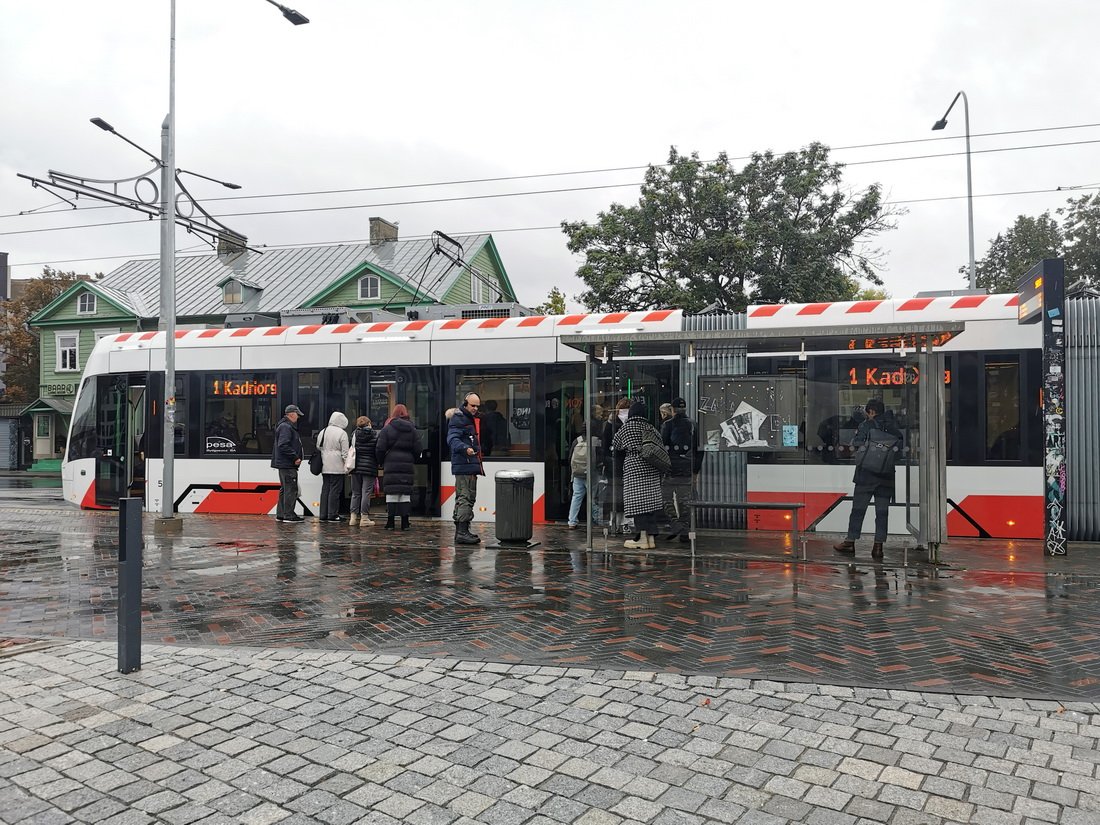
Tallinn’s trams run often — about every 10 minutes during the day.
Tallinn is compact — you may not need public transport at all. But if you do, it is clean, reliable, and easy to use.
Schedule:
Most buses, trams, and trolleybuses operate from around 6:00 until close to midnight, though exact times vary by route. Most daytime routes operate every 10–15 minutes.
How to check times:
Use the official Tallinna Transport website or app — or simply open Google Maps, which works well in Tallinn and shows real-time arrivals.
How to pay:
The simplest method is to tap your contactless bank card on the validator near the driver. A single ticket is valid for 1 hour and allows unlimited transfers during that period.
Drivers do not sell tickets.
At each stop, route maps and digital displays show the next arrivals. Inside the vehicle, the screen displays the route number and final destination.
Ordering a Taxi in Tallinn
Bolt — Estonia’s homegrown ride-hailing app — is the easiest option. It works like Uber, supports English, and allows card payment. Prices are generally low by European standards.
Traditional taxi companies such as Tallink Takso, Amigo Takso, and Forus Takso are also reliable. Confirm the fare before departure if ordering by phone.
Best Day Trips from Tallinn
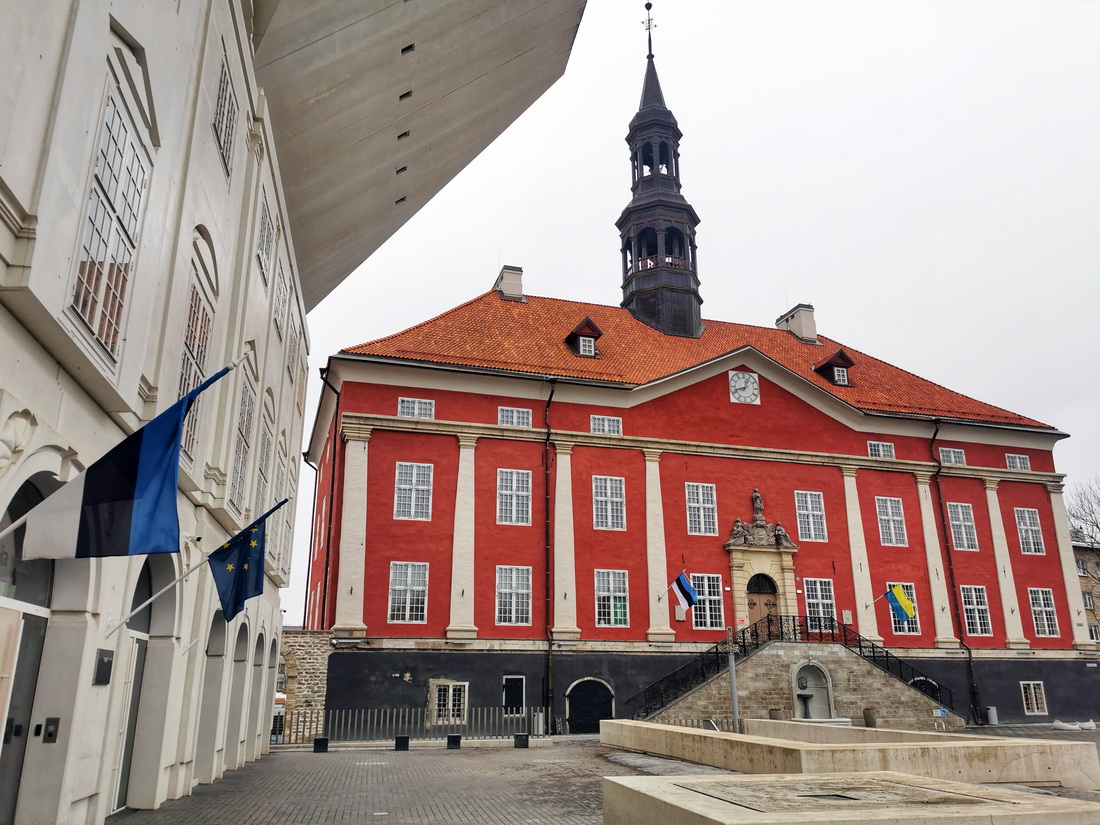
Narva – just a 3-hour journey from Tallinn by bus or train.
Tallinn is lovely — but if you have an extra day or two, Estonia has plenty more to offer. Thanks to excellent public transport and short distances, you can hop on a bus, train, or ferry and be somewhere completely different by lunchtime.
Here are some of my favourite day trips, each with its own mood and tempo:
For city lovers
• Tartu – Estonia’s university town: street art, cafés, river walks, and brainy charm.
• Haapsalu – Seaside, swans, and a romantic castle ruin. Feels like a Wes Anderson set with better pastries.
• Narva – The edge of the EU, quite literally. Two castles — one Estonian, one Russian — stare each other down across the river.
• Helsinki is the easiest international day trip from Tallinn. Ferries run throughout the day and the crossing takes about two hours. See the full guide → Tallinn to Helsinki Day Trip.
For island energy
• Naissaar – Wild and forested, with Cold War relics and beaches where you might be the only one around.
• Aegna – Peaceful and close. Great for picnics, mushrooms, and quiet walks.
• Prangli – My favourite of the three. Proper village life, sea air, and a chapel with a wooden chandelier.
🛳️ See more: Prangli day trip guide → | Naissaar trip notes →
For something different
• Kuremäe Convent – Estonia’s only active Orthodox monastery, deep in the forest. You’re free to visit the grounds and enter the church.
• Lake Peipus – Try it in winter, when people sit on frozen water hoping for a fish to nibble. Not warm, but very memorable.
• Viljandi – Medieval castle ruins and hilly streets in the middle of Estonia. Slightly poetic. Often foggy.
If you’ve got more time, spend a night on Saaremaa, Hiiumaa, or even Kihnu, where traffic signs warn of dancing grandmothers. Yes, really.
🚌 Want full details? Here’s my guide to 9 easy day trips from Tallinn →
How to travel around Estonia
Estonia is small — which makes it perfect for day trips and short escapes. Most towns and nature spots are under 4–5 hours from Tallinn, and public transport is reliable, modern, and easy to use. You don’t need a car unless you’re chasing remote beaches or island windmills.
By bus
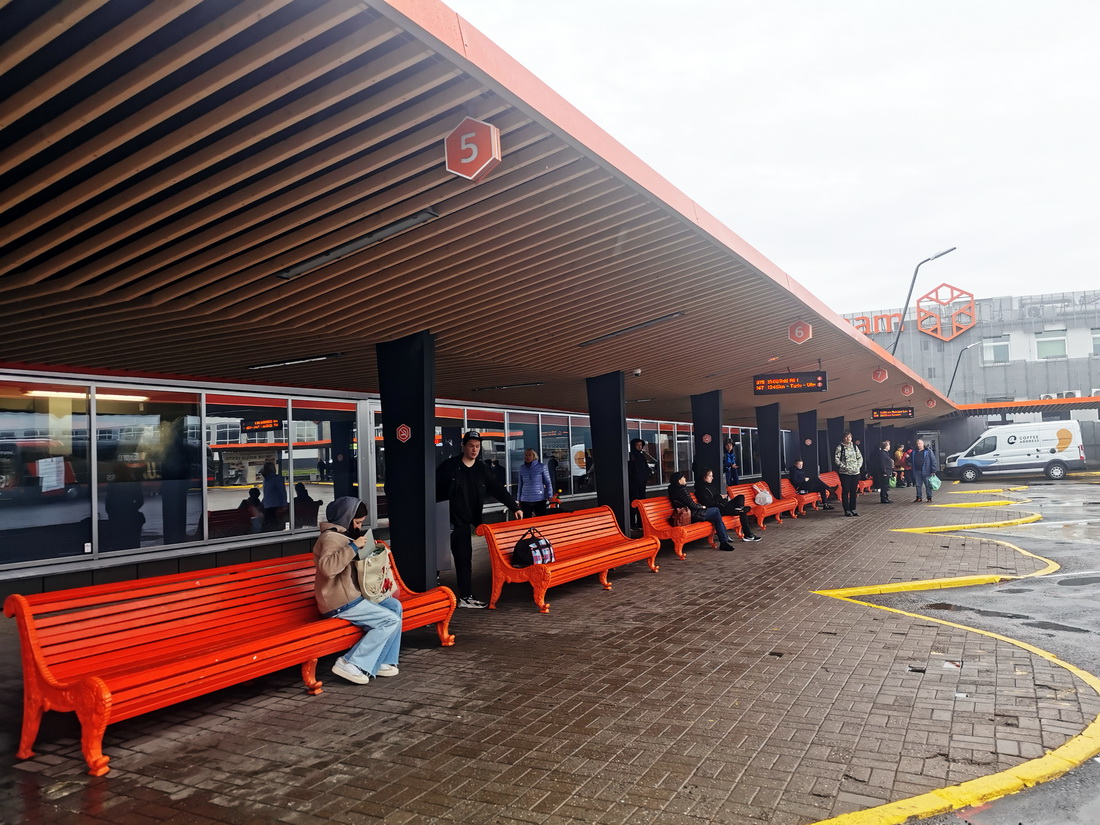
Tallinn Bus Station – small, functional, and easier to navigate than it looks.
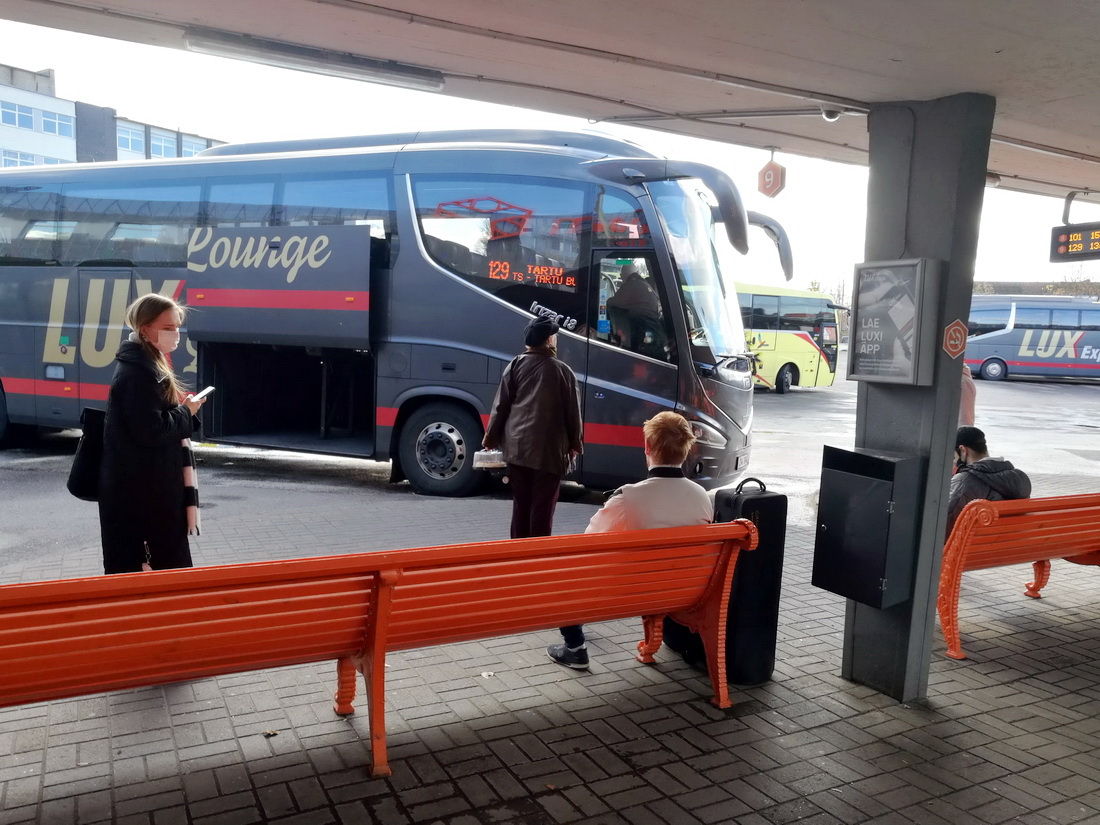
Long-distance bus at the station — most lines board just 15 minutes before departure.
Long-distance buses connect Tallinn with pretty much everywhere: Tartu, Narva, Pärnu, Viljandi, and more. Most buses are comfortable and clean, with free Wi-Fi, power sockets, and sometimes even seatback screens. A one-way ticket usually costs €10–15.
Buses leave from Tallinn Bus Station (Tallinna Bussijaam) at Lastekodu 46 — a small, tidy terminal halfway between the Old Town and the airport. There’s a ticket counter, a minimarket, a café, and luggage lockers (€1–3/day depending on size). It’s open daily from 6:00 to 1:00.
⏱️ Buses usually pull in about 15 minutes before departure. Check your platform number on the screen inside.
By train
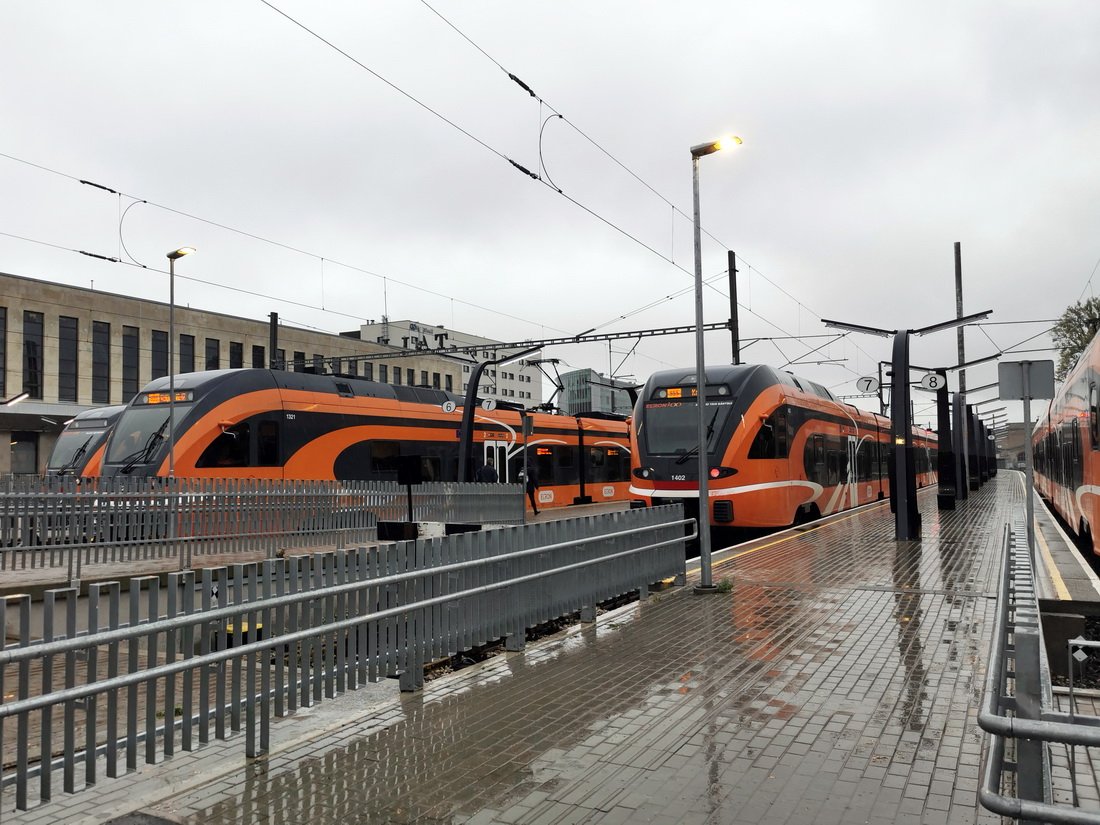
Balti Jaam – Tallinn’s central station. Just walk straight to the train.
Trains in Estonia are bright orange — which explains the local nickname “carrots.” And the nickname fits: they’re fast, friendly, and comfy. Clean carriages, big windows, Wi-Fi, and a quiet countryside view all the way.
Rush hours (early morning and late afternoon) can get a bit packed, so go off-peak if you can.
Tallinn’s main station, Balti jaam, is just outside the Old Town. It’s compact and easy to figure out — no underground mazes or endless platforms. There’s even a big Selver supermarket right next door, in case you need snacks or socks before departure.
🔗 Check schedules and tickets on the Elron website →
Is Tallinn safe?
Yes — Tallinn is a very safe city, both day and night. If you want a more detailed breakdown of how it actually feels on the ground, see this →Tallinn safety guide.
The overall atmosphere is calm, with very little visible tension in public spaces. Serious crime is rare, and most visitors move around comfortably without thinking much about safety.
The more realistic risks are minor: occasional pickpocketing in crowded areas, especially in the Old Town during peak hours, or the usual late-night noise around bars on weekends.
Solo travellers — including women — generally feel comfortable here. The main adjustment is not safety, but the city’s quietness: streets can empty out early, especially outside the centre.
One local detail worth knowing: after dark, you are legally required to wear a reflector on your clothing or bag. They cost €2-3 and are sold at R-kiosks, post offices, and supermarkets. Locals take this seriously — and once you see how dark the streets can get, it makes sense.
Best Time to Visit Tallinn
Tallinn is beautiful all year — and unpredictable in the best (and worst) way. Sunshine, sleet, wind, and fog often take turns on the same afternoon. Still, if you’re wondering when to visit, there are two golden windows: May to early October, and mid-December through New Year’s.
Here’s what each season actually feels like:
Spring (March–May)
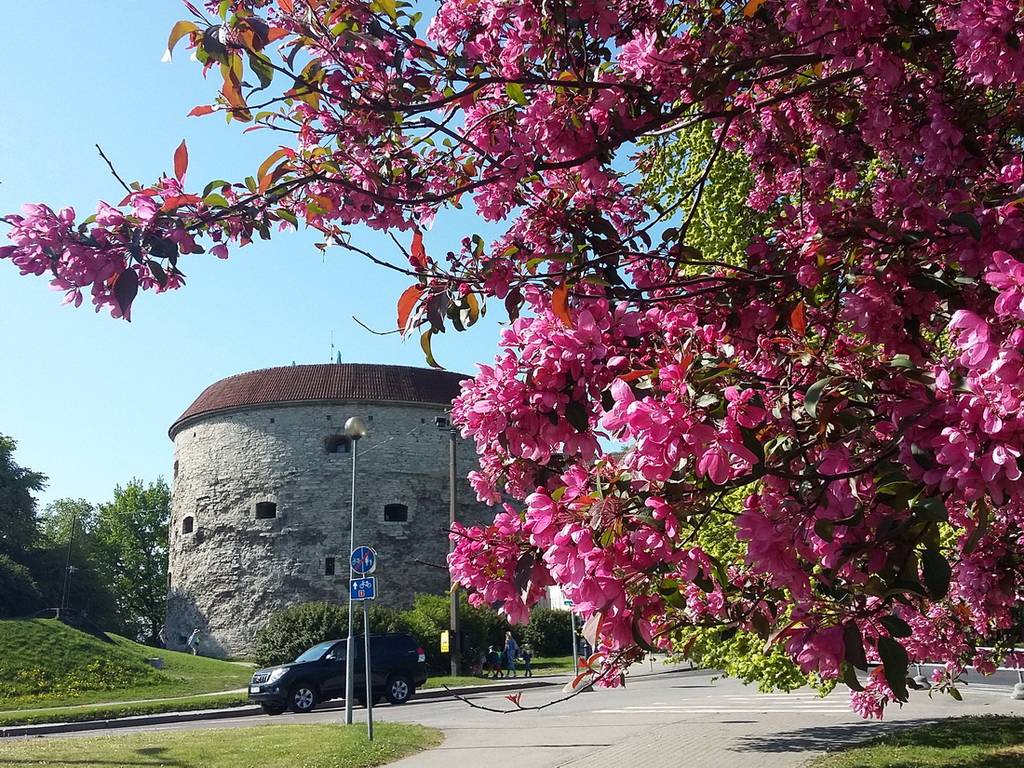
Late May in Tallinn – blossoms, blue skies, and still a bit of jacket weather.
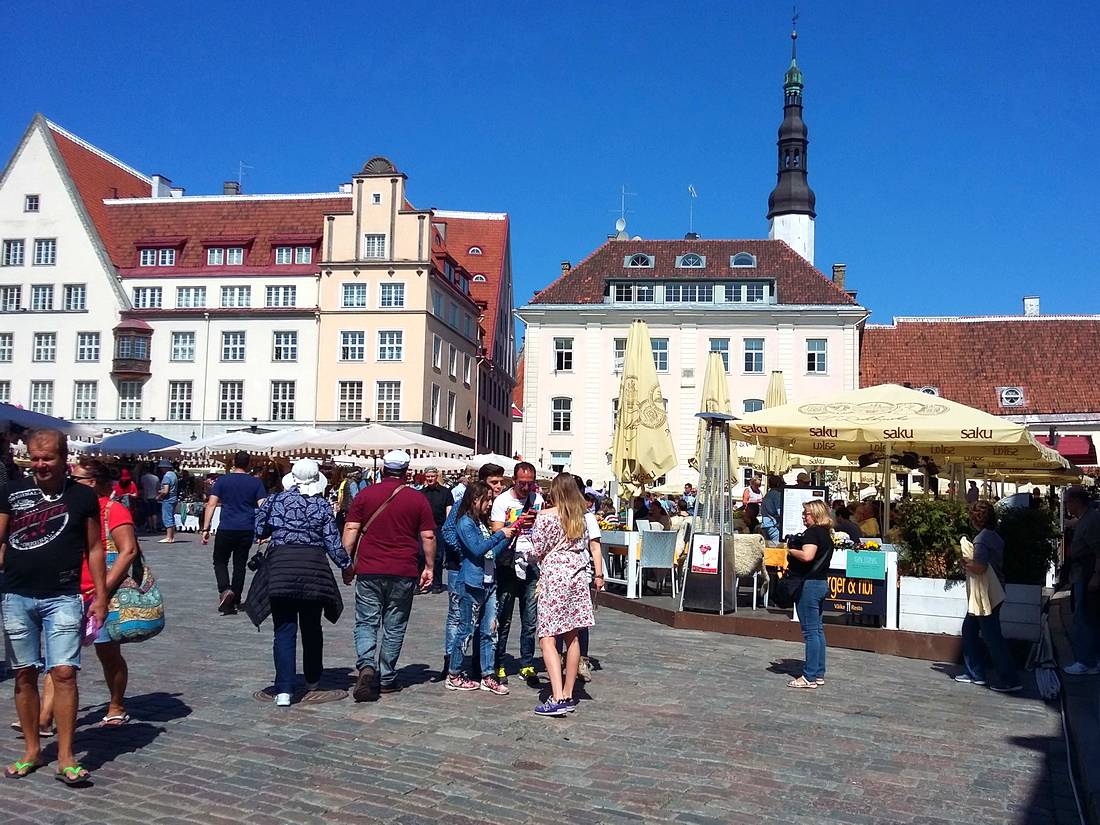
May 26th, +21°C – Tallinn pretending it’s full summer already.
March is still winter — snow, cold wind, and that fifty-shades-of-grey sky. But April brings the first crocuses, and by May, the city blooms: lilacs, apple blossoms, flower beds tucked between medieval walls. People start switching to lighter coats (cautiously).
May is wonderful. Long days, soft sunlight, near-empty museums. Mornings are crisp, afternoons café-perfect. Bring layers — this is still the Baltics.
Summer (June–August)
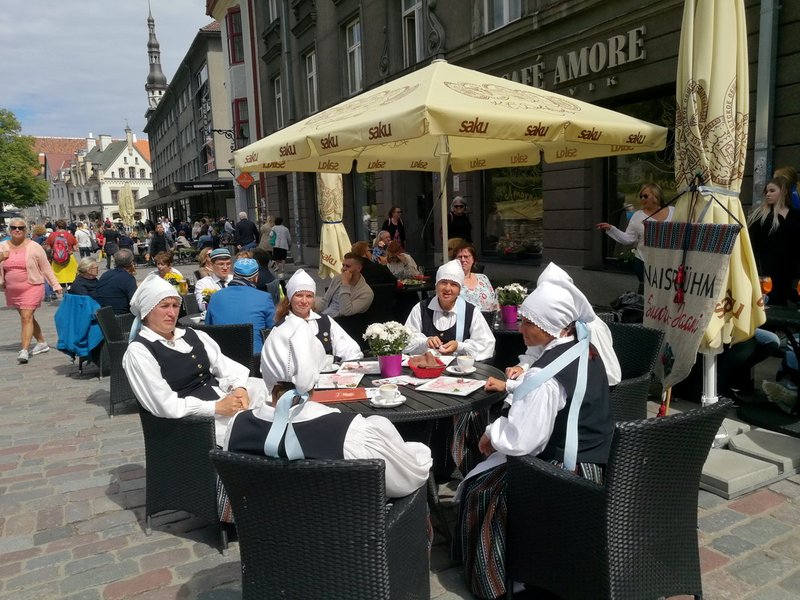
Early July in Tallinn – sun, music, and surprises around every corner.
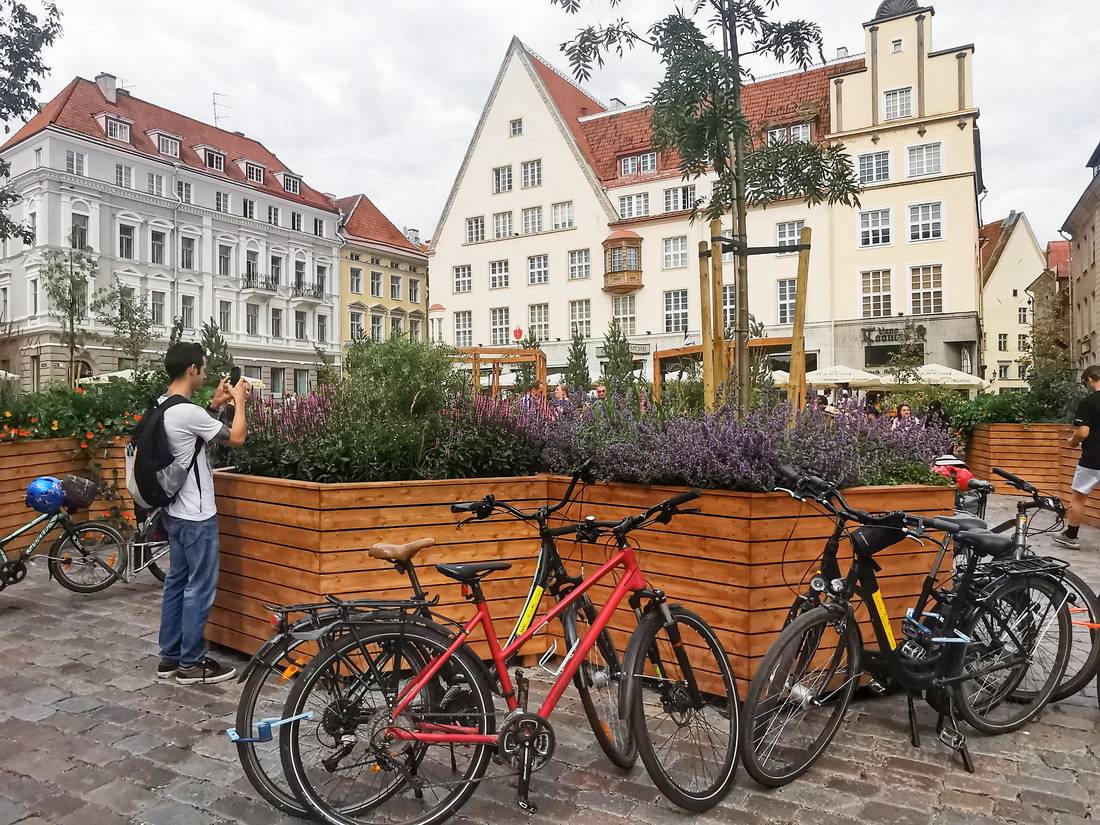
Lush greenery and bright skies in Tallinn in mid-August, with scattered clouds hinting at a summer shower.
Long days, green parks, and outdoor everything. Tallinn’s summer feels both laid-back and full of surprises.
Temperatures usually hover around 19–23°C, though it can swing both ways. One week it’s T-shirt weather, the next you’ll wish you brought a hoodie. July is the most reliable for warmth and sunshine. August tends to bring more thunderstorms — not every year, but often enough to keep an umbrella in your bag.
From late May to late June, you’ll get the famous white nights, when it barely gets dark. Midnight feels like early evening, and the city hums with that slightly surreal energy of endless light.
Terraces overflow, ice cream melts too fast, and even the stone walls of the Old Town seem to breathe a little easier. It’s Tallinn at its most sociable.
Autumn (September–November)
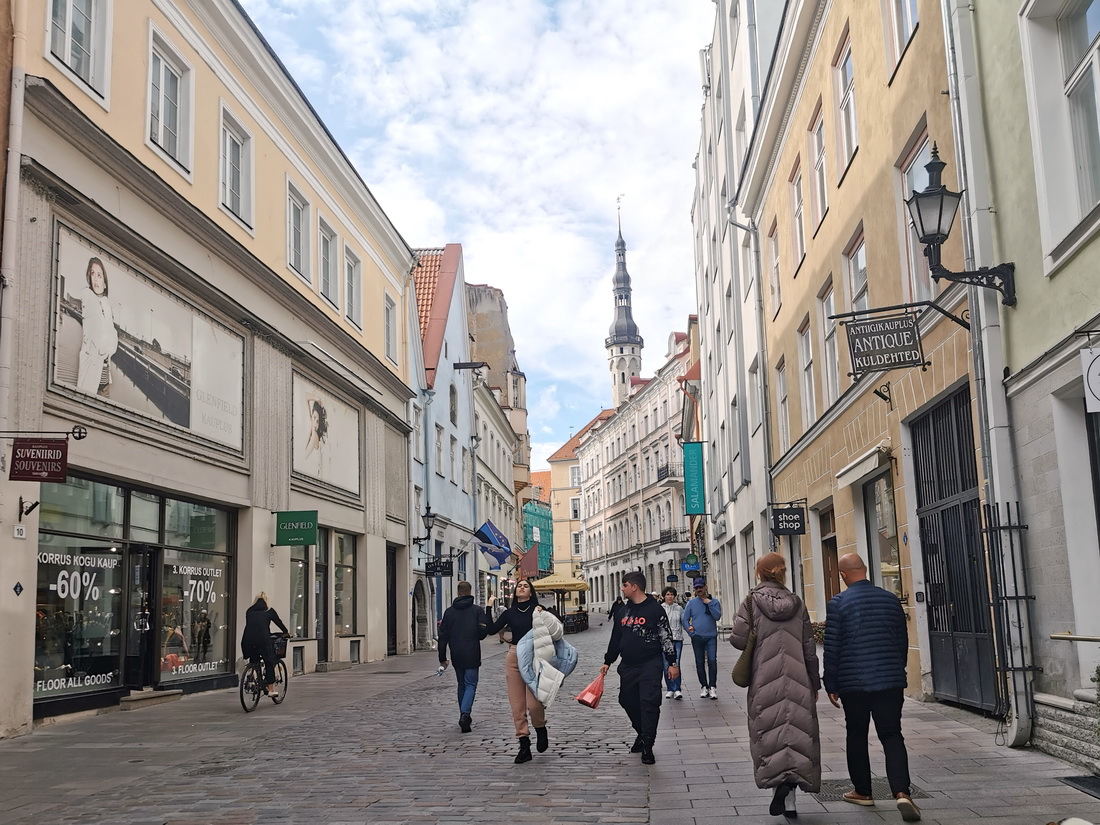
September 25th, +15°C – sweater weather or jacket weather, depending on your mood.
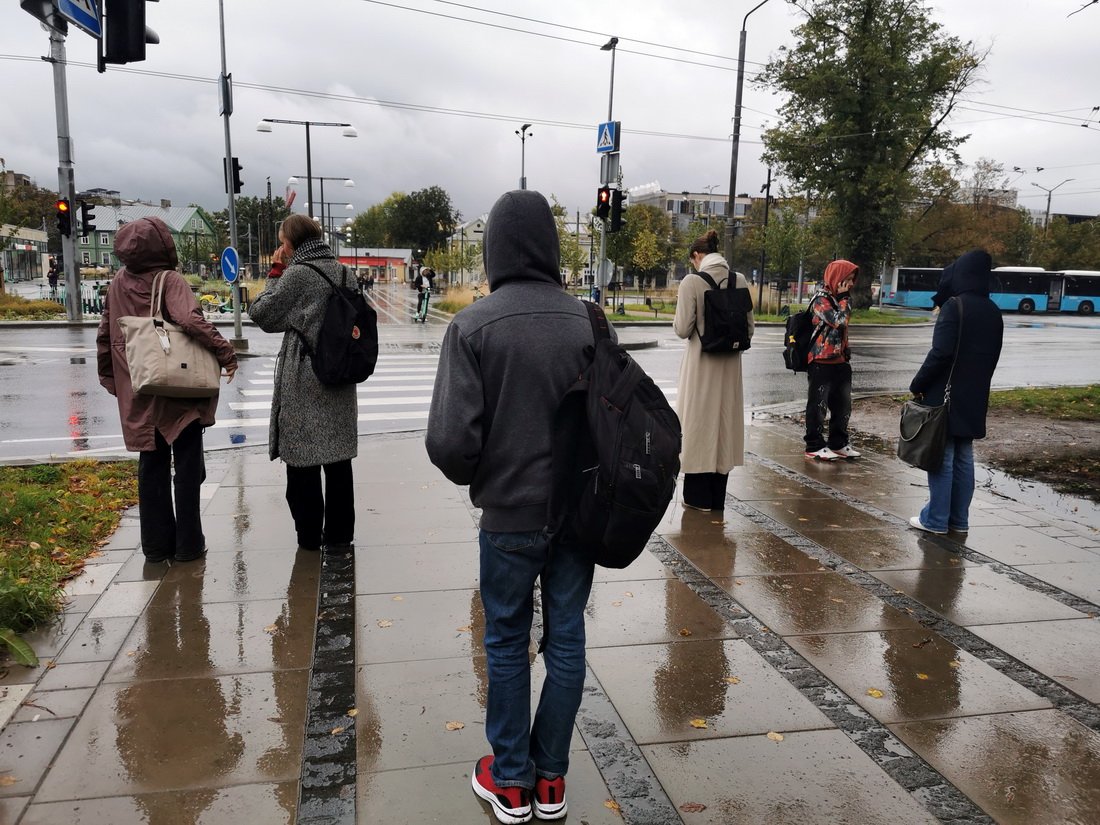
October 2nd, +12°C – light rain all day, just classic Tallinn autumn.
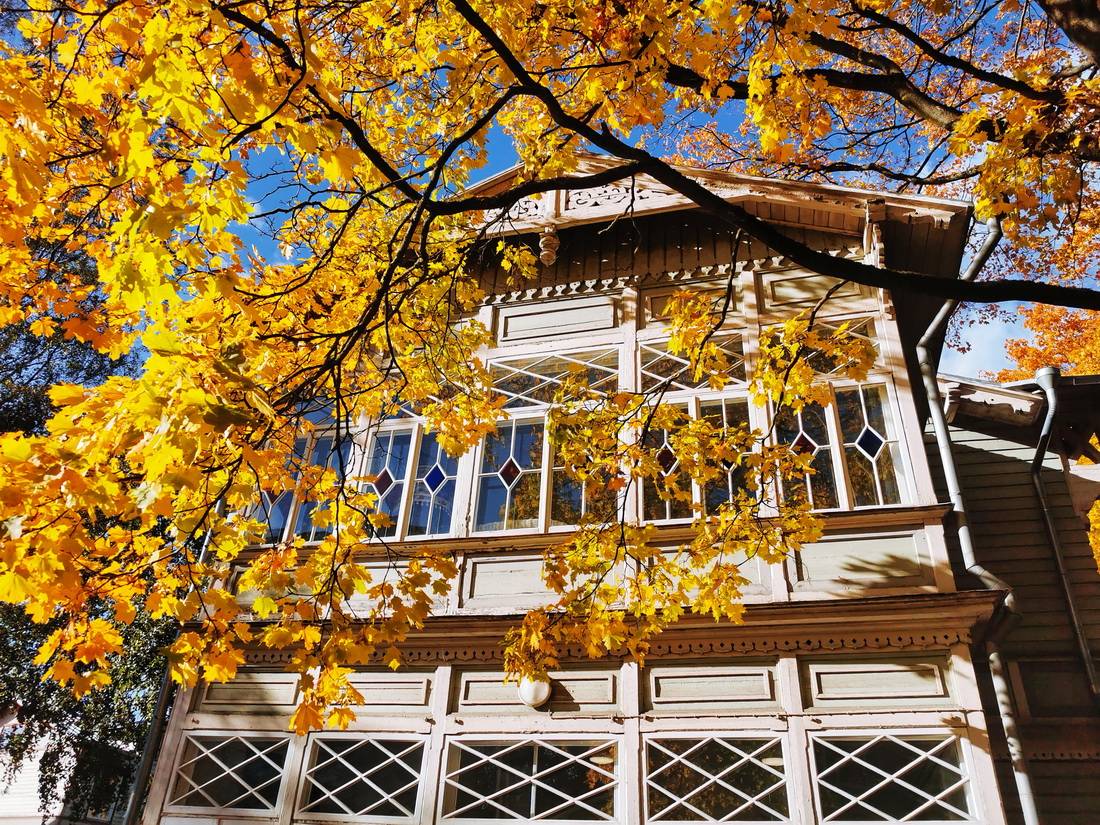
Early October in Tallinn – golden leaves and perfect walking weather.
September feels like summer’s afterparty — golden, mellow, and a bit wistful. Leaves turn amber, the light grows softer, and parks fill with people making the most of the last dry days. The best of the foliage usually hits around 20 September to 7 October — Tallinn’s brief but beautiful golden autumn.
October brings wind, rustling leaves, and that unmistakable “maybe I should start baking again” feeling. It’s perfect for long walks, hot drinks, and peeking into galleries or cosy museums.
By November, the city shifts gear. The days grow short, the air turns damp, and the colour palette goes full Nordic noir. It rains often, the sky is mostly grey, and daylight ends before you finish your coffee. But — it’s quiet, it’s cheaper, and the Christmas lights start creeping in by the end of the month.
Bring waterproof shoes and low expectations for sunshine. You’ll be fine.
(Still unsure? Here’s what Tallinn in November really feels like →)
Winter (December–February)
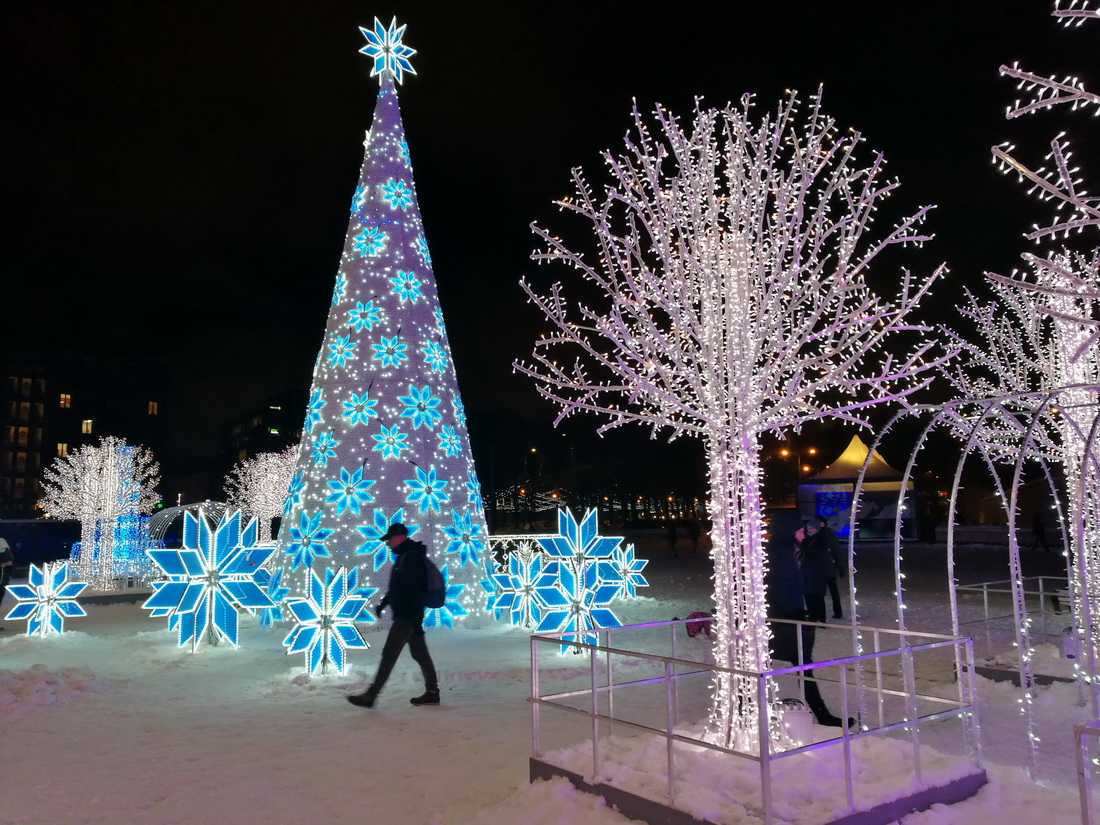
Late December – lights glowing, snow falling, Tallinn in full holiday mode.
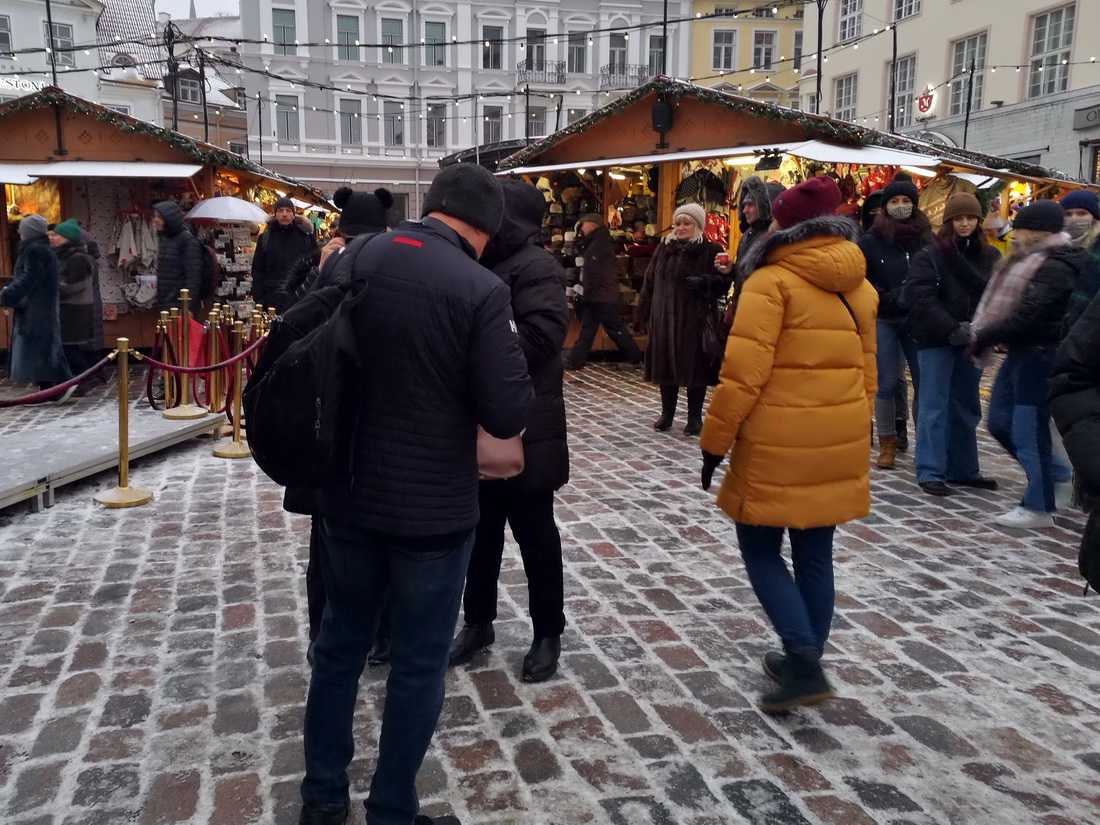
Tallinn’s Old Town in late December – quiet, festive, and dusted with snow.
Cold. Sometimes very cold. –20 °C isn’t unheard of, though in recent years, most winters have hovered just above or below freezing. Slush is more common than snowstorms — but when it does snow, Tallinn looks like a postcard.
From late November, the Christmas market in Town Hall Square lights up the Old Town. The smell of almonds, the glow of lanterns, the frost on cobblestones — it’s real, it’s festive, and it’s worth packing your warmest coat.
Sunset around 15:00. But the fairy-tale factor? Maximum.
(Wondering what it’s really like? Here’s my post about Tallinn at Christmas and New Year →)
Where to Stay in Tallinn: Hotels, Hostels and More
Tallinn fits all budgets — from dorm beds to boutique hotels, with plenty of cosy, design-forward options in between. The best area to stay? In or near the Old Town. You’ll be close to everything, and the cobblestone charm is hard to beat.
Just one note: inside the Old Town, some streets can get noisy in summer. Even with closed windows, you might hear midnight laughter and clinking glasses — so check reviews if you’re a light sleeper.
Luxury
Hotel Regent Tallinn
Set in one of the oldest buildings in Europe (really), this is medieval charm meets modern comfort. Some rooms have views of St. Olaf’s Church so close you could almost touch it. Small spa, peaceful vibe, perfect location.
Schlössle Hotel
An elegant townhouse tucked just off Town Hall Square. Plush armchairs, thick drapes, and that quiet “someone really thought about this” kind of luxury.
Swissotel Tallinn
Not in the Old Town — but if you like your skyline with your sauna, this is it. Floor-to-ceiling windows, great breakfast, small pool. Excellent for a stylish city stay.
Spa hotels
In Tallinn, “spa hotel” often means access to saunas, pools, and hot tubs — no millionaire status required.
Metropol Spa Hotel
Stylish and central (in the Rotermann Quarter), this four-star spot has sleek rooms and a full spa zone. Entry is included in some rates, or available for a small fee.
Mid-Range
L’Ermitage Hotel
Quiet, well-designed, and a short walk from the Old Town. Some rooms even overlook the medieval skyline. Underrated and excellent value.
Palace Hotel
Classic style near Freedom Square. Calm, elegant, with a small spa and gym. A five-minute stroll to the centre, and great for travellers who like comfort with quiet.
Citybox Tallinn
Modern, minimal, and budget-friendly — with cheerful design and self-check-in. Just 10 minutes from the Old Town and near the ferry terminals.
Hestia Hotel Kentmanni
A modern stay in a quiet corner — close enough to the Old Town (1 km) but away from crowds. Some rooms have balconies. Spa included.
Popup Living Kakumäe
A new seaside hotel about 7 km from the city centre. Quiet air, Nordic simplicity, and rooms that smell faintly of pine and fresh linen. Feels more like a retreat than a city stay. Offers both regular rooms and studios with kitchens.
Apartments
Thomas’ Home – Trendy, Central & Balcony
Stylish, peaceful, and surprisingly central. Located in a new building between the Old Town and Kadriorg. On sunny mornings, you can sip coffee on the balcony and watch trams glide by. Modern kitchen, elevator, and a calm courtyard — ideal for longer stays.
Jakobi Guest Apartment
A quiet, no-frills stay just a short walk from the Central Market and bus station. Comfortable and well-equipped, with a full kitchen, washing machine, and good Wi-Fi. Feels more like a local corner than a tourist stop — especially if you enjoy slow mornings and market walks.
Budget
Fat Margaret’s Hostel
A long-time favourite with travellers for a reason. Just outside the Old Town walls and close to the ferry terminal, it offers dorm beds and private rooms, plus a sauna, small indoor pool, and communal kitchen. Friendly vibe, good coffee, and plenty of space to unwind after a day on the cobblestones.
Imaginary Hostel
Right in the centre and steps from all the sights. Bunk beds with individual lights and charging ports, a basic kitchen, and a cheerful, no-fuss atmosphere. Great for solo travellers who want to be in the middle of it all — without spending it all.
Do People Speak English in Tallinn?
Yes — and often surprisingly well. Estonian is the official language (closely related to Finnish), and many locals also speak Russian. But in Tallinn, English is widely spoken — especially by younger people, museum staff, and anyone working in hospitality.
Hotels, restaurants, and public transport? No problem. Most menus, signs, and announcements are in English too.
The only place you might get slightly confused? Supermarkets. Food packaging is often just in Estonian — but don’t worry, here’s a quick cheat sheet:
🛒 Useful Words for Shopping
Basics
Avatud — Open
Suletud — Closed
Pood / Kauplus — Shop
Food & Drinks
Piim — Milk
Vesi — Water
gaseerimata — still
gaseeritud/gaasiga — sparkling
Õlu — Beer
Kala — Fish
Kana — Chicken
Hapukoor — Sour cream
Jäätis — Ice cream
Dietary Labels
Gluteenivaba — Gluten-free
Laktoosivaba — Lactose-free
Suhkruta — Sugar-free
Taimetoit — Vegetarian
Vegan — Vegan
What to Buy in Tallinn: Souvenirs, Snacks and Gifts
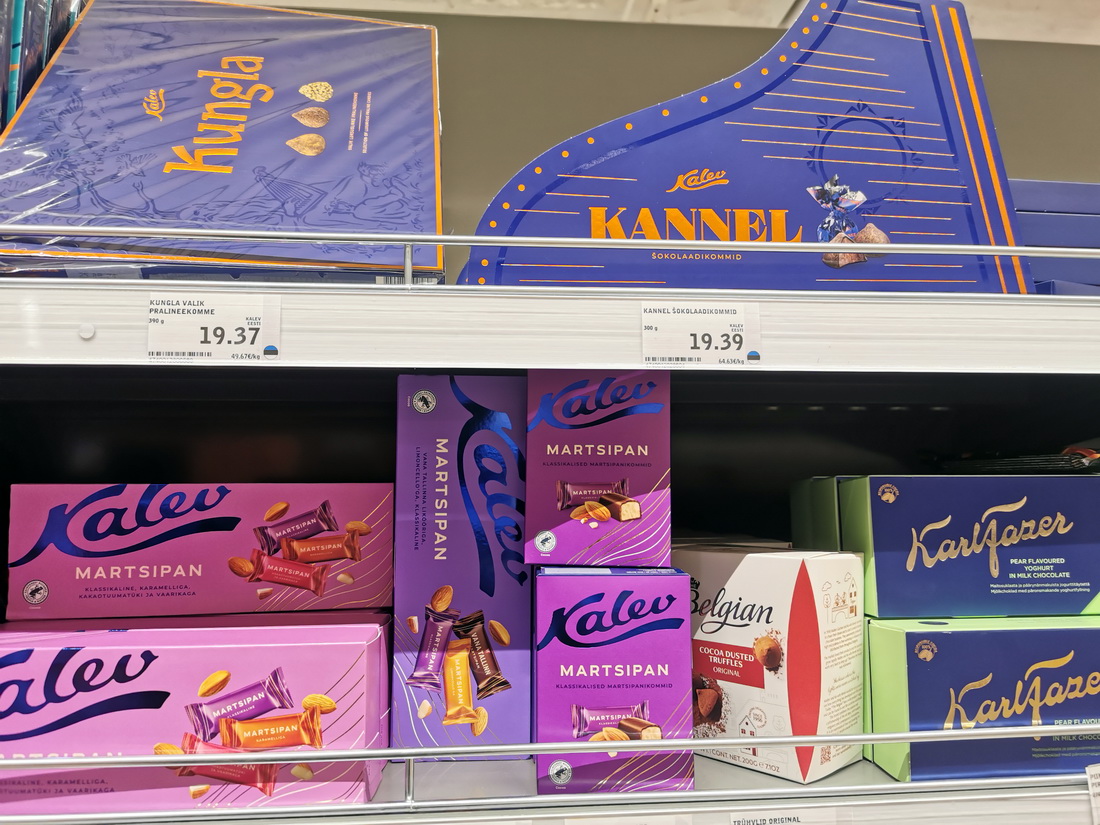
Kalev marzipan comes in all flavours – lemon, raspberry, even Vana Tallinn.

In Tallinn, holiday gnomes show up early — often by November.
Sure, you’ll find the usual fridge magnets and Viking mugs — but Tallinn has more up its sleeve. If you’re after something with a bit of charm (or flavour), here’s what to look out for:
Handcrafted and wearable
Estonia’s rich folk traditions live on in woollen mittens, scarves, and patterned socks — often handmade and warm enough for real winters. Expect to pay around €40–50 for a quality pair of mittens. They last, they’re beautiful, and yes, you’ll get compliments.
You’ll also find traditional wooden toys, hand-forged ironwork, ceramics, and silver jewellery in Old Town boutiques and craft fairs.
Edible classics
Kalev chocolate is everywhere — but for proper gifts, visit the Kalev shop in Rotermanni (Roseni 7). You’ll find elegant boxes, unusual flavours, and charming old-school wrappers. Their marzipan (especially the painted kind) is an Estonian classic — sweet, soft, and giftable.
Liquid memories
Vana Tallinn is Estonia’s signature liqueur — sweet, spiced, and very drinkable. Made with rum, citrus, and cinnamon, it’s perfect in coffee or over ice cream. A 0.5 L bottle starts around €10 in most supermarkets.
Quirky local picks
Some souvenirs raise eyebrows at customs — in a good way. Keep an eye out for:
-
-
-
- Spicy sprats in oil (yes, they’re tasty)
- Bright yellow mustard in a tube
- Raw Estonian honey in tiny jars
- Juustupats — braided, salty local cheese (perfect with beer)
-
-
You’ll find most of these in supermarkets or at Balti Jaama Turg, where browsing is half the fun.
📍 Marking Your Spot
Where you stay can shape how you see a city — and Tallinn is a great example of that. Whether you’re sipping coffee under medieval towers or waking up next to a pine forest, your base will color the way you remember the place. I’ve tried to offer options that match different moods, seasons, and travel styles — with a soft spot for places that feel like they belong here, not just anywhere.
Wherever you land, I hope Tallinn will surprise you a little — with its calm and contrasts, sea air and slippery cobblestones, misty mornings and glowing rooftops. And I hope this guide helped you find not just a bed, but a story to carry home.

