












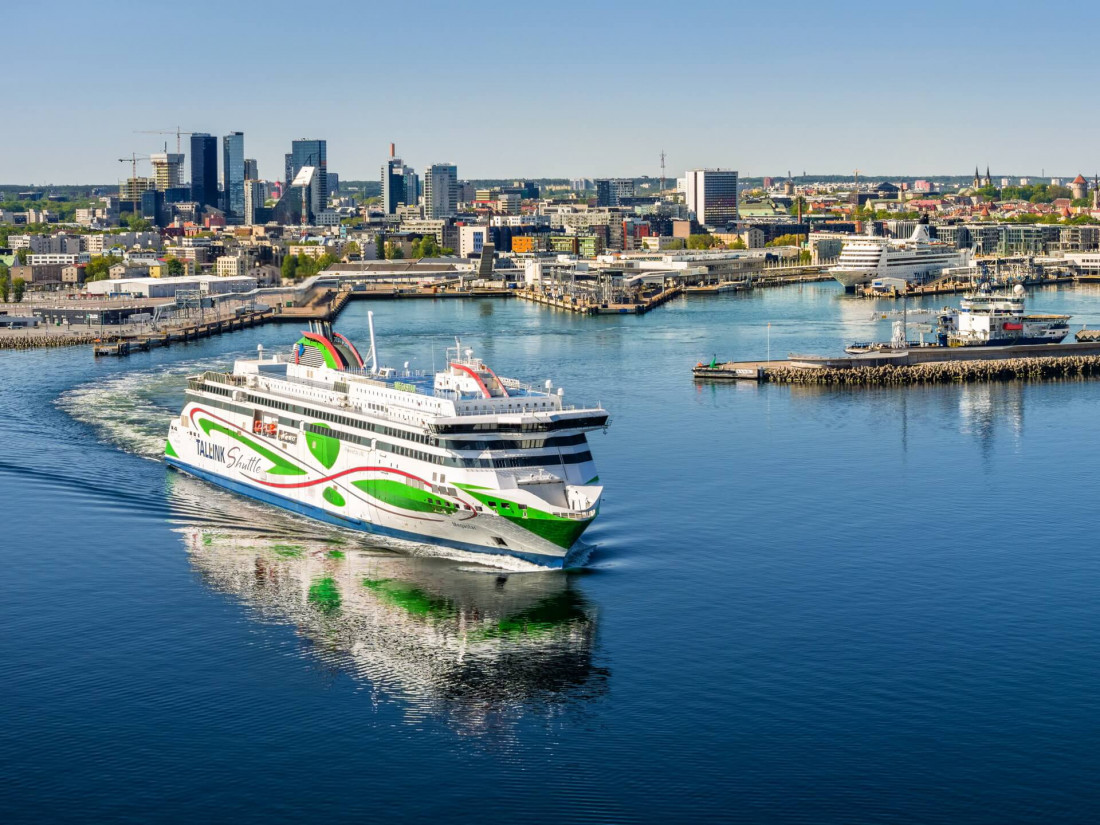
The ferry route between Estonia and Finland is one of the busiest corridors in northern Europe. There are very few places where swapping capitals for an afternoon feels this mechanical and seamless.
If you are using Estonia’s capital as your main base, see my → Tallinn Travel Guide for a detailed overview of neighbourhoods, sights and practical tips, or check out these Day Trips from Tallinn if you decide to stay local.
In Brief:
- The crossing: The 80-kilometre ferry ride across the Gulf of Finland takes roughly 2 hours.
- The cost: Return fares vary widely by operator, sailing, and booking date. Budget roughly €30 – €70 for a same-day return ticket.
- The operators: Tallink Silja, Viking Line, and Eckerö Line all run reliable daily services.
- The timeline: Factoring in boarding and getting to the city centre, expect 3 to 4 hours of door-to-door transit each way.
Can You Really Visit Helsinki from Tallinn in One Day?
Yes. Fast ferries take about two hours each way, and with a smart morning departure and an evening return, you get roughly six to twelve solid hours in the city, depending on the operator.
However, compressing this experience into a single day requires pace. You need to factor in terminal navigation, strict boarding cut-offs, and the sheer scale of Helsinki’s granite streets. A day trip offers a brisk first impression rather than a deep dive, but it is entirely feasible.
Tallinn to Helsinki Ferry: Operators, Times and Terminals
Three main operators run this route. All three make the crossing in roughly two hours, but sailing times, ships and onboard facilities vary. For a day trip, the timetable and Helsinki arrival terminal matter more than the onboard differences.
Here is how the operators compare:
- Terminals: Tallinn Terminal D → Helsinki West Harbour (Terminal 2)
- Crossing time: ~2 hours
- Schedule: Multiple sailings daily. Check the current timetable for your travel date.
- Best for: The widest choice of departure times. With up to six departures a day, it is the easiest operator to fit around a specific itinerary.
Viking Line (Viking XPRS)
- Terminals: Tallinn Terminal A → Helsinki Katajanokka
- Crossing time: ~2 hours 15 minutes
- Schedule: Usually 2 – 3 sailings daily. Check the current timetable for your travel date.
- Best for: The easiest arrival on foot. Katajanokka terminal drops you right on the edge of the historic centre, which lets you walk towards the Market Square instead of taking the tram from West Harbour.
Eckerö Line (MS Finlandia)
- Terminals: Tallinn Terminal A → Helsinki West Harbour (Terminal 2)
- Crossing time: 2 hours 15 minutes
- Schedule: 3 sailings daily. Check the current timetable for your travel date.
- Best for: Early and late options. They typically offer the earliest morning departures and latest evening returns, giving you one of the longest day-trip windows on the route.
Note: While most people book directly with the operators, aggregators like GetYourGuide offer bundled options such as a Return Day Trip Ferry Transfer to Helsinki or Tallinn–Helsinki All-Inclusive Ferry Day Trip Business Class ticket if you want everything on one receipt.
Navigating the Terminals
In Tallinn: Departures run out of the passenger port Vana Sadam. Depending on your starting point in the Old Town, it is a 20- to 35-minute walk. Pay attention to your terminal: Terminal A and Terminal D sit on opposite sides of the Admiralty Basin. Walking between them means circling the water, which eats up 10 – 15 minutes.
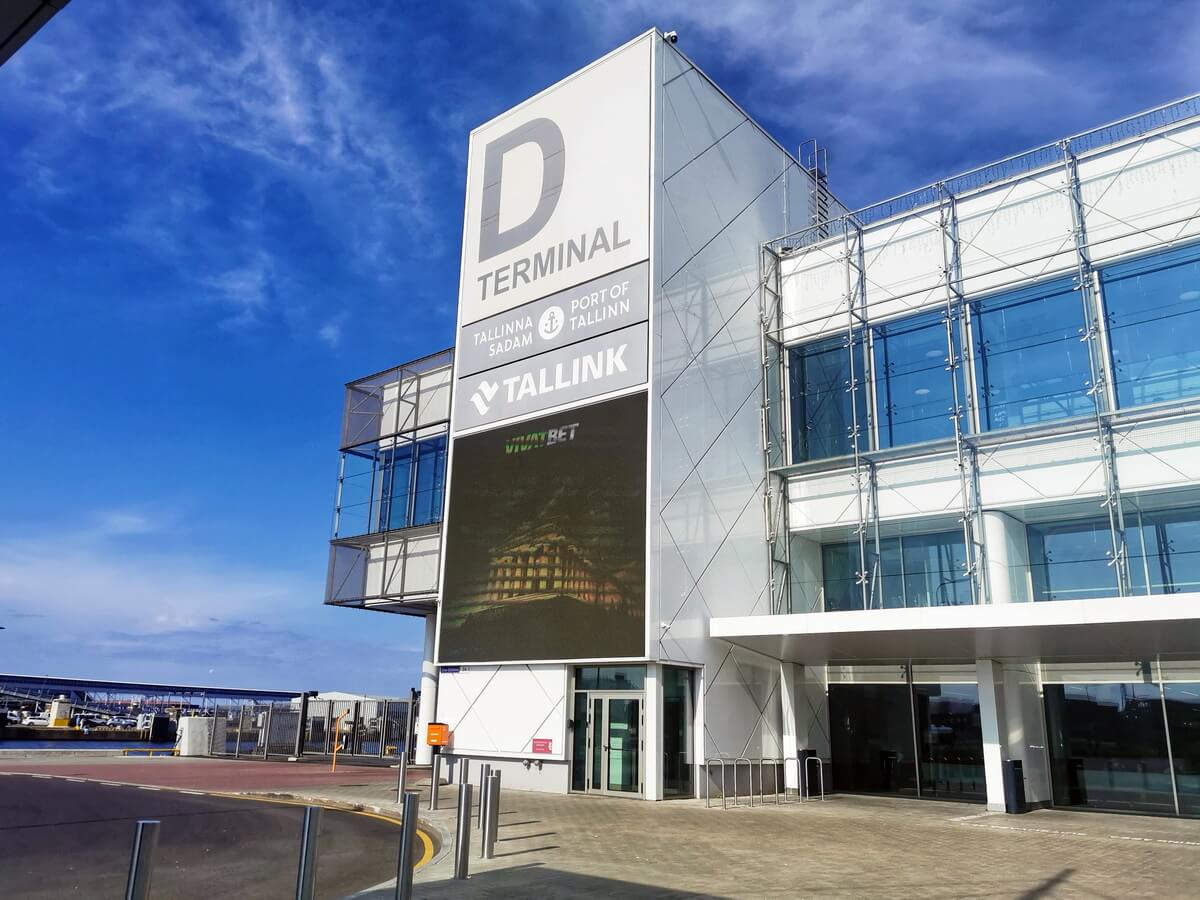
Terminal D at Tallinn’s port – the place to go if you’re taking the Tallink ferry to Helsinki.
In Helsinki: Tallink and Eckerö tie up at West Harbour (Länsisatama). From the terminal doors, you need a short, sharp ride into the centre on tram 7 or 9. Viking Line slides into Katajanokka, a much softer landing. From here, you simply walk inland via Kanavakatu toward the Market Square (about 15 minutes).
How Much Does a Tallinn – Helsinki Day Trip Cost?
Logistically, it is seamless: both Estonia and Finland operate on the euro (€). However, Helsinki is tangibly more expensive than Tallinn.
Ferry companies actively push ‘Day Cruise’ fares, specifically priced to be cheaper than two single legs for travellers returning the same evening.
Typical day-trip cost per person:
- Ferry: from roughly €30 – €70 return, depending on sailing and booking date
- Helsinki public transport (AB zone day ticket covering the centre, ferry ports, and Suomenlinna): €10.60
- Lunch (weekday lounas buffet or market food): €15 – €20
- Coffee and a pastry: €7 – €9
- Optional museum or attraction: €15 – €20
- Realistic day-trip total: about €75 – €130
(Prices checked in August 2026. Weekend à la carte dining will push this total significantly higher).
How Much Time Do You Really Have in Helsinki?
The biggest mistake day-trippers make is confusing the hours between their ferry tickets with actual sightseeing time.
A seven-hour gap between ferries does not give you seven hours in Helsinki. You lose time getting off the ship, travelling into the centre and returning to the terminal before departure. A seven-hour ferry gap usually leaves about five and a half to six hours of actual sightseeing.
The Best One-Day Helsinki Itineraries from Tallinn
Your exact time in Helsinki depends on the sailing you choose. Here are two sample itineraries built around a late-morning arrival and an early-morning arrival.
These are sample timelines based on August 2026 schedules. Always check the operator’s current timetable before booking.
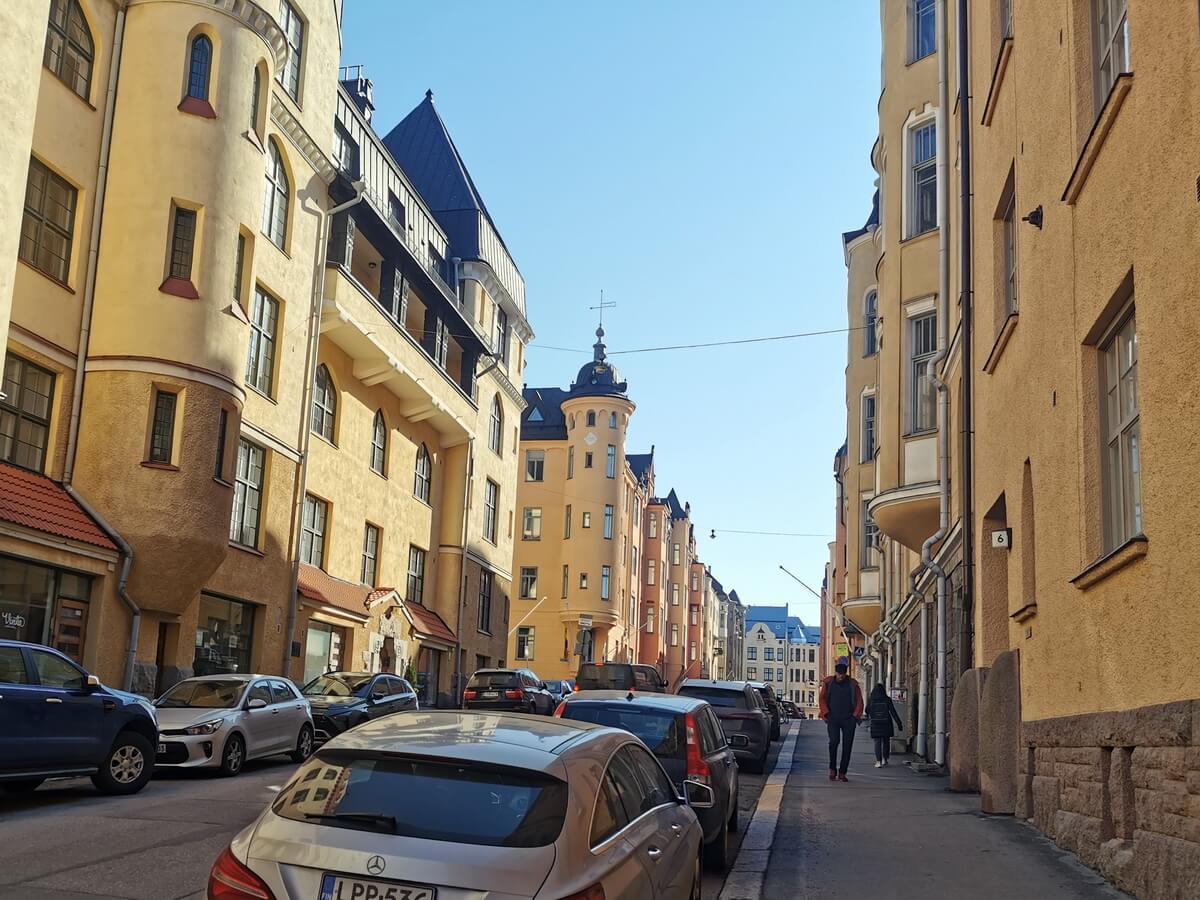
Luotsikatu in Katajanokka — the kind of street you notice five minutes after leaving the ferry.
Option A: The Fast-Paced Helsinki Sampler (~5 Hours of Sightseeing)
Built around a sample Tallink schedule.
- 10:30 – Depart Tallinn (Terminal D)
- 12:30 – Arrive in Helsinki (West Harbour). Take the tram to the centre.
- 13:00 – 14:00 – Walk through the Market Square (Kauppatori) and up to Senate Square to see the Helsinki Cathedral.
- 14:00 – 15:00 – Grab a late lunch near the Esplanadi boulevard.
- 15:00 – 16:30 – Walk north to explore the Oodi Central Library and the railway station area.
- 16:30 – 17:30 – Walk or take the tram back towards the harbour.
- 17:30 – Arrive at West Harbour terminal for check-in.
- 18:30 – Ferry departs for Tallinn.
Option B: The Long Day in Helsinki (12 Hours on the Ground)
Built around a sample Eckerö Line schedule.
- 06:00 – Depart Tallinn (Terminal A)
- 08:15 – Arrive in Helsinki (West Harbour). Take the tram to the centre.
- 09:00 – 12:00 – Grab coffee at Market Square, see Senate Square, and take the 15-minute public ferry to Suomenlinna for a two-hour walk around the sea fortress.
- 12:00 – 13:00 – Return to the mainland for lunch.
- 13:00 – 15:00 – Walk through the Design District and visit the Rock Church (Temppeliaukio).
- 15:00 – 17:30 – Explore Oodi Central Library and the Töölönlahti waterfront.
- 17:30 – 19:30 – Dinner and free time in the centre.
- 19:30 – 20:30 – Head back to West Harbour terminal.
- 21:40 – Ferry departs for Tallinn.
What to See in Helsinki
A day trip demands ruthlessness. Keep your geographic footprint small and tailor your map strictly to your timeline.
Have 4 – 5 hours:
Stick to the waterfront and the immediate centre. Walk the Esplanadi boulevard, visit the Market Square, and climb the steps to Senate Square.
Have 6 – 8 hours:
Add the modern civic spaces or the Design District. Walk north toward the railway station to find the Oodi Central Library. It is not just a building, but a massive sweep of glass and spruce timber housing workshops, studios, and roaring public energy. Alternatively, walk out to Temppeliaukio Church (the Rock Church), blasted directly out of a solid granite outcrop.
Have 8+ hours and a specific interest:
Consider Suomenlinna or a deeper walk through Katajanokka to see the architectural details.

Oodi Central Library, with studios, workshops and free workspaces open to everyone.
If you prefer a guided introduction, Helsinki has short tours that work well on a day trip — for example, an English-speaking walking tour of the centre or a guided Segway highlights tour (weather-dependent).
What the Ferry Ride Is Actually Like
If you are picturing a small passenger boat, adjust your expectations. These ferries are massive, multi-deck ships functioning as floating shopping and entertainment hubs, complete with sprawling supermarkets, buffets, pubs, and live music stages.
The seating scramble: Standard tickets do not include assigned seats. The moment gates open, experienced passengers power-walk to panoramic cafés to claim window tables.
The lifehack: Board as early as allowed (usually 40 – 45 minutes before departure). Ignore the duty-free shops—they stay open all trip. Head straight for the highest passenger decks at the bow or stern. If travelling solo, leave a bag to hold your spot while grabbing coffee; if you are with someone, take turns guarding the table.
Upgrades and weather: If you want to bypass the hustle, a Comfort or Business Lounge upgrade (€20 – €60) guarantees a quiet armchair, Wi-Fi, and drinks. If the weather holds, step out onto the open deck. The Gulf breeze is sharp, so bring an extra layer—you will need it in the city anyway, as the damp sea breeze makes Helsinki feel colder than Tallinn.
Will I get seasick? Because these ships are huge and heavy, the crossing is overwhelmingly smooth. Seasickness is rarely an issue unless you cross during a severe winter storm.
Is a Tallinn – Helsinki Day Trip Worth It?
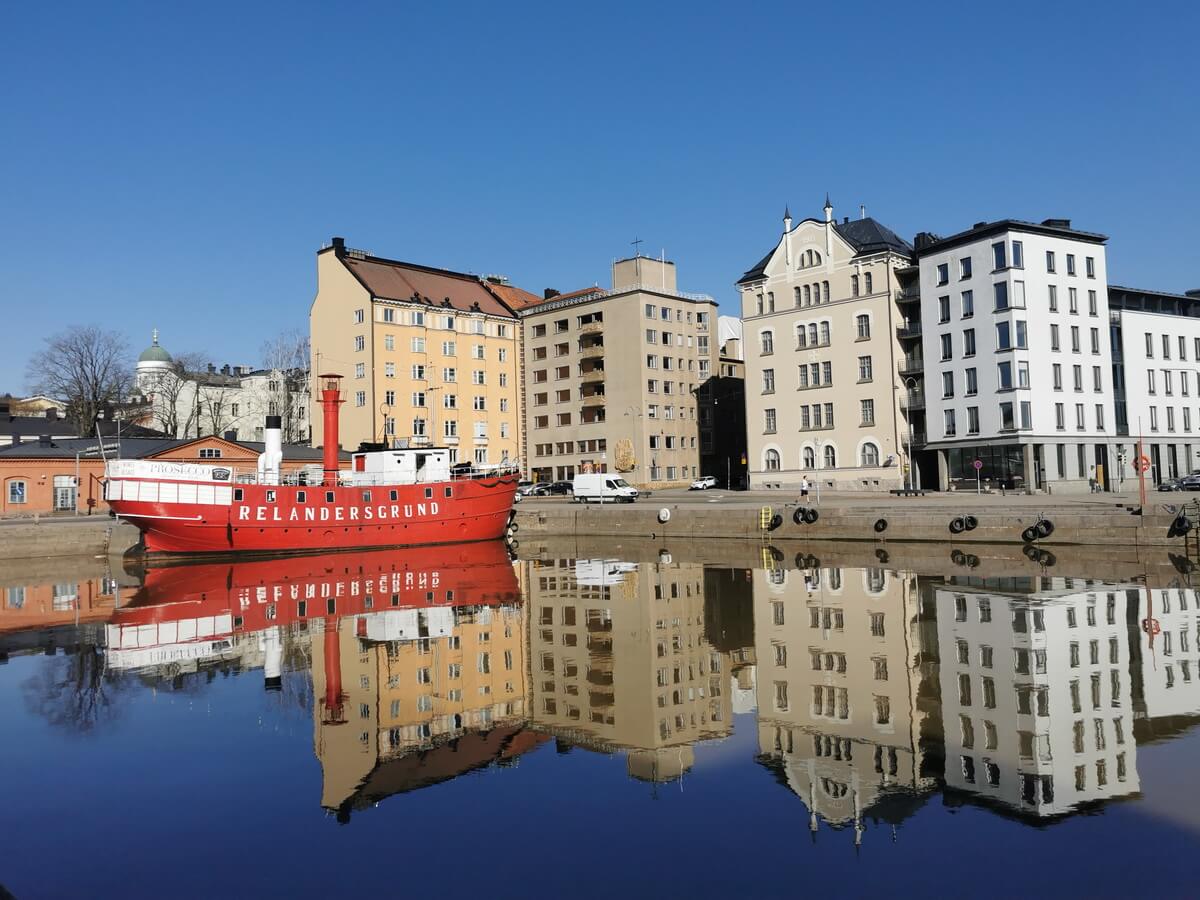
Relandersgrund, a former Baltic Sea lightship now moored beside Helsinki’s Market Square.
It comes down to your stamina and your broader travel schedule.
If you appreciate the heavy mechanics of the ferry crossing, want a taste of Finnish design, and have a long runway in Estonia, it is a brilliant bolt-on. It allows you to cross a major European capital off your list with minimal logistical friction.
But if you only have two or three days in Tallinn, do not spend six hours of it in transit. A fast-paced sprint through Helsinki is rarely worth sacrificing a deeper, slower exploration of Estonia itself. Stay put, walk the local pavement, and dig deeper into the Baltics.
What You Need to Know Before You Go
Do I need to book my ferry ticket in advance?
Yes, especially in the summer (June – August) and on weekends. Friday afternoon and Saturday morning sailings frequently sell out as Finnish commuters return home.
What happens if I miss the boarding deadline?
If you miss the boarding cut-off (usually 20 – 30 minutes before departure), you may not be allowed onto the ship. Contact the operator immediately – depending on your fare and availability, you may need to change the booking or buy a new ticket entirely, which will likely cost more than your promotional day-cruise fare.
Do you need a passport for the ferry from Tallinn to Helsinki?
You need a valid travel document. EU, EEA, and Swiss citizens can generally travel with an accepted national ID card, while other travellers may need a passport or another recognised document. Requirements depend on nationality, so always check your operator’s current rules before travelling. Do not assume the Schengen zone means no checks – spot inspections happen at the gate.
Is there a time difference between Tallinn and Helsinki?
No. Estonia and Finland share a time zone. The clocks stay the same, so no mental gymnastics are required for your itinerary.
Where can I leave my luggage?
If you are hauling bags for onward travel, use the banks of paid lockers located at either the ferry terminals or Helsinki Central Station.
Are ferries cancelled during a severe storm?
Cancellations are rare because these vessels are built to handle rough northern waters. However, during severe winter or autumn gales with extreme wind speeds or high waves, sailings can be delayed or cancelled for safety. Operators monitor conditions closely and notify passengers via SMS or email if schedules change, so always check your messages on the morning of travel.


