










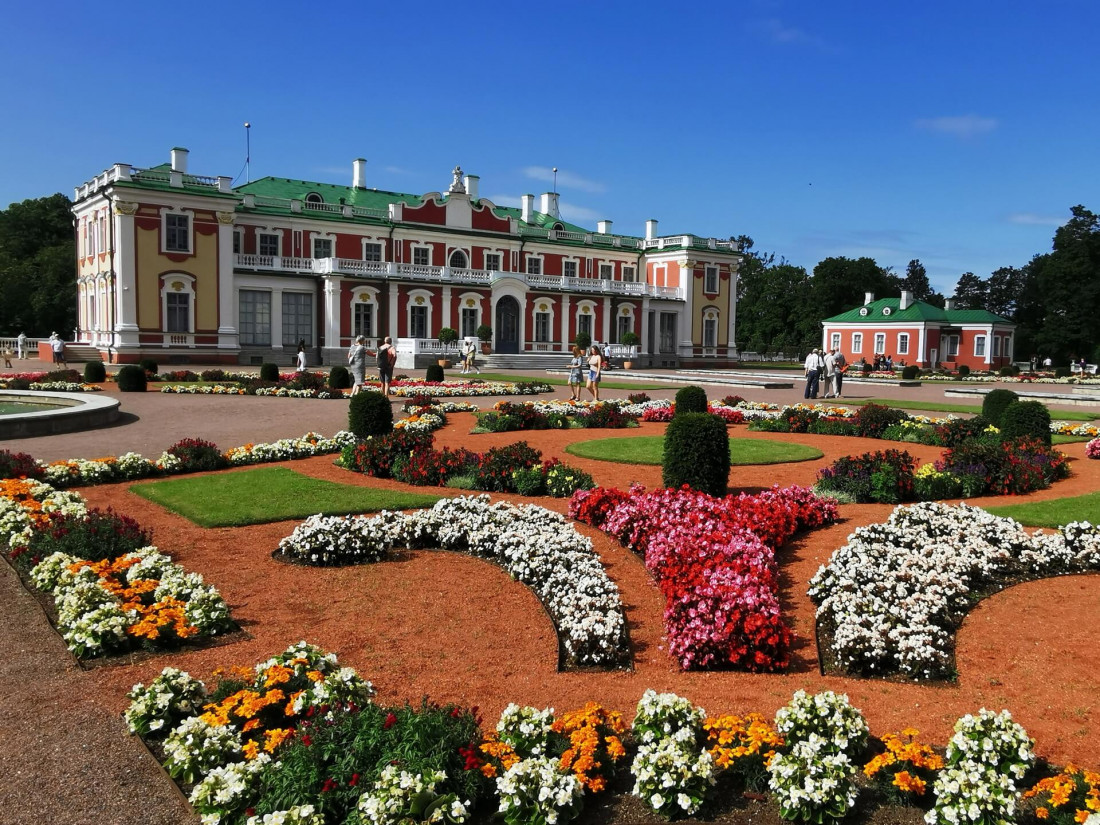
Flip through almost any Tallinn guidebook, and Kadriorg is inevitably reduced to a piece of “imperial heritage”.
The glossy photos highlight the grand red palace — commissioned by the Russian tsar Peter the Great and named after his wife Catherine I (Kadri in Estonian). It leaves visitors expecting a stiff, formal quarter where you take an obligatory selfie in front of the façade and promptly leave.
Ask a local what the district actually feels like, however, and Peter the Great rarely gets a mention. To us, it is a neighbourhood of intricate timber architecture, quiet art museums, the presidential residence, and roses that bloom well into November.
Planning a broader trip? If you are exploring the Estonian capital for the first time, see also → my Tallinn travel guide, where I cover the city’s main districts, museums and viewpoints.
In Brief:
Tallinn’s historic park district just east of the Old Town is best known for:
- Kadriorg Palace & Kumu: The city’s two major art museums.
- Timber Architecture: Quiet streets lined with historic 19th and 20th-century wooden villas.
- The Lighthouse: A 19th-century working lighthouse that looks more like a small church.
- The Greenery: Baroque avenues, a Japanese garden, and the Swan Pond.
- The Sea: A seaside promenade just a five-minute stroll from the park’s centre.
Million-Euro Villas and a Fence-Free President
Kadriorg shifts gears the moment you step away from the tour bus parking. Veer off the main avenues onto Koidula or Poska streets, and the grand Baroque layout immediately gives way to a deeply domestic world.
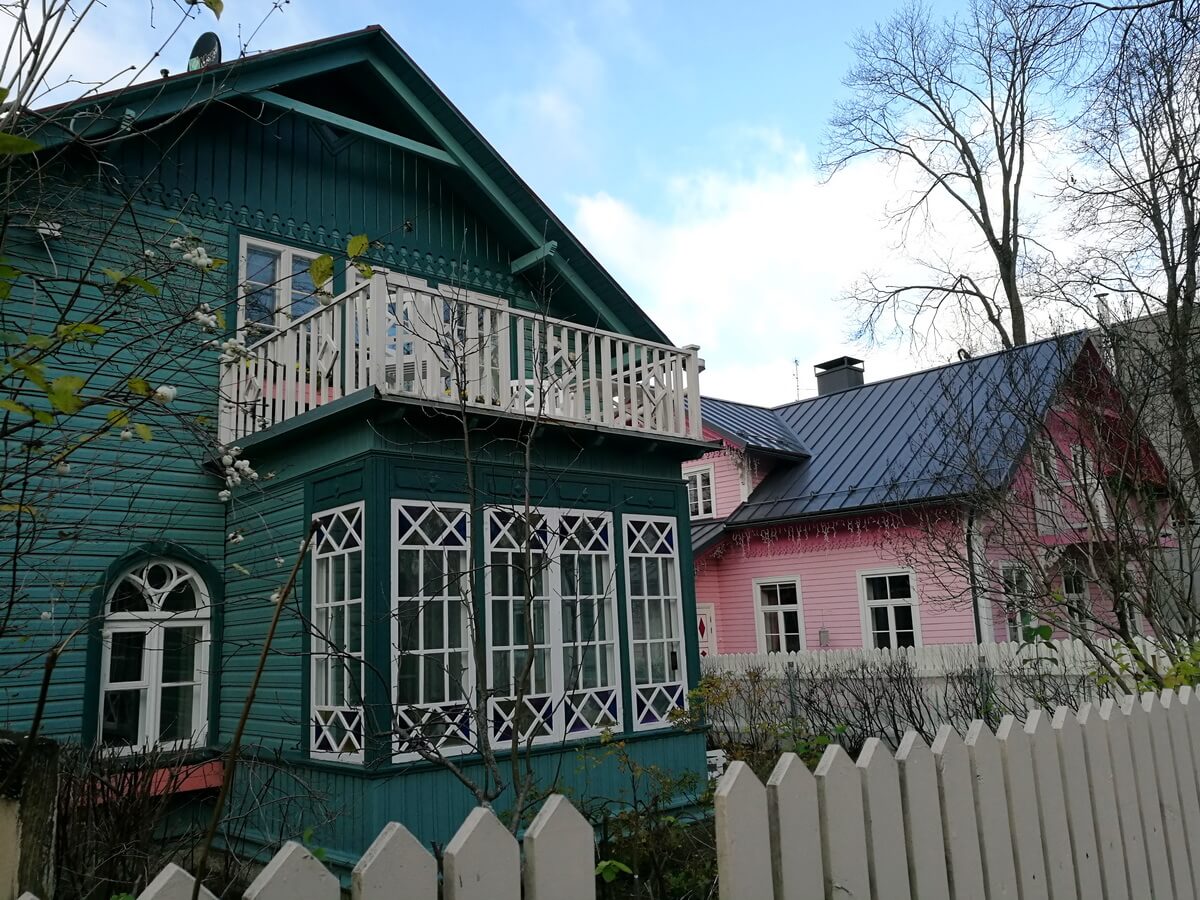
Just a few minutes from the park, Kadriorg turns into a neighbourhood of wooden villas and leafy backstreets.
These are historic Estonian timber houses. Painted in soft yellow or pale pastels, they feature glazed verandas and overgrown gardens.
Walk past them after a light rain, and you can smell the damp, aged wood mixing with the scent of wet leaves. Despite looking like they belong in a folk tale, buying one today would require a very optimistic relationship with your bank account.
Even the head of state blends right into this unassuming landscape. The Office of the President of Estonia sits inside Kadriorg, right beside the main park.
What strikes visiting friends most isn’t the building itself, but what is conspicuously missing: no high walls, no flashing motorcades, no visible security perimeter.
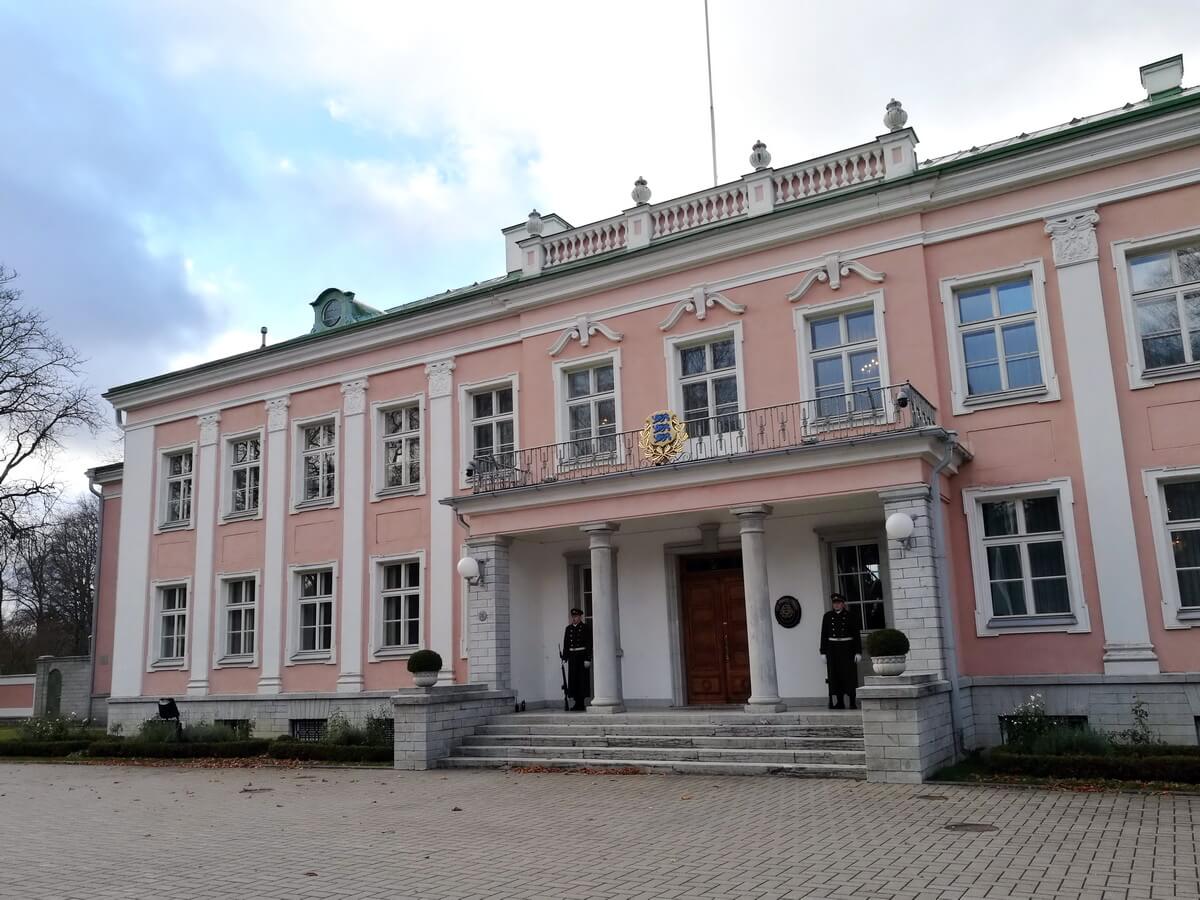
The President’s residence in Kadriorg — just another building along the park, if not for the two guards at the door.
Two ceremonial guards stand by the door, ducks from the nearby Swan Pond waddle across the lawn, and proper working beehives sit next to the palace. Either it reflects extraordinary trust, or Estonia simply prefers not to overdo security theatre.
Untouched 1920s Apartments
During Estonia’s first period of independence, Kadriorg became Tallinn’s most desirable residential district.
The country’s new intellectual elite — writers, lawyers, doctors, and university professors — settled here in quiet wooden villas, safely removed from the busy port city centre.
A trace of that pre-war world survives just outside the park gates. Two modest house-museums belonging to Estonian writers Anton Hansen Tammsaare and Eduard Vilde sit on quiet residential streets.
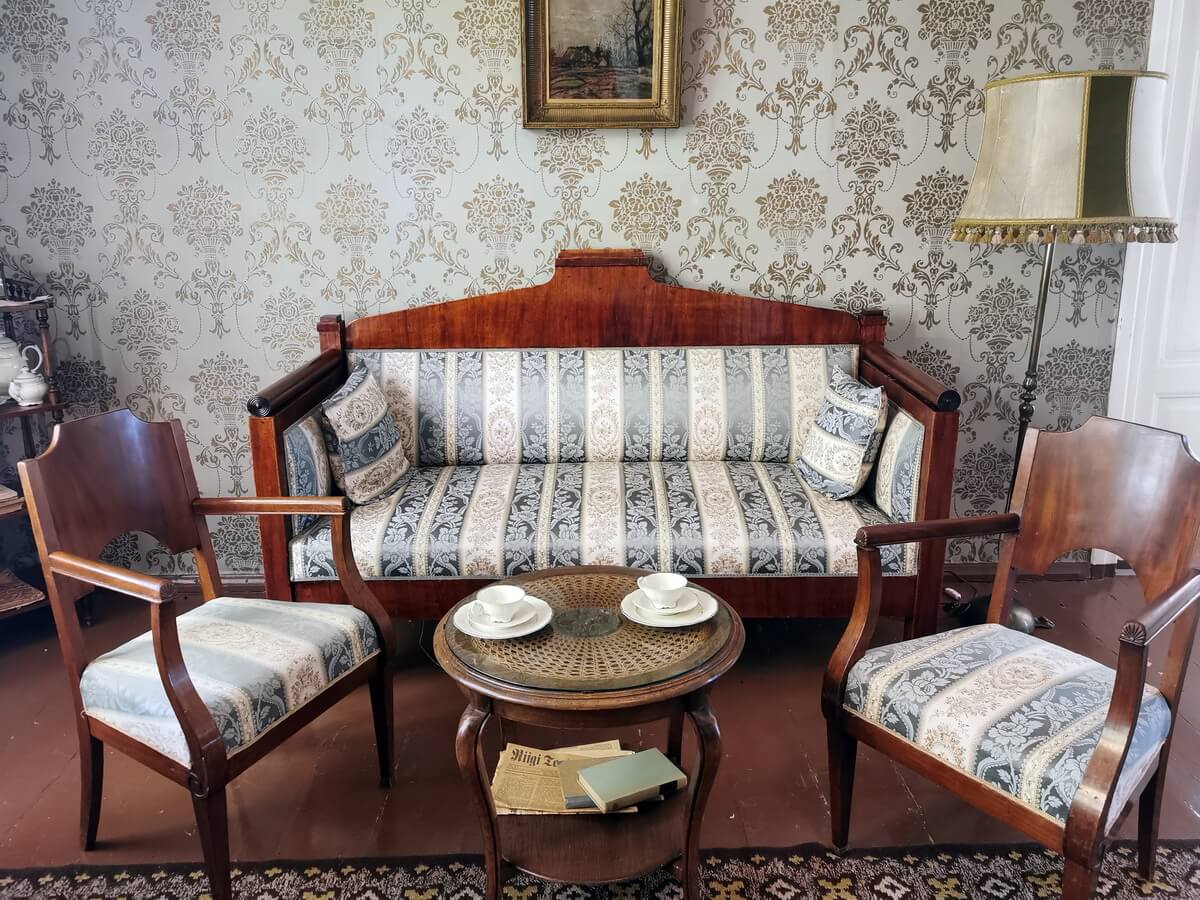
A preserved writer’s apartment — a glimpse of Tallinn’s pre-war intellectual life.
These flats remain exactly as they were, complete with heavy writing desks, original wallpaper, and green-shaded lamps.
What makes these interiors so fascinating is knowing what came next: the Soviet occupation, which brought with it decades of standardised concrete blocks and aggressively uniform flats. Stepping inside is a rare chance to see a highly individual, bourgeois world that was abruptly erased.
A Japanese Garden and a Very Small Lighthouse
If you head beyond the main avenues, the landscape changes abruptly. Tucked away in one corner of the park is a Japanese garden. A relatively recent addition to Tallinn (it only opened in 2011). Somehow, this precise little landscape survives the Baltic winter.
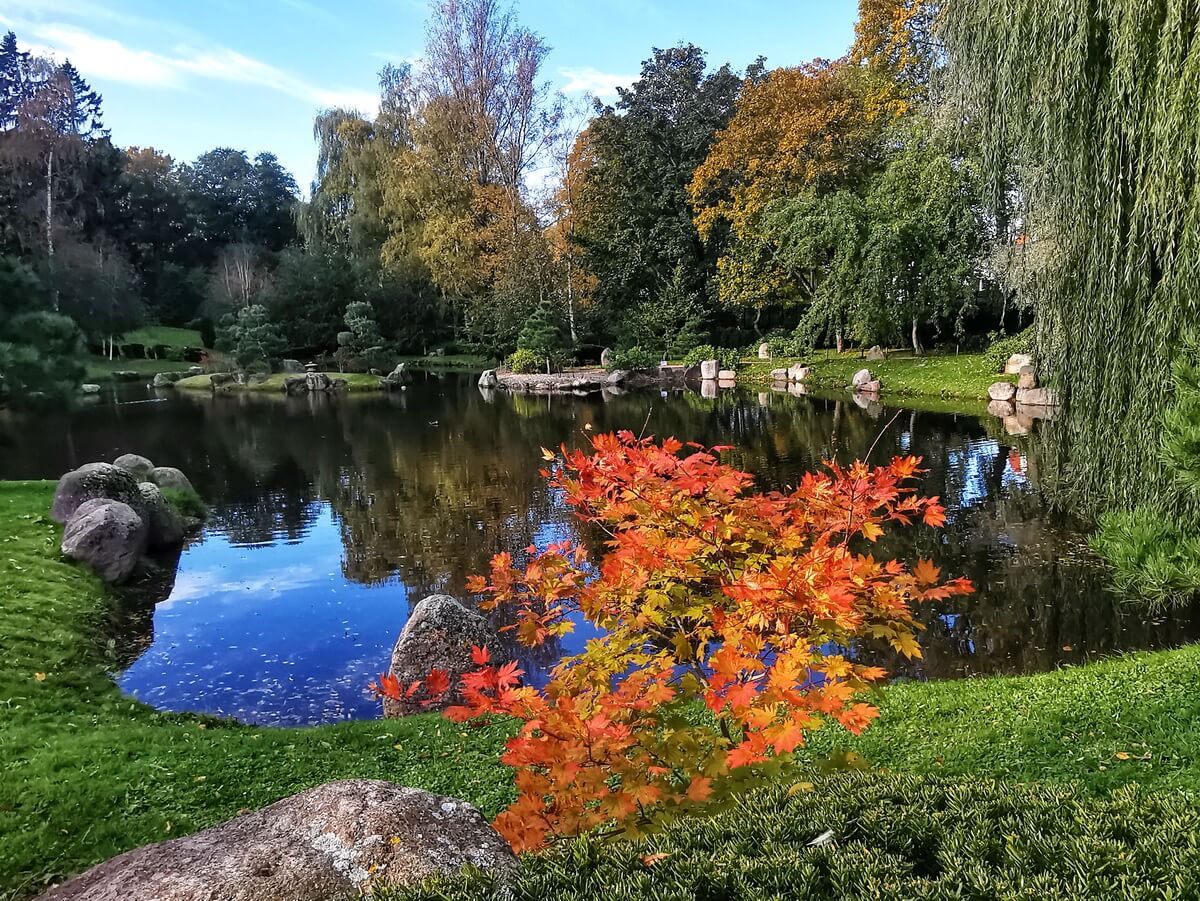
Tallinn’s little pocket of Zen — surprisingly authentic for a park better known for its baroque symmetry.
Alternatively, take the steps up the limestone hill behind Kumu art museum, and you will find the Lower Tallinn Lighthouse. Built in 1836 and standing just 18 metres tall, it looks more like a small church or a garden ornament than serious maritime infrastructure.
Yet, it is a fully functioning historic navigational light that works in tandem with an upper lighthouse further inland to safely guide ships into the bay.
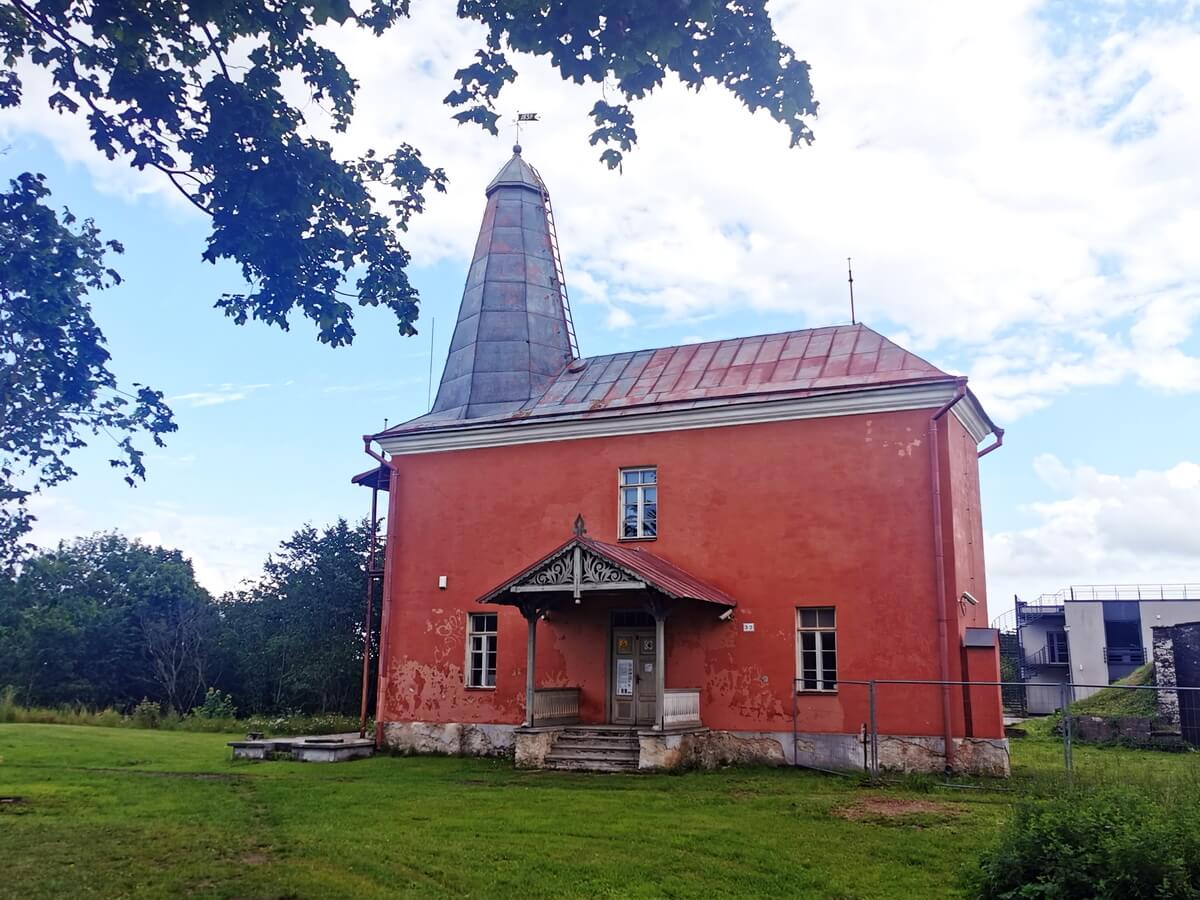
The Lower Lighthouse behind Kumu still guides ships into Tallinn Bay.
It stands here because the Gulf of Finland is right behind the trees. In the 1930s, local boys would sprint down these leafy avenues to swim in the sea on warm days (keeping in mind that the Estonian definition of “warm” is anything above 16 °C). The water is still barely a five-minute stroll away, and the habit remains.
Once you reach the shore, the view is wonderfully layered. Whether you are walking along the seaside promenade or actually wading out into the bay, you can catch a distant glimpse of the Old Town spires.
Out on the water, massive, brightly coloured ferries glide past, shuttling towards Helsinki and Stockholm with the casual regularity of city trams.
Autumn Traffic Jams and the Shirtless Jogger
Kadriorg isn’t always quiet. On the first clear weekend of autumn, half of Tallinn descends on the park.
The gravel paths get literal pedestrian traffic jams, filled with the constant crunch of footsteps and the clatter of children’s scooters. Still, everyone shows up for one last collective gathering before the long dark season returns (if you want to time your walk for peak yellow maples without the weekend crowds, see my guide to visiting Tallinn in autumn).
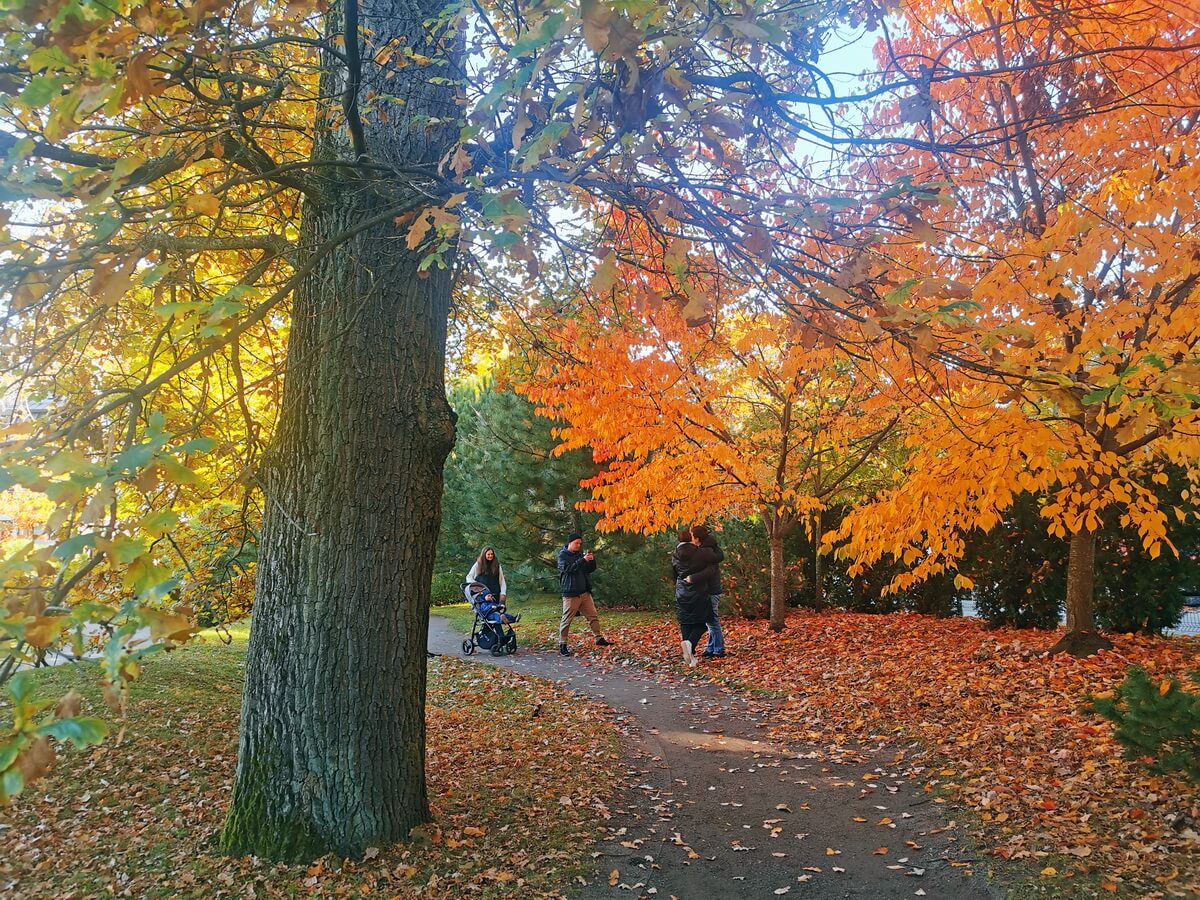
A quiet autumn afternoon in Kadriorg Park — the kind of slow walk locals come here for.
In deep winter, a different local character emerges. When the temperature drops below zero and the wind cuts through the park, most of us are wrapped in heavy puffer jackets and beanies.
In stark contrast, you might spot a local chap out for his daily jog… entirely shirtless. He runs past, breath steaming in the freezing air, while onlookers watch with a mix of deep respect and a mild urge to groan for making everyone else feel so inadequate.
It is a park built for emperors, but thoroughly occupied by everyday, occasionally eccentric locals.
Here is how to plan your route through the district.
What to See in Kadriorg
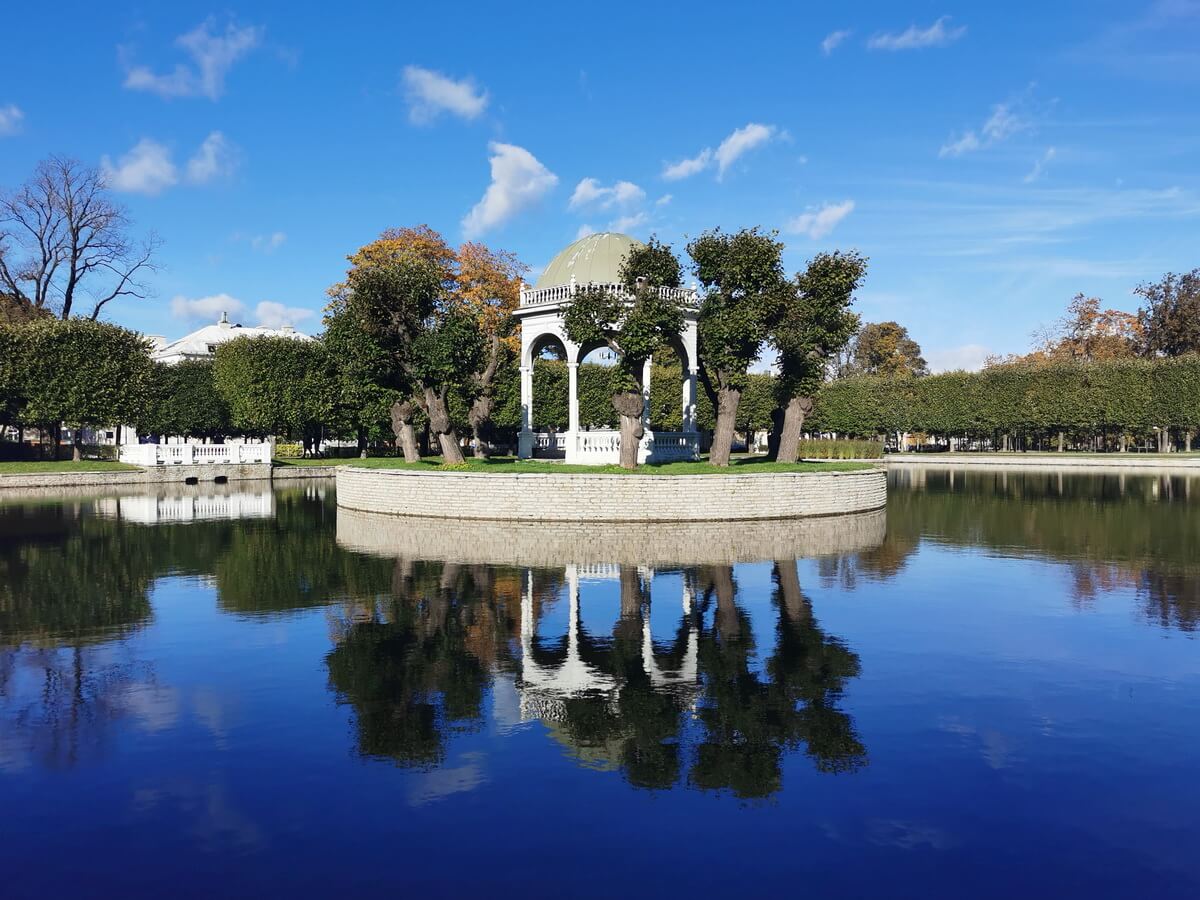
The Swan Pond in Kadriorg, where most walks through the gardens eventually lead.
If you are walking through the neighbourhood, here is what merits a stop:
- Kadriorg Palace — An elegant 18th-century Baroque palace commissioned by Peter the Great. Today it houses an art museum, so you can actually go inside and see the grand interiors.
- Kumu Art Museum — Estonia’s main art museum. It showcases both contemporary exhibitions and a massive collection of Estonian art.
- Kadriorg Park — One of Tallinn’s most beautiful historic parks, featuring long Baroque avenues and the well-known Swan Pond.
- Japanese Garden — A quiet, authentic Japanese garden opened in 2011. Note that it is closed during the winter months.
- Tammsaare and Vilde House Museums — The beautifully preserved homes of two Estonian writers. Perfect for seeing what an intellectual’s apartment looked like in the early 20th century.
- Lower Tallinn Lighthouse — A tiny historic lighthouse tucked among the trees behind Kumu. You can’t climb it at the moment, but it’s a charming curiosity to stumble across.
If you’d rather explore Kadriorg with a guide, some Tallinn city tours include the district as part of the route — for example, the Tallinn Classic: Old Town and Kadriorg District Guided Tour or the Panoramic Tour over Tallinn by vehicle.
Where to Eat in Kadriorg
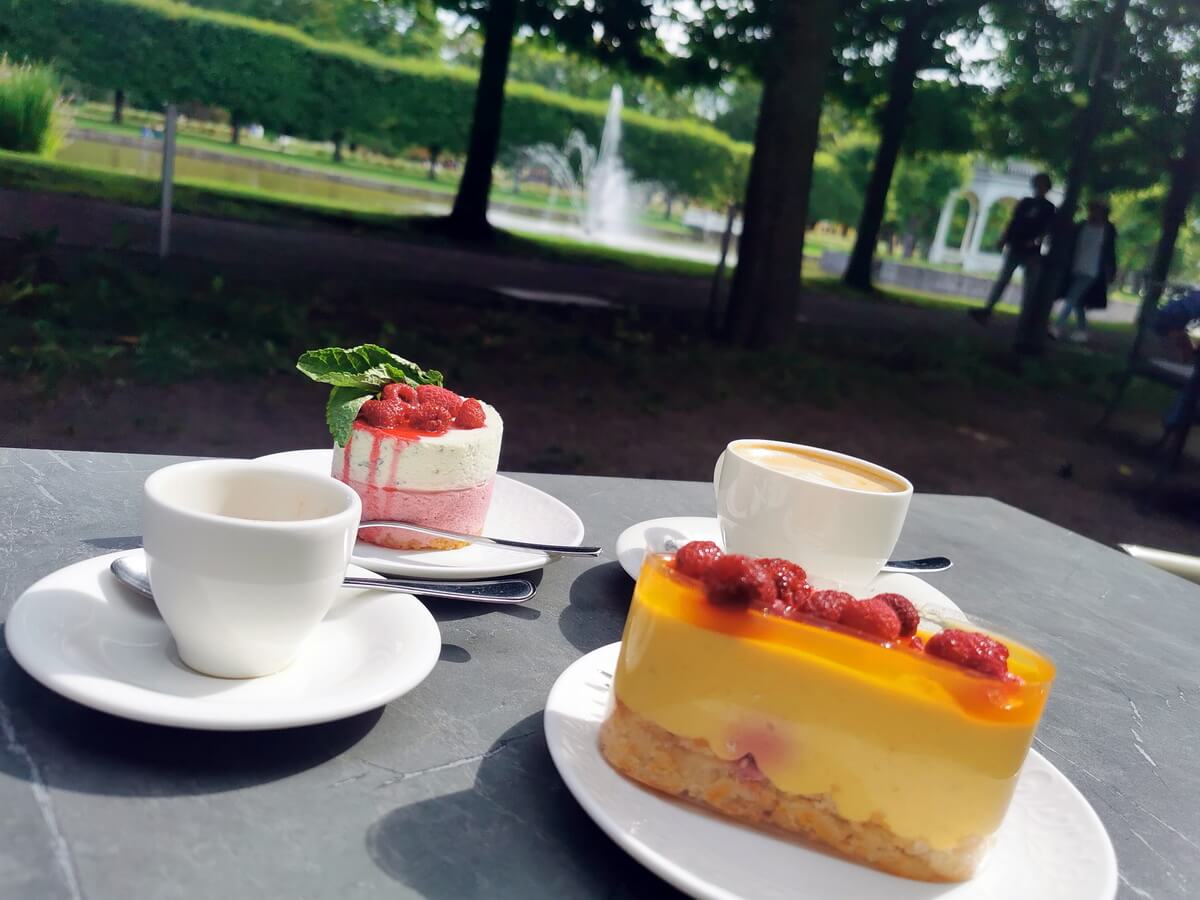
Coffee and cake after a walk through the park — a small Kadriorg ritual.
After a walk through the park, Kadriorg is a straightforward place to stop for food or coffee.
- For dinner: Mantel & Korsten is a superb restaurant set in a wooden villa (they hold a Michelin Bib Gourmand). If you want something easy, Cantina Carramba serves hearty Mexican food.
- For coffee & cake: Head to Gourmet Coffee Kadriorg, or grab a seat at Katharinenthal Café — in summer, its terrace looks straight over the Swan Pond.
- For a quick bite: There is a Reval Café inside the Kumu Art Museum. You can go in without needing a museum ticket.
How to Get to Kadriorg
Getting to Kadriorg from Tallinn Old Town is simple. Tram lines 1 and 3 connect the city centre with the park (Kadriorg stop) in about 10 minutes.
Many visitors walk along Narva Road, but a far better route is to turn into the side streets like J. Poska, F. R. Kreutzwaldi or Koidula. These avenues take you past the wooden villas and give you a proper sense of the neighbourhood.
A Walk from the Old Town to Kadriorg
One of the best ways to explore Kadriorg is to walk there from the Old Town and make a slow loop through the park. This route takes about 2 hours (longer if you stop at the museums).
The Route:
- Start at Viru Gate and head east along Narva Road.
- Turn onto J. Poska or Koidula to swap the main road for quiet, wooden villa-lined avenues.
- Pass the Tammsaare and Vilde House Museums (worth a quick 10-minute detour).
- Stroll to the Swan Pond and the nearby rose garden.
- Walk past Kadriorg Palace, then continue up the hill to the Kumu Art Museum and the Lower Tallinn Lighthouse.
- Wind down to the Japanese Garden.
- Finish at the seaside promenade by the Russalka Memorial, where you can easily catch a bus back to the Old Town.
Kadriorg fits perfectly into a short visit. If you’re planning a quick trip, see → my 2 Days in Tallinn itinerary.
Mark Your Landing Spot
Kadriorg is often presented simply as Tallinn’s “imperial park”, but that description only tells a fraction of the story. Beyond the palace walls and museum galleries, it remains a lived-in, deeply Estonian neighbourhood of historic timber architecture, quiet streets, and the reassuring, slow rhythm of everyday life.
FAQ: Visiting Kadriorg in Tallinn
Is Kadriorg Park free to enter?
Yes. The park, the rose garden, the paths around the palace, and the walk up to the tiny lighthouse are all completely free. You only need a ticket if you want to go inside the museums or the palace itself.
Is the Japanese Garden open in winter?
No. The stone paths get too slippery and the garden just isn’t built for harsh weather, so it closes from late autumn until spring. The rest of Kadriorg, though, is open all year.
Is Kadriorg worth visiting?
Definitely. If you want a break from the Old Town crowds, this is the place. It is much greener, much quieter, and full of beautiful timber architecture. Plus, it is only a ten-minute tram ride from the centre.
How much time do you need for Kadriorg?
A couple of hours is fine for a stroll through the park and a coffee. But if you want to properly look around Kumu or the palace, give yourself half a day.

