










Summer Solstice in Latvia usually forces a harsh choice: brave the massive, commercialised pop concerts or try to awkwardly crash a private family gathering. Turaida Castle, however, offers something completely different – an authentic, ritual-driven celebration set within a vast open-air museum.
I wrote this guide following my own on-site visit, tracking the continuous programme from the sunrise chants to the midnight fire. This is an honest, practical look at what you will actually experience on the ground, and more importantly, how not to end up stranded in the dark.
Crucial Warning: The Transport Trap
Let me be absolutely clear upfront. You cannot treat this as a simple day trip from Riga if you plan to stay for the evening bonfire. The event concludes exactly at 00:00, and returning to the capital by public transport at that hour is impossible. The last trains and buses depart long before the fire is even lit. You either need a rental car or a pre-booked bed in Sigulda. Otherwise, you will find yourself sleeping in a field.
Solstice at Turaida in Brief
- What it is: A deeply traditional, full-day Baltic Solstice festival featuring folk singing, ancient rituals, and a valley bonfire.
- The Schedule: The programme is not split into disconnected segments. It runs continuously from the 04:00 sunrise greeting until midnight.
- When and Where: Turaida Museum Reserve, near Sigulda. The celebration takes place strictly on the exact astronomical solstice (21 June).
- Price and Value: In 2026, admission was just 8 euros. Crucially, this ticket also grants you full access to explore the restored Turaida Castle, including its tower and cellars.
- Getting there: Take a 75-minute train from Riga to Sigulda. From the Sigulda train station, it is incredibly easy to find the local bus stop. The bus drops you right near the Turaida entrance, so there is no need to hike uphill to get in.
Turaida Midsummer Programme: What to Expect
The festival is a physical marathon. Surviving the entire cycle requires serious stamina, but you can arrive at any point.
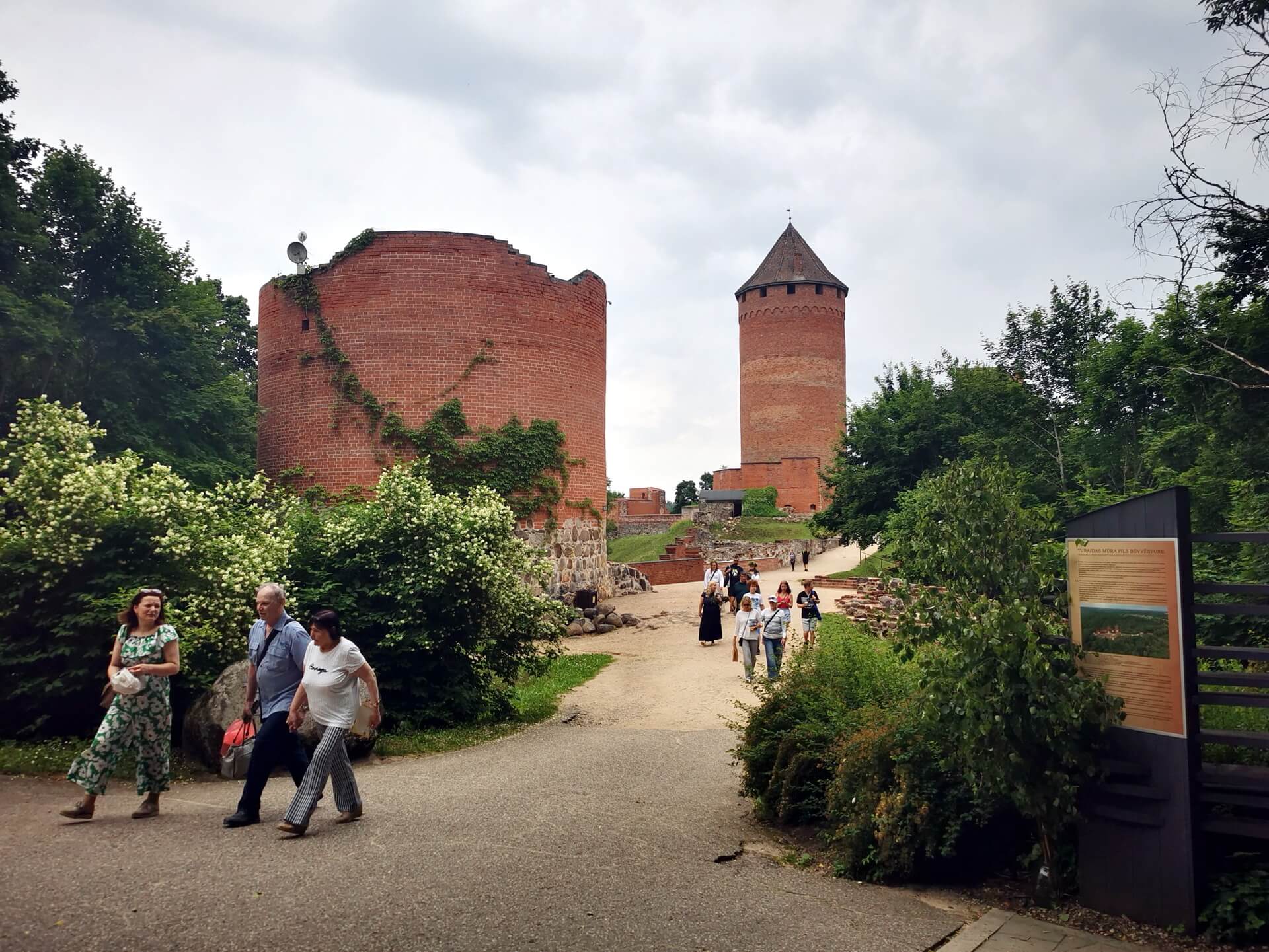
The festival ticket crucially includes full access to the museum reserve. Before the evening rituals start, take time to walk the grounds and explore the imposing red-brick towers of Turaida Castle.
The Pre-Dawn Start (04:00)
The festival officially kicks off at 04:00 with traditional songs to greet the sunrise. It is a brilliant experience if you are already awake, but if you are based in Sigulda, think carefully before sacrificing your sleep. You have a very long day ahead, and it is not mandatory to be there at dawn.
The Daytime Atmosphere (10:00 – 18:00)
By late morning, the grounds become an active cultural workshop. You can learn to weave flower wreaths and traditional bathhouse whisks. Too busy to forage? Florists in Sigulda sell handmade crowns for 15 to 25 euros. Take time to explore the restored 18th-century farmstead, the wooden church, and the castle itself. Climbing the red-brick tower offers expansive views over the primeval forest.
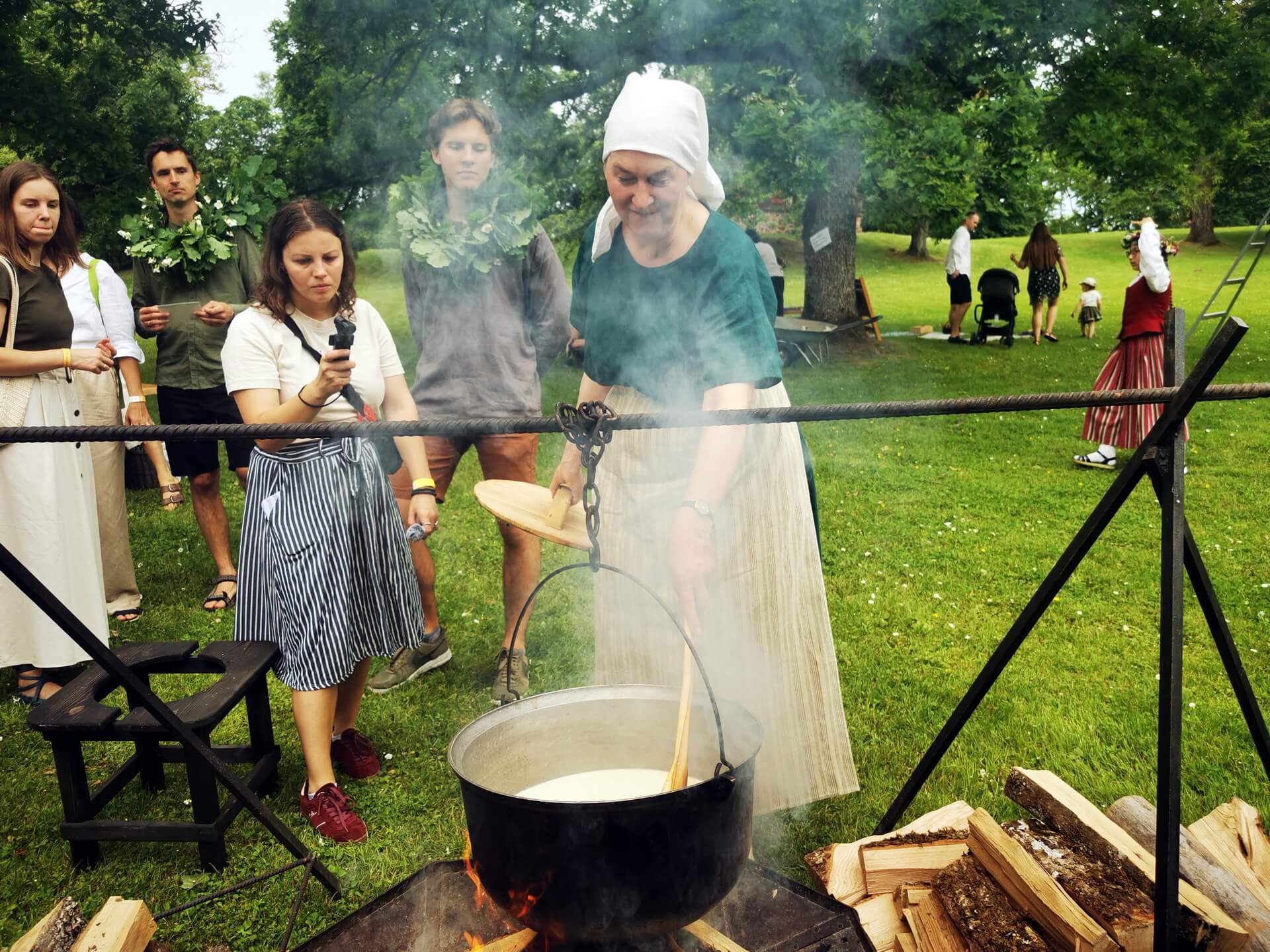
Various historical demonstrations are scattered across the grounds throughout the day. Because it is a massive public event, you will often see ancient techniques being documented through modern smartphone lenses.
Field Note: The Midday Escape
By mid-afternoon, the summer heat and the sheer size of the reserve will catch up with you. Since my hotel was in Sigulda, returning just for lunch or a quick rest made no sense. Instead, I grabbed a re-entry wristband and left the festival territory to walk through the actual village of Turaida. The settlement itself is a fascinating architectural clash – a jarring mix of Soviet-era five-storey apartment blocks sitting right alongside typical private houses. I took in the brilliant views near the old Magazīna granary, eventually finding a restaurant overlooking a quiet pond. I sat there for hours and returned to the gates fully recharged by 20:00.
The Evening Bonfire Rituals (19:00 – 00:00)
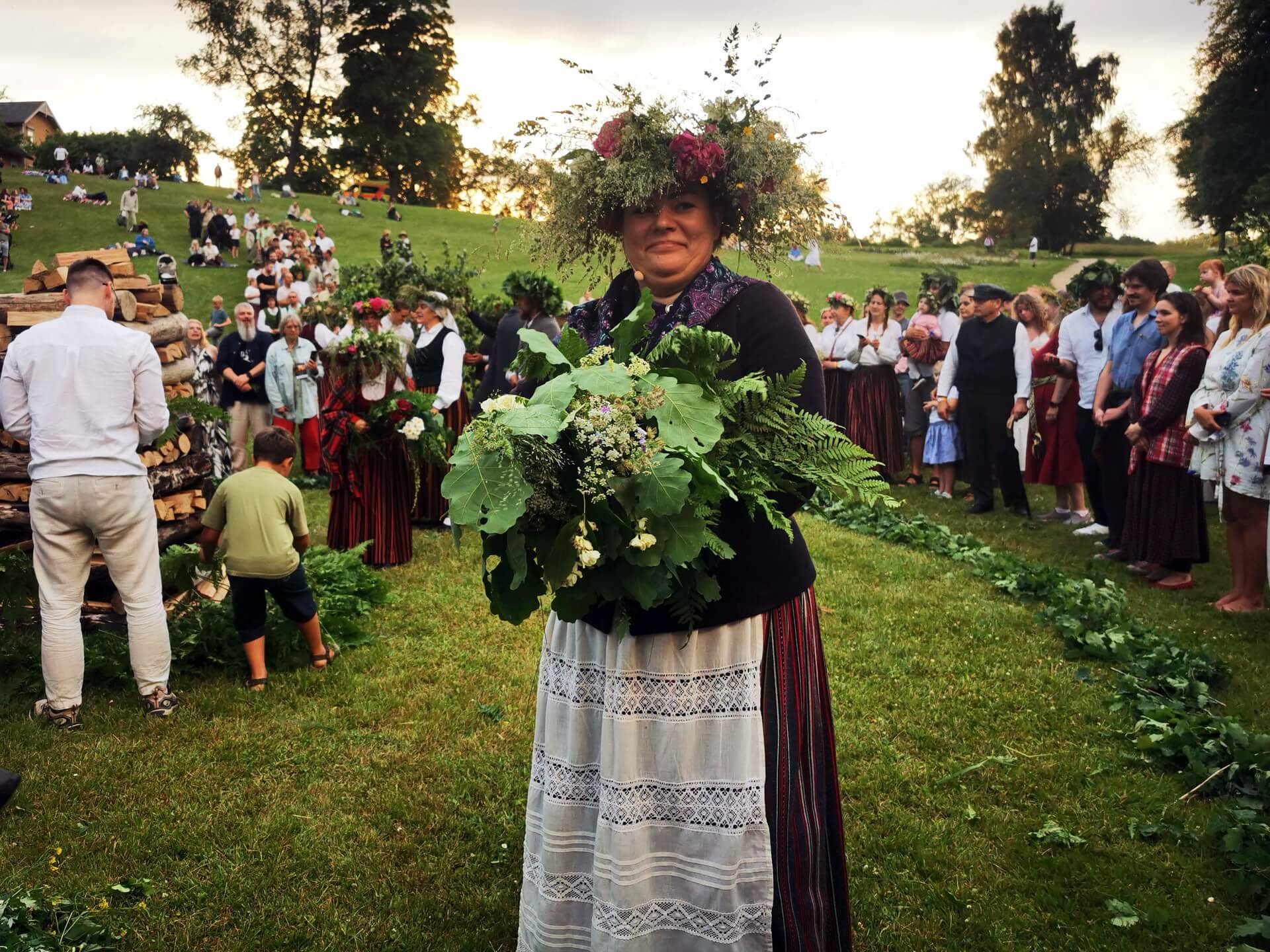
While casual clothes are perfectly fine for tourists, many locals treat the solstice as a chance to showcase stunning, handcrafted regional garments and incredibly heavy oak arrangements.
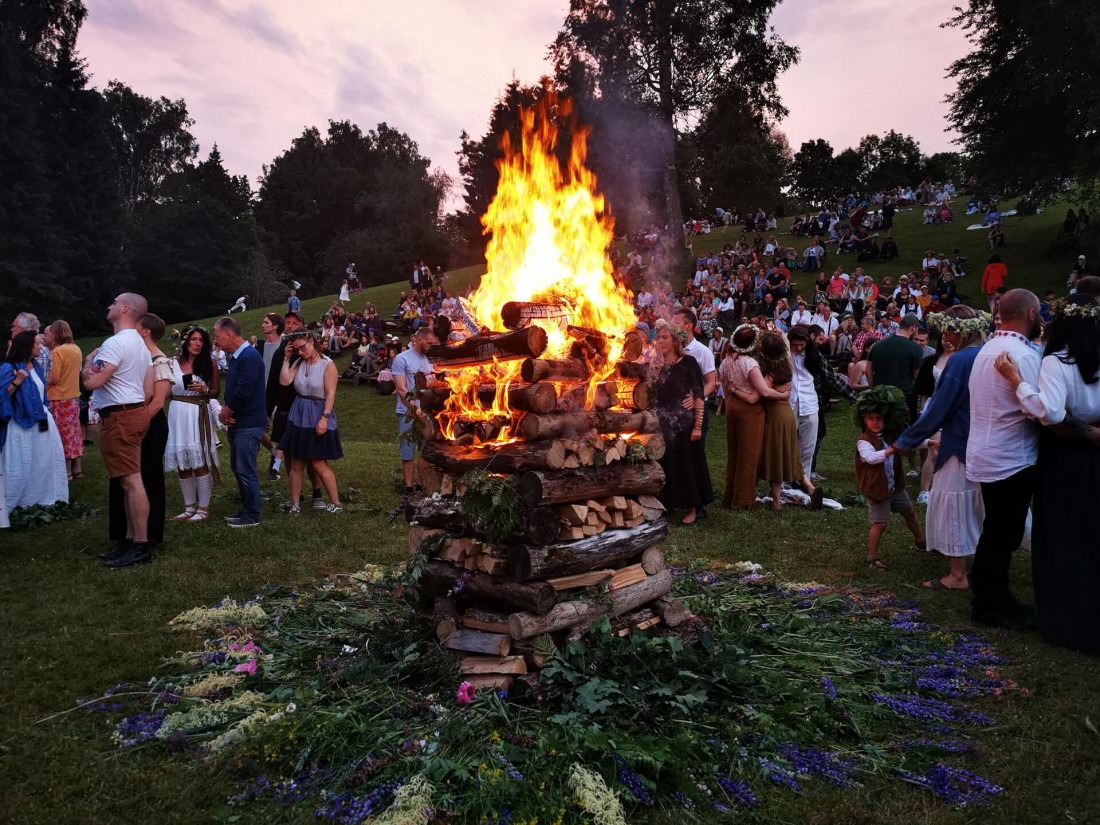
As dusk approaches, the crowd moves to the valley. The highlight begins around 21:00. People line up to pass through symbolic gates made of birch branches, making their way towards the bonfire. Do not be intimidated by the dancing. You do not need to know any complex choreography. The best place to be is right by the fire, where people simply hold hands and walk in circles around the flames. Continuous choral singing fills the hollow until the festival officially concludes at 00:00. Long after the fire burns down and you begin the walk back in the twilight, you will find yourself unconsciously humming the hypnotic “Līgo, līgo” refrain. It genuinely stays with you.
Practical Survival Details
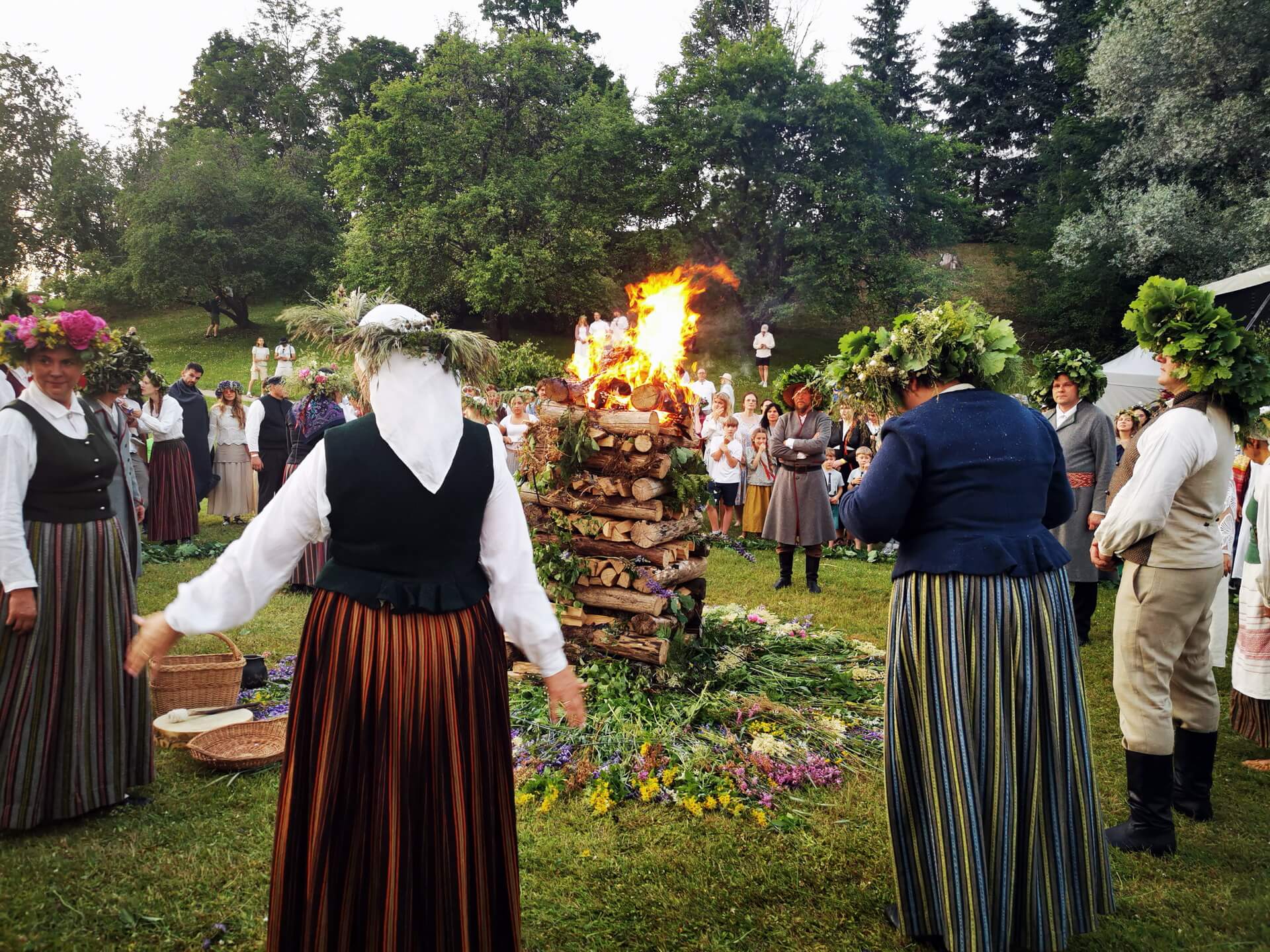
You will likely smell like woodsmoke for days, but standing on the inner edge of the ring, feeling the intense heat and the collective energy of the crowd, is the definitive Midsummer experience.
The Tech Warning: Because the programme runs continuously for 20 hours, your phone battery will inevitably drain. This is a critical detail: my rented apartment in Sigulda used an app-controlled smart lock. Between taking photos and the long day, my phone nearly died, and I narrowly avoided sleeping on the street. Bring a fully charged power bank.
Facilities: Despite the large crowds, you do not need to worry about basic amenities. Portable toilets are plentiful across the festival grounds, and I never saw a single queue.
Dress Code, Footwear & Weather: Summer afternoons might hit 28°C, but valley temperatures plummet after 22:00. Bring a warm fleece mid-layer and a windproof jacket. Many locals wear elaborate traditional costumes, but jeans and a casual t-shirt are perfectly acceptable. Crucially, the ground is a mix of packed earth and uneven grass. Leave the delicate footwear behind; cushioned foam slip-ons from Skechers or sturdy Keen sandals are your best bet for surviving the marathon.
Late-Night Return Realities: Turaida to Sigulda
If you are heading back to your room in Sigulda, be warned that regular local buses stop running long before midnight, and taxis in the area are virtually non-existent. Check the official museum website’s news section a few weeks before the event to see if they are coordinating a special late-night shuttle back to the station.
Very few people walk back, but I did. The Nordic white nights provide enough twilight to navigate the 5 km route alongside a quiet regional road. It is a standard, safe asphalt path, and the terrain is mostly flat. The only genuinely exhausting part is the steep uphill climb that hits you right after crossing the bridge into Sigulda.
Want to skip the walk? A highly recommended alternative is to ask your guesthouse hosts in advance to arrange a taxi pick-up for a specific time. Do not rely on ride-hailing apps for this – the demand is massive, and the local taxi fleet is simply too small to cope.
What to Eat and Drink
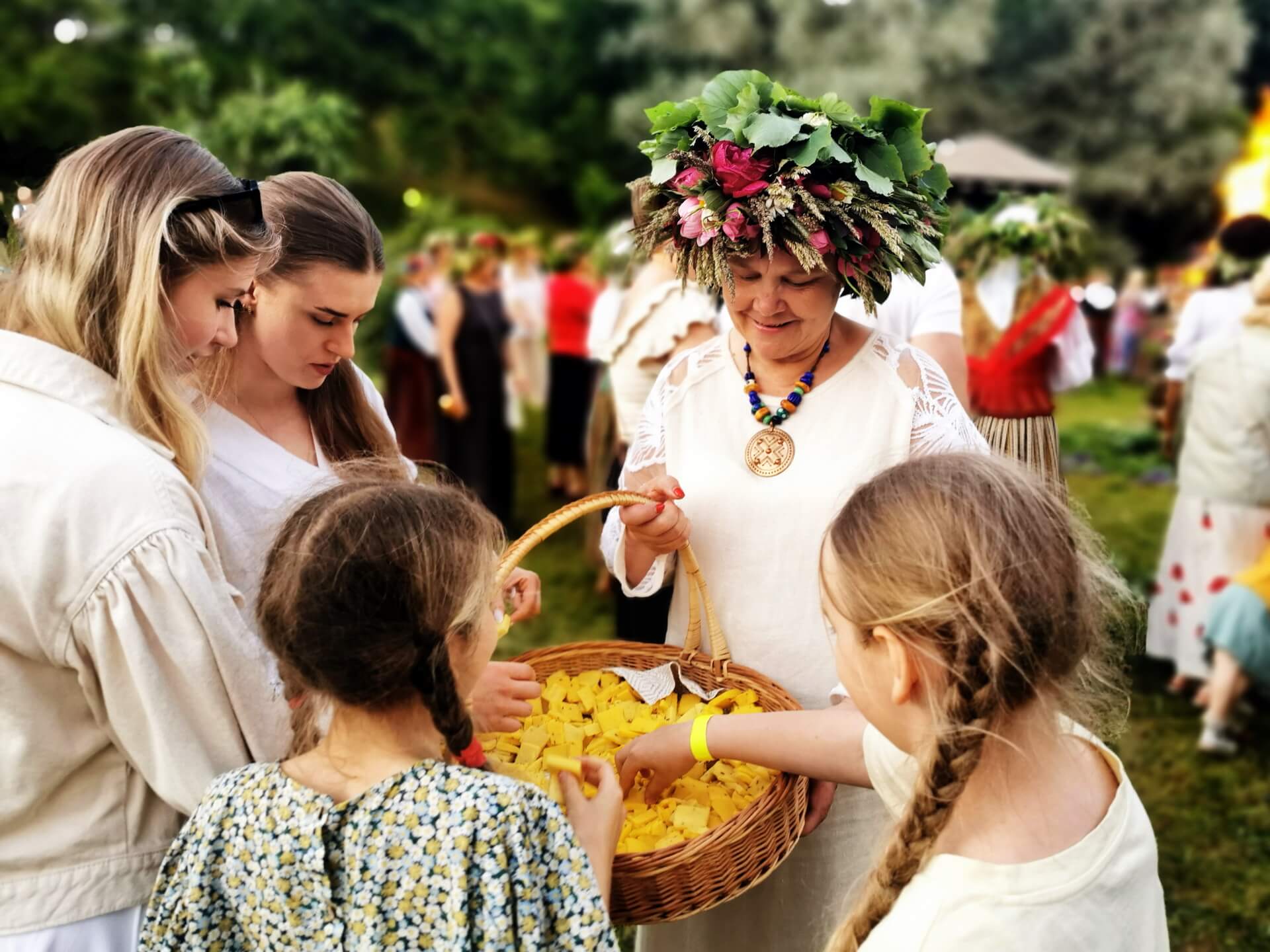
The ultimate Midsummer snack. It might just be a standard block of caraway cheese from the local supermarket, but being offered a piece from a wicker basket by the bonfire makes it taste entirely authentic.
Skip the standard fast food and hunt down these regional specialities.
Jāņu cheese: Fresh curd cheese packed with caraway seeds. Generic versions dominate the supermarkets, and frankly, much of what you will be offered at the festival is exactly that. Do not stress about finding a rare artisanal batch; it is the tradition of sharing it by the fire that matters.
Rye bread: Heavy, naturally fermented sourdough.
Grilled Meats: Pork shashlik cooked over wood charcoal at the festival stalls.
Aukstā zupa (In village restaurants): You will not find this at the festival stalls, but if you visit a restaurant in Turaida village or Sigulda, you must order this vibrant, neon-pink cold beetroot soup. This refreshing mix of kefir, pickled beets, fresh cucumber, dill, and hard-boiled eggs is the ultimate Latvian summer cooler.
The Vegetarian Reality: If you do not eat meat, you will find almost nothing at the festival itself beyond cheese and bread. Vegetarians should pack their own dinner or plan to escape to a local village restaurant.
Local Beer: Unfiltered craft farmhouse ales flavoured with honey.
Making the Most of Sigulda
Since you have to base yourself in Sigulda, you should explore the town. Visit the medieval castle ruins, even though there is not much left of the original structure. For a brilliant hike, take the route through Krimulda down to the pedestrian bridge over the Gauja River. You can swim in the river, but be extremely careful – it is shallow but has a deceptively strong current.
When it is time to head back to Riga, pay close attention at the Sigulda train station. Trains depart for the capital at different times and from entirely different platforms, so verify you are boarding the correct one.
Strategic Comparison: Latvian Solstice vs. Estonian Jaanipäev
Travelling the Baltics in late June offers a unique calendar overlap. Turaida’s authentic festival hits on the astronomical solstice (21 June). Estonian Midsummer (Jaanipäev) happens on the night of 23 June. You can easily do both.
Primary Focus: Turaida focuses on ancient folk singing and authentic rituals. Estonian Jaanipäev leans heavily into community bonfires and village games.
Iconic Customs: Turaida is all about caraway cheese, oak crowns, and circle dances. In Estonia, expect massive wooden village swings and heavy barbecuing.
The Setting: Latvia offers historic castles and primeval river valleys. Estonia usually relies on open manor parks or rural village commons.
Proposed Baltic Midsummer Itinerary
Fly into Riga: Explore the Old Town and Art Nouveau district.
Train to Sigulda: Base yourself in the Gauja National Park.
21 June: Attend the Solstice Celebration at Turaida. (Pace yourself).
22 June: Sleep in, explore Sigulda Castle ruins, and hike to the Gauja pedestrian bridge.
23 June: Take the train north via Valga to Tartu, Estonia.
23 June (Night): Experience Estonian Jaanipäev bonfires at Raadi Manor Park in Tartu.
24 June: Travel by train to Tallinn for departure.
Curious about how the neighbours celebrate? Read my full field guide to surviving the Estonian Jaanipäev in Tartu.
Frequently Asked Questions
What time does the celebration at Turaida Castle start?
The festival officially begins at 04:00 with sunrise chants and runs continuously. The daytime programme ramps up by 10:00, and evening rituals peak after 21:00. The event concludes at exactly midnight.
Are the festival dates always 23 – 24 June?
No. The national public holidays of Līgo and Jāņi are fixed on those dates. However, Turaida’s traditional festival occurs strictly on the astronomical solstice (21 June). Always check the calendar.
How much do tickets cost, and can I pay by card?
In 2026, admission cost just 8 euros, which also includes access to the castle and tower. Most artisan stalls accept contactless cards, though carrying small cash notes is wise for rural vendors.
How do I get back to Sigulda at night without a car?
Check the official website for special late-night event buses. Otherwise, prepare for a 5 km walk along a paved asphalt path. It is mostly flat and safe, but expect a steep uphill climb right after crossing the bridge into town.

