










Exploring the Eagles’ Nests Trail is a fascinating experience, even if the modern access to these historical sites can be occasionally frustrating.
I’ve always had a soft spot for its medieval fortifications, but there’s a logistical catch: standard 40-seater tourist coaches simply don’t run this route. A small minivan tour is essentially your only realistic option.
If you want to read my broader thoughts on Krakow itself, check out my 9 impressions of Krakow.
What Is the Eagles’ Nests Trail?
The Eagles’ Nests Trail (Szlak Orlich Gniazd) is a 163-kilometre string of medieval fortifications between Krakow and Częstochowa. In the 14th century, King Casimir the Great ordered these castles built directly into towering limestone cliffs to guard against invaders.
They were brutally functional, nearly impossible to siege, and today, mostly ruins. Tours out of Krakow usually cherry-pick three stops.
The Day Trip in Brief:
- Tour: Eagles’ Nests Trail small group tour – Minivan transport with a driver-guide.
- Price: €117 (I was refunded 40 PLN after a site closure, making the final cost roughly €108).
- Duration: 8 hours.
- Group size: 5 people.
- Route: Ojców Castle ruins, Chapel on the Water, Pieskowa Skała, and Ogrodzieniec Castle.
Escaping Krakow Traffic
Our tour started at 09:00. Escaping Krakow on a weekday is a grind, but mercifully, our guide wasn’t the sort to treat the drive as a morning radio audition. He gave us the essential historical context and then let us stare out the window in peace.
Stop 1: Ojców Castle Ruins & The Chapel on the Water
Our first stop was the Ojców valley. We started with the Chapel on the Water: in 1901, Russian Tsar Nicholas II restricted new Catholic churches to suppress Polish national identity.
Because the decree forbade building them on state land, the locals built this chapel on stilts over the Prądnik River. Water isn’t soil. Checkmate, bureaucracy.
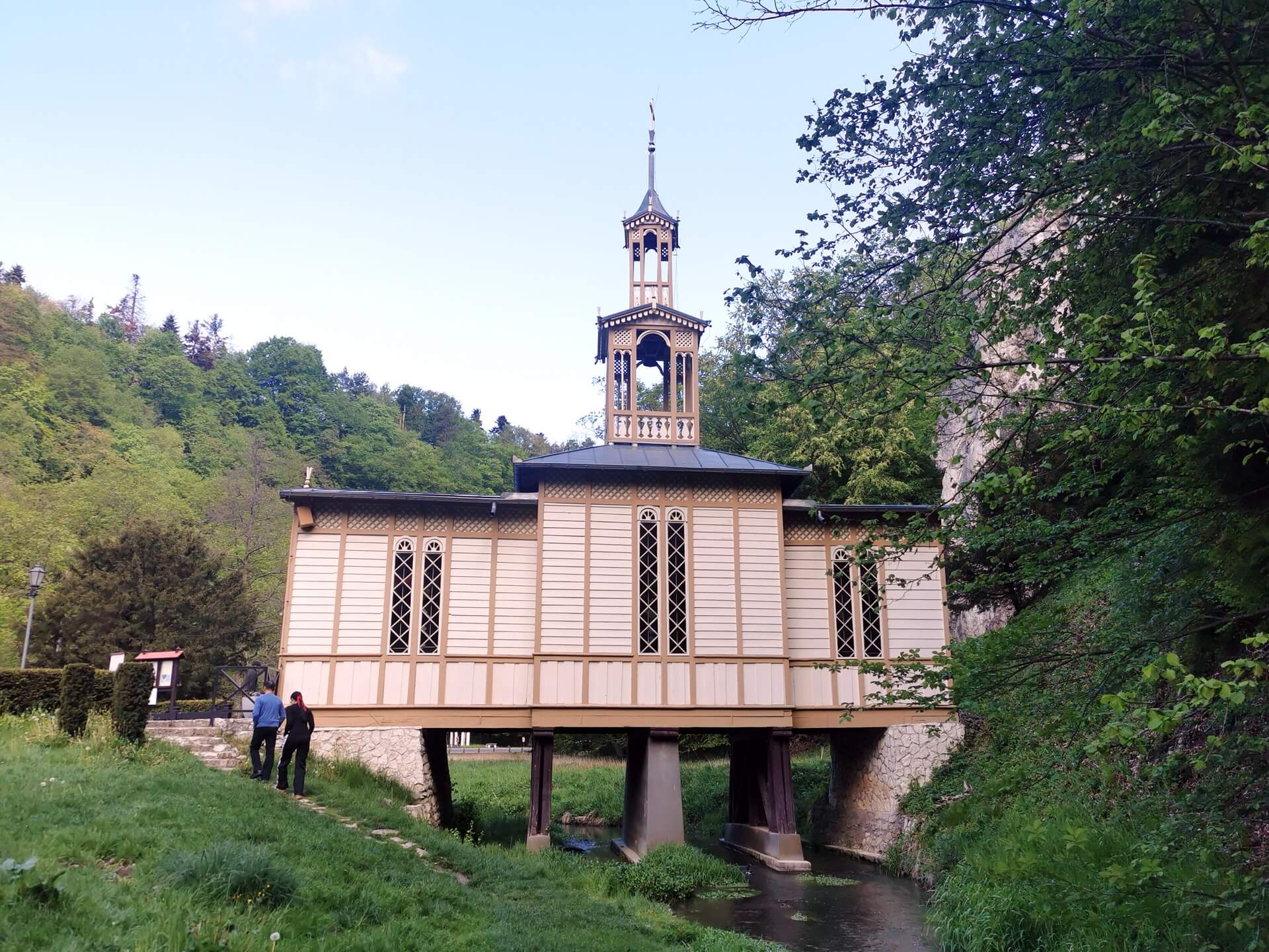
The delicate “Swiss-Ojców” wooden architecture makes a striking contrast with the heavy limestone cliffs looming behind it.
A short distance away, we climbed up to the ruins of Ojców Castle. These are proper, crumbling limestone remains integrated into the cliffside.
The pace here was surprisingly relaxed—we actually finished exploring and returned to the car ahead of schedule. It’s an intimate site that feels completely detached from the modern world.
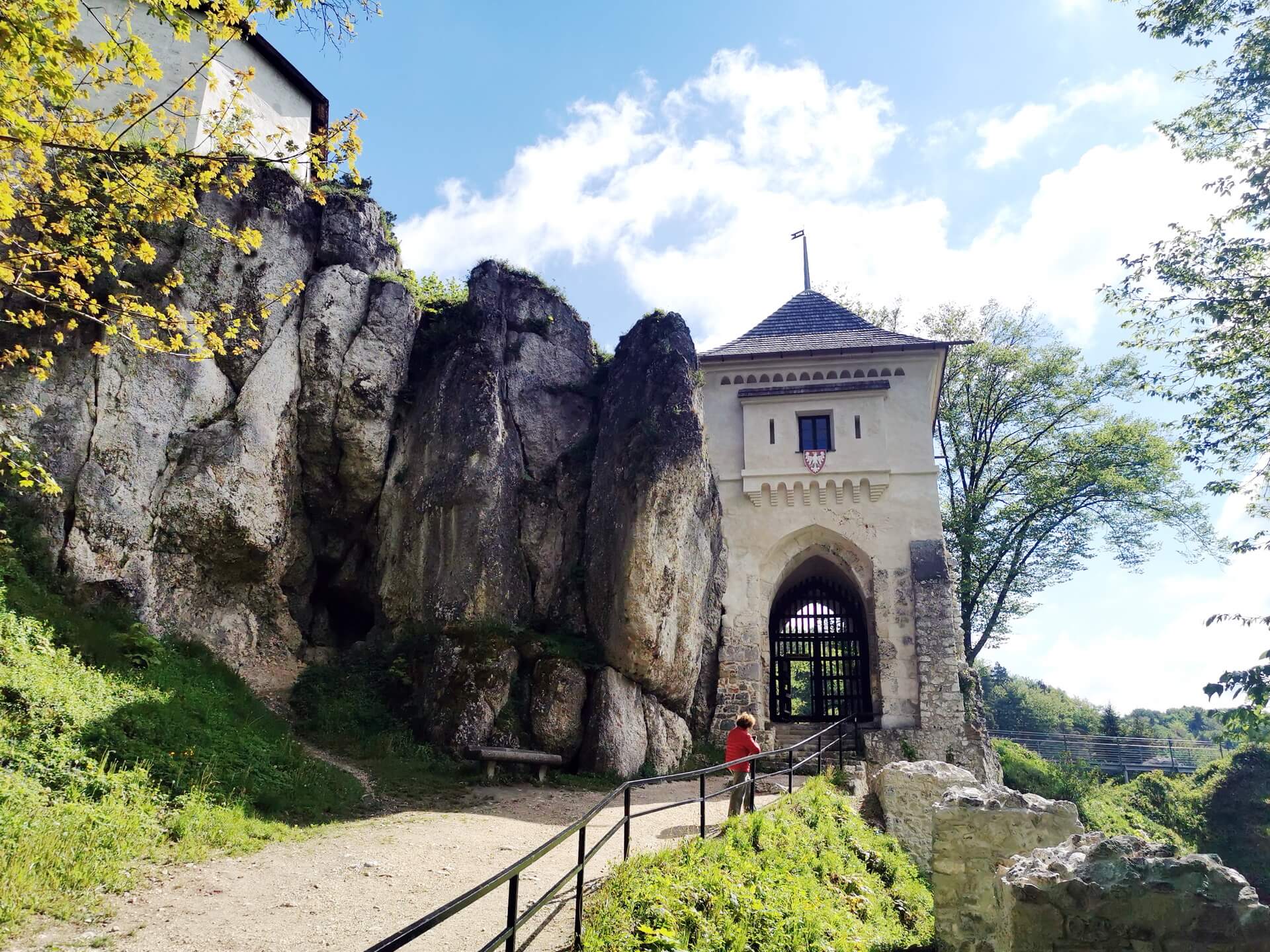
It is genuinely hard to tell where the natural rock ends and the 14th-century masonry begins.
Stop 2: Pieskowa Skała and the Cash Problem
Just before reaching our next castle, we stopped at Maczuga Herkulesa (Hercules’ Club)—a massive, 30-metre limestone pillar balancing improbably on a narrower base.
It’s a striking preview of the wind-carved geology that defines the entire trail, and a natural motif that repeats on an even grander scale at our final stop.
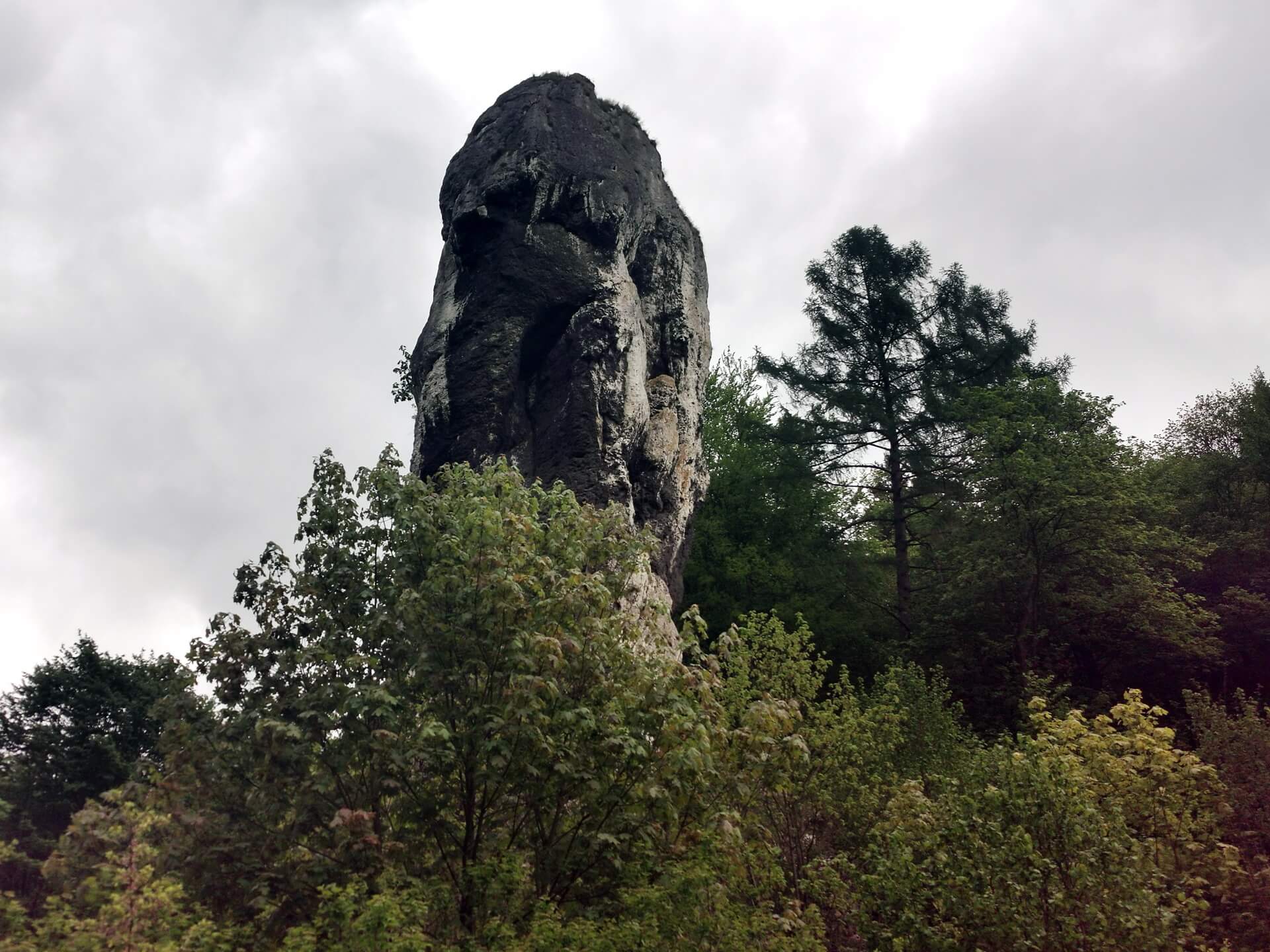
Maczuga Herkulesa (Hercules’ Club). It looks photoshopped, but the limestone pillar is completely natural.
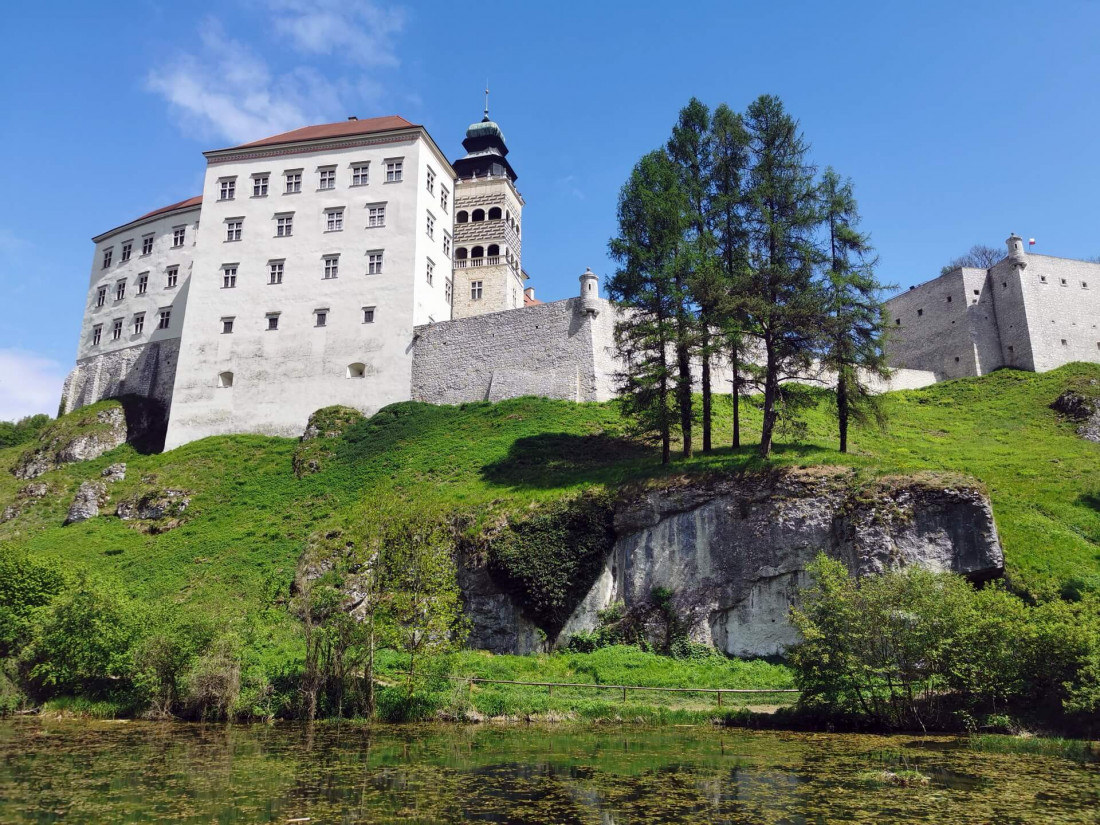
Next was Pieskowa Skała itself, a 14th-century fortress transformed into a Renaissance residence. The exterior views of the castle perched above the lake are spectacular.
I had expected this to be my favourite stop, but the 21st century failed us: the ticket terminals were down. Our guide had no cash, and neither did I. The guards allowed us exactly one metre past the gate to snap a photo before shooing us away.
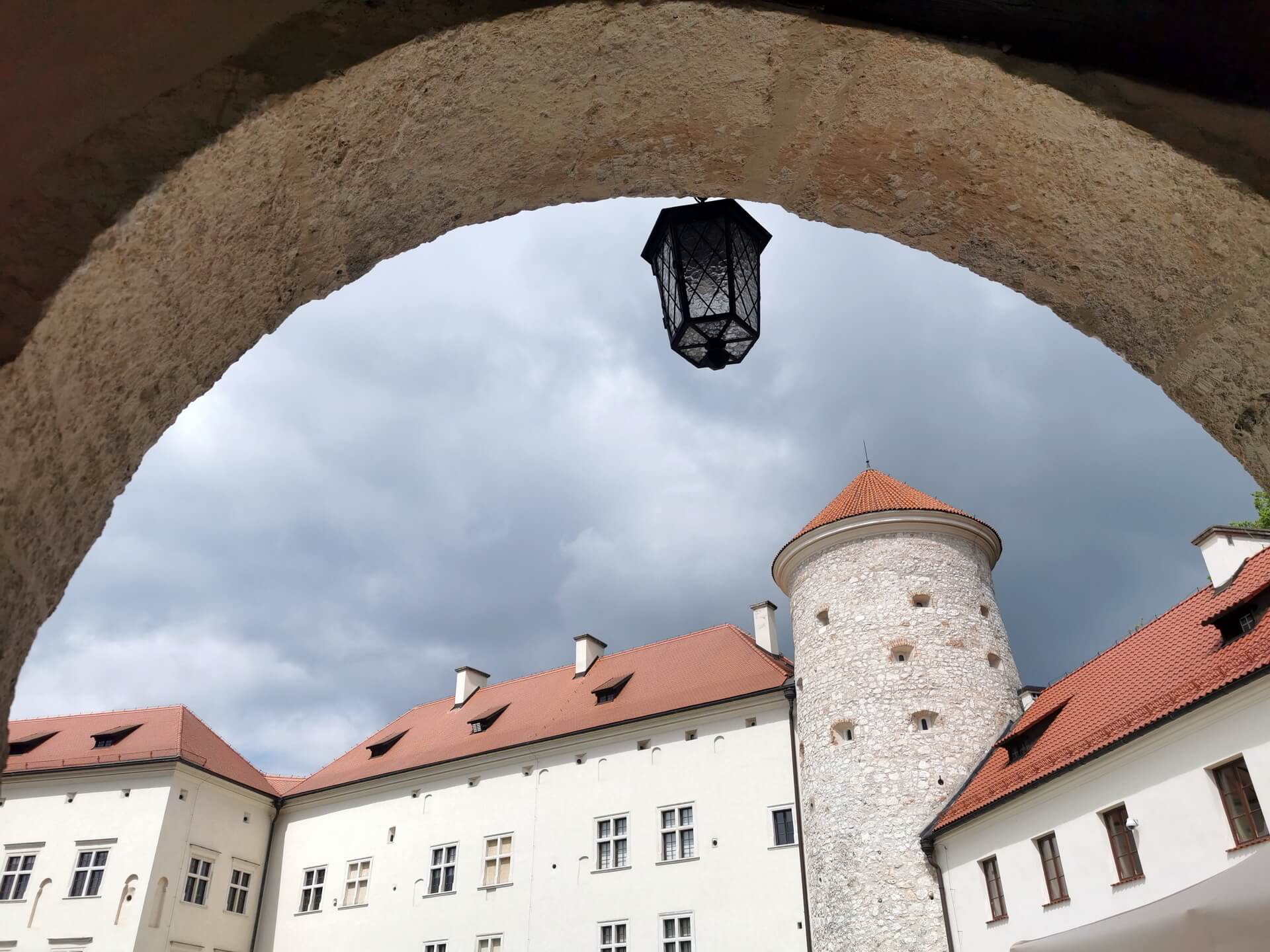
The pristine Renaissance courtyard of Pieskowa Skała. A beautiful view, best enjoyed while standing outside and contemplating a broken card machine.
Practical note: Always carry physical zloty in rural Poland. It’s not just that small postcard stands might be cash-only—it’s that digital infrastructure in the countryside is fragile. When card terminals go down, physical cash is your only backup.
Stop 3: Ogrodzieniec Castle (The Expectations Reality Check)
The main event is Ogrodzieniec. It’s a sprawling, aggressive limestone behemoth, with defensive walls that seem to grow directly out of the jagged cliffs.
You can climb through narrow stone cellars, navigate wind-battered towers, and walk along the parapets where the sheer scale of the medieval fortification truly hits you.
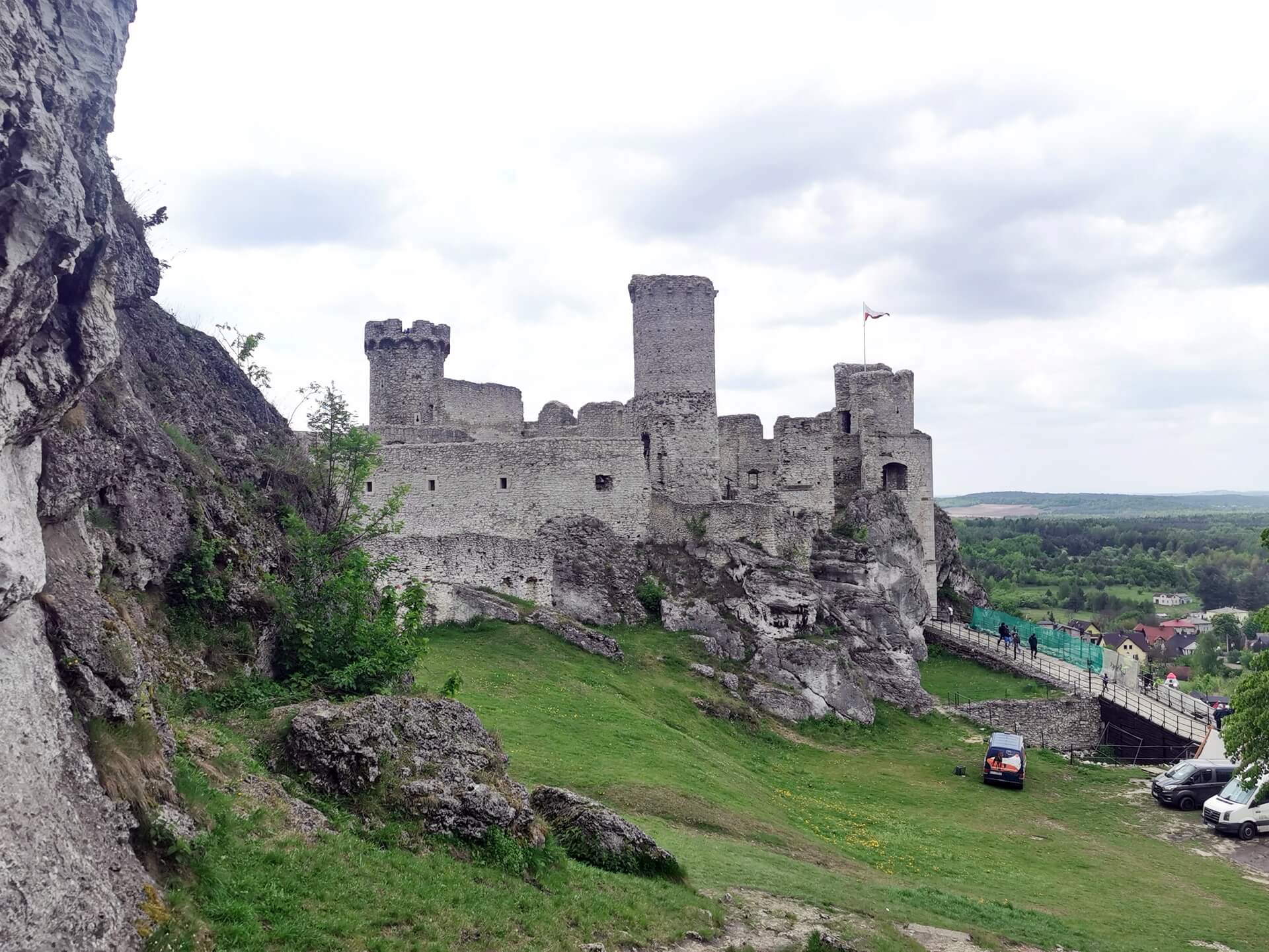
From a distance, the 14th-century masonry is perfectly camouflaged against the limestone. The true scale of the ruins only becomes apparent as you get closer.
It is clear that the site’s Witcher connection has become a major engine for the local tourism economy. The final stretch leading up to the ticket office is practically a gauntlet of souvenir tents, coffee stands, and children’s entertainment.
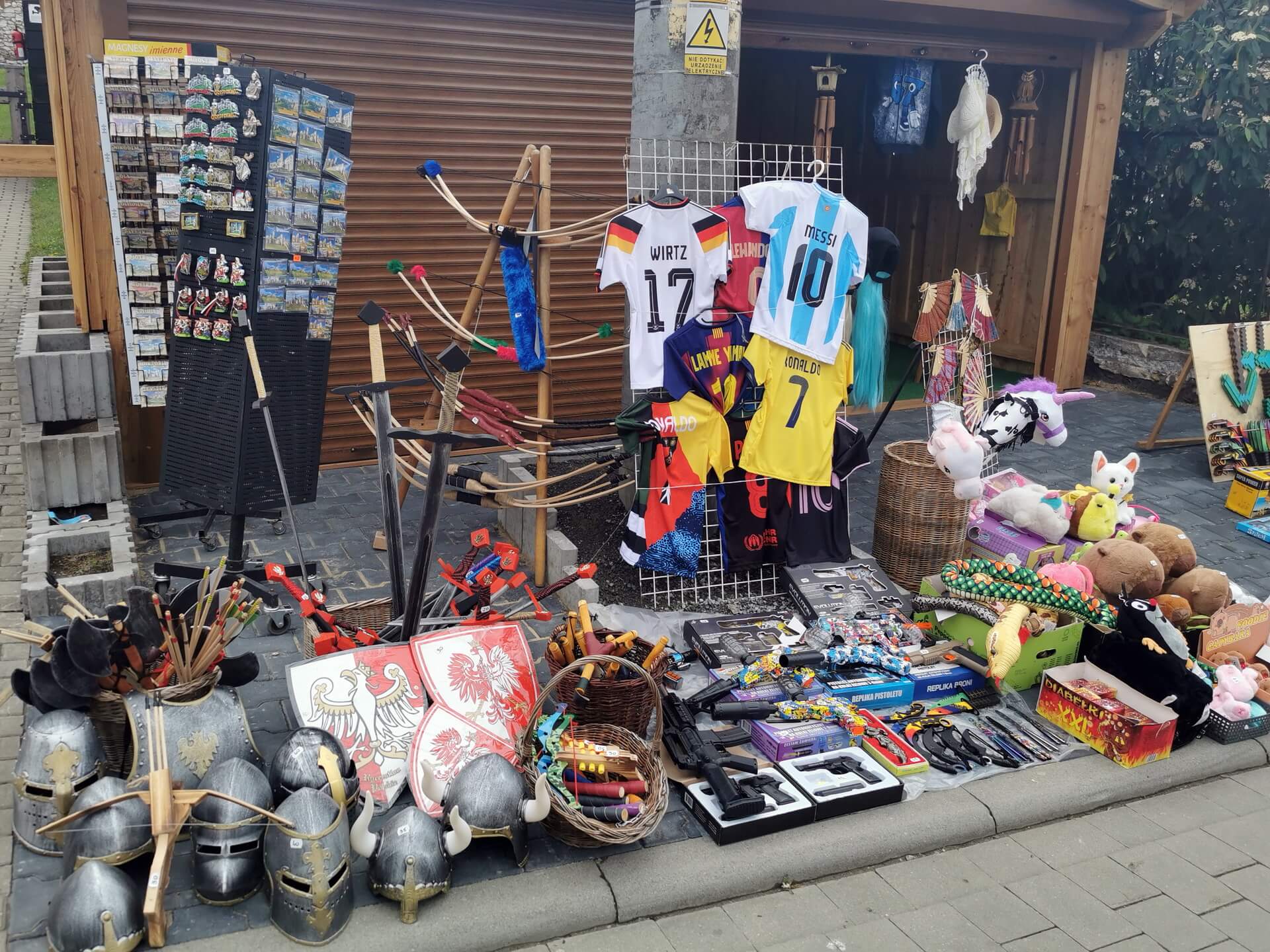
Medieval atmosphere meets modern commerce. The approach to the historical site is heavily fortified by brightly coloured plush horses and plastic weaponry.
However, once you cross the threshold, the commercialization abruptly stops. If you’re visiting because of the show, keep your expectations realistic: there are no exhibits or costumes inside. What you get instead is something better: a genuinely atmospheric ruin.
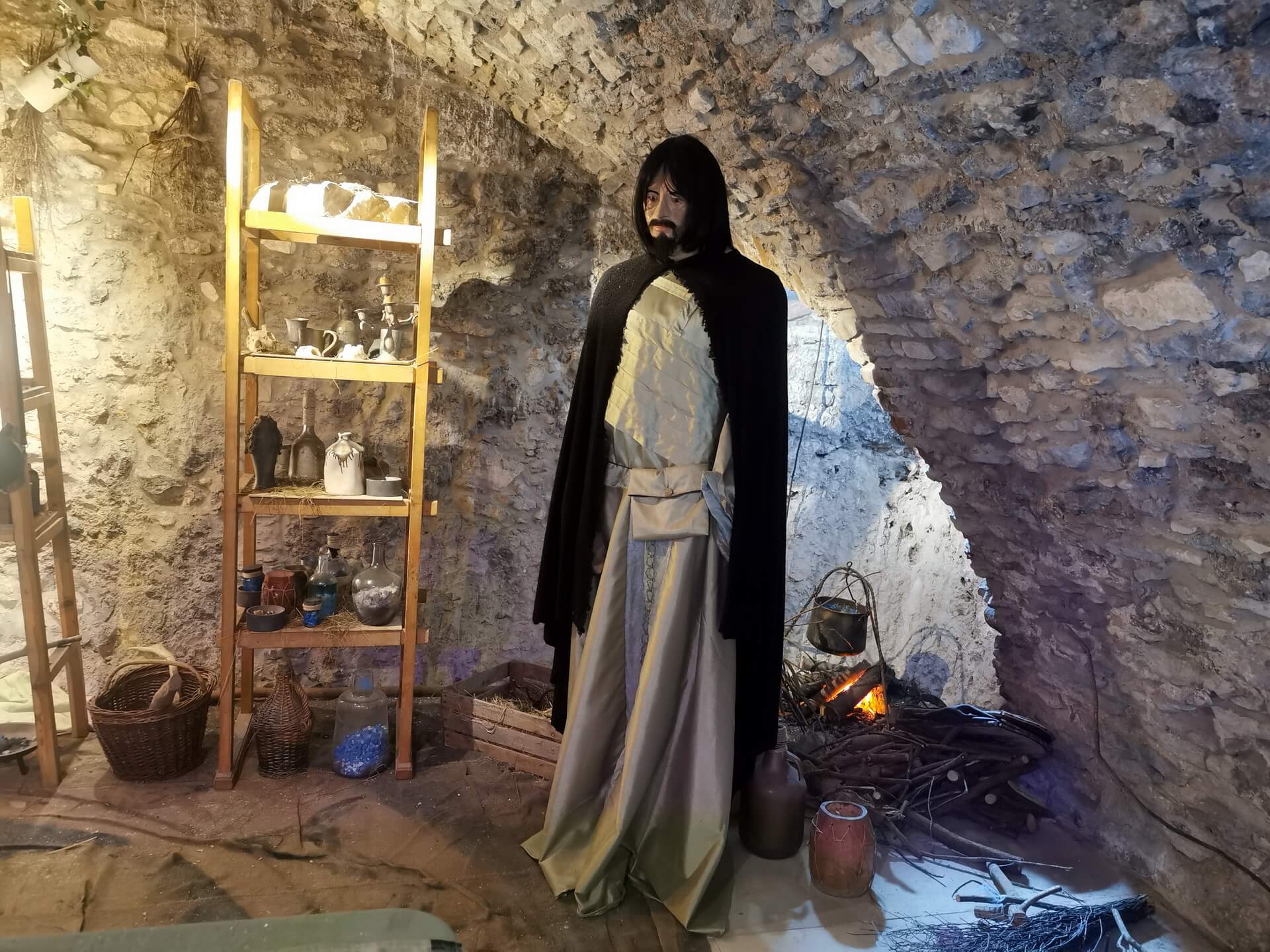
The castle’s cellar features this rather gloomy display. It’s a far cry from a Netflix production set, but it has its own low-budget charm.
Finishing your visit to the castle, it’s easy to see why the Eagles’ Nests Trail has become such a staple of regional tourism.
We had two hours at this stop. Navigating the sprawling complex took me a solid hour and a half. With my remaining thirty minutes before the minivan departed, I followed the guide’s tip to a local bistro just outside the gates.
For €12, I received a piece of battered pork roughly 40 centimetres long—the sort of meal that makes you question every portion size you’ve encountered elsewhere in Europe.
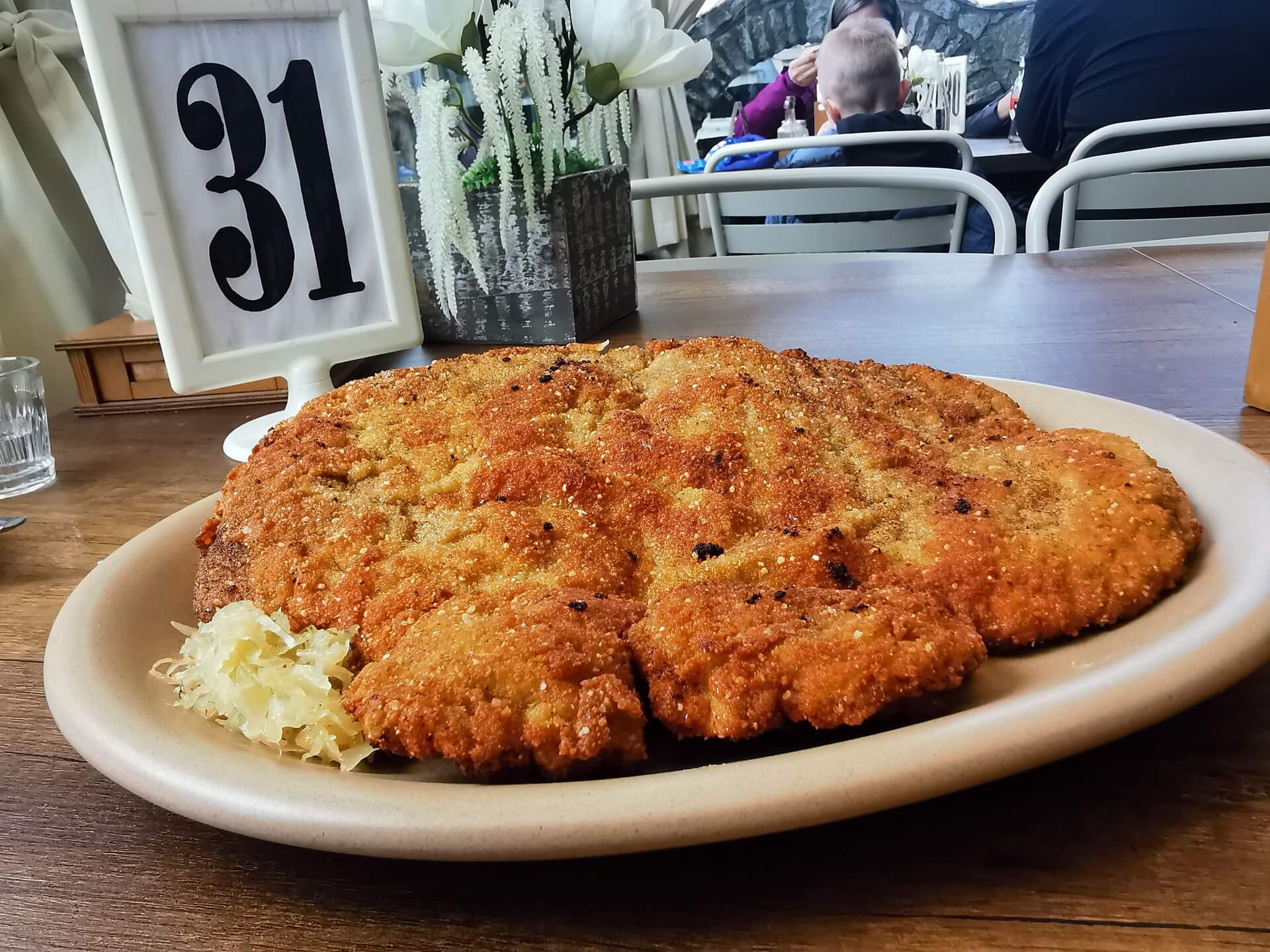
Visual proof of the aforementioned lunch. At this scale, the side salad is purely decorative.
Mark Your Landing Spot: Is the Tour Worth It?
We rolled back into Krakow just before 17:00. Our guide promptly refunded everyone 40 PLN in cash for the missed entry at Pieskowa Skała—a surprisingly honest gesture from the tour operator. If you are planning to experience the Eagles’ Nests Trail, you can check the current availability and prices here.
Let’s be clear about public transport: Pieskowa Skała works perfectly as a standalone day trip from Krakow by local bus. Ogrodzieniec sits much farther away, making it difficult to combine all three castles in a single day without a car or a tour.
I took my refunded 40 PLN and booked an evening Chopin piano concert. It was a sophisticated end to a day that peaked with medieval ruins and a colossal schnitzel, and it paired perfectly with my other deep dives into the region, from the underground world of the Wieliczka Salt Mine to the intricate artistry of Krakow’s stained glass heritage.
Eagles’ Nests Trail FAQ
How much does it cost to enter the castles?
It varies. Expect to pay between 20 and 55 PLN per site depending on what exhibitions are open. Ogrodzieniec is around 30 PLN, while the smaller Ojców ruins are about 22 PLN. If you take the tour I described, they handle all the tickets for you—one less thing to fumble with.
Is it a gruelling hike?
Not at all. You’d think scaling cliffside fortresses would require serious gear, but we covered a total of maybe three kilometres all day. There’s a short climb to the Ojców ruins and some uneven stone steps inside Ogrodzieniec, but you can manage it in normal trainers. Just don’t expect a mountain trek.
Can I bring a pushchair?
The castle grounds are fine, but the ruins themselves are no-go zones for wheels. We’re talking steep, uneven stone steps and narrow passages. If you want to actually explore the inner fortresses, bring a baby carrier. And wear proper shoes—that limestone gets treacherous if it’s even a little bit damp.
Are there toilets?
Yes. Pieskowa Skała and Ogrodzieniec have them inside (free with your entry). Otherwise, there are paid public facilities outside the gates and near the Chapel on the Water.
Can I do this without a car?
Pieskowa Skała is an easy solo bus trip from Krakow. But trying to hit all three in one day on local transport? Forget it—it’s logistically impossible. You either rent a car or book a guided transfer.

