










Most people know Kazimierz as Krakow’s historic Jewish quarter — a lively district filled with cafés, bars, synagogues, and weekend crowds. Few expect one of the city’s most visually striking museums to sit quietly on its southern edge.
After a week of churches, royal courts, the sprawling underground corridors of the Wieliczka Salt Mine, and the 10-kilometre walking trails of Kalwaria Zebrzydowska, this was the museum I kept thinking about. Not because it felt historically grand, but because it revealed something unexpectedly vivid about Polish visual culture itself: the love of colour, pattern, texture, and sheer decorative intensity.
Here is what to expect from the Ethnographic Museum in Krakow, whether it is worth visiting, and why it feels entirely different from the city’s royal landmarks.
In Brief:
- Location: Plac Wolnica, in the quieter southern end of Kazimierz.
- Time Needed: Around 1.5–2 hours. The embroidery alone slows most people down.
- Tickets: 20 PLN. Admission is free on Tuesdays, but always check their website for updated hours and temporary exhibitions.
- Atmosphere: Traditional, object-heavy, and unapologetically analogue.
- Best For: Textiles, traditional folk art, visual culture, and anyone slightly exhausted by royal chambers.
Survival Machines and Floral Walls
Walking straight into the ground floor, you instinctively prepare for dim, depressing historical dioramas. Instead, the wooden rural interiors are strangely loud.
The centrepiece of these rooms is the traditional masonry stove. Some are massive, whitewashed blocks, easily taking up half the room. Blindingly bright yellow paint and dense floral motifs cover others entirely. These were essentially winter survival machines—you simmered beetroot and cabbage stews inside them and dried heavy damp woollens against the warm tiles.
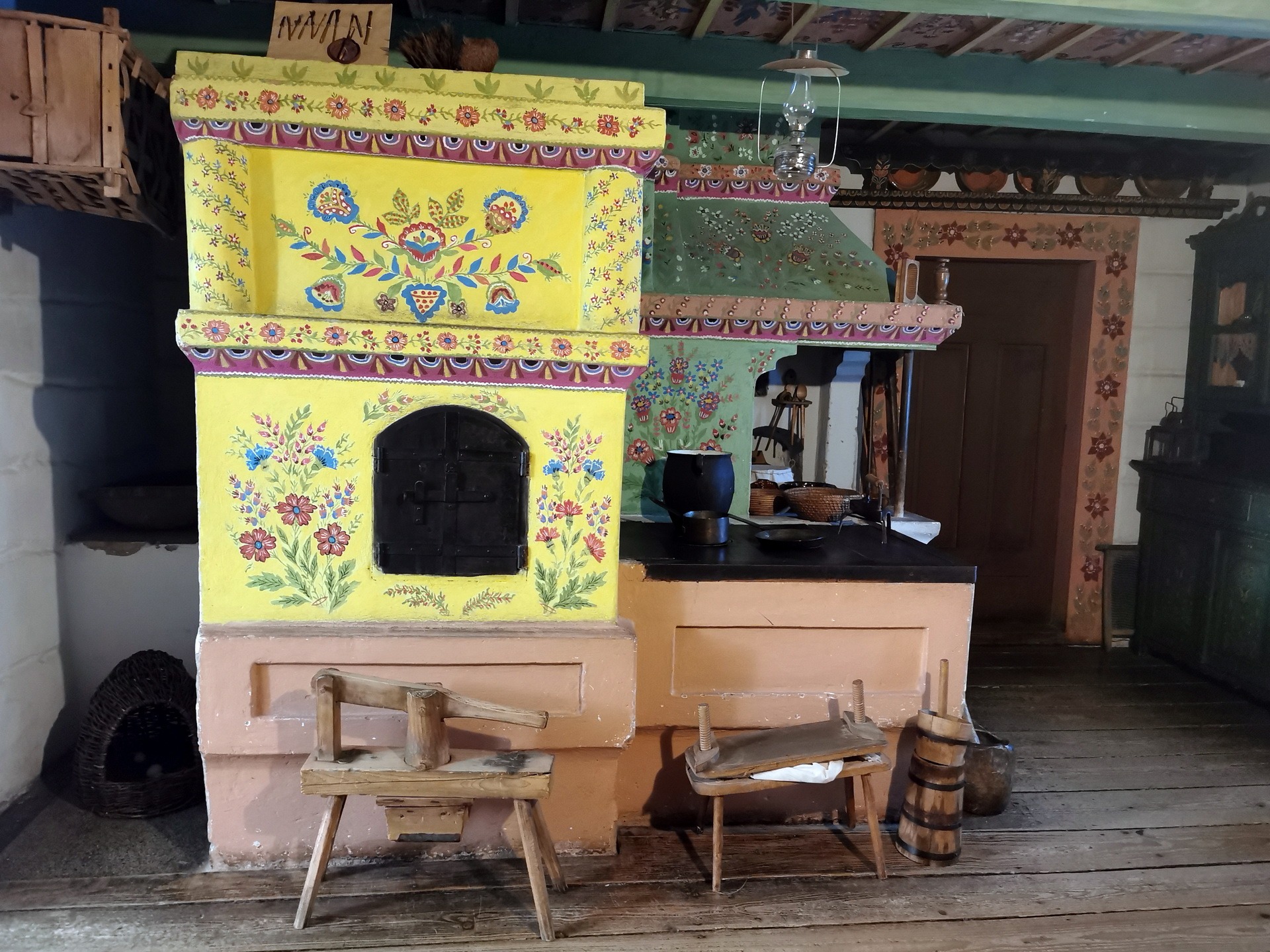
Bright floral stoves, painted ceilings, embroidered textiles, paper decorations — almost every room in the Ethnographic Museum in Krakow feels visually overloaded in the best possible way.
Yet, seeing rural families turn these brutal utilitarian structures into fiercely cheerful, room-sized canvases—sitting just steps away from wooden beds piled high with red-embroidered pillows—makes the space feel oddly stubborn rather than miserable.
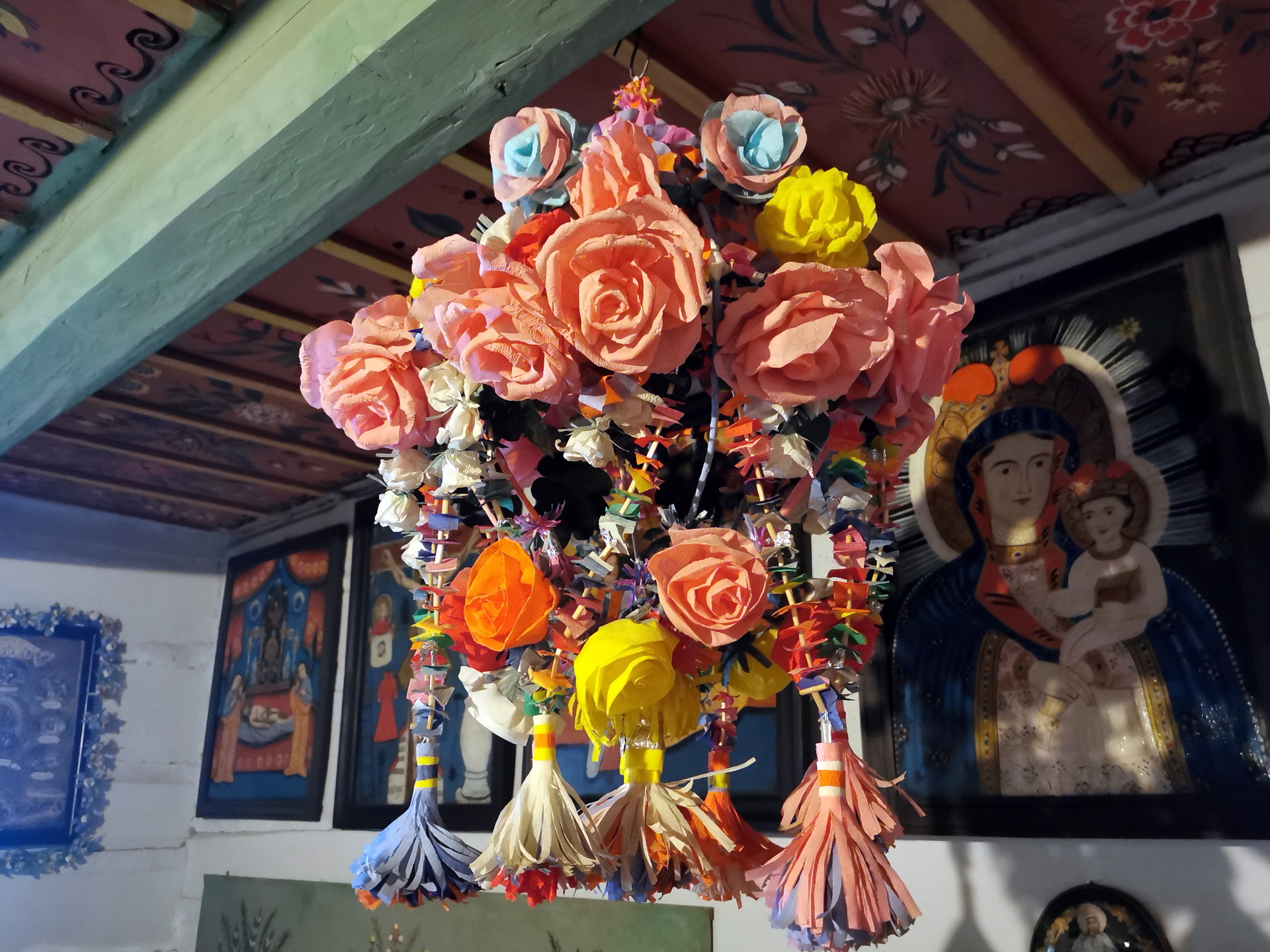
Even the ceilings and hanging decorations feel intensely ornamental here. Eventually, furniture, religion, craft, and decoration stop feeling like separate categories altogether.
Rural Haute Couture
Moving up the stairs, the Ethnographic Museum stops being about daily survival and gets slightly out of hand.
An expansive gallery opens up, filled with traditional Polish folk costumes, and within minutes the embroidery turns visually exhausting in the best possible way. The sheer volume of heavy sequins, red coral beads, and raised, almost three-dimensional threadwork crowded onto black velvet and thick wool is difficult to process all at once.
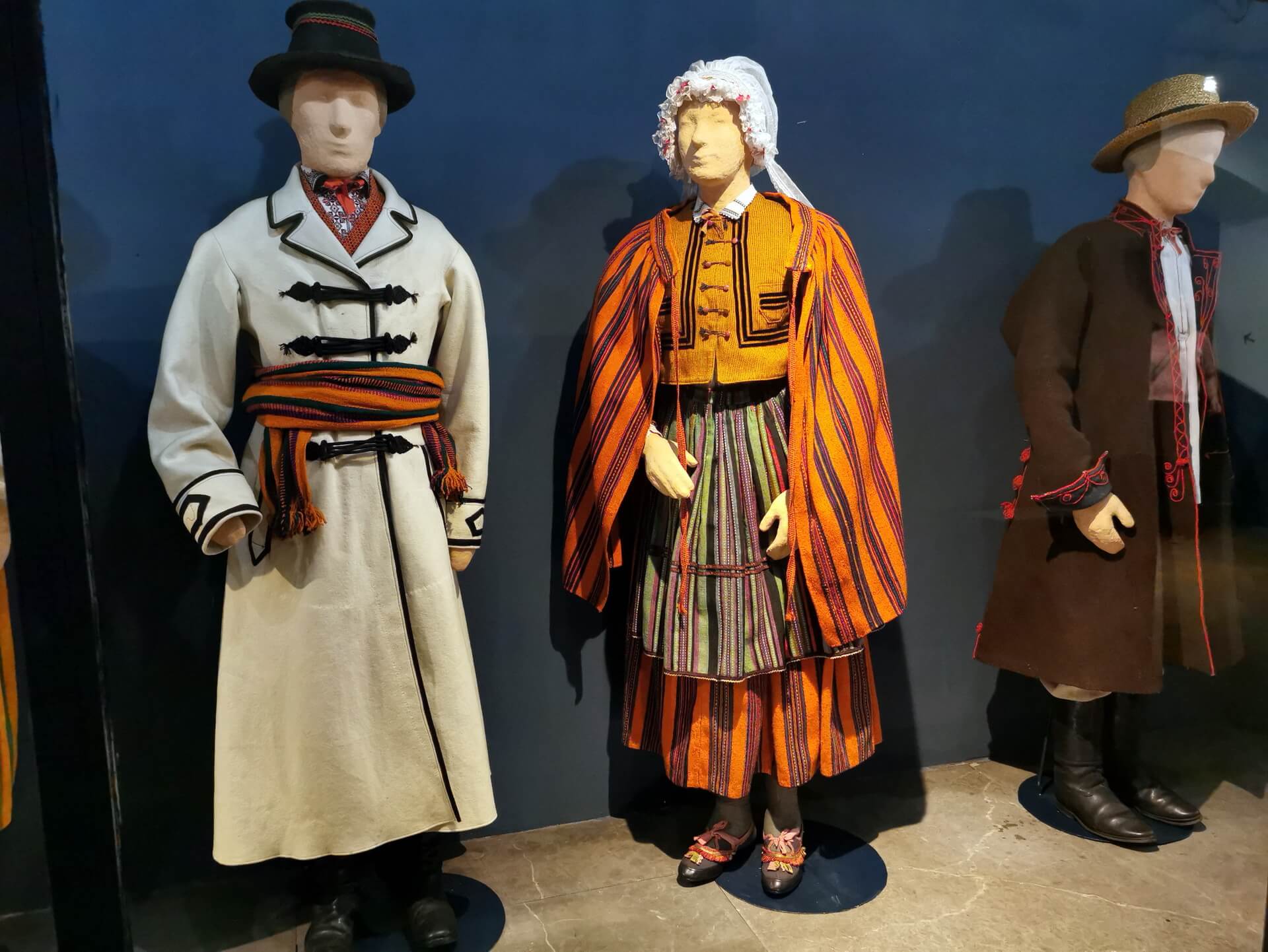
The further you walk into the gallery, the harder it becomes to think of these clothes as “folk costumes” in the simplified tourist sense of the word.
Some of the gorsety (waistcoats)—particularly the dominant reds of the Kraków region—look closer to avant-garde fashion experiments than anything usually associated with peasant life.
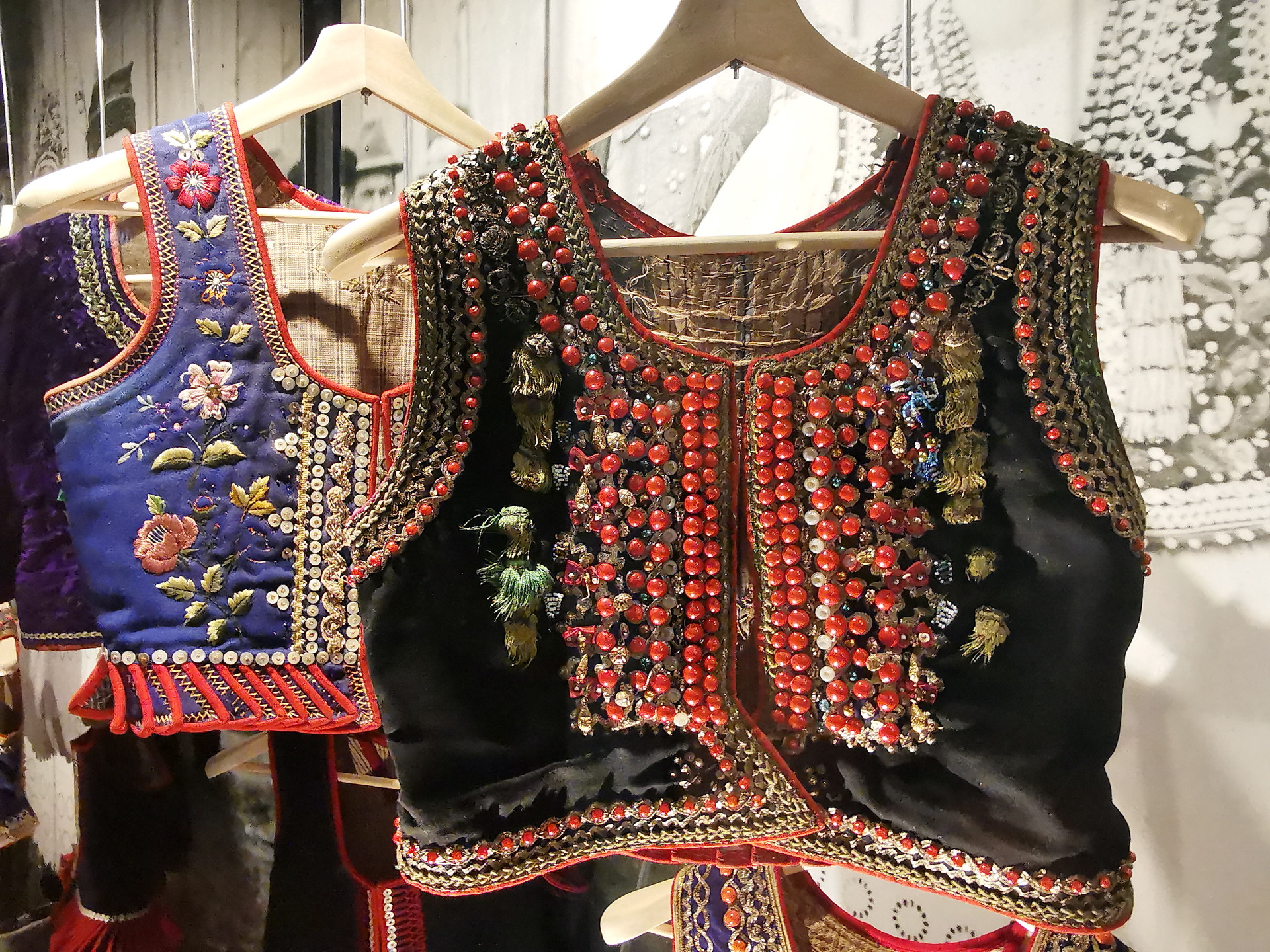
Some of the waistcoats look almost unreal up close — less like clothing and more like wearable surface decoration pushed to its absolute limit.
It shifts how you think about rural clothing. It was not just a basic necessity, but a highly deliberate canvas for personal expression.
Sheep Shears and Paper Lace
Further along, the wycinanki (traditional paper cutting) section highlights a different kind of contradiction.
The delicate roosters and symmetrical geometric shapes reminded me of clumsily snipping folded paper stars as a child. Yet the flawless detail here becomes faintly absurd when you realise these artisans were not using fine craft scissors, but heavy, crude sheep shears. What makes it even more staggering is that they worked entirely without preliminary sketches or drawn lines.
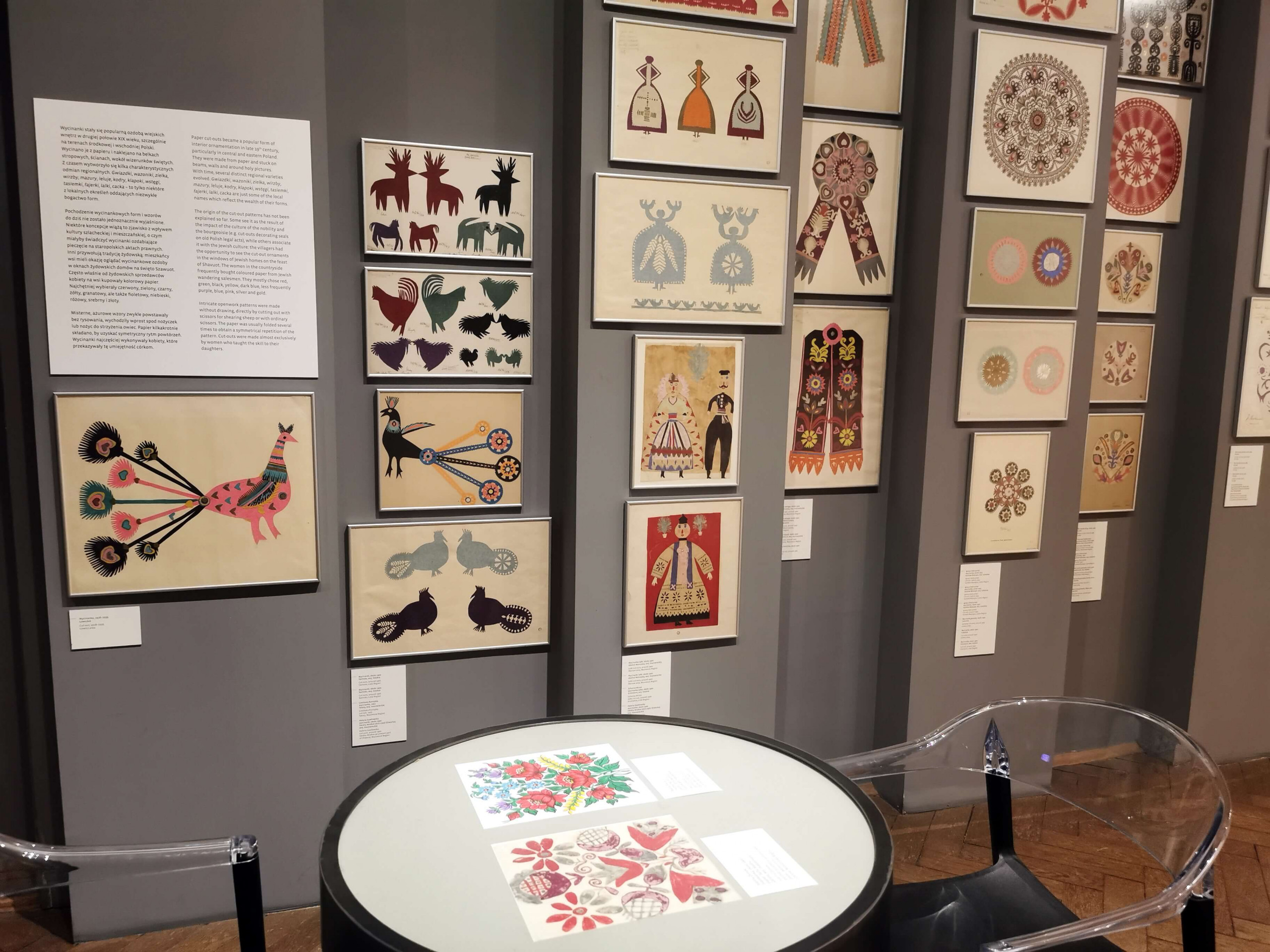
When displayed en masse across a gallery wall, these delicate cut-outs start to look more like complex optical illusions than simple folk crafts.
Trying to create paper lace with an iron tool designed for livestock requires extraordinary physical control. And the work goes far beyond simple symmetry: some frames display complex, multi-layered scenes of apple harvests and village life that the artists built entirely from blocks of solid colour.
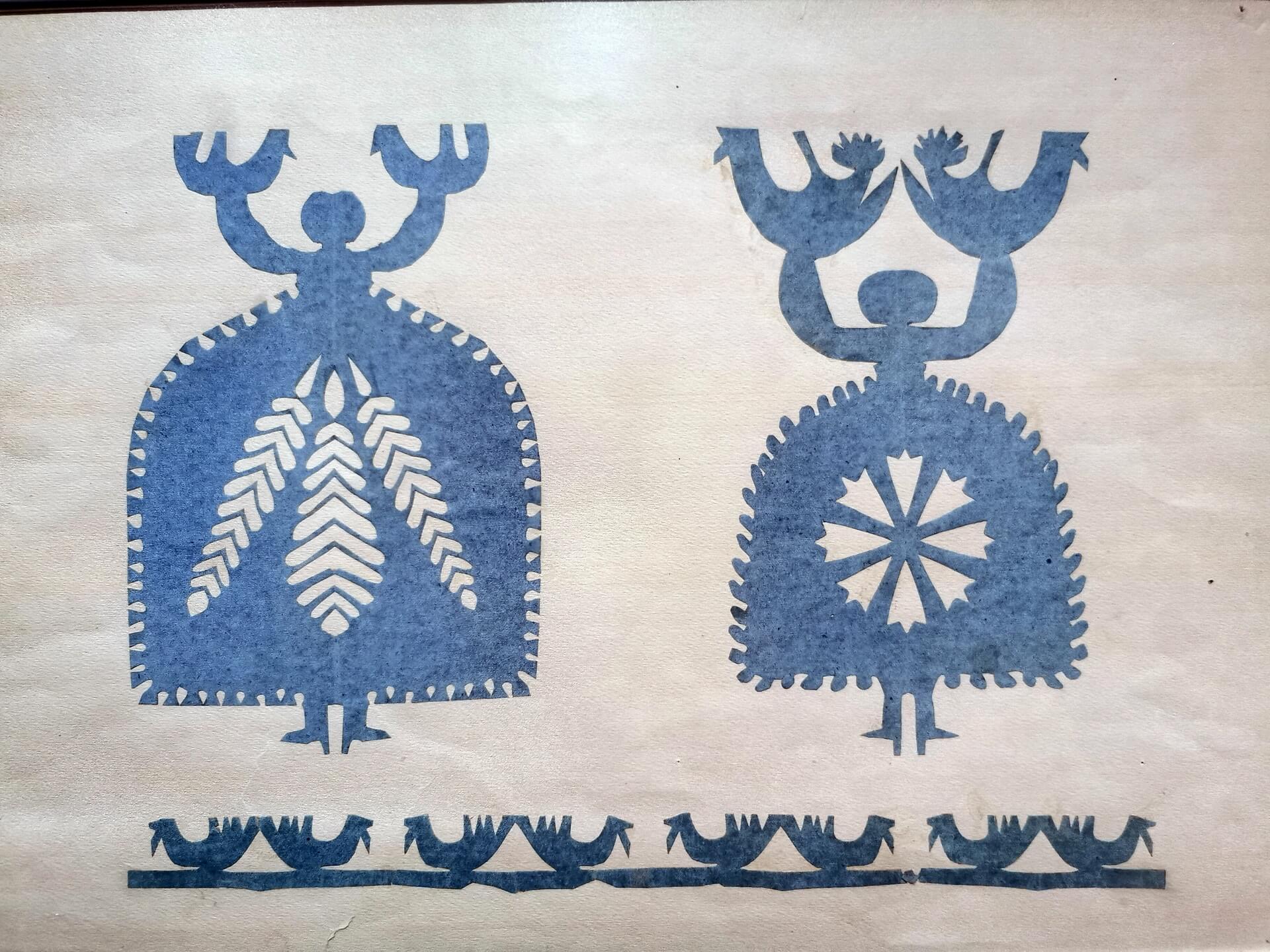
Up close, the repeated cuts become almost physically impossible to mentally reconstruct.
In the 19th century, these cheap, intensely coloured paper cuts offered the most accessible way for women to break the visual monotony of soot-stained whitewashed walls during the long winters.
Easter Eggs Under Glass
It is easy to dismiss Easter eggs as simple holiday crafts, but the museum treats these intricately dyed eggshells with the seriousness of a scientific archive. Long wooden cases display hundreds of pisanki, each featuring a highly complex, distinct pattern.
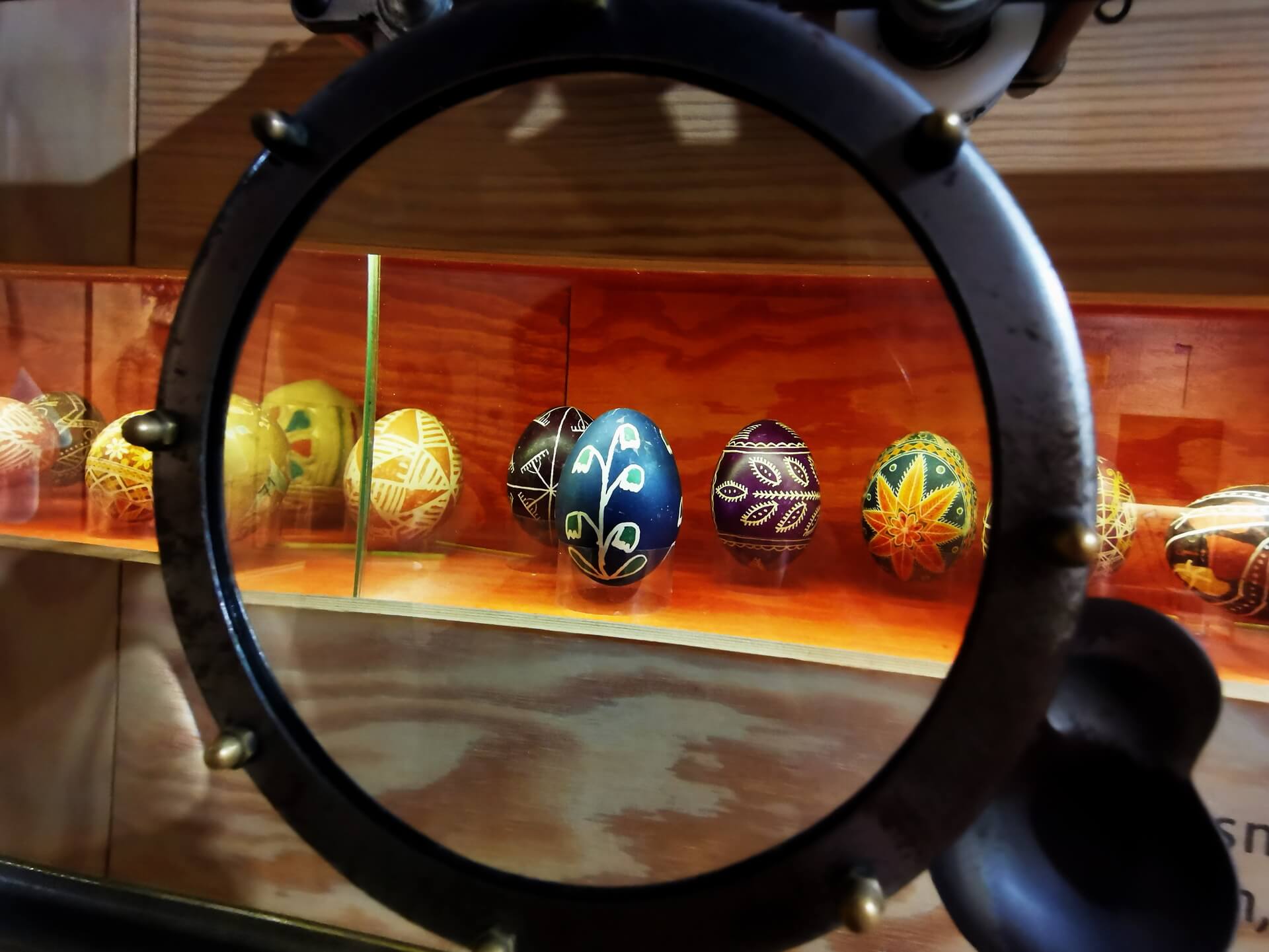
The oversized lens feels almost theatrical at first — until you realise some of these patterns are thinner than pencil lines and scratched directly into fragile eggshells.
To appreciate the microscopic precision of the scratched lines, the museum has installed a heavy metal magnifying glass on a sliding rail. Rolling this bulky industrial lens over rows of fragile shells forces you to slow down. It is a curatorial choice that makes you physically interact with the obsessive level of detail, treating these tiny objects with the scrutiny they actually deserve.
Village Surrealism
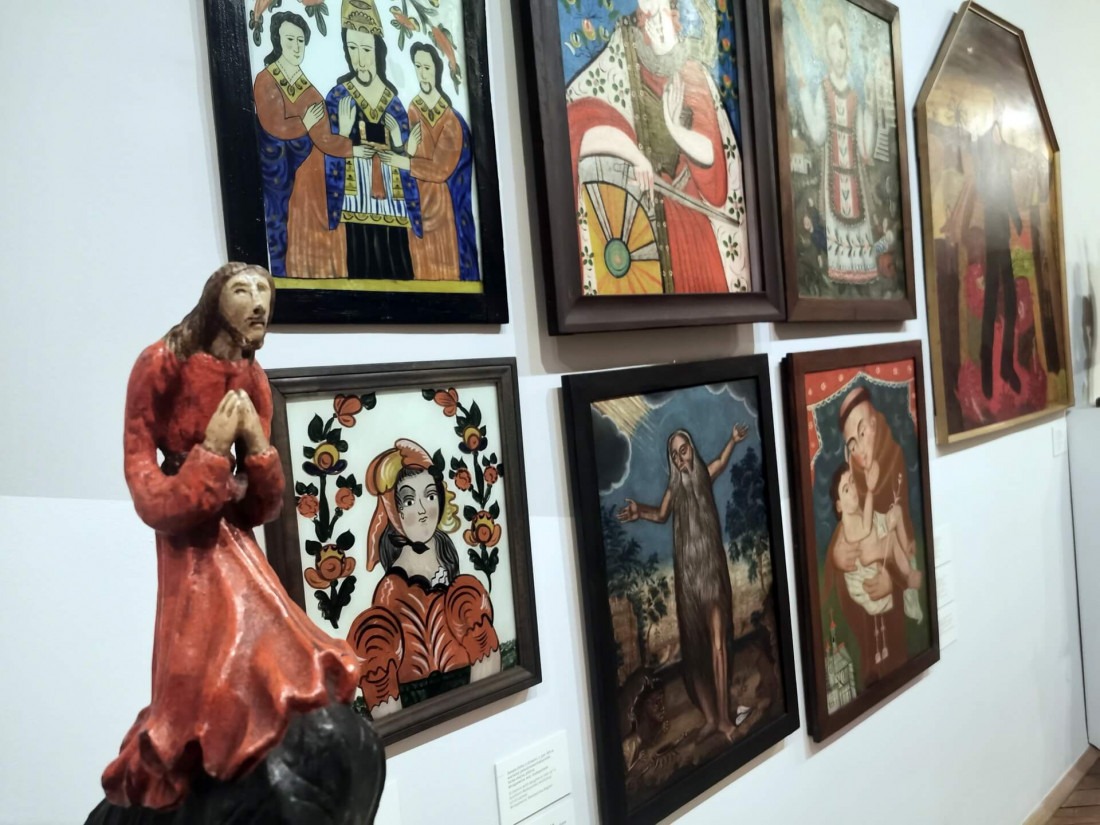
Then the mood changes completely in the religious folk art section. Whether carved into thick wooden reliefs, painted on sturdy boards, or painted directly onto the reverse side of glass, the saints stare out from their frames.
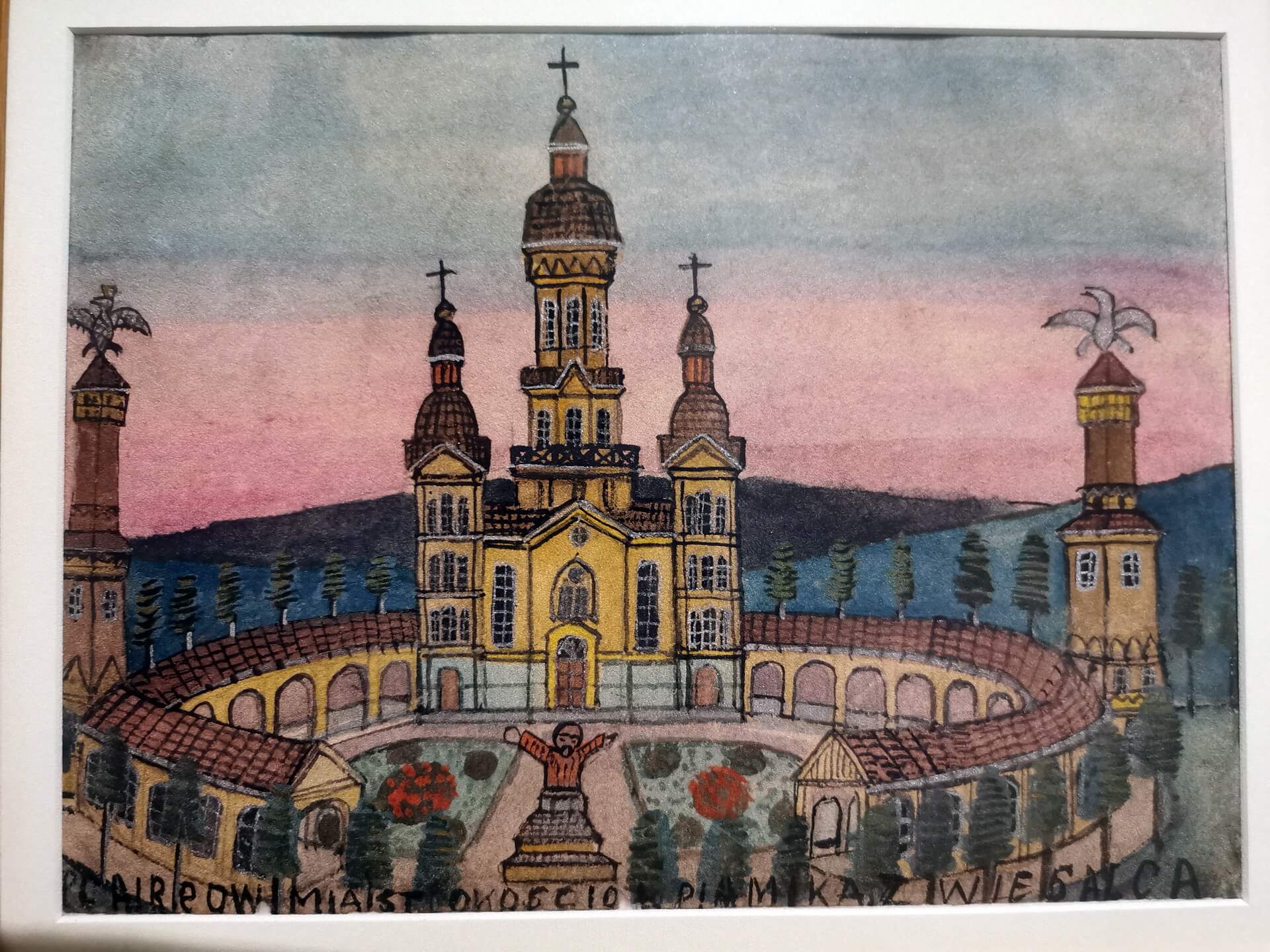
The proportions barely follow architectural logic, yet the painting somehow captures the emotional scale of a pilgrimage landscape better than strict realism would.
They drift somewhere between strict Catholic devotional imagery and village surrealism. Some of the saints look oddly stern, with direct, almost unblinking gazes. The artists did not make the brilliant colours, gold details, and metallic foils backing the glass for polite gallery viewing; they designed them specifically to catch and amplify the hearth firelight in dark wooden houses.
Beyond the Rooms That Stayed With Me
These were simply the rooms I found myself mentally returning to long after the trip. The museum’s collection goes far deeper than this short article suggests. There are entire wings filled with agricultural tools, musical instruments, and domestic utensils that I moved through at a much faster pace.
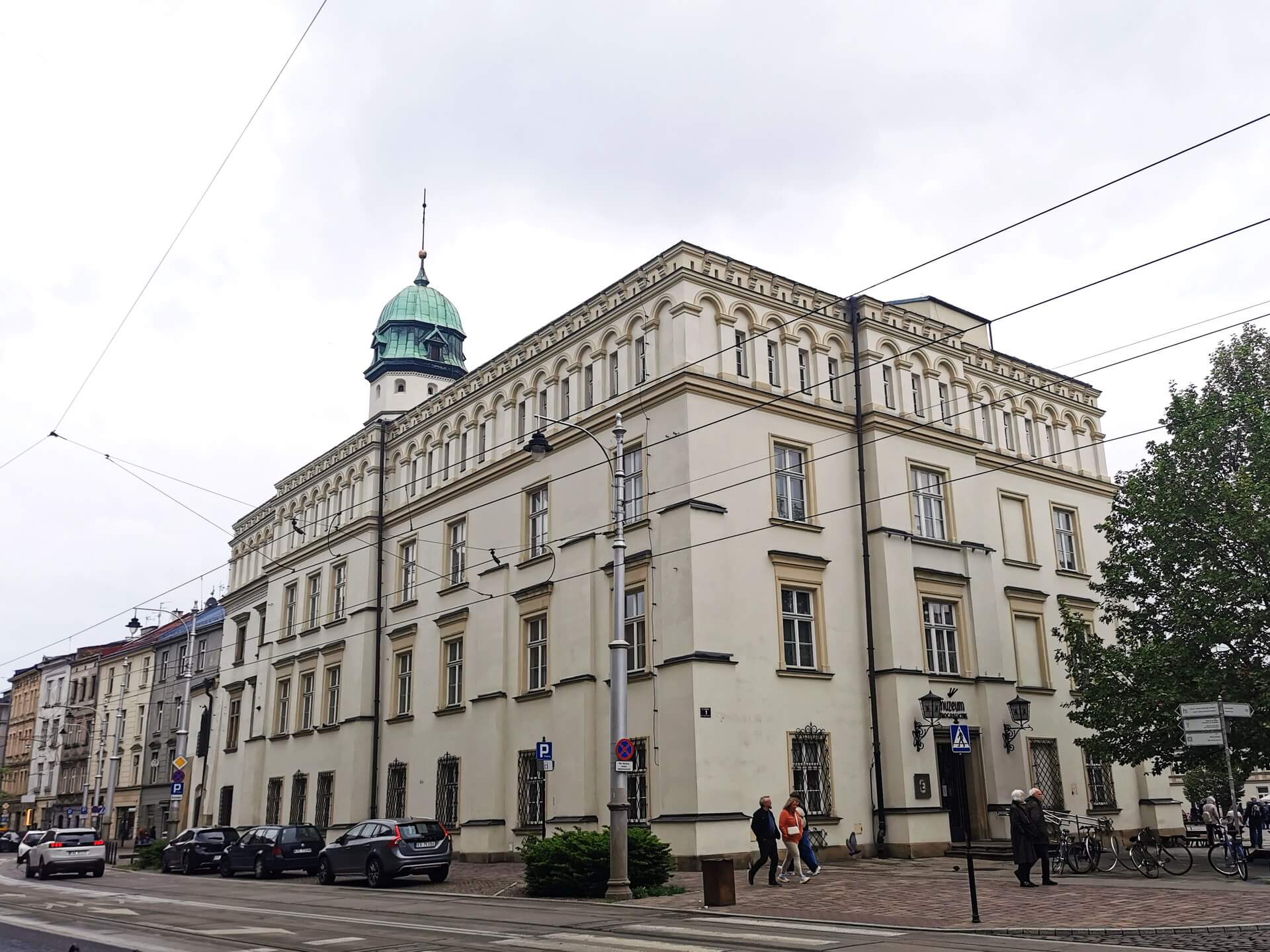
From the outside, almost nothing prepares you for how many separate worlds are packed into this unusually large museum.
Practical Tips
- The Lockers: There are lockers by the entrance. Use them. The Ethnographic Museum in Krakow is larger than it first appears, and the upstairs galleries reward slow wandering.
- Pacing: The museum’s most striking rooms are upstairs. Do not burn out on the ground-floor domestic interiors; save your focus for the textiles.
- The Labels: English descriptions are available throughout, and surprisingly, they avoid the usual dry, museum jargon. They read clearly and accessibly, giving you just enough context without turning the visit into a reading assignment.
- Photography: Almost everything upstairs sits behind reflective glass cabinets. After a while, putting the camera away becomes easier.
- After the Visit: The museum sits on the quieter edge of Kazimierz, making it easy to continue the evening with a slow walk through the district’s cafés, synagogues, and Jewish food scene. Kazimierz also has several thoughtful Ashkenazi food and history tours if you want to keep exploring the area afterwards.
Looking for more of Kraków’s physical reality? If you want to skip the polished tourist circuits, read my deep dive into the 9 unexpected realities of modern Poland. It covers everything from the strange lack of history in Airbnb apartments to why the local markets feel so much more authentic than the ones on the Main Square.
Mark Your Landing Spot: Ethnographic Museum or Skip?
Skip this if you are on a tight schedule and just want to tick off the Wawel Dragon and the main square.
But if you want to see how bold traditional visual culture actually was, it is essential. The museum thoroughly shatters the expectation of folk art as something modest and quiet. Long after the royal palaces and stone castles blur together, it is the impossible density of colour and decoration that stays with you.

