











Most travel itineraries for this region follow the same exhausting formula: the underground conveyor belts of the Wieliczka Salt Mine, the crowded streets of Zakopane, or the often shoulder-to-shoulder hike to Morskie Oko.
Kalwaria Zebrzydowska is the exact opposite. It is not an attraction built to entertain you. It does not have massive ticket halls, orchestrated group tours, or a polished sequence of exhibits.
Instead, it looks, at first, like a sleepy settlement where nothing dramatic is about to happen. Then you walk up towards the main basilica, the landscape suddenly opens up, and you realise you have stepped into an interconnected network of woodland paths and viewpoints spread across the hills.
Is it actually worth dedicating half a day to? This guide to visiting Kalwaria Zebrzydowska from Krakow looks honestly at the physical experience, the suggested walking routes, the practical logistics, and whether you will love this quiet, unusual alternative — or find yourself wishing you had gone to a traditional museum instead.
In Brief:
- From Krakow: 35–60 minutes by train or about 50 minutes by bus.
- Walking: Around 7 kilometres if you explore the full pilgrimage trails.
- Terrain: Hilly, with forest paths, stairways, and uphill streets.
- Access: The sanctuary grounds and walking trails are free to access.
- Facilities: Cafés, toilets, and small shops are clustered around the monastery. The woodland trails have almost no facilities.
Inside this article:
- Who Will Actually Enjoy Kalwaria Zebrzydowska
- Why a Forest Walk Became a UNESCO World Heritage Site
- The Physical Experience of the Woodland Trails
- How to Structure Your Walk
- The Architecture and the Everyday Streets
- Pilgrimage Crowds, Locked Chapels and Other Realities
- Food, Facilities and Muddy Paths
- Best Time to Visit
- How to Get to Kalwaria Zebrzydowska from Krakow
- Kalwaria Zebrzydowska vs Wadowice vs Lanckorona
- Mark Your Landing Spot: Kalwaria or Skip?
- FAQ
Who Will Actually Enjoy Kalwaria Zebrzydowska
This day trip is for you if you like:
- UNESCO World Heritage sites with profound historical contexts.
- Long walks through nature and quiet forests.
- Towns that feel genuinely local rather than polished for tourists.
- The quiet atmosphere of small chapels standing alone among the trees.
You should probably skip it if you prefer:
- Spectacular, tightly packed indoor sightseeing.
- Endless café-hopping and a dense tourist infrastructure.
- Non-stop sightseeing — especially if you dislike long, quiet walks. The combination of trees and closed chapels will feel repetitive surprisingly quickly.
Why a Forest Walk Became a UNESCO World Heritage Site
When you hear “UNESCO World Heritage,” you might expect a fenced-off monument. Kalwaria is different.
Added to the UNESCO list in 1999, Kalwaria is a huge Catholic pilgrimage complex created in the early 1600s. Churches, chapels, and walking paths were deliberately spread across the hills to recreate the landscape of Jerusalem and the final journey of Christ before the crucifixion.
UNESCO protected it not just because of the massive Basilica, but because of the entire cultural landscape. It is a remarkably well-preserved 17th-century spatial project where the natural forest, the historical walking tracks, and over 40 churches and chapels blend together almost exactly as they did 400 years ago. It is less about a single building and more about moving through the landscape itself.
The Physical Experience of the Woodland Trails
This is the element most guidebooks miss. Kalwaria is a physical and spatial experience, defined by sharp contrasts. It starts in an ordinary town with quiet residential streets, local bakeries, and everyday Polish life.
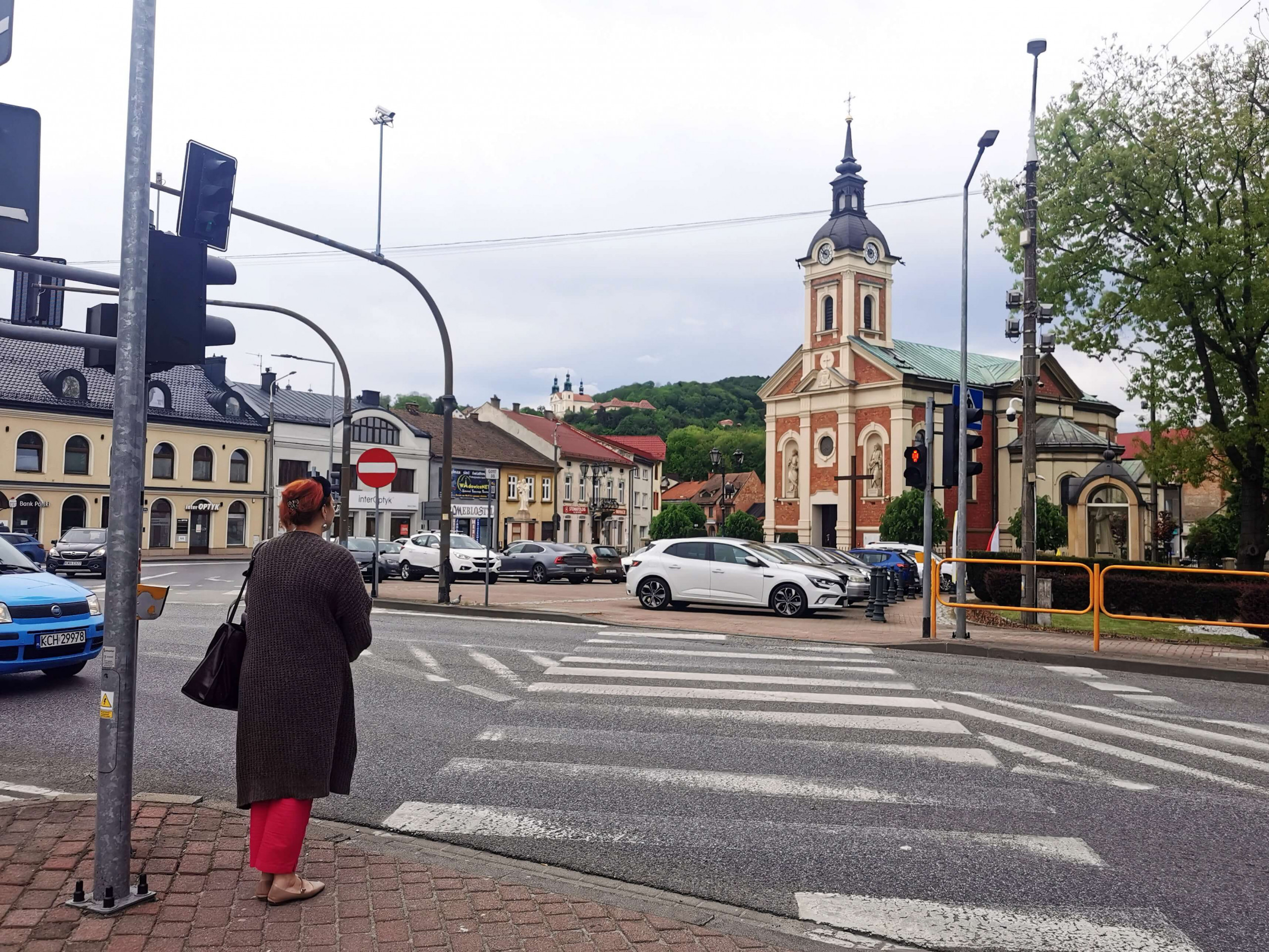
Despite the monastery rising above the town, everyday life still dominates the streets below.
Then, Bernardyńska Street begins climbing uphill towards the monastery. The uphill walk takes about 15 minutes at a relaxed pace, especially if you stop occasionally to catch your breath on the steeper sections.
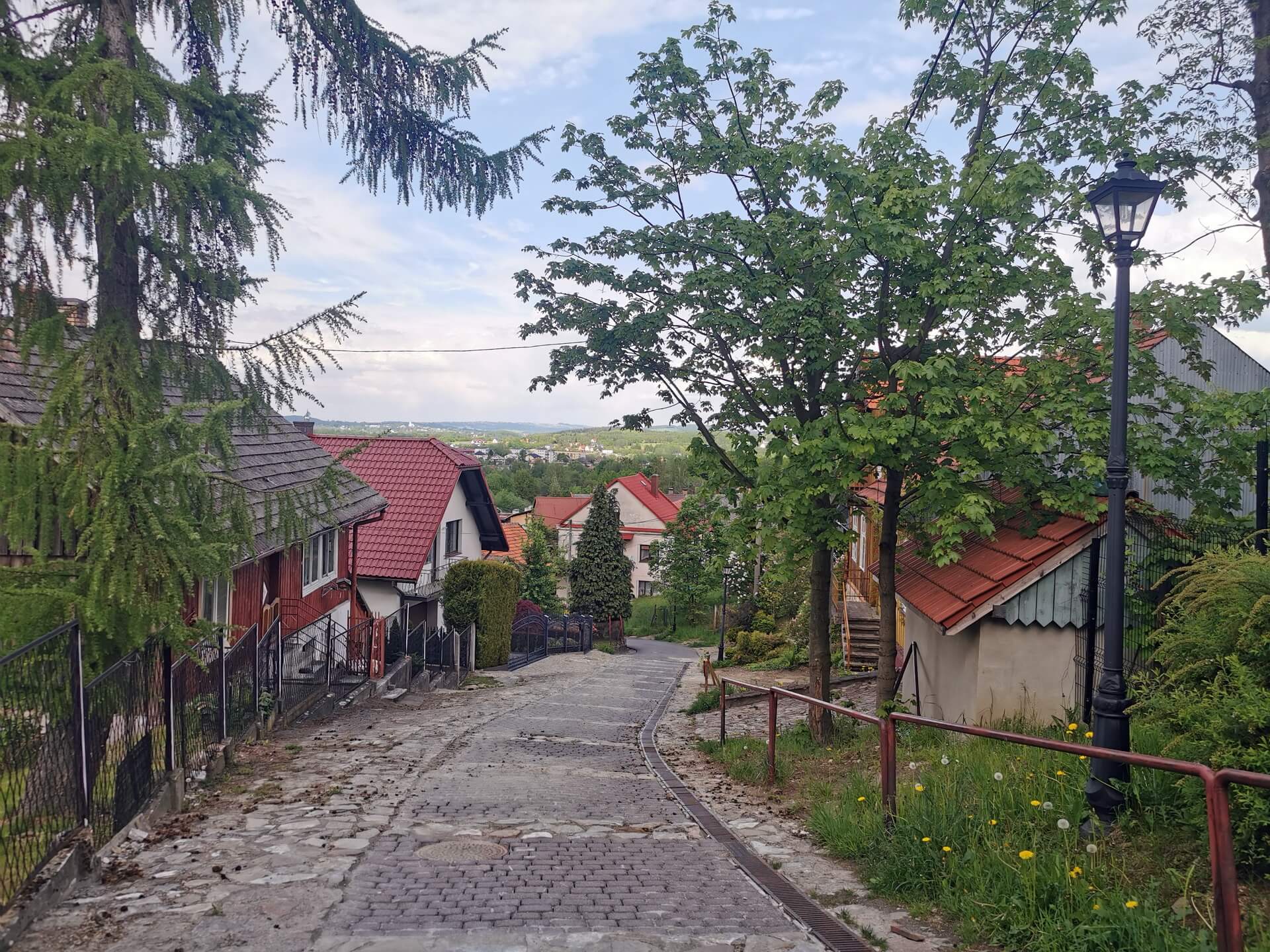
The steep residential streets are part of the experience long before the forest trails begin.
Then the monastery walls appear above the trees, and beyond them, the landscape changes completely. Dense forest paths and scattered chapels spread across the hillsides.
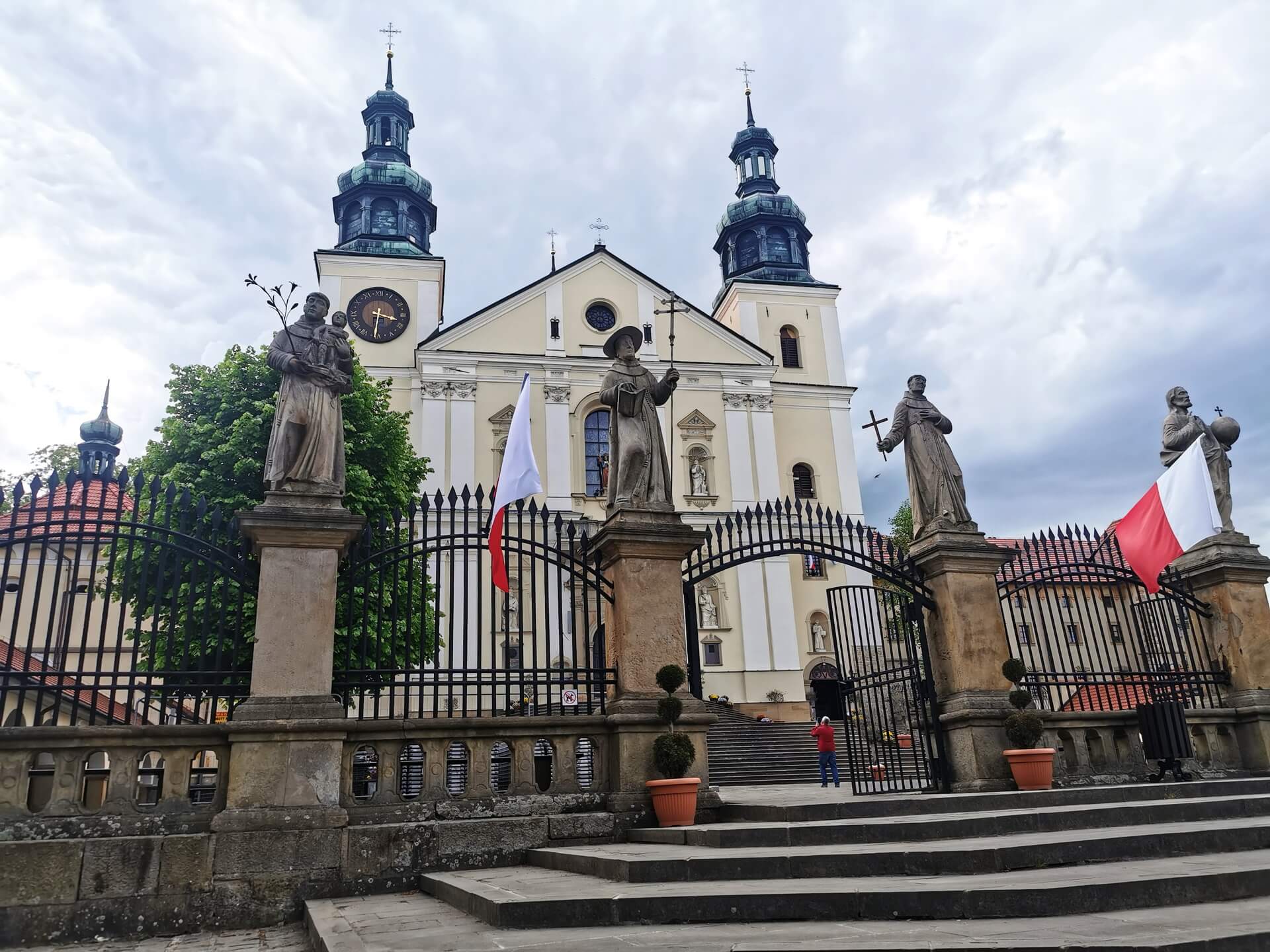
The monastery complex is far larger and more imposing than it initially appears from town.
Most visitors naturally pause here for a while — to walk through the monastery courtyard and step inside the Basilica before continuing into the forest trails. Even if you are not religious, the atmosphere inside feels warm and welcoming rather than formal or intimidating.
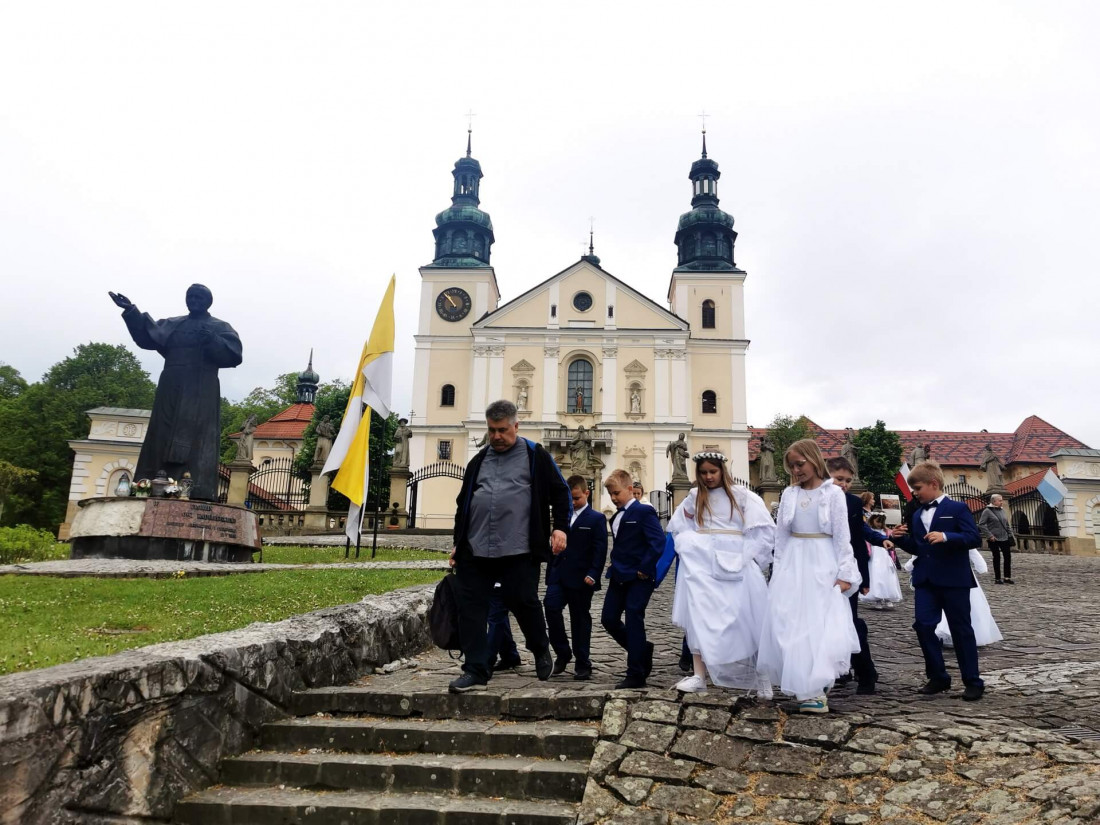
My first impression of the Basilica was unexpectedly festive rather than solemn. I had arrived completely by chance on the day of a First Communion celebration, when children dressed in formal white outfits receive communion in the church for the first time. The entire hilltop was full of flowers, families chatting in small groups, and children carefully trying not to ruin their immaculate clothes. It completely changed the mood of the visit. Even later, deep in the forest trails, Kalwaria still felt alive rather than preserved for tourists.
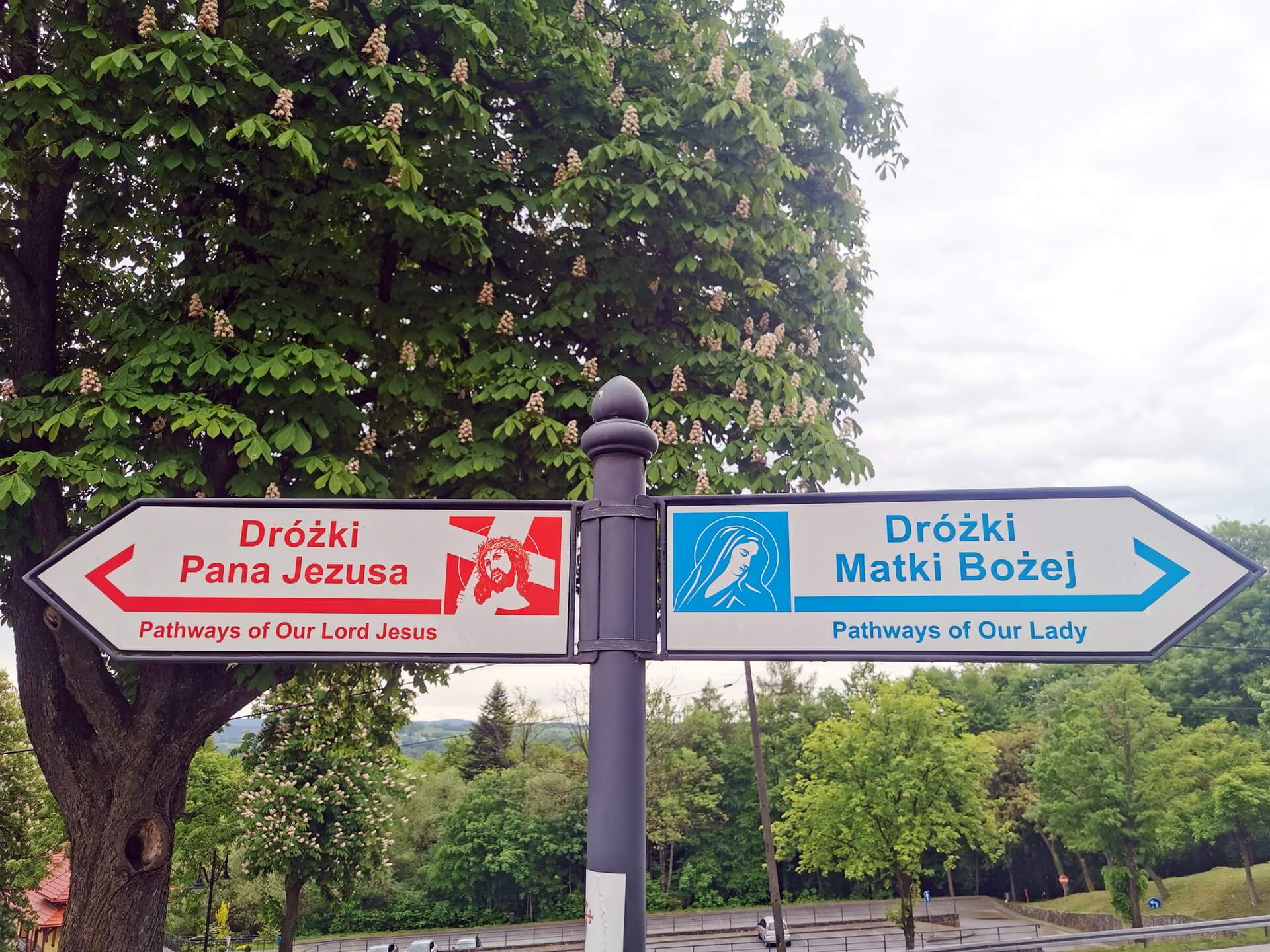
Some trails feel more like hiking routes than religious pathways.
The landscape feels more like rolling foothills with a few distinct climbs than flat countryside. You are never in deep, dangerous wilderness, but the silence is immediate. You walk along dirt paths, and every 10 to 15 minutes, a small Baroque chapel emerges in a forest clearing.
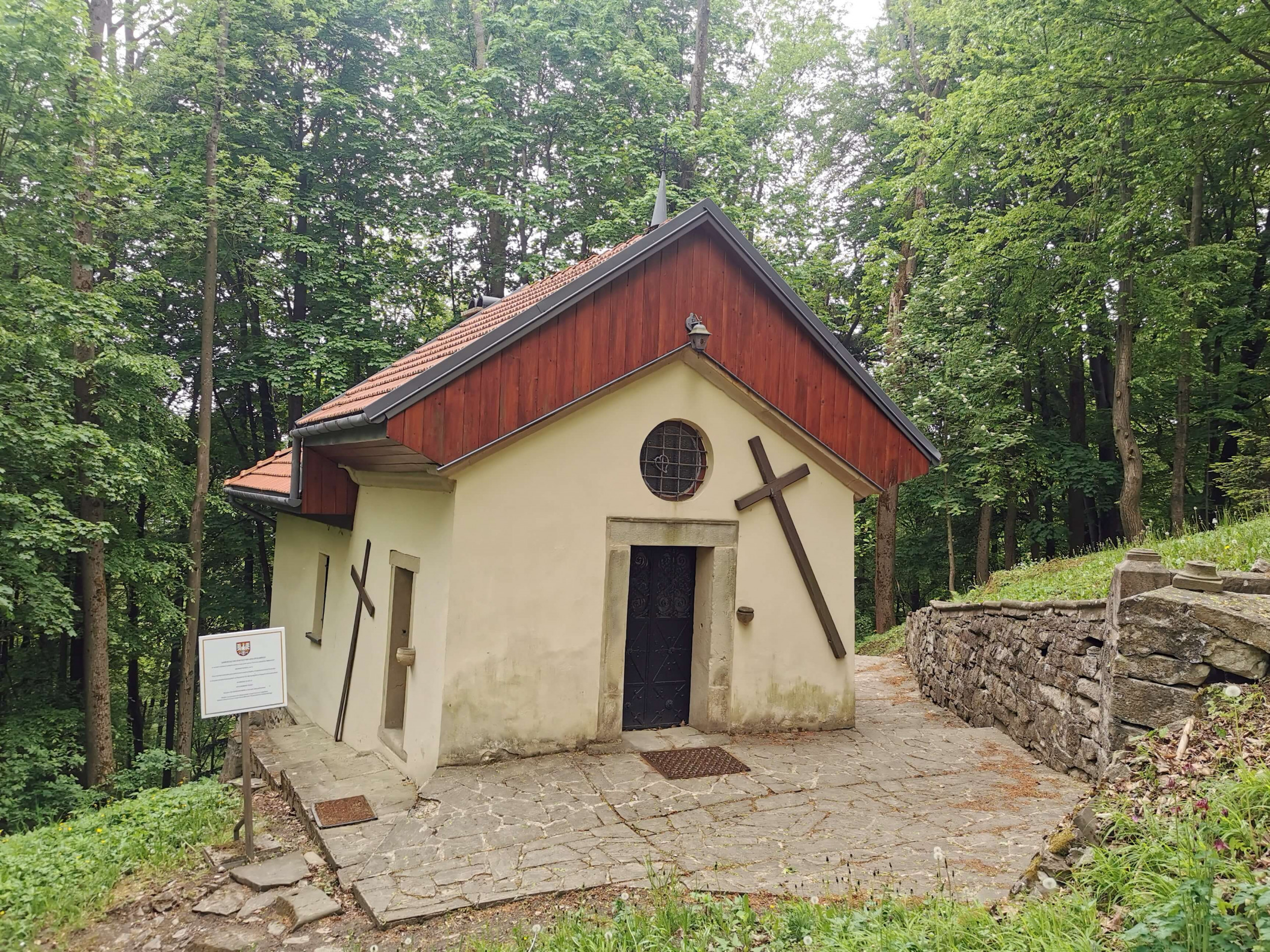
The monastery complex gives way to forest trails almost immediately.
Sometimes, the path drops you back onto a sleepy paved village road lined with normal houses, only to veer right back into the woods. You catch glimpses of the main monastery between the trees from hilltop viewpoints. You hear church bells echoing across the valley.
At moments, the atmosphere resembles an old Central European pilgrimage trail — slower, quieter, and deeply tied to the surrounding landscape. I ended up staying far longer than planned.
How to Structure Your Walk
You do not have to walk the full pilgrimage routes to experience the site. The trails loop naturally, making it easy to tailor your visit. These are simply a few practical ways to structure the day depending on your energy level and interests.
1. The Short Visit (1.5–2 hours)
The Route: The Town → The Basilica → The immediate monastery grounds → A brief 20-minute loop into the nearest trees to see 2–3 chapels.
Best for: Those with limited time who want to see the main architecture, get a feel for the landscape, and head back down for a coffee in town.
2. The Half-Day Walk (3–4 hours)
The Route: The Basilica → A custom loop through the forested hills, passing striking spots like the Kaplica III Upadku (Chapel of Christ’s Third Fall) and Pustelnia Marii Magdaleny.
Best for: Most visitors. This allows you to experience the transition from the monumental church into the quiet, isolated woodland chapels without exhausting yourself.
3. The Full-Day Experience (4–7 hours)
The Route: Walking the complete 7-kilometre official dróżki (pilgrimage paths). By combining the Pana Jezusa and Matki Bożej trails, you will pass major architectural stops like Pałac Heroda (Herod’s Palace) and Ratusz Piłata. My own wandering easily stretched to 10 kilometres just by exploring different branches.
Best for: Walkers, slow travellers, and photography enthusiasts. You will pass through multiple chapel clusters, cross village roads, and spend hours wandering through the wooded hillsides.
The Architecture and the Everyday Streets
The Monastery and Basilica
The main landmark of Kalwaria Zebrzydowska and the visual centre of the entire pilgrimage landscape. The monastery complex combines a large Baroque Basilica, inner courtyards, arcades, gardens, and elevated viewpoints over the surrounding hills.
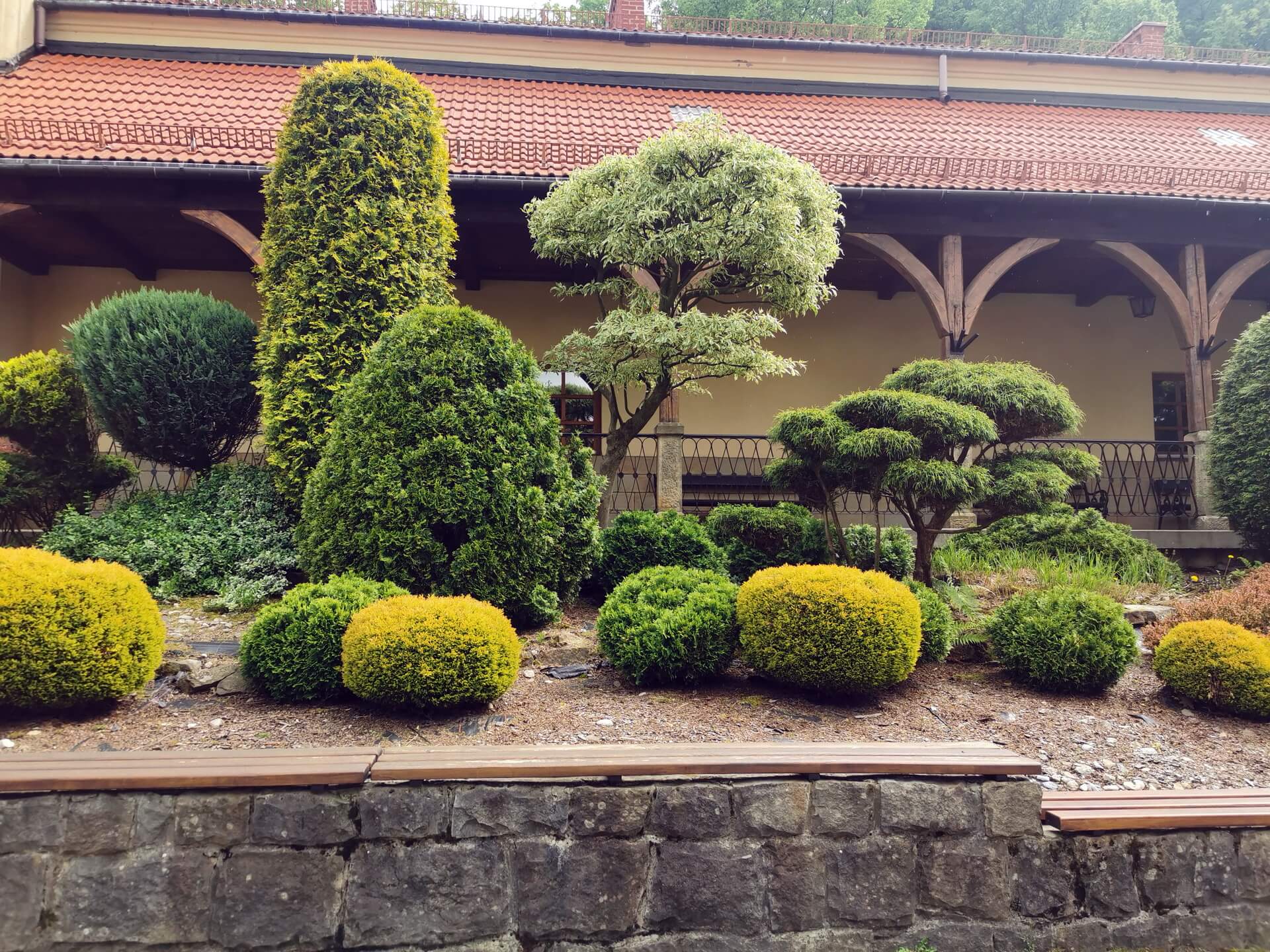
The monastery grounds are much larger than they first appear from town and include formal gardens, arcades, and sheltered inner courtyards.
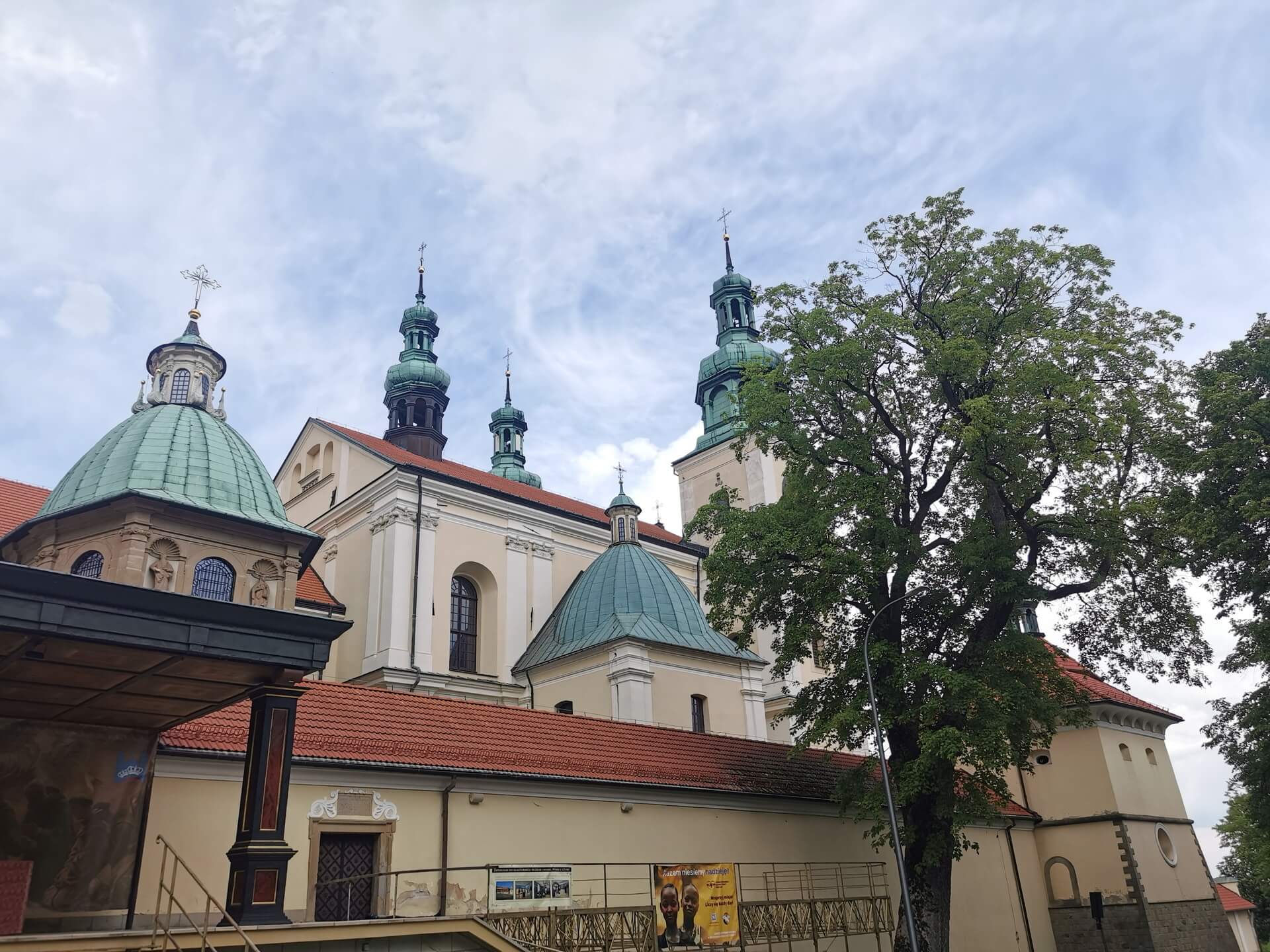
The Basilica dominates the hilltop, but the surrounding trees and rolling terrain quickly become just as visually important as the building itself.
The Chapels in the Woods
More than 40 chapels and small churches are scattered across the hillsides around the monastery. Some stand beside the main walking routes, while others are partially hidden among the trees and connected by forest paths and stone stairways.
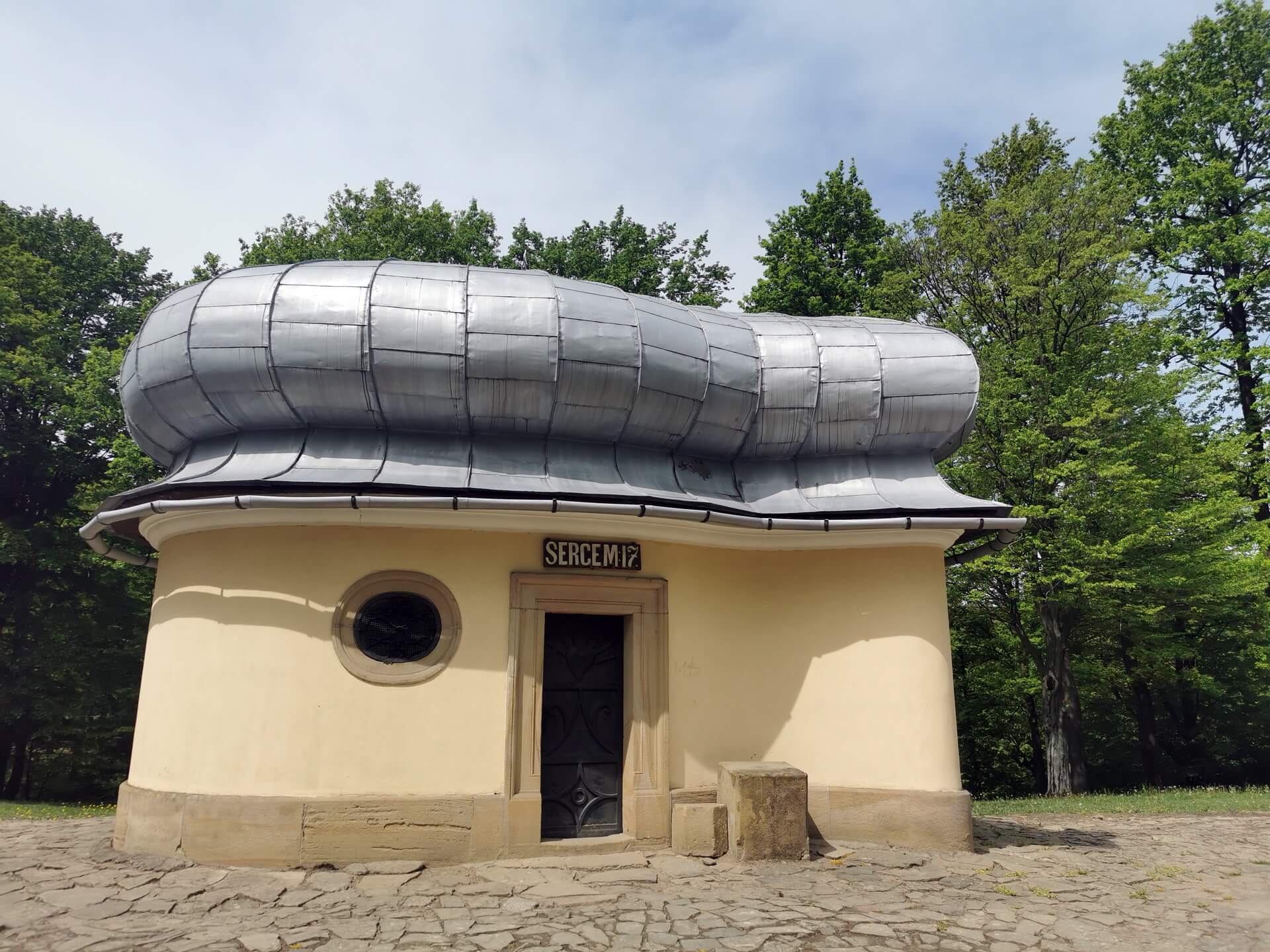
Many chapels were deliberately placed far apart, encouraging pilgrims to move continuously through the forested landscape.
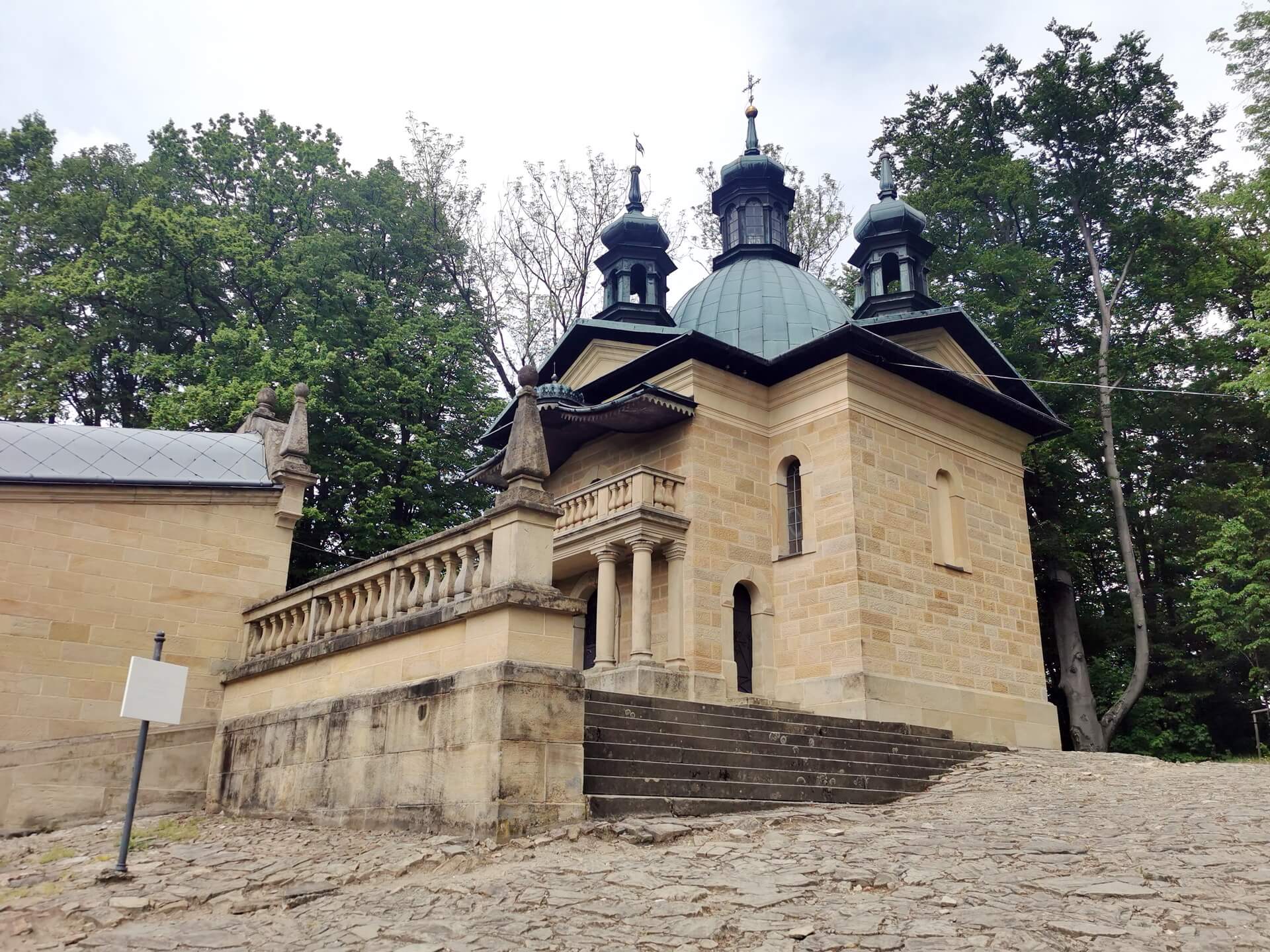
The forest trails occasionally give way to unexpectedly monumental chapels.
Everyday Life Around the Sanctuary
One of the most interesting parts of Kalwaria is the contrast between the pilgrimage complex and ordinary small-town life around it. Residential streets, family gardens, orchards, and hillside houses remain woven directly into the landscape instead of being separated from the religious area.
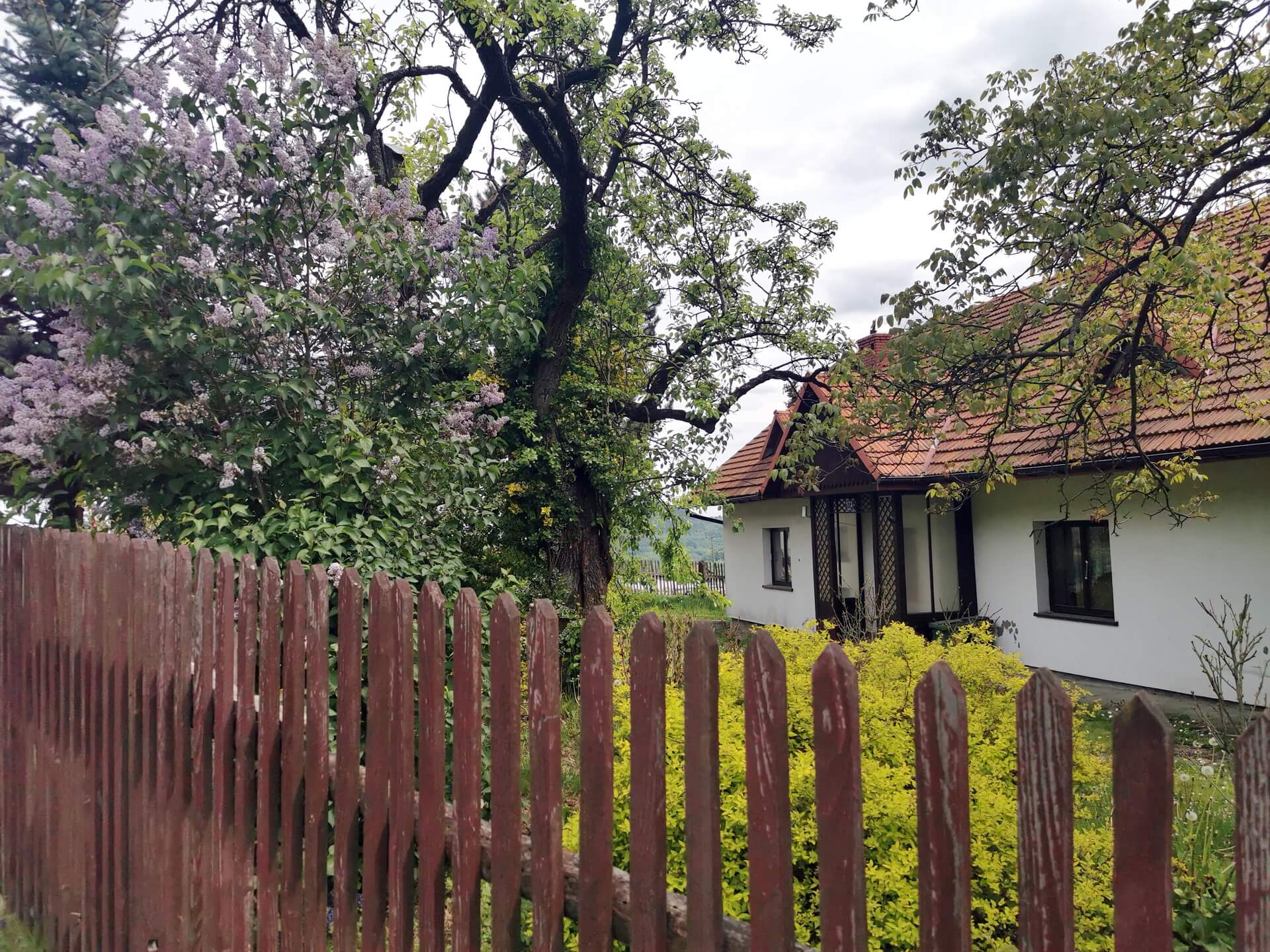
At times, the forest trails dissolve back into ordinary small-town streets and private gardens.
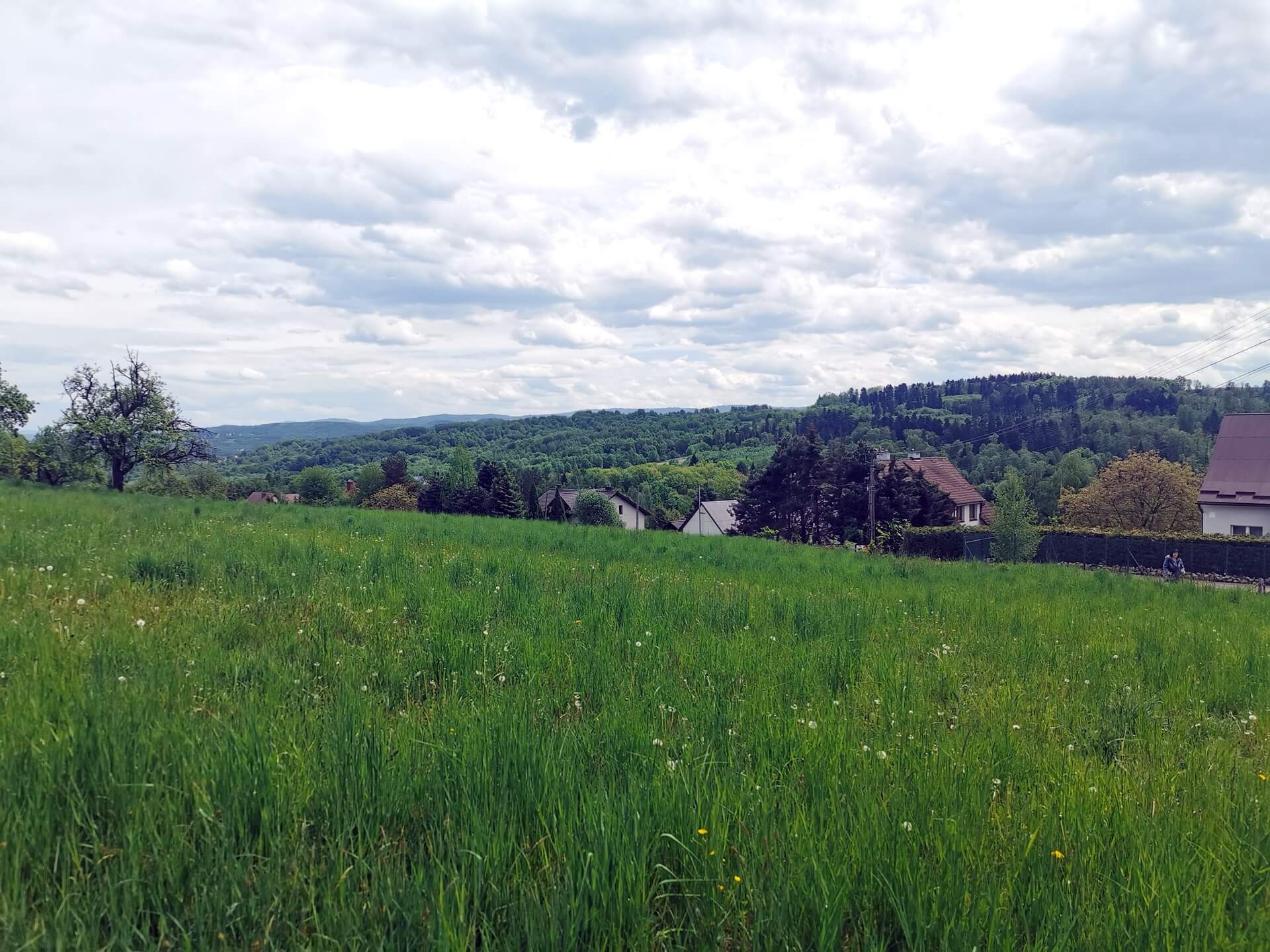
The hills around Kalwaria are gentle rather than dramatic, but they quietly shape the entire experience.
Pilgrimage Crowds, Locked Chapels and Other Realities
Arriving on a Sunday expecting silence: Weekdays are incredibly quiet, but weekends and major Catholic holidays can completely transform the atmosphere. Despite its sleepy appearance, Kalwaria attracts up to two million pilgrims and visitors a year. Do not expect an empty forest walk during Holy Week, the Feast of the Assumption in August, or other major religious celebrations.
Underestimating the walking: It is a landscape designed to be traversed. Wear comfortable trainers.
Assuming the chapels are museums: Visitors often expect the small woodland chapels to be open, staffed, and full of exhibits. They are usually locked; the architecture and the exterior setting are the attraction.
Visiting only the Basilica: If you only look at the main church and skip the woodland trails, you have missed the entire point of why it is a UNESCO site.
Not bringing water: Once you are on the trails, there are no shops or cafes.
Food, Facilities and Muddy Paths
Toilets & Food: There are public toilets, a restaurant, and a café at the main monastery courtyard. However, out on the woodland trails, there are zero facilities. Buy snacks and water before heading out into the woods.
Before starting the climb up Bernardyńska Street, I stopped for a quiet morning espresso at a simple place called Cukiernia Pysia down in town. Several hours later, after finishing the trails, I ended up at Restauracja Premium, where I ate an enormous portion of battered fish in their inner courtyard before catching the train back to Krakow.
Muddy Paths: After heavy rain, the dirt sections of the woodland trails turn properly muddy. Do not wear pristine white trainers if the weather has been wet.
Navigation & Signage: The main paths are generally well marked with physical signs. It is hard to get seriously lost, but it is easy to take a longer loop than planned. Mobile signal was good during my visit, but I would still download the area in Google Maps before setting off. The official sanctuary website is also worth checking before your visit, especially for maps, pilgrimage events, and practical updates.
Payments & Souvenirs: Cafés and shops in town generally accept cards, but carrying a small amount of cash (PLN) is still useful for bakery purchases or toilet fees. Near the monastery, there are several souvenir stalls selling candles, magnets, and devotional items, though I never managed to find a simple postcard. Remember: once you head out onto the woodland trails, there is nothing to buy.
Best Time to Visit
The best time to visit Kalwaria Zebrzydowska is from late spring to early autumn, when the woodland paths are green and easy to walk. May worked beautifully for me: quiet trails, fresh foliage, and enough local life around the church to make the place feel alive rather than empty.
Autumn would be gorgeous too, though rain can make the dirt paths muddy. Winter may be atmospheric, but slippery sections would make the longer routes less pleasant.
How to Get to Kalwaria Zebrzydowska from Krakow
Getting here is refreshingly straightforward, making it an excellent independent day trip.
By Train (Recommended): Modern regional trains depart from Kraków Główny. You can alight at either Kalwaria Zebrzydowska or Kalwaria Zebrzydowska Lanckorona. The journey takes anywhere from 35 to 60 minutes, depending on the specific train.
By Bus: The A40 bus departs from Kraków MDA or the Kraków Jubilat stop and takes about 50 minutes to reach the town centre.
From either train station, the walk up to the monastery is about 1.5 kilometres (partially uphill).
A smart practical tip: Download the KOLEO app and create a quick account before your trip. Buying your regional train ticket through the app is not only more convenient, but it is also slightly cheaper than purchasing it directly from the conductor on board. As for the stations, both are roughly the same distance from the sanctuary, so you can simply walk to whichever one has the best departure time for your return journey.
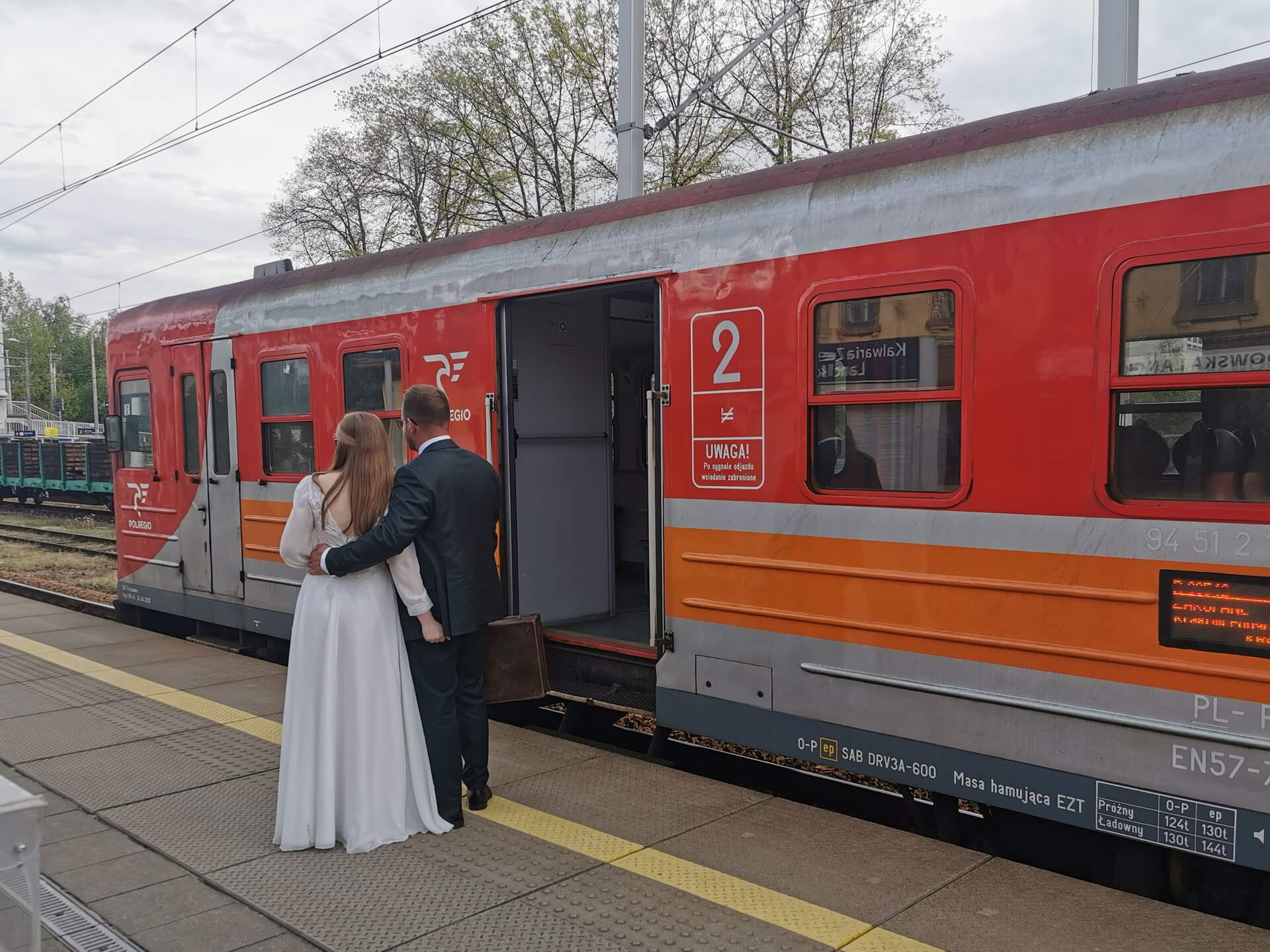
Even the return train from Kalwaria felt touched by the day’s quietly festive atmosphere.
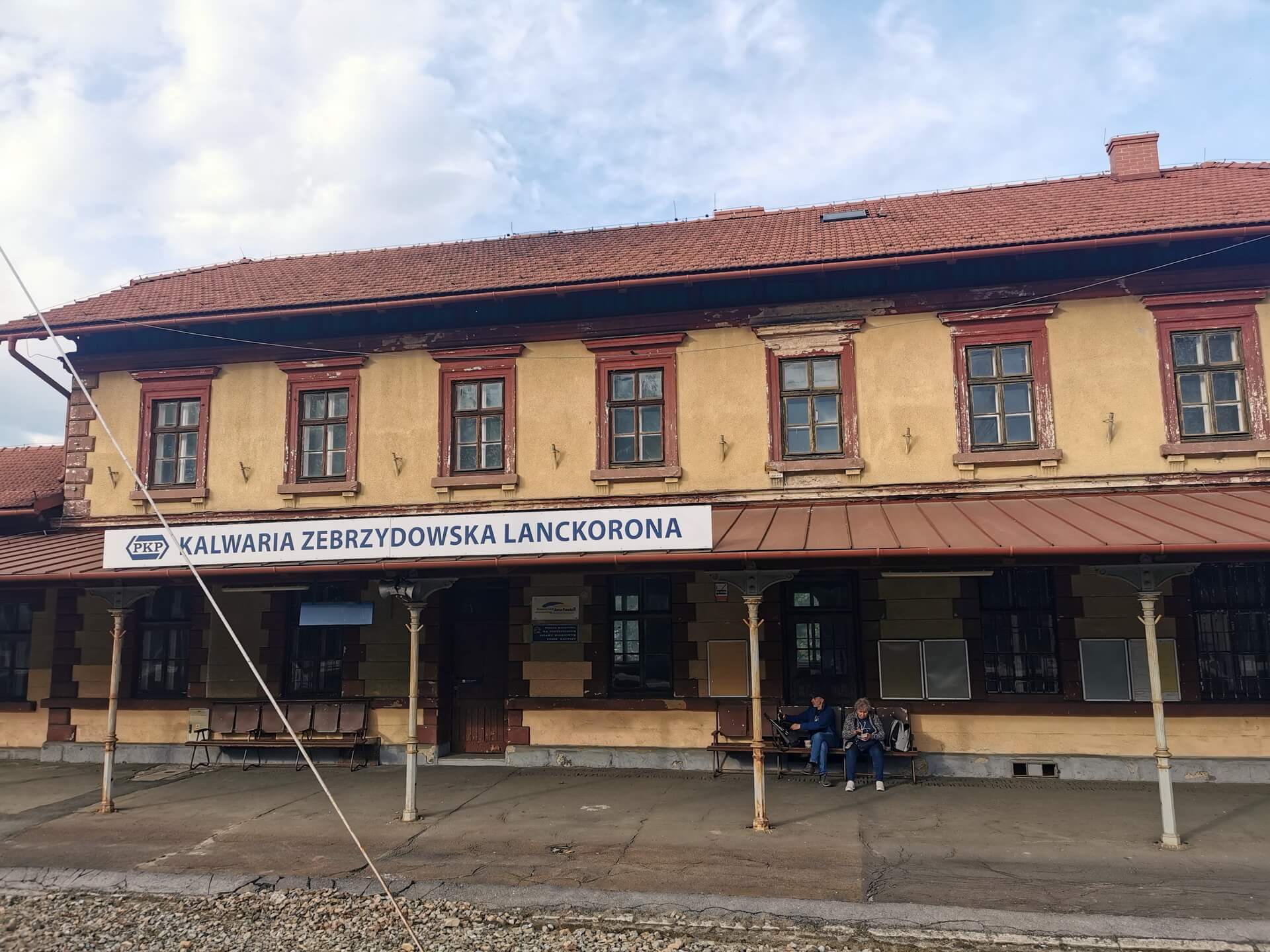
Even the station looks like something left behind by a slower century.
Pairing Kalwaria with Wadowice or Lanckorona
If you are exploring this region south of Krakow, you might be weighing up a few nearby options:
Kalwaria Zebrzydowska: Best for UNESCO history, walking routes, scattered chapels, and quiet landscapes.
Wadowice: The birthplace of Pope John Paul II. This is a more urban stop, better suited if you want museums, busy squares, and café culture.
Lanckorona: Famous for its preserved 19th-century wooden architecture, hilltop ruins, and a very slow, artistic village atmosphere.
A great itinerary: Kalwaria and Lanckorona are connected by local bus lines (like the A56). Pairing a morning walk in Kalwaria with a short bus ride for a late lunch in Lanckorona makes for an exceptional, well-rounded day trip.
Mark Your Landing Spot: Kalwaria or Skip?
Kalwaria Zebrzydowska is not the loudest day trip from Krakow. It does not package itself for tourists in the way Wieliczka or Wawel do. But if you like places where landscape, faith, architecture, and ordinary town life quietly overlap, it is absolutely worth considering.
Visitors drawn to quieter, more tactile experiences might also enjoy Krakow’s working stained glass studio, Muzeum Witrażu, where the focus shifts from monumental landscapes to the physical craft behind the city’s stained glass windows.
More From This Trip
If my approach to exploring Poland resonates with you, you might find these guides useful:
- The Big Picture: Read my deep dive into the 9 unexpected realities of modern Poland—a guide to skipping the polished tourist circuits and understanding the actual, unfiltered local life.
- Industrial & Historic Sites: For more hands-on exploration, see my notes on the sheer industrial scale of the Wieliczka Salt Mine or the delicate craft behind Kraków’s stained glass workshop.
FAQ
Is Kalwaria Zebrzydowska a good day trip from Krakow?
Yes, particularly if you want a break from crowds and heavily commercialised tours. It offers a rare mix of UNESCO heritage, easy hiking, and authentic small-town atmosphere just under an hour away by train.
Is the route difficult to walk?
No. The terrain consists of low, rolling hills. The paths are a mix of paved village lanes and packed dirt through the forest. While there is some uphill walking, it is gentle. Comfortable everyday trainers are entirely sufficient.
Can you visit without a tour?
Absolutely. In fact, visiting independently is arguably the best way to experience it. You do not need a guide to walk the trails or appreciate the landscape, and the area is completely free to enter.
How religious does it feel?
This depends heavily on when you go. On a quiet weekday, it feels more like a historical nature reserve. On Sundays or during Catholic holidays (like Holy Week or the Assumption in August), it transforms into a deeply religious, crowded pilgrimage centre.
Can you combine Kalwaria and Lanckorona in one day?
Yes. The two towns are very close to each other. Exploring the Kalwaria trails in the morning and heading to the artistic, wooden village of Lanckorona for lunch and a slow afternoon is a highly recommended combination, easily managed via local buses.
Is Kalwaria Zebrzydowska worth visiting in the rain?
If there is a light drizzle, the misty forest and isolated chapels can look incredibly atmospheric. However, in heavy rain, the woodland dirt trails turn muddy and slippery, making the walking routes much less enjoyable.

