












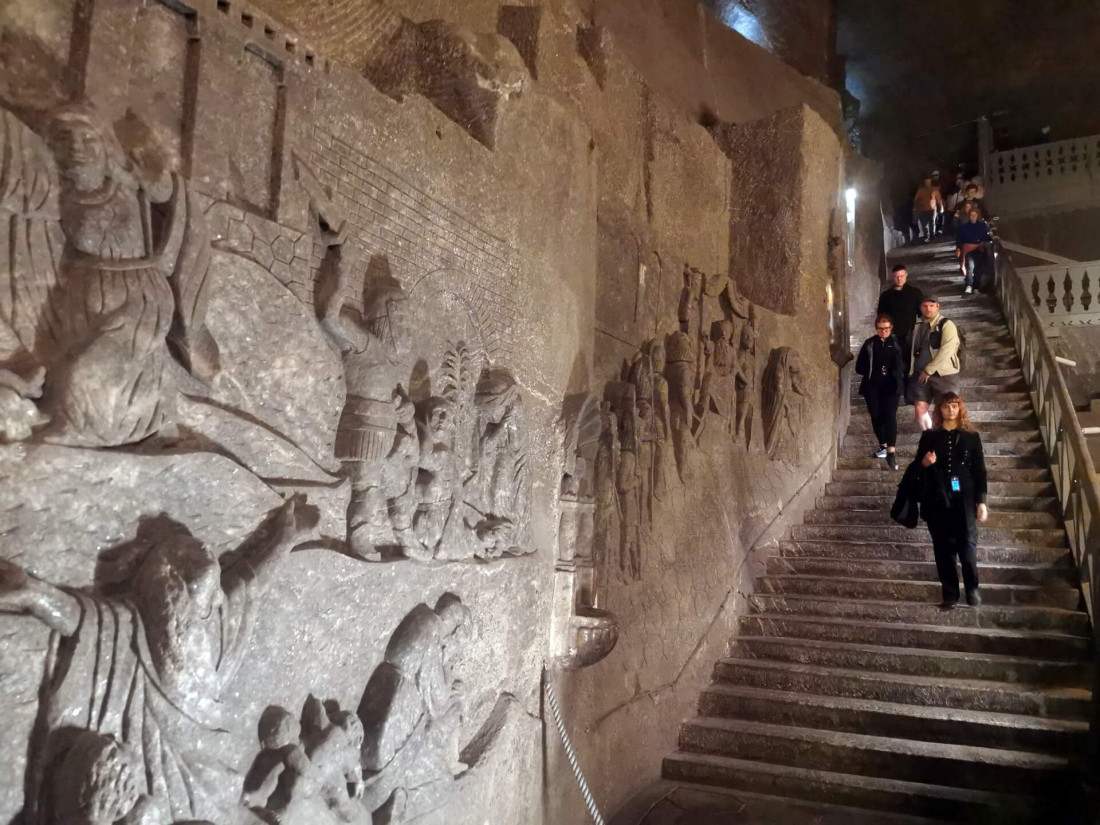
The deeper I descended, the more the crowds faded, replaced by 700 years of history carved directly into the rock salt. Here is what it’s actually like to walk through a city built in the dark—and whether the reality lives up to the reputation.
Wieliczka Salt Mine: Quick Facts
- Depth reached: 135 metres (442 feet)
- Walking distance: About 3.5 kilometres
- Underground temperature: 17–18°C (62–64°F) year-round
- Tour duration: Around 2–3 hours underground
- Standard ticket price: 120–160 PLN depending on language
Inside this article:
- What Exactly Is Wieliczka Salt Mine?
- First Impressions of the Guided Tour
- The Famous Underground Chapels: Amazing or Overhyped?
- Things That Surprised Me Most Underground
- Is the Tour Physically Difficult? (Walking vs. Standing)
- The Commercial Side: How Touristy Does It Feel?
- Who Will Actually Enjoy It?
- How to Get to Wieliczka from Krakow
- Practical Tips & Best Time to Visit
- Mark Your Landing Spot: Is Wieliczka Worth It?
- FAQ
What Exactly Is Wieliczka Salt Mine?
If you judge purely by the promotional photos online, you might expect Wieliczka to be an endless, spectacular underground palace. But it is not a non-stop sequence of masterpieces. It is a highly structured historical and industrial monument hidden deep beneath the surface.
While mining here technically began in the 13th century, the grandest spaces you walk through were created much later. What visitors see today on the standard Tourist Route is only a few kilometres of a much larger underground network.
Recognised as a UNESCO World Heritage Site in 1978, it is less a mine in the traditional sense and more an underground city built layer by layer over centuries, showcasing incredible human engineering.
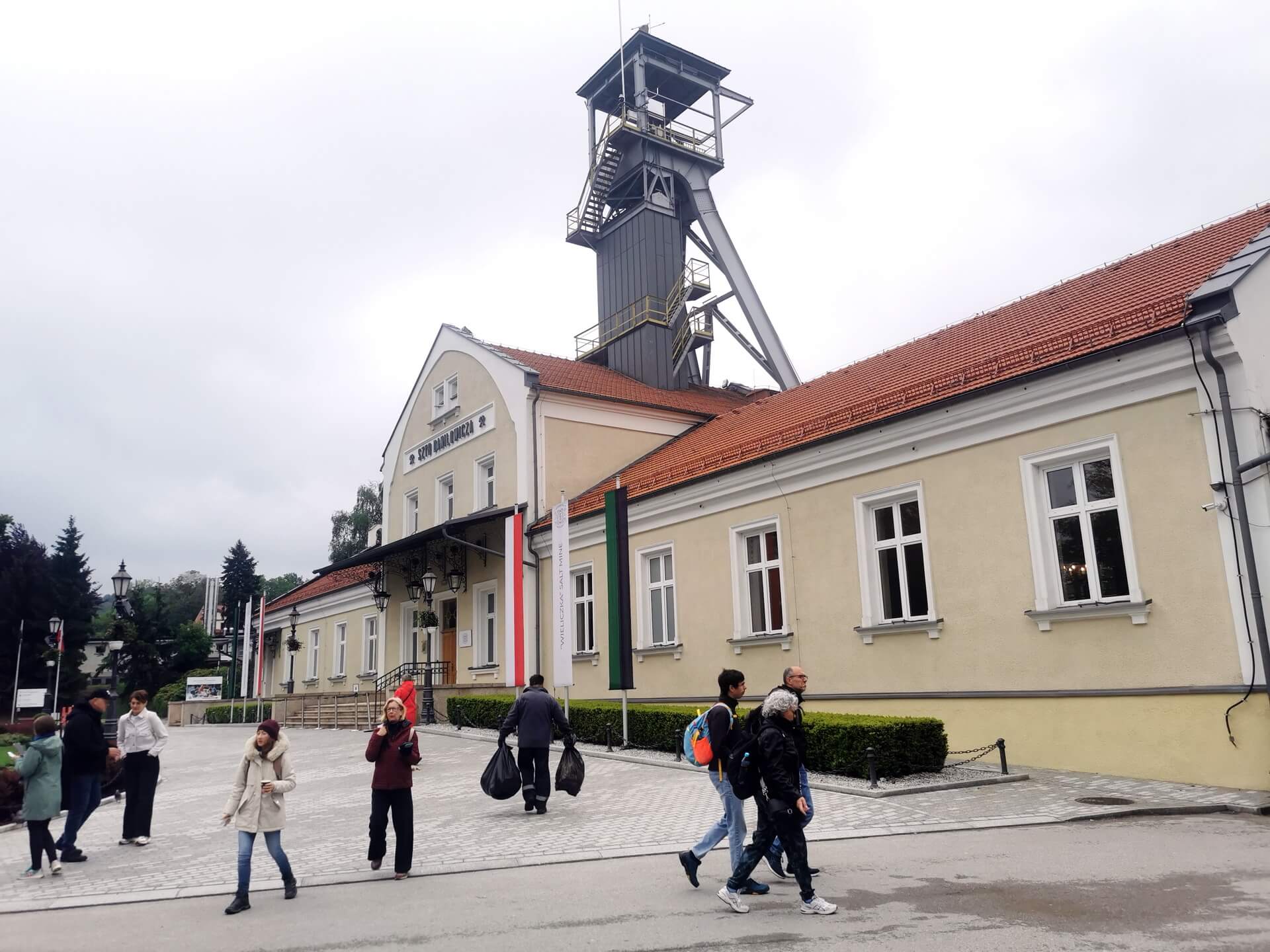
From the surface, Wieliczka looks deceptively modest for a place hiding an underground world beneath it.
First Impressions of the Guided Tour
The experience begins at the Daniłowicz Shaft on the surface, and arriving is entirely stress-free. There is no chaotic grand plaza. You simply turn up at the address about 15 minutes before your time slot, spot the small outdoor tents marked with language flags, and wait to be called.
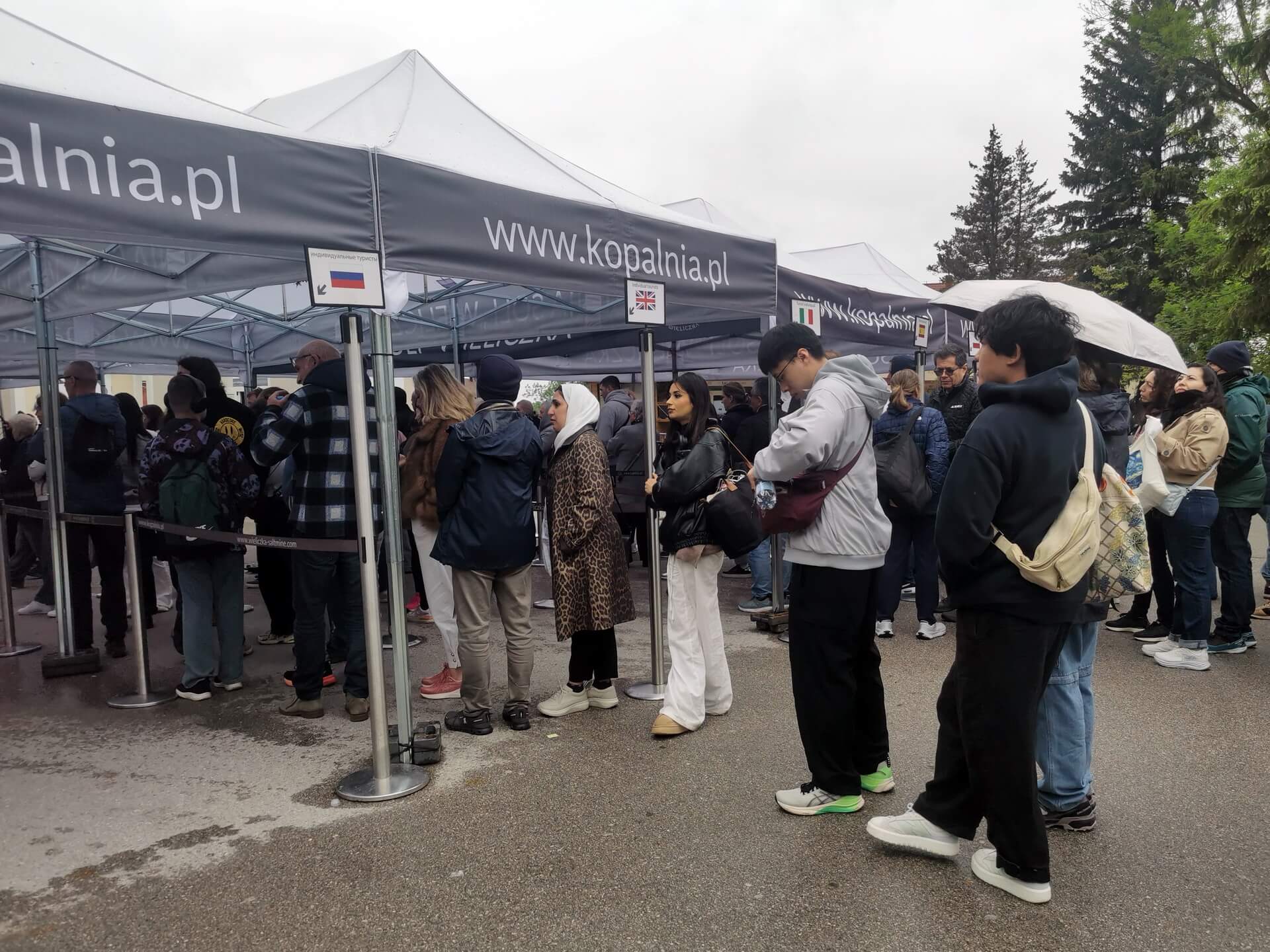
Most visitors simply arrive shortly before their scheduled entry time.
Once your QR code is scanned, you are handed a radio receiver and an earpiece. It requires zero setup, which is a massive relief. It means you can hear your guide perfectly—even if you are trailing at the back of a 35 to 40-person group.
Then comes the descent. You walk down a wooden staircase—380 steps to be exact. It takes about five minutes of non-stop stairs to reach Level 1. What strikes you immediately at the bottom is the sheer scale of the space — and the unexpectedly fresh air. Despite being surrounded by 40 people in an enclosed space, it does not feel stuffy. The ventilation system keeps the air surprisingly fresh and comfortable.
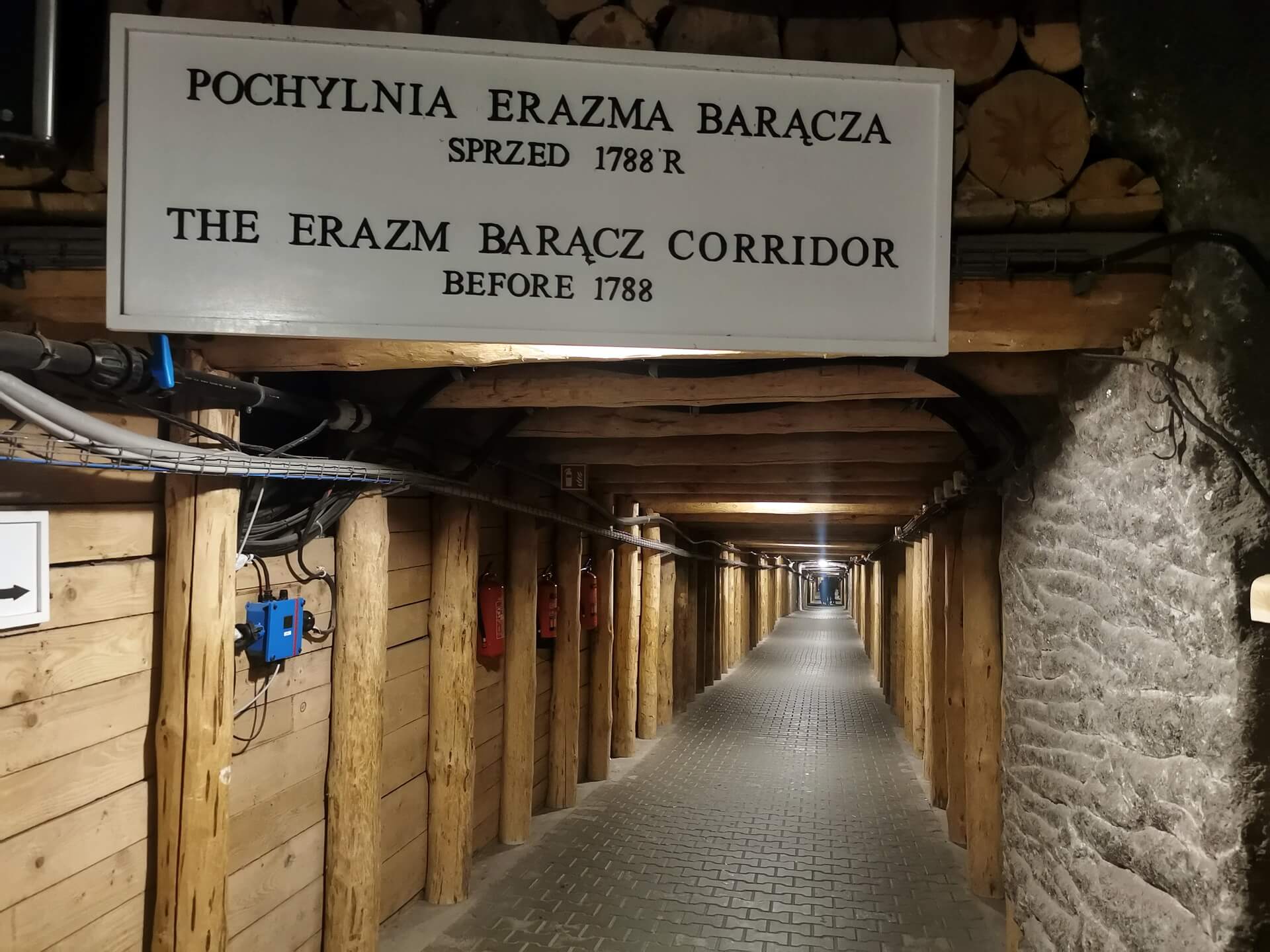
This is the side of Wieliczka people rarely show online: long timber corridors disappearing into artificial light.
The Famous Underground Chapels: Amazing or Overhyped?
St. Kinga’s Chapel
This is the centrepiece. It is a giant church carved straight out of the rock salt, complete with intricate wall carvings and glowing chandeliers made of salt crystals.
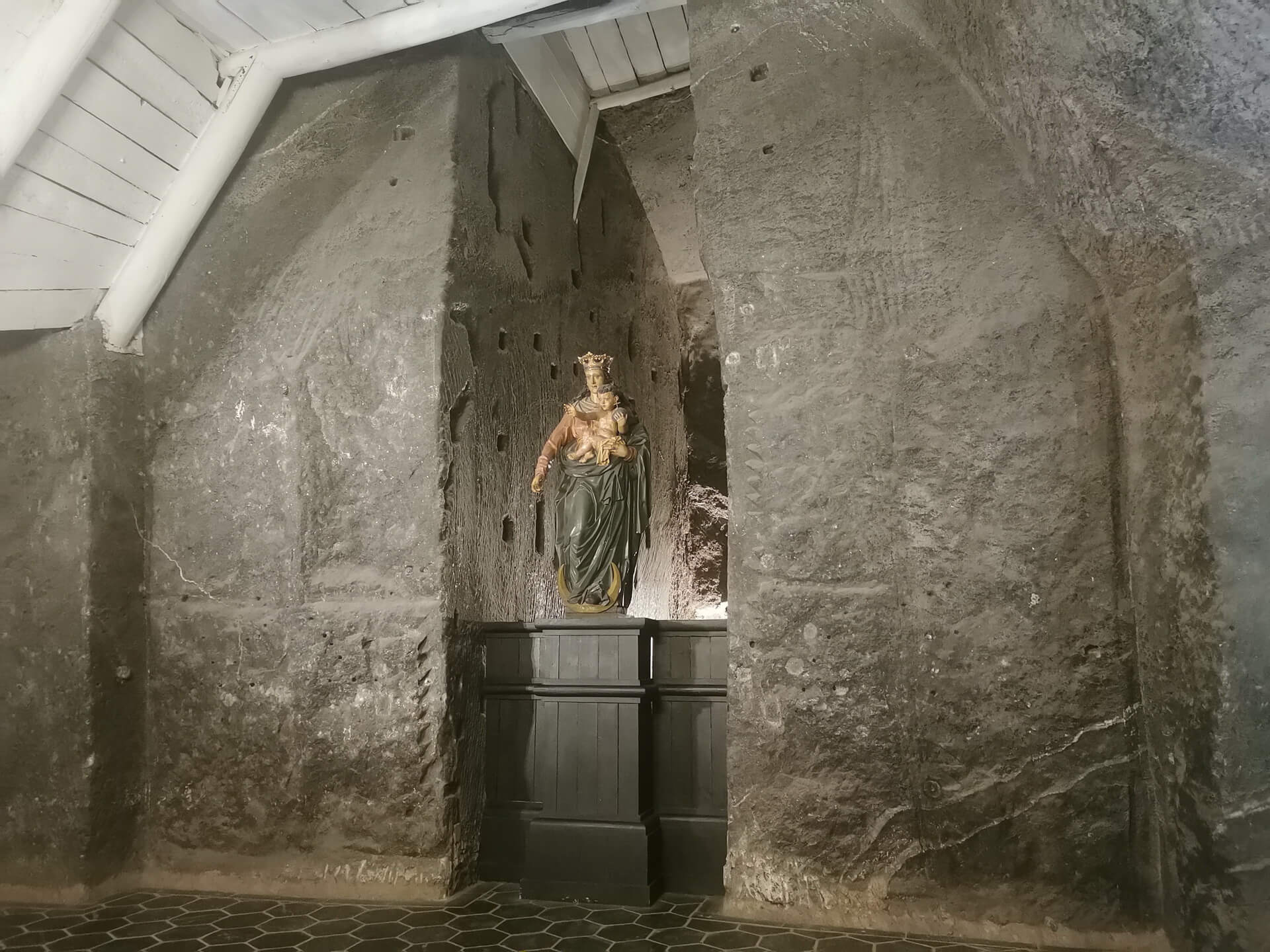
Even the side chambers inside St. Kinga’s Chapel feel strangely monumental underground.
When your group finally enters this cavern, the shuffling stops, and people genuinely stare in silence. The salt here isn’t sparkling white; it is naturally grey, resembling solid granite.
Right beside these centuries-old biblical scenes, modern exit signs glow in green, and thick industrial pipes run along the rock walls. The contrast feels oddly modern and medieval at the same time.
How Many Chapels and Sculptures Are There Really?
You will pass several dozen salt sculptures and bas-reliefs along the route, ranging from life-sized figures of historic monarchs to massive scenes.
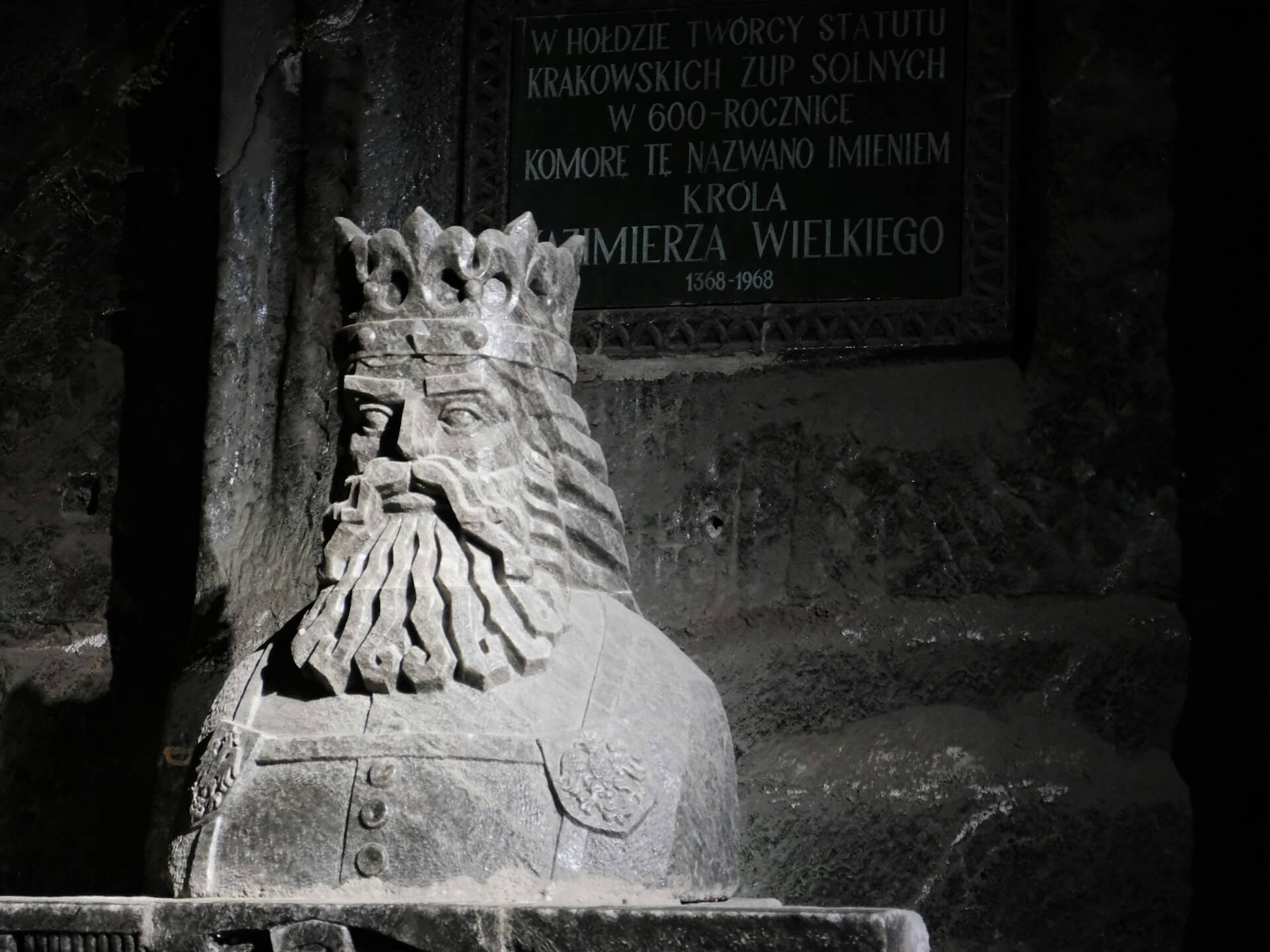
Deep underground, you suddenly come across Casimir the Great carved entirely from salt.
However, these spectacular sections alternate with long, unadorned transit corridors. Eventually, everything starts merging into one long sequence of timber supports, shifting artificial light, and constant walking.
By the 90-minute mark, you completely lose any sense of where the surface might be. After a while, the outside world starts feeling strangely distant.
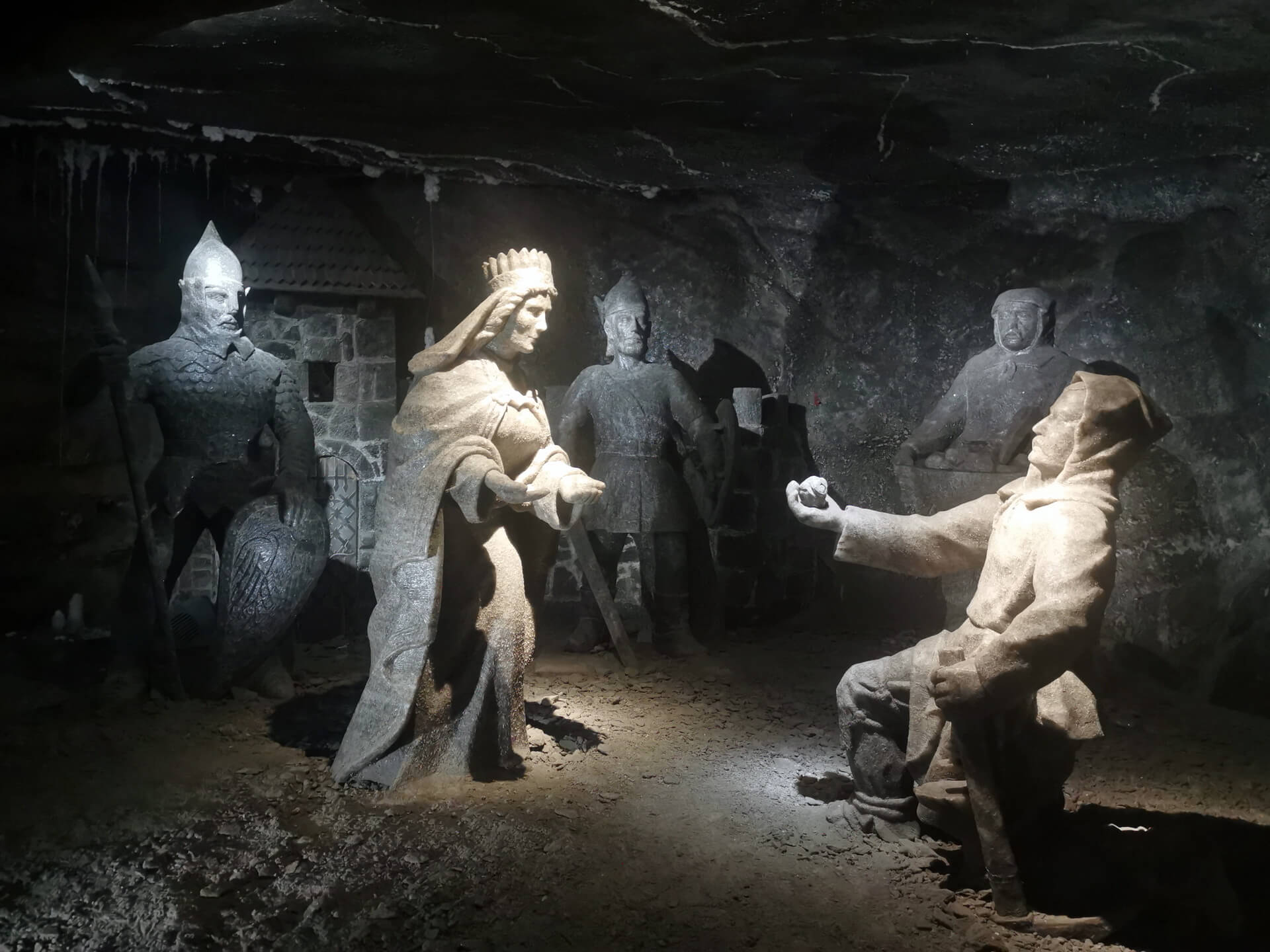
Some chambers feel less like museum exhibits and more like frozen underground theatre.
Things That Surprised Me Most Underground
It feels far less claustrophobic than most people imagine. You brace yourself for damp, heavy air, only to find the tunnels remarkably crisp and breathable.
The mine is loud. Between echoing boots on wooden boards and multiple tour groups moving at once, it is rarely silent.
You spend far more time in corridors than in the famous chapels. The spectacular caverns are highlights, but much of the route consists of long timber-framed tunnels.
The underground café is enormous. Deep underground, there is a full-scale café large enough to seat what feels like hundreds of people. By that point, the entire mine starts feeling less like a hidden world and more like a perfectly engineered tourist system.
The salt is grey, not white. After a lifetime of seeing refined white table salt, the natural rock salt underground looks unexpectedly dark — closer to granite than anything you would normally associate with salt.
Is the Tour Physically Difficult? (Walking vs. Standing)
Over the course of the tour, you will cover about 3.5 kilometres and descend roughly 450-500 steps in total.
The physical fatigue doesn’t come from the walking itself—the pathways are level, well-lit, and not slippery. The real challenge is the standing-to-walking ratio.
You walk for two minutes, then stand still on hard rock for five minutes while the guide explains a chamber, then repeat. For the average visitor, it is perfectly fine, but if you have lower back or knee problems, this start-stop pacing over two to three hours can be demanding.
The lift ride back to the surface is an experience in itself. It holds a small, tightly packed group of about 8-10 people. It is a draughty, cage-like elevator. Because you can feel the airflow and see the shaft walls rushing past through the mesh sides, it actually feels much less intimidating than a standard enclosed box.
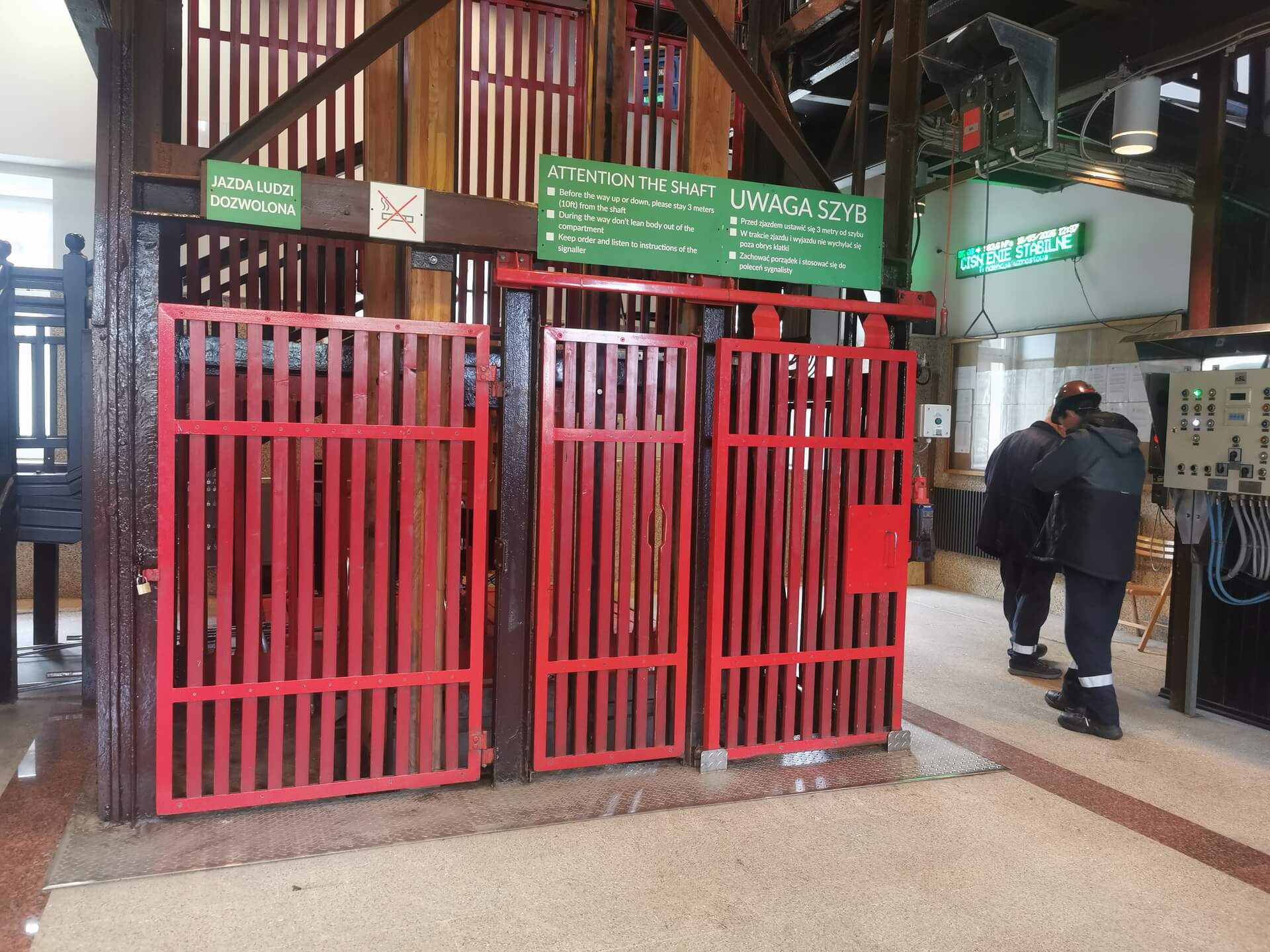
The industrial lift back to the surface feels more like old mining infrastructure than a tourist attraction.
The Commercial Side: How Touristy Does It Feel?
Let’s be entirely honest: this is a mass-tourism heavyweight.
You cannot wander freely. The mine operates on a conveyor-belt rhythm, with groups moving from chamber to chamber in a tightly coordinated dance. Nobody gets lost here. There are orchestrated photo stops, and about an hour in, you hit a large rest stop with modern toilets and stalls selling branded salt scrubs.
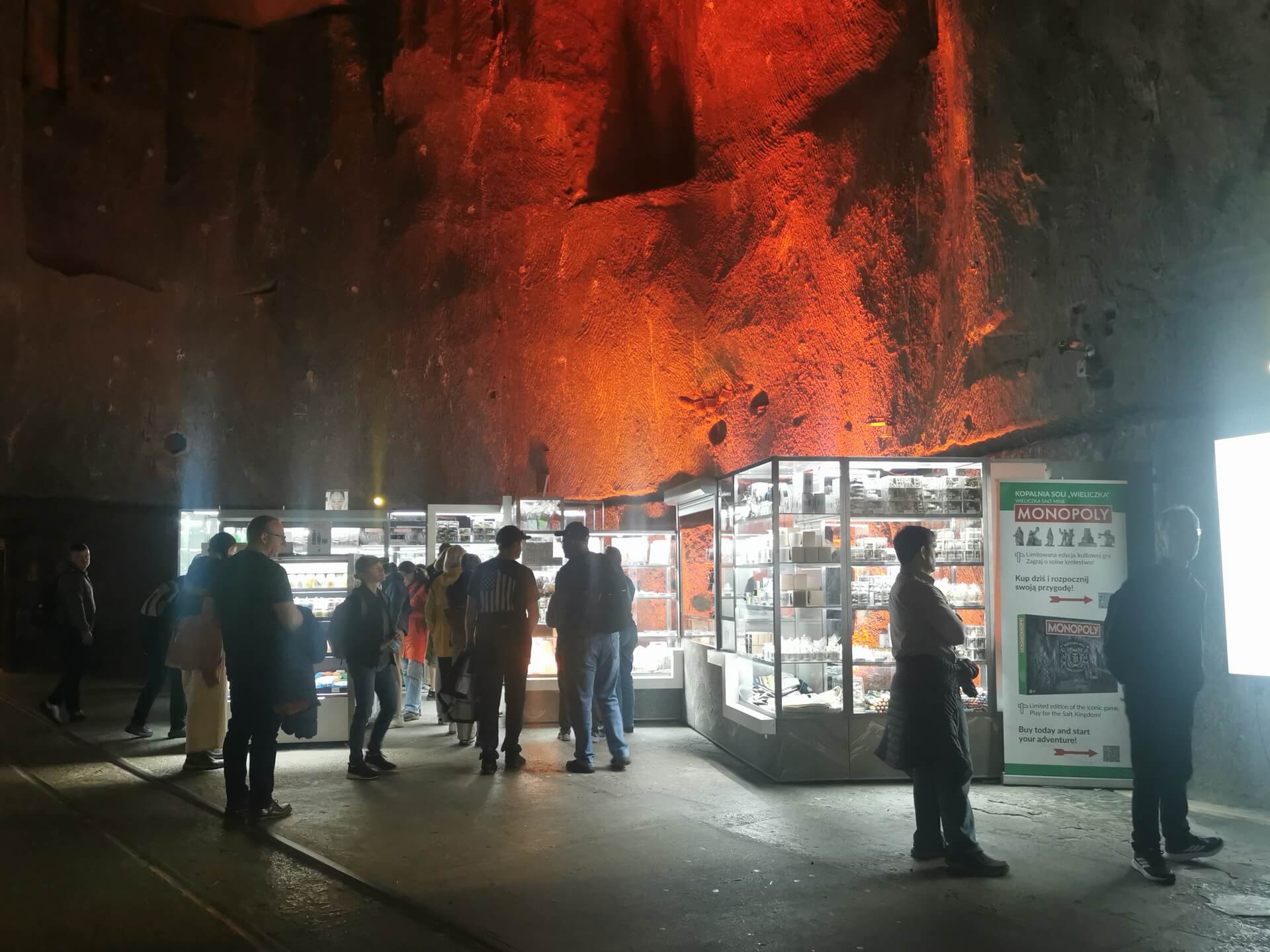
Deep underground, the historical atmosphere suddenly makes way for commerce.
Towards the end of the route, there is a modern café. Sitting 125 metres underground with an espresso feels strangely normal by that point. It is convenient, but it shatters any illusion that you are exploring the unknown. At times, it feels more like a perfectly managed attraction than an underground expedition.
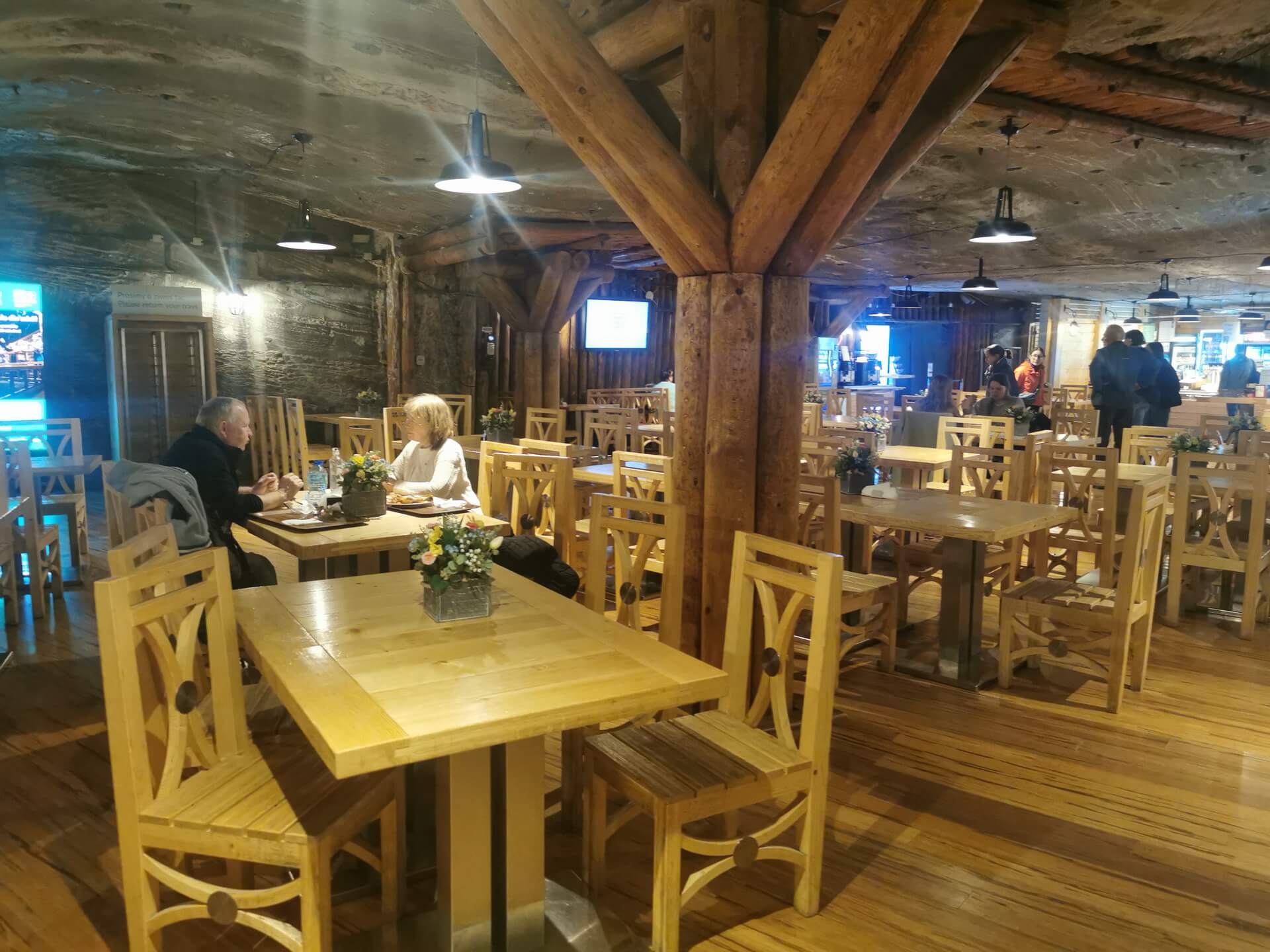
An espresso bar inside a medieval salt mine somehow no longer seems out of place.
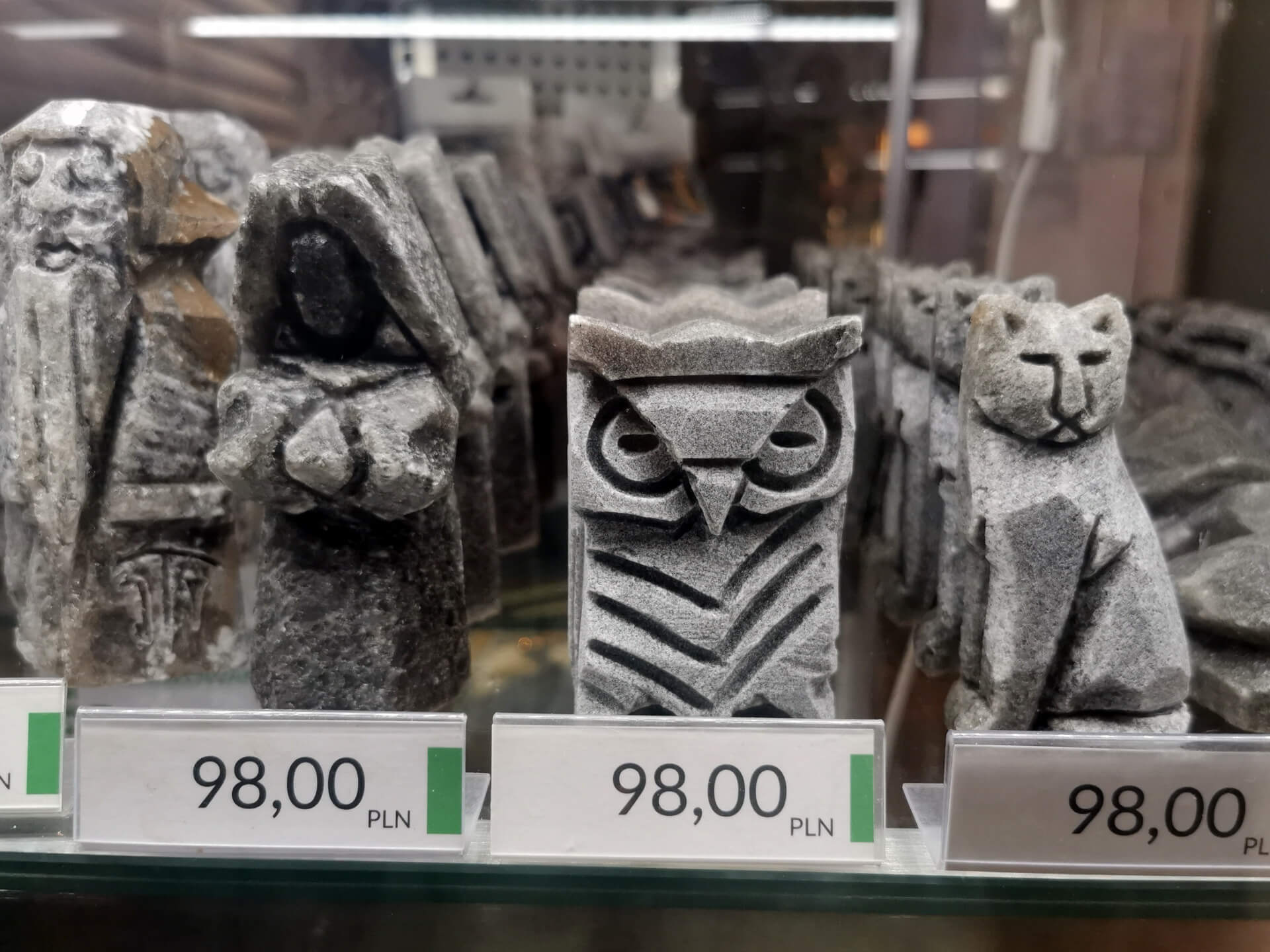
By the end of the tour, a subterranean gift shop seems perfectly logical.
Who Will Actually Enjoy It?
Wieliczka is likely a great fit if:
- Large-scale infrastructure and engineering fascinate you.
- Monumental, human-made spaces hold a special appeal.
- You are travelling with older children who will love the sheer scale of the descent and the changing environments.
Consider skipping it if:
- Slow-moving, heavily managed group tours test your patience.
- Being deep underground without a quick exit causes genuine discomfort.
- Your time in Krakow is limited to a single day, and you’d rather explore the Old Town in the daylight.
How to Get to Wieliczka from Krakow
Wieliczka is arguably the easiest half-day trip from Krakow. While many visitors choose organised transfers, getting there independently is incredibly simple.
A modern regional train (Polregio or Koleje Małopolskie) from Krakow Główny usually takes around 20–25 minutes. The trains are modern, air-conditioned, and a one-way ticket typically costs under 8 PLN (less than €2). You can buy tickets easily on the KOLEO app in English.
The train drops you at Wieliczka Rynek-Kopalnia station, which is a flat, three-minute walk to the mine entrance.
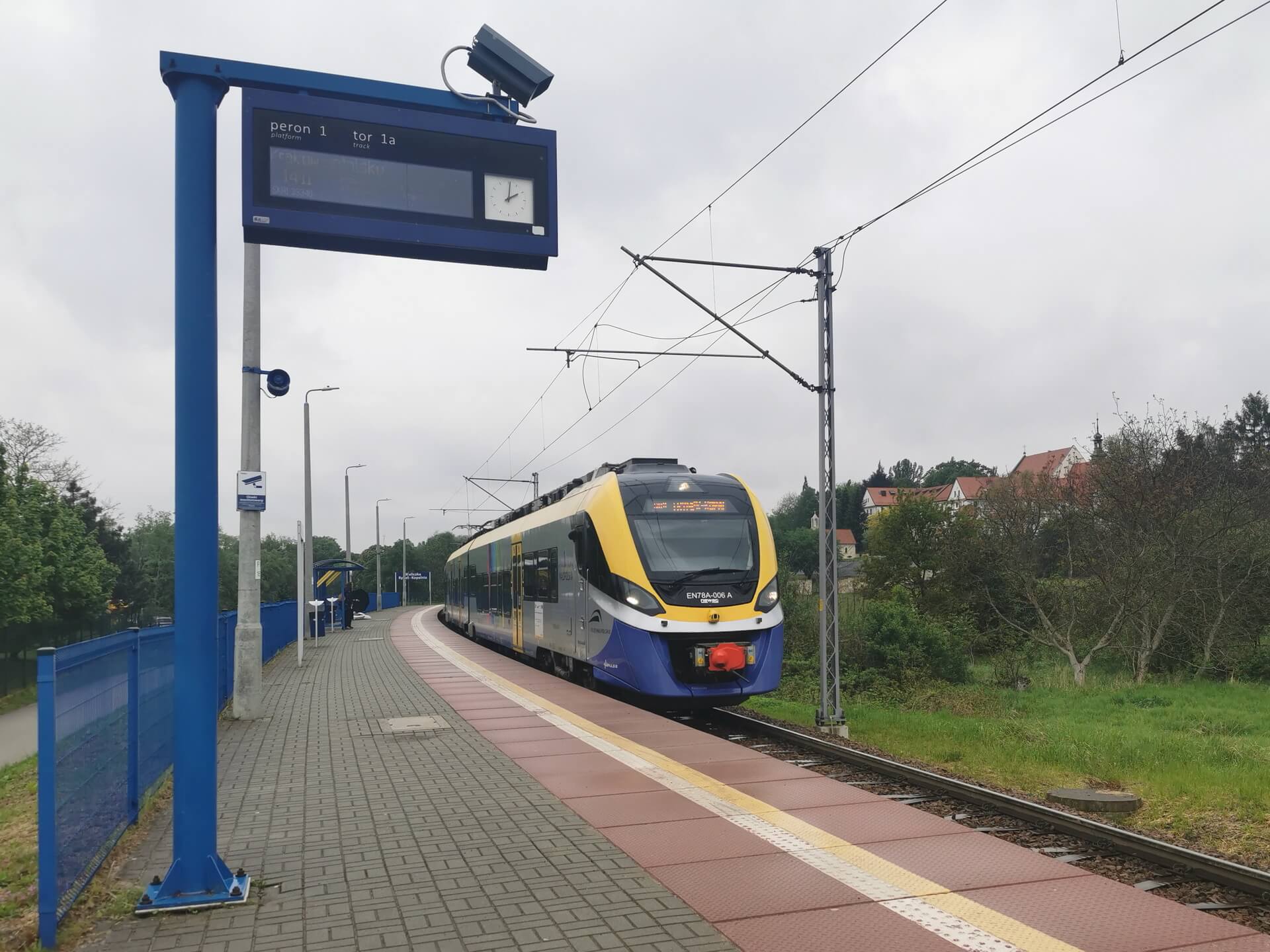
Getting to Wieliczka Salt Mine from Krakow is incredibly simple — the train drops you just a short walk from the mine entrance.
Just keep in mind the total time commitment: when you factor in the train journey, arriving early for your entry slot, and the tour itself, you need to realistically block out about 4.5 hours for the entire round trip.
Personally, I think visiting independently is easier than many people expect. However, organised tours still make sense if you want hotel pickup, a fixed schedule, or an Auschwitz + Wieliczka itinerary in a single day.
- Kraków: Auschwitz-Birkenau & Salt Mine Full-Day Guided Tour
- Krakow: Wieliczka Salt Mine Guided Tour with Hotel Pickup
- Auschwitz & Wieliczka One-Day Tour with Private Transport
Practical Tips & Best Time to Visit
Best time to go: Even though you book a specific entry time, the experience changes a lot depending on the time of day. During peak periods, groups move underground almost back-to-back, which creates bottlenecks near the lifts and constant overlapping noise in the chambers. If you want the experience to feel slightly less conveyor-belt-like, aim for an early morning slot (before 10:00) or a later afternoon tour. Weekends and July–August get especially crowded.
Book direct online: Buying tickets on the official Wieliczka Salt Mine website a few days in advance is a good idea, especially in summer. Make sure you choose the standard Tourist Route.
Luggage restrictions: Big backpacks and suitcases are not allowed underground, but there is a free left-luggage office right next to the Daniłowicz Shaft.
With kids or mobility concerns: The route involves long stair sections, constant walking, and remarkably little sitting during the tour. Most visitors will cope perfectly well, but if you struggle with stairs, knee or back pain, or are travelling with a very young child, it is worth knowing that this is not a particularly relaxed experience.
What to wear: The underground temperature stays around 17–18°C year-round. Some visitors are perfectly comfortable in a T-shirt, while others prefer a light jumper, especially towards the end of the tour. Heavy winter coats quickly become annoying once you have carried them through several kilometres of tunnels.
Explore the town: After the tour, spend a little time in Wieliczka itself. The main square is calmer and more pleasant than many visitors expect after the crowds underground, with mining-themed sculptures and small cafés. About 15 minutes away on foot stands St. Sebastian’s Church, a wooden church dating back to the late 16th century.
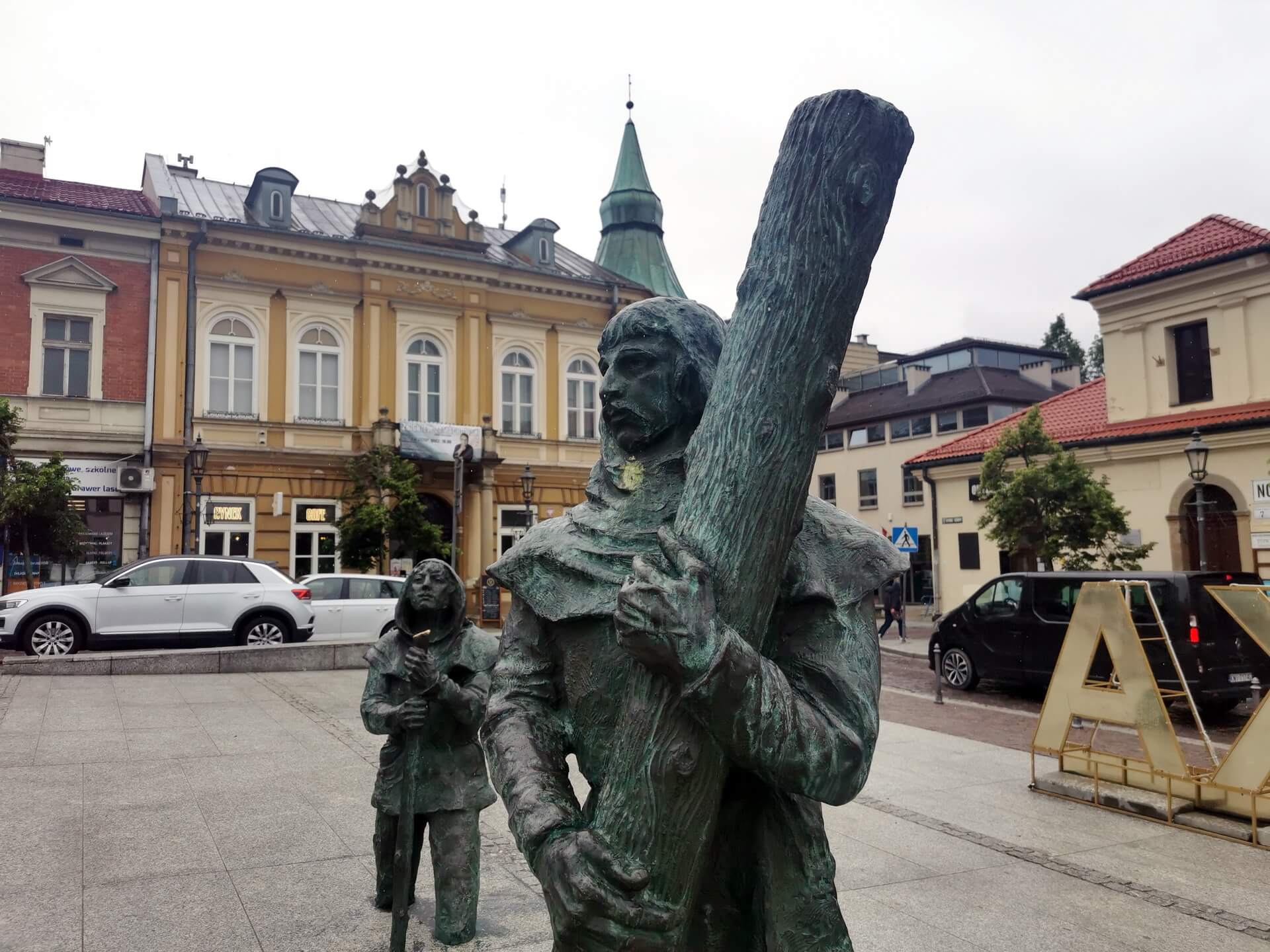
Wieliczka itself is quieter and more pleasant than many visitors expect after the crowds underground.
Mark Your Landing Spot: Is Wieliczka Worth It?
Yes, but with managed expectations.
Do not go expecting untouched authenticity. You are walking through centuries of labour, engineering, and religious symbolism transformed into something strangely atmospheric.
Oddly enough, some of the most memorable places around Krakow feel completely opposite in scale and rhythm — from the living stained glass workshop of Muzeum Witrażu to the forest chapels scattered across Kalwaria Zebrzydowska.
Walking back into daylight afterwards feels oddly abrupt. After nearly three hours in the grey, dimly lit depths, stepping out of the lift and seeing a cloudy sky brings an unexpected rush of relief. It’s the physical realisation that you’ve just resurfaced from a separate world hidden beneath an ordinary Polish town.
More From This Trip
If my approach to exploring Poland resonates with you, you might find these guides useful:
- The Big Picture: Read my deep dive into the 9 unexpected realities of modern Poland—a guide to skipping the polished tourist circuits and understanding the actual, unfiltered local life.
- Regional Exploration: Read my guide to the Eagles’ Nests Trail—a string of medieval castles and limestone ruins accessible via minivan tour from Krakow, offering a perfect contrast to the underground world of the salt mine.
- Craft & Culture: For more intimate, tactile experiences, see my guides to the historic Stained Glass Museum or the quiet pilgrimage trails of Kalwaria Zebrzydowska.
FAQ
Can you take photos inside Wieliczka Salt Mine?
Yes, photography is completely free and allowed throughout the Tourist Route, including inside St. Kinga’s Chapel. You do not need to buy a separate photography permit anymore. Just avoid using flash in a way that disrupts the guide or other groups.
Is Wieliczka Salt Mine worth visiting as a half-day trip from Krakow?
Yes. It is one of the easiest excursions from the city. The modern regional train journey takes around 20–25 minutes from the central station, dropping you right near the entrance.
How long does the tour take?
The guided portion underground takes between 2 and 3 hours. However, if you are travelling from central Krakow, you should set aside around 4.5 hours in total to account for trains, walking to the shaft, and waiting for your scheduled entry time.
Is Wieliczka claustrophobic or stuffy?
The ventilation system is highly effective, so it does not feel stuffy. The main corridors and chapels are wide and well-lit with high ceilings. The most enclosed spaces are the initial 380-step wooden staircase and the short, mesh-sided lift ride back up.
Can you visit without a tour?
No. For safety and crowd management, all visitors must be accompanied by an official guide. You cannot explore the mine independently.
Is it cold underground?
The temperature remains a constant 17–18°C (62–64°F) year-round. While some people comfortably do the whole tour in a T-shirt, others find it cool enough to need a light jumper.
Is Wieliczka suitable for kids?
Older children are usually fascinated by the enormous chambers and the deep descent. For toddlers, the long underground route can become tiring much faster than you might think. If you are visiting with a baby, a carrier is far more practical than a pushchair.

