











Kraków’s Main Square offers a perfect Instagram backdrop. But ten minutes north, the scene completely changes. People abruptly stop in narrow aisles to inspect early potatoes. They argue over strawberry prices and queue for smoked cheese before noon.
Under Renaissance vaults, you can easily tap a card for rubbery cheese. Alternatively, walk to Rynek Kleparski, squeeze past delivery vans, and panic because you forgot cash.
Here is what happens when you compare Kraków’s most famous architectural set piece with a working market.
The Sukiennice: The Most Famous of Krakow Markets
Historically, the Cloth Hall was exactly what its name suggests. It served as the commercial heart of medieval Kraków. Merchants traded heavy textiles, imported spices, and local salt hauled up from places like the Wieliczka salt mine.
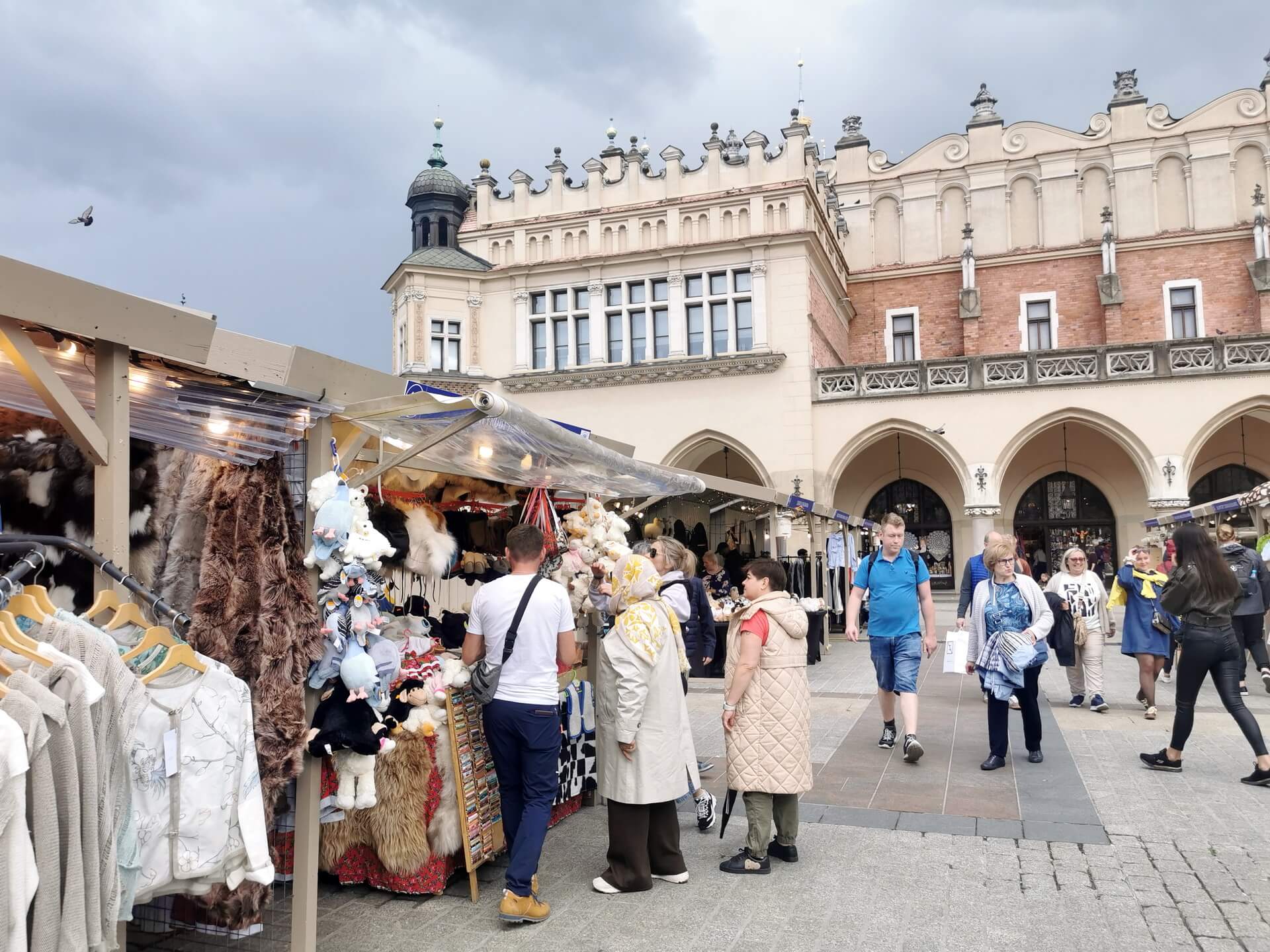
The Renaissance arches of the Cloth Hall dominate the Main Square. Today, temporary stalls selling fleece jackets and plush toys surround the historic building, immediately capturing the heavy tourist footfall.
Today, it functions less as a market and more as a beautifully preserved corridor of amber jewellery, souvenir dragons, and emergency gift shopping.
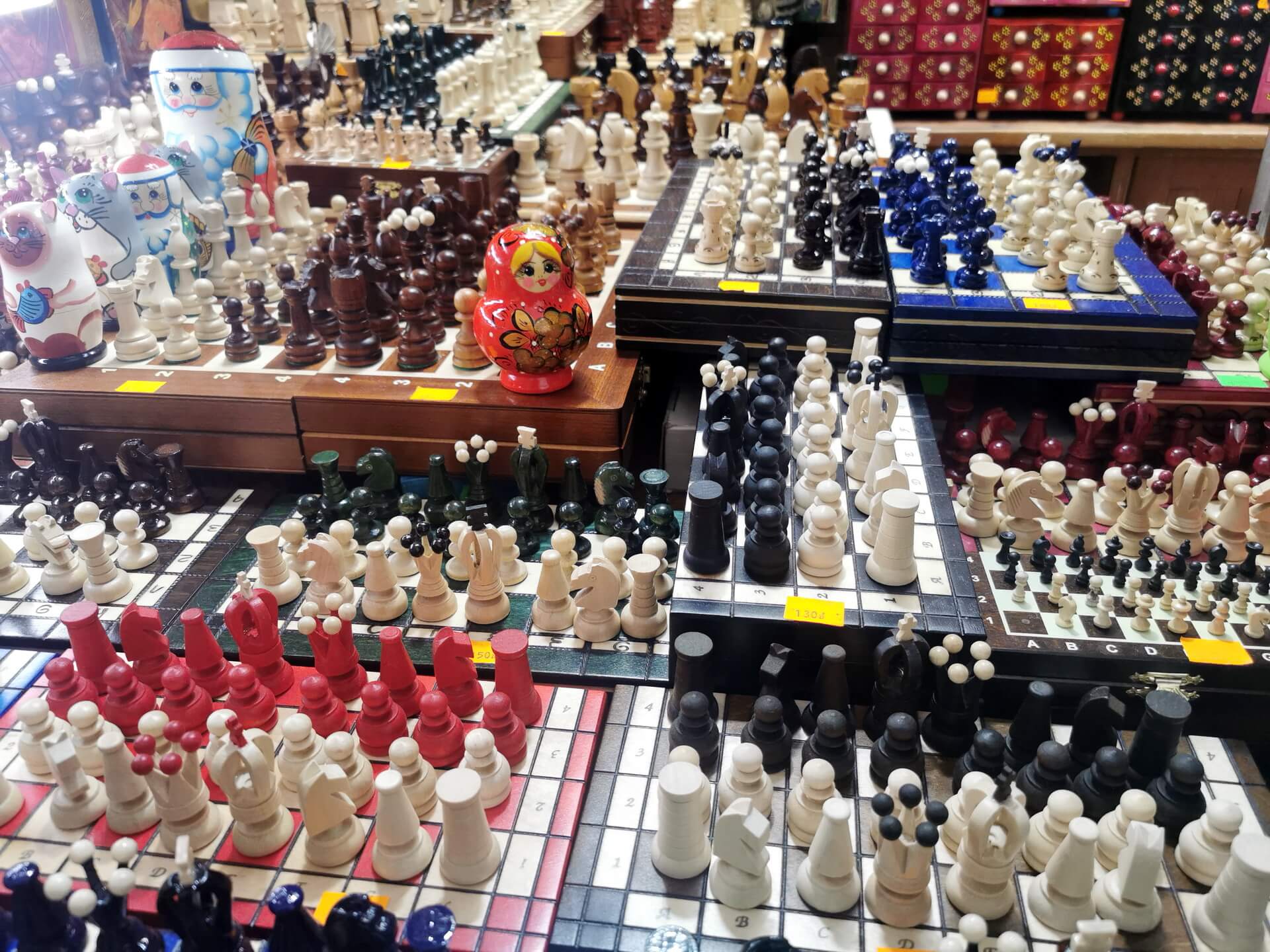
Mass-produced wooden crafts dominate the inner stalls. You will find these exact identical sets replicated across dozens of different vendors under the historic arches.
Walk through the heavy doors, and the echo of hundreds of footsteps immediately swallows you. The stalls sell everything from elegant amber pendants to endless rows of identical fridge magnets and aggressively varnished chessboards.
You will spot beautiful Polish ceramics here too. However, any dedicated pottery shop nearby offers a much better selection.
Outside the hall, vendors sell grilled oscypek (smoked cheese) and sweet cranberry jam. They happily accept Apple Pay. The cheese is slightly rubbery, arguably more cow than sheep, but the queue never shortens. Tourists stand around eating it carefully. They hold the paper plates almost like fragile museum exhibits.
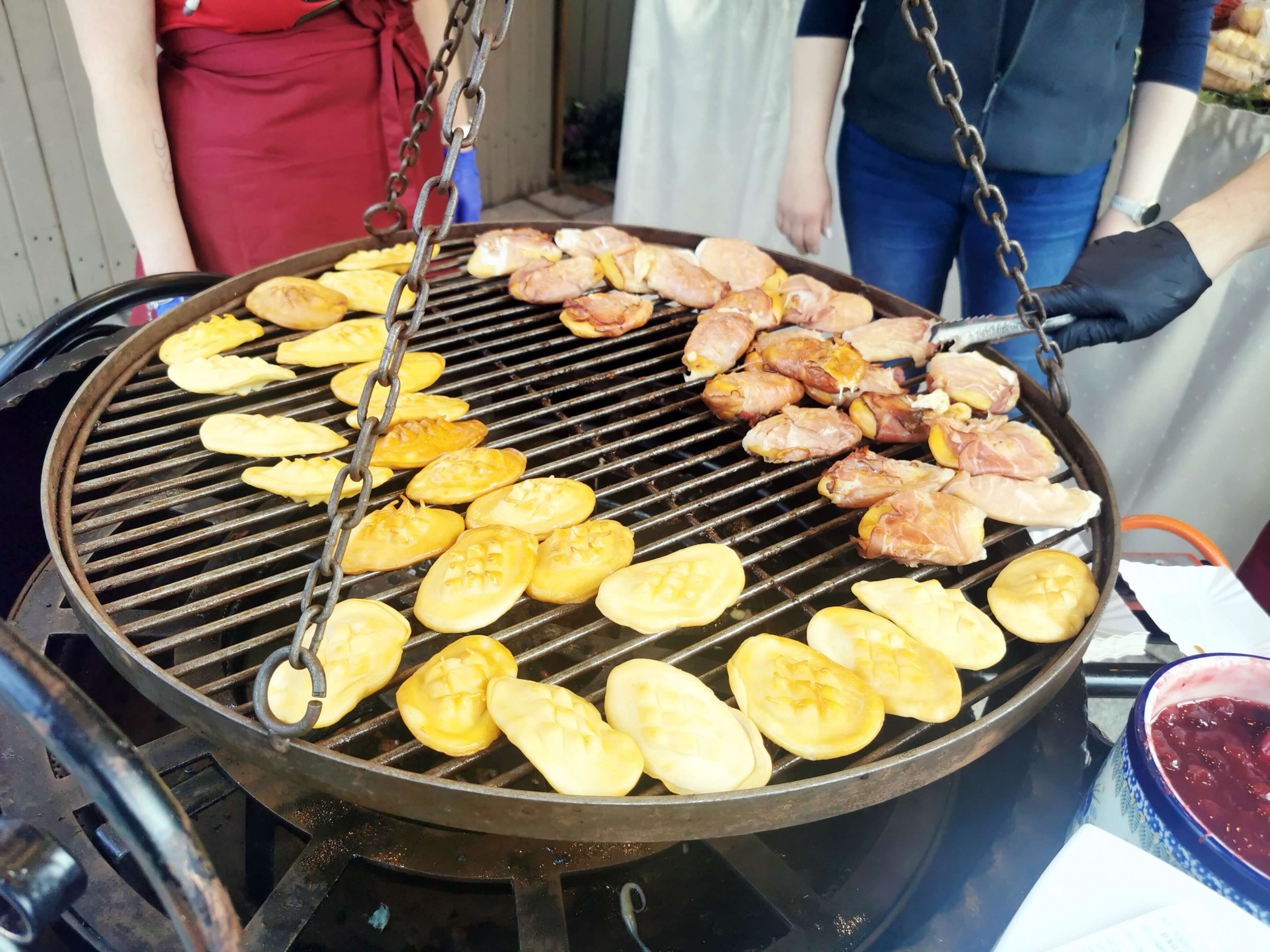
Sellers serve hot slices of mountain cheese straight from the grates. The heavy tourist footfall guarantees a constant, rapid turnover on these outdoor grills.
Stary Kleparz: Actual Groceries
Stary Kleparz sits a short walk north of the Old Town and lacks postcard appeal.
I arrived in the morning and stepped into a cramped maze of produce crates. People abruptly stopped in the middle of narrow aisles, blocking the shopping trolleys. Permanent kiosks line the perimeter. Locals stock up on heavy yeast pastries and meats here, and most vendors accept cards.
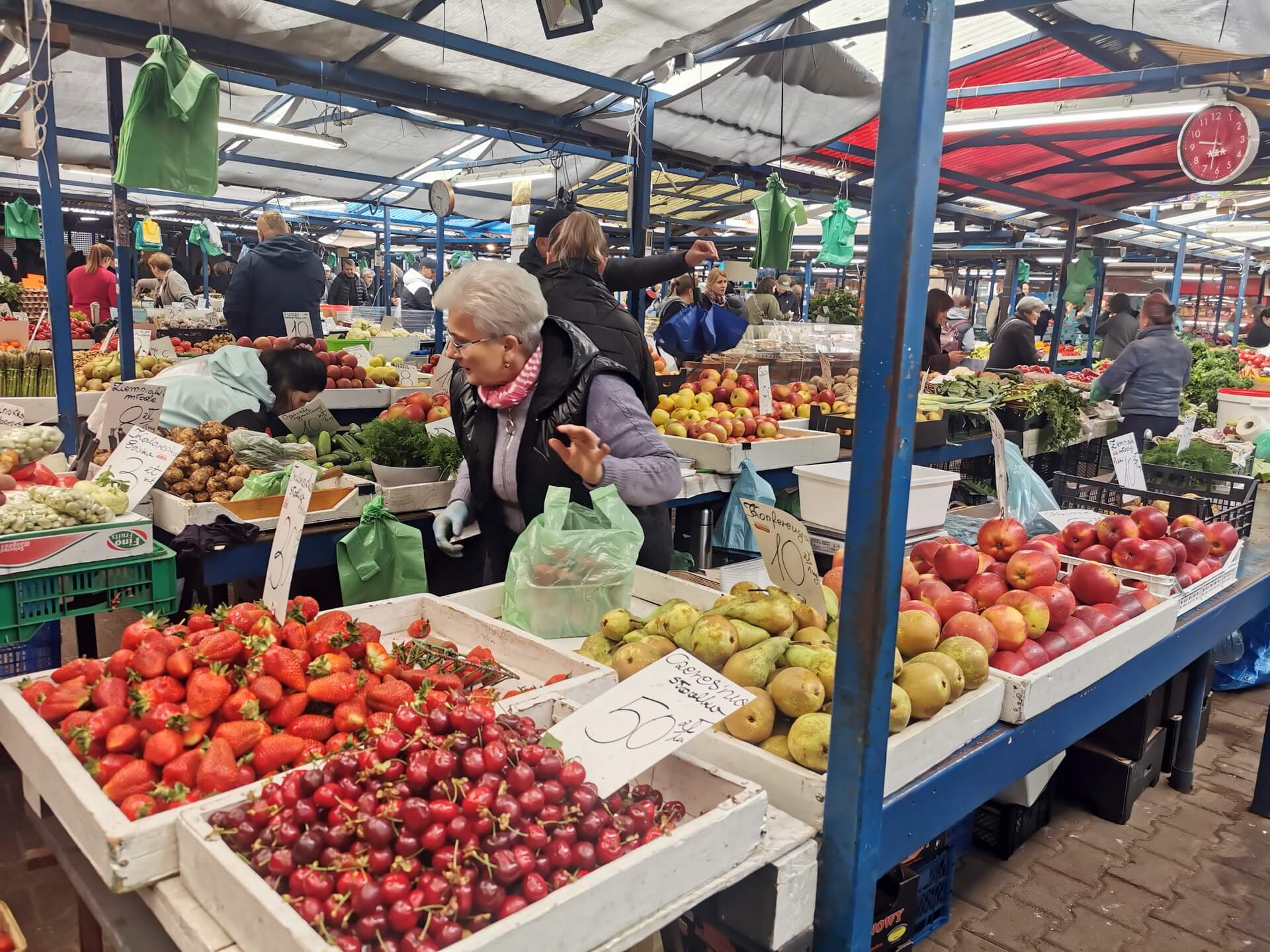
Observe the vendor-customer dynamic. Shoppers build long-term relationships with specific farmers here, trusting them over any supermarket label.
But the core of the market is tight, functional, and strictly cash-only territory.
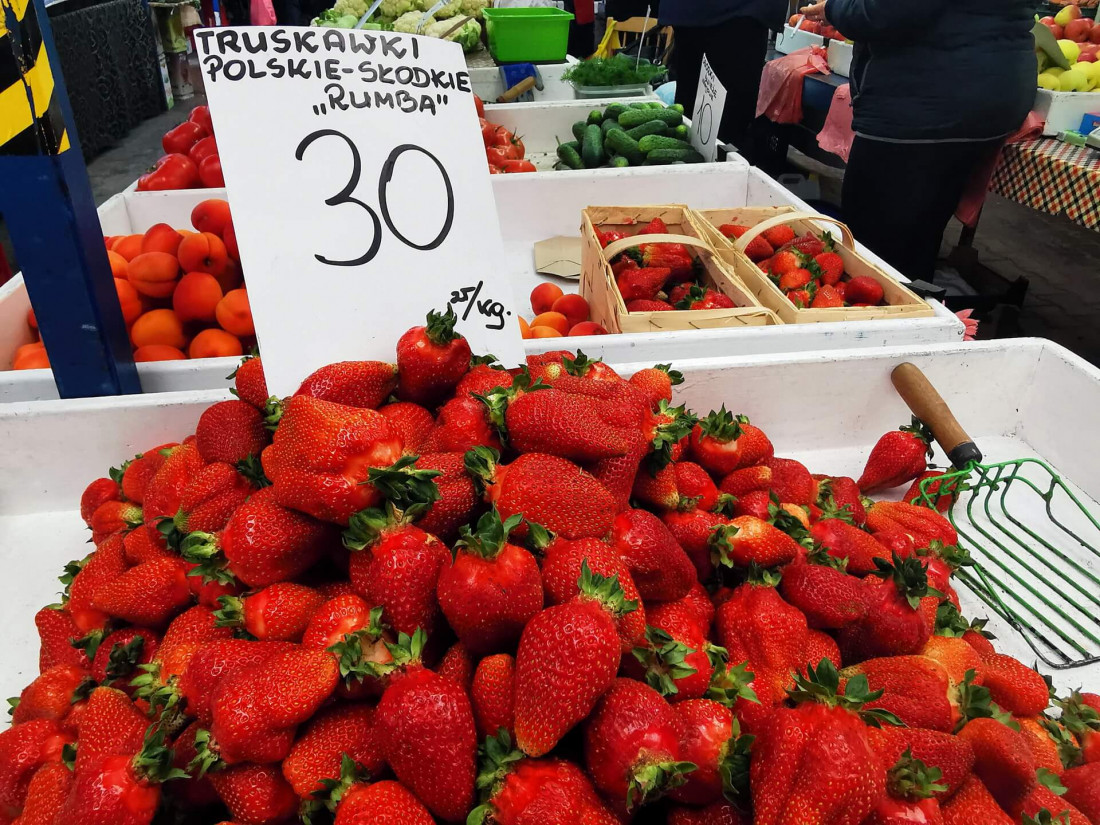
During my May visit, mounds of fresh early potatoes and bleeding strawberries drew the biggest crowds. Meanwhile, vendors sitting behind piles of early apricots and cabbage looked visibly bored.
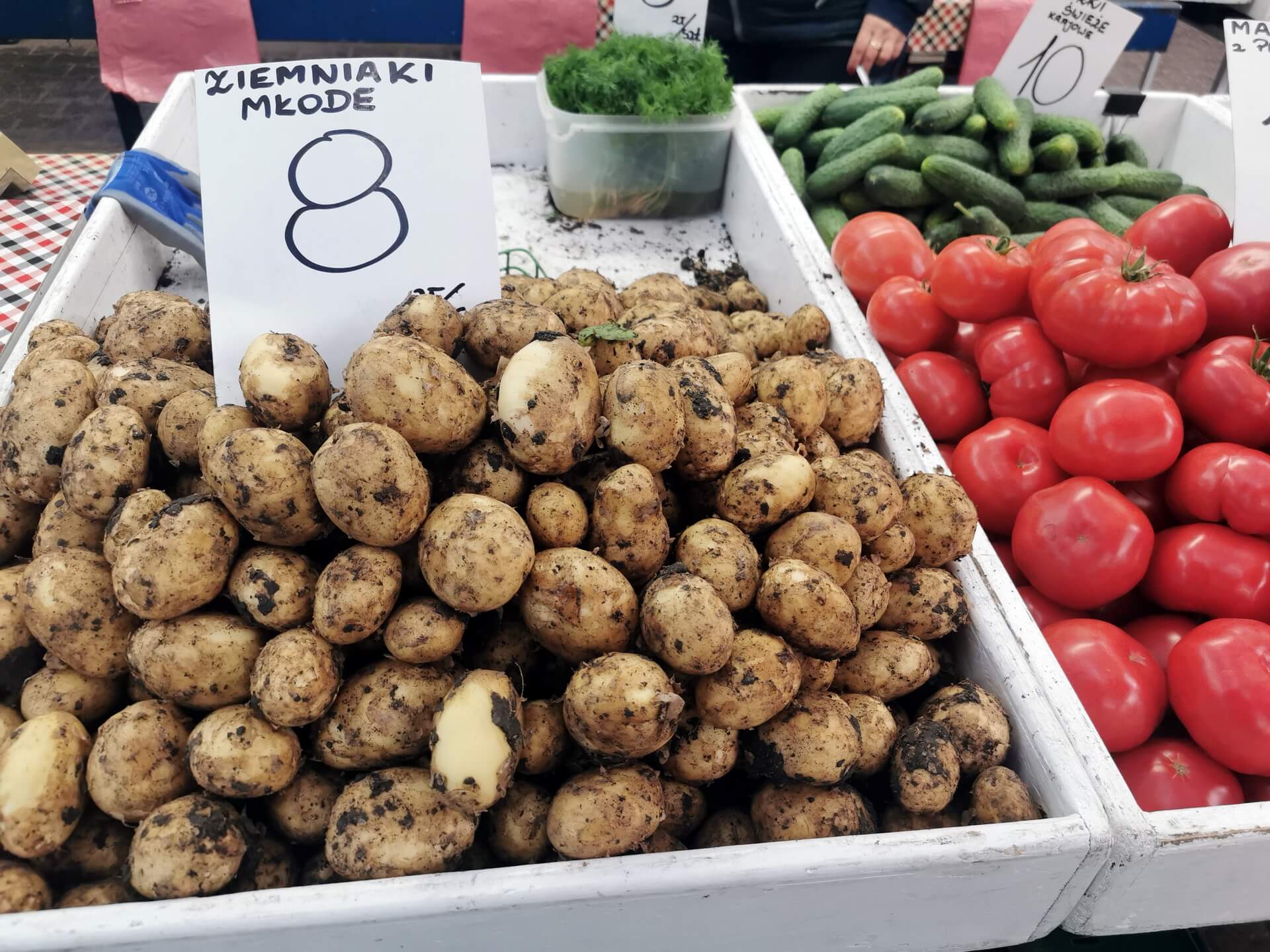
Polish cooks prize this specific soil-covered variety for a quick boil with dill and butter, bypassing the need for peeling altogether.
Near the entrance, two neatly dressed women had set up shop on upside-down crates. The one selling lily of the valley stood quietly. Beside her, the egg vendor chatted animatedly with her customers.
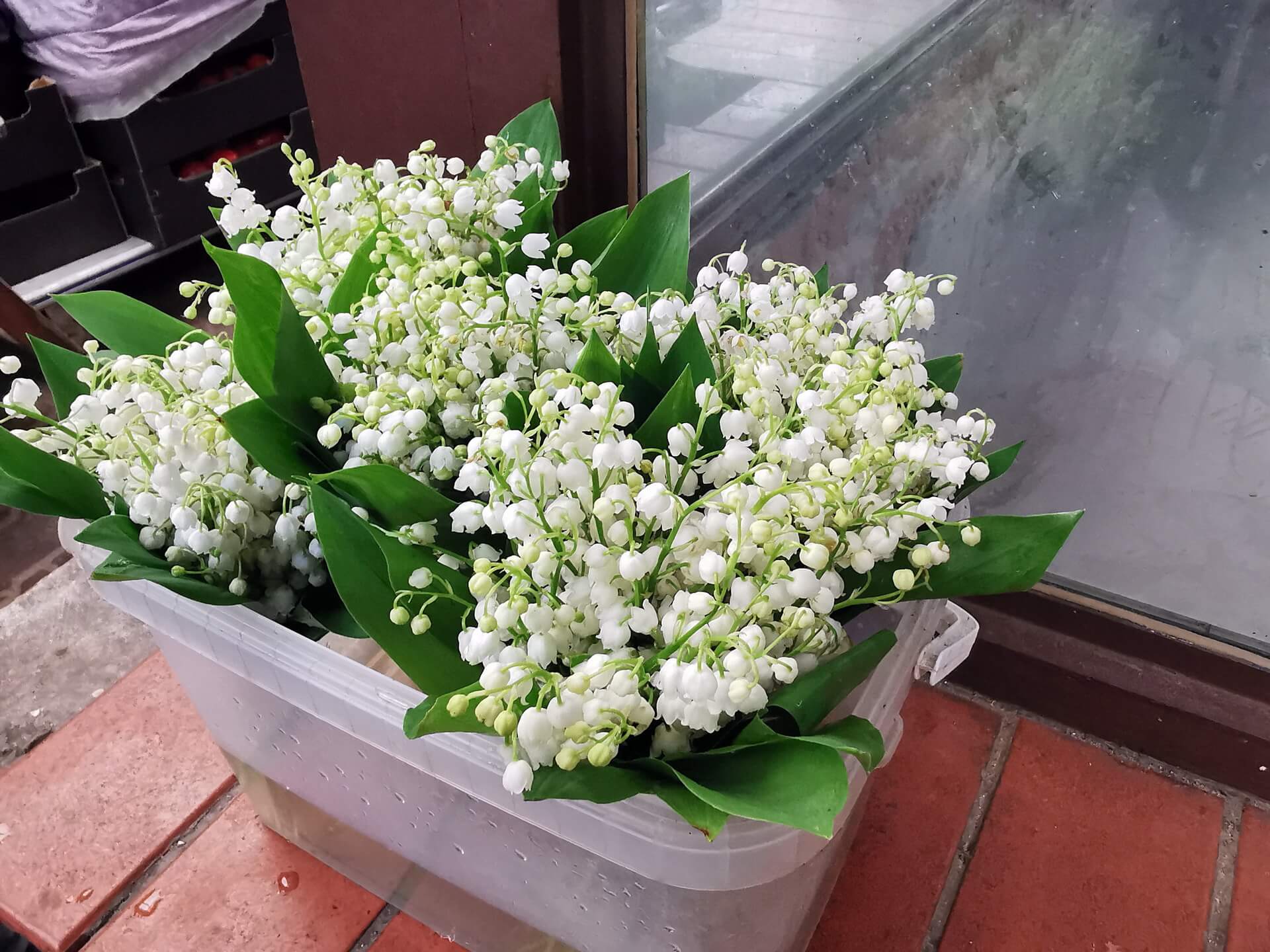
Foragers gather these highly fragrant blooms from local forests for a brief window each May, marking a definitive shift in the season.
Sourcing Regional Cheese
Unlike the Main Square, I found only two stalls selling more convincing, regional smoked sheep cheese here. The vendors are clearly accustomed to a steady trickle of determined foreign visitors; they slice the dark, intricately patterned spindles of smoked cheese and weigh out massive blocks of fresh, white sheep’s cheese with practised efficiency.
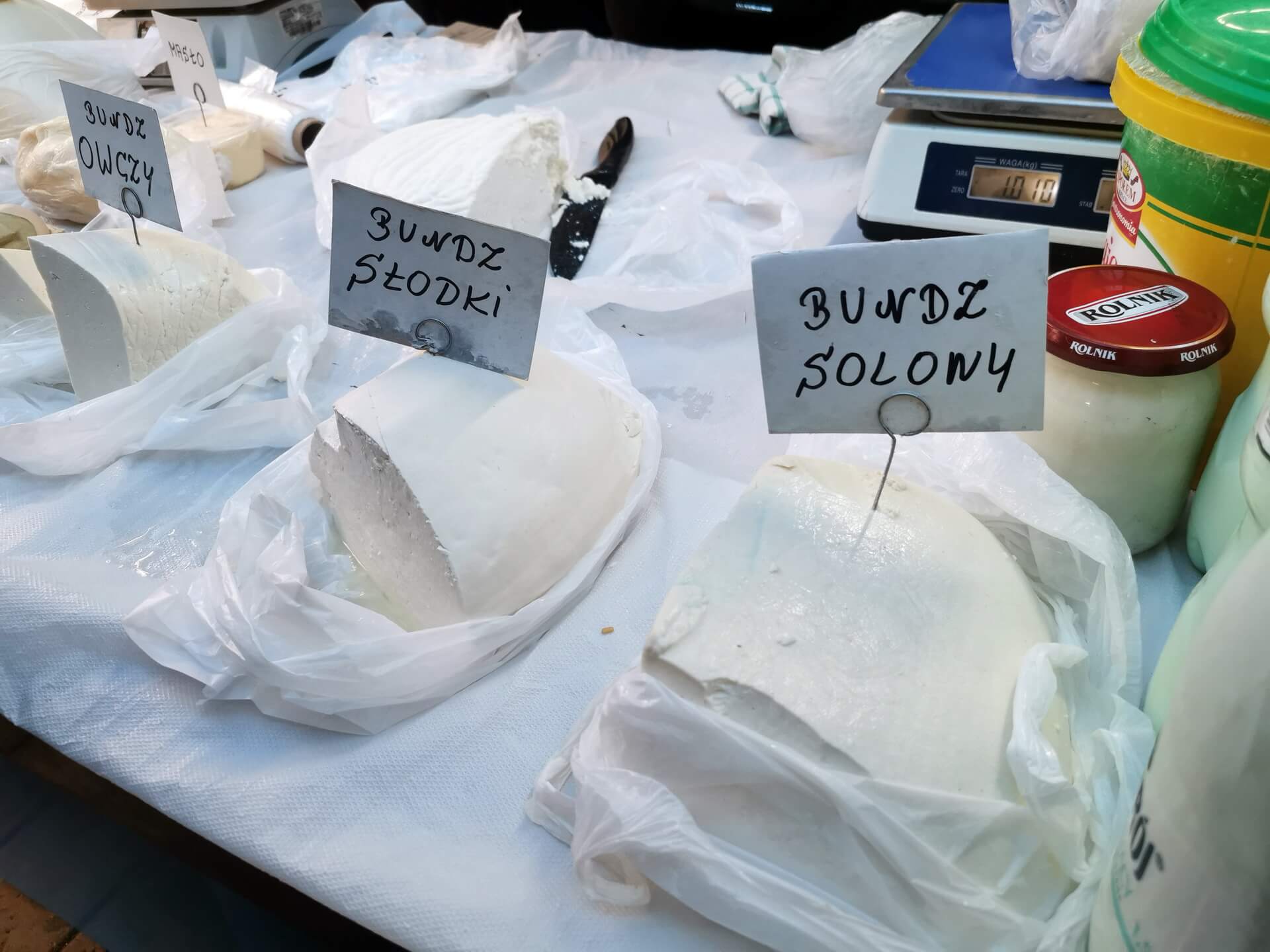
You can buy this soft sheep’s milk cheese in both sweet (słodki) and salted (solony) variations. Treat it much like a regional alternative to mozzarella.
English suddenly becomes much less useful once you leave the cheese stalls.
This is where the reality check hits. I bought just one piece of cheese because card terminals had made me complacent.
The vendors here want cash. Locals know this. The ATM at the market entrance sees a steady stream of people withdrawing money before they step inside. Meanwhile, a spontaneous, highly organised queue formed in front of the stall.
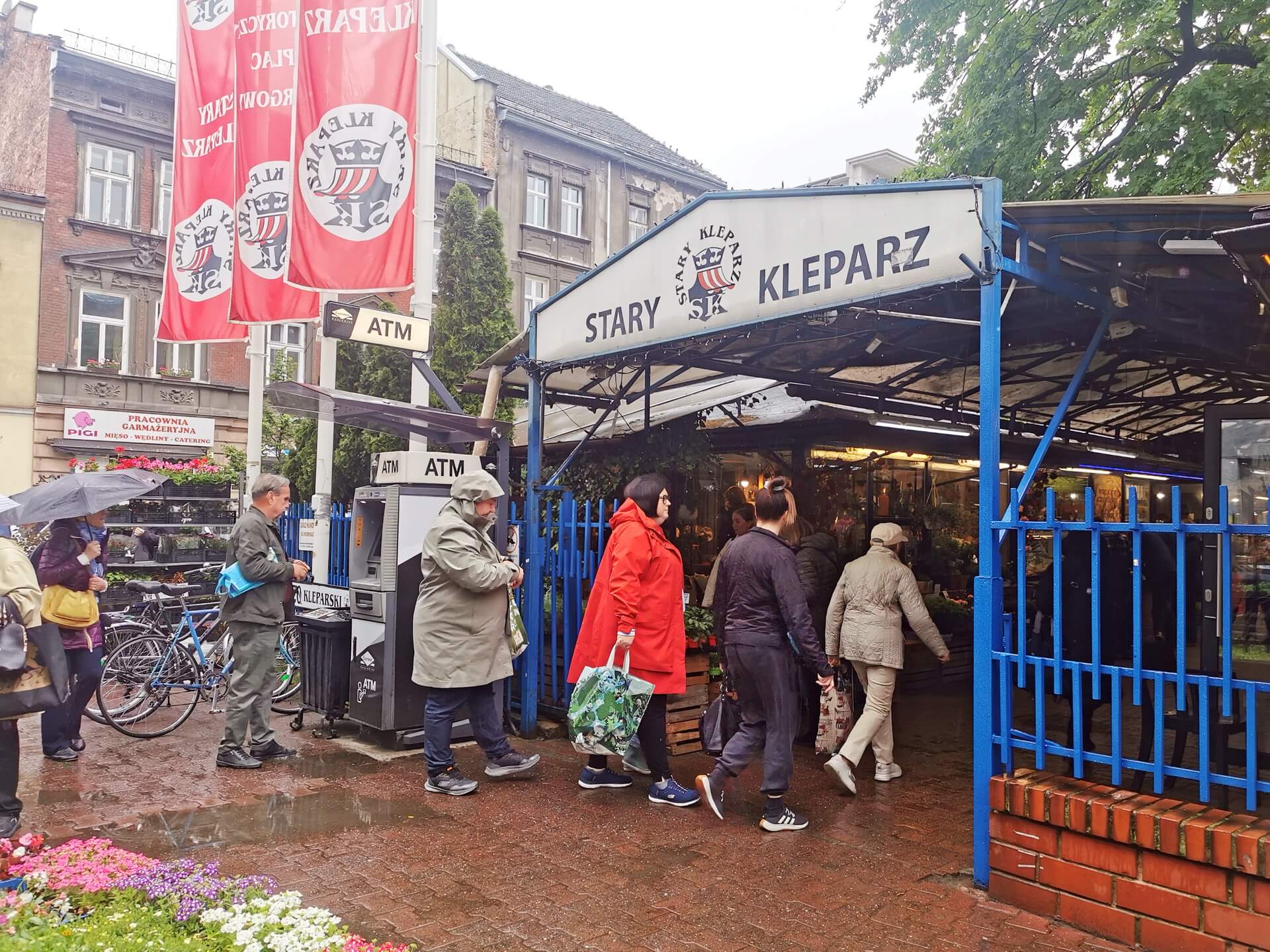
Rain rarely deters the morning crowd. The metal roof provides just enough cover to navigate the outer stalls without an umbrella.
The Practical Angle on Krakow Markets
Stary Kleparz makes far more sense at the beginning of a trip than at the end. I stopped by simply to look around. I quickly realised the sheer volume of excellent, reasonably priced food makes it the perfect place to stock a rented apartment kitchen.
Go to the Sukiennice to appreciate the 16th-century architecture. But Stary Kleparz is where people arrive carrying shopping lists, not cameras.
If the idea of deciphering handwritten cheese signs and navigating the meat counters feels a bit daunting, I highly recommend booking a Guided Polish Food and Culture Tour. Instead of trailing behind an umbrella on a generic historical walk, you actually get to taste the regional produce, understand the local culinary rhythm, and let an expert handle the cash transactions. It is the best way to bridge the gap between sightseeing and actual eating.
Quick Navigation Tips:
- Sukiennice (Cloth Hall): Located in the middle of Rynek Główny. Almost all vendors accept cards. Great for photos, less so for everyday shopping.
- Stary Kleparz: Located at Rynek Kleparski, this is the most authentic of all Krakow markets. Go in the morning; by early afternoon, the best produce is gone.
- Crucial Tip for Stary Kleparz: Bring small denominations of Polish Złoty (PLN) in cash. The perimeter kiosks might take cards, but the farmers selling the best produce absolutely will not.
Looking for more of Kraków’s physical reality? If you want to skip the polished tourist circuits, read my deep dive into the 9 unexpected realities of modern Poland. For more specific insights on local craft and heritage, you can also explore my visit to the Kraków Ethnographic Museum or step inside a working stained glass workshop.

