











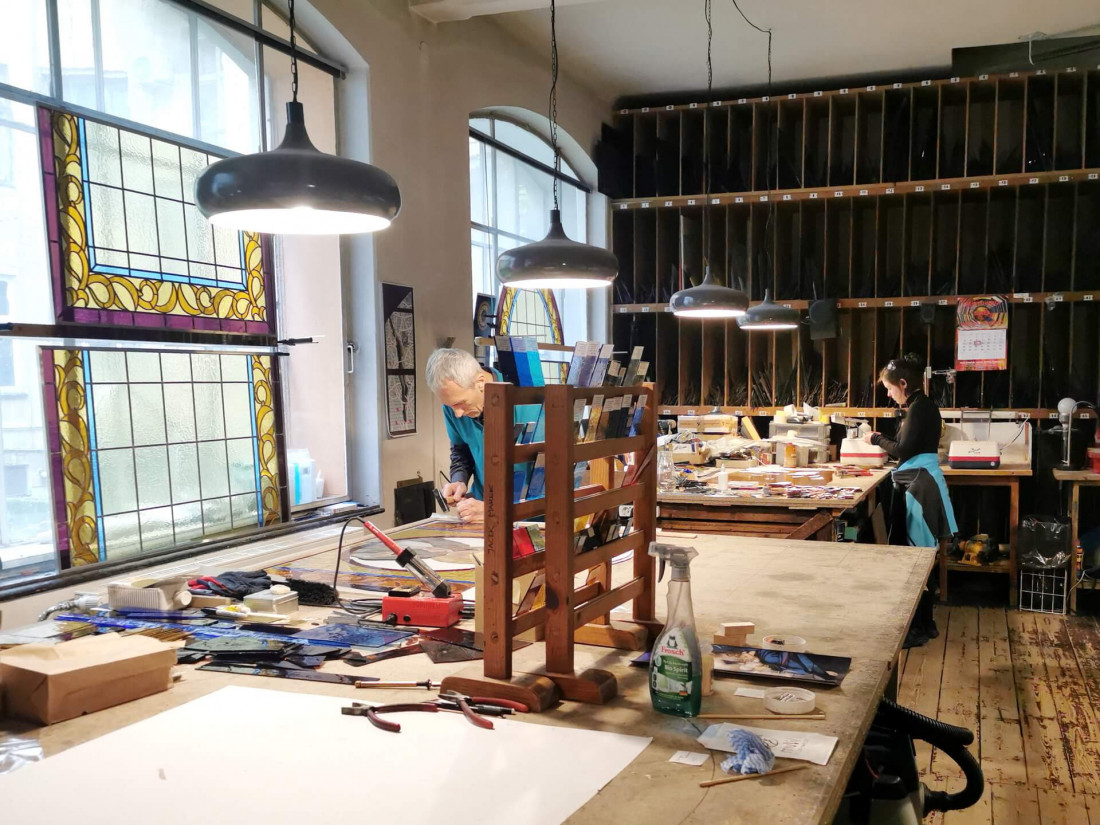
Most museums preserve finished beauty. The Stained Glass Museum Krakow – officially Muzeum Witrażu – reveals the raw reality, the clutter, and the craftsmanship behind it.
If you have spent any time in Krakow, you have probably stood inside the Franciscan Basilica just outside the Main Square, staring up at Stanisław Wyspiański’s stained glass windows. But stepping into this heritage workshop brings the craft back down to earth.
You simply walk between old wooden workbenches, listening to the dry scrape of glass cutters.
In Brief:
- Location: Aleja Krasińskiego 23, just outside Krakow’s Old Town.
- Tickets: 80 PLN for the English-language tour (60 PLN in Polish). There are no audio guides here – you are paying for a live specialist, which explains the slight premium for an English-speaking guide. Book via the official website.
- How long does it take? Around 45–50 minutes.
- Easy to combine with: Wawel Castle or the National Museum nearby.
- Good to know: You can only visit as part of a guided tour.
What the Krakow Stained Glass Museum Visit Actually Feels Like
Expecting Windows, Finding Fragments
The core of the experience is that you are temporarily entering someone else’s working environment. While I cannot say how far the entire complex stretches, the tour itself leads you through an exhibition space and two main halls.
Walking across the creaking wooden floors, I had expected rooms packed with glowing, finished panels. Instead, you see fragments in progress: a piece of a saint’s face stacked against a wall, geometric shards waiting to be fitted, and enormous windows designed to bring in as much daylight as possible.
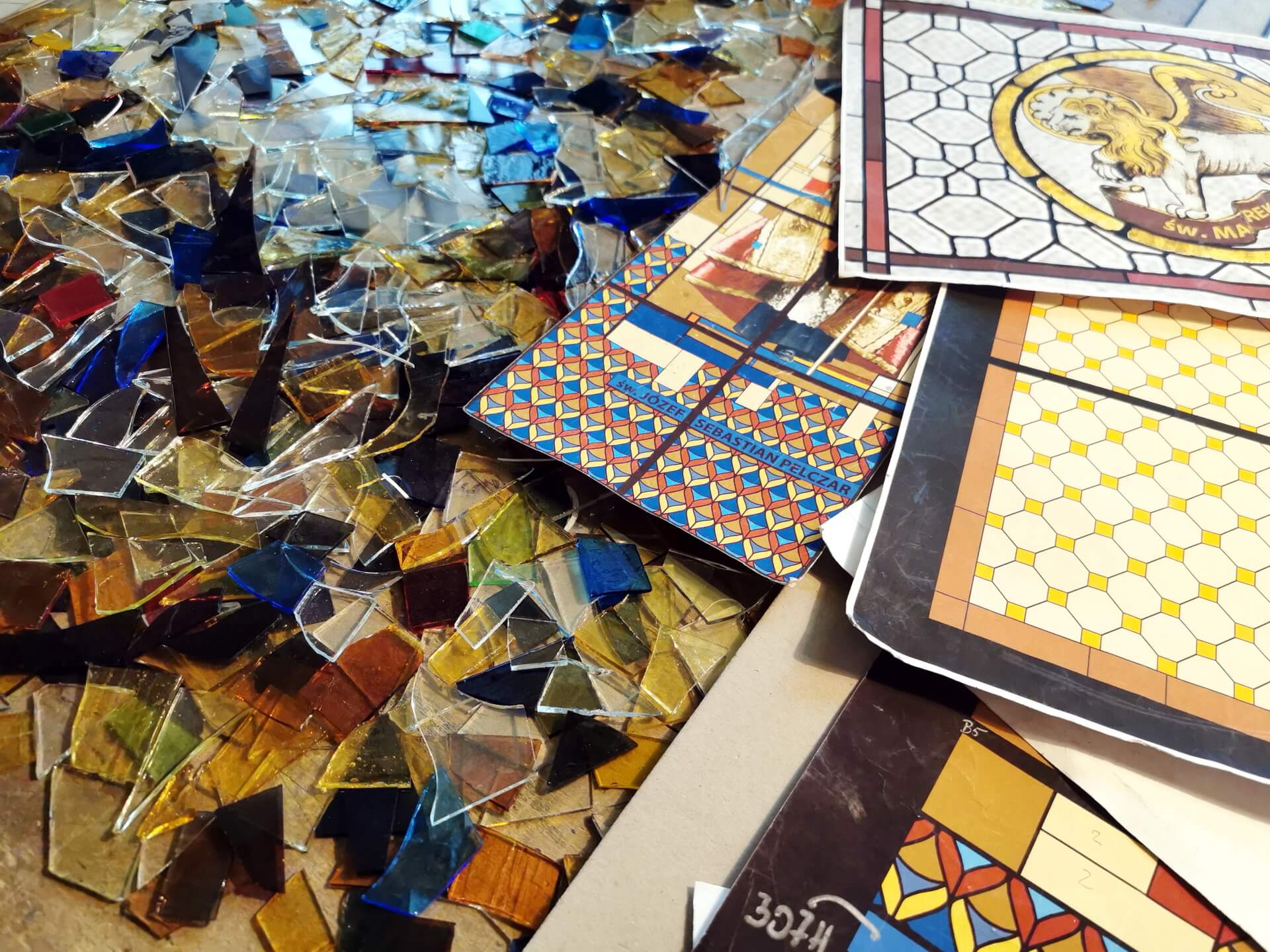
Hundreds of tiny glass pieces cover the tables like oversized confetti — except every fragment already has a very precise future home.
These halls feel busy with materials but slightly chaotic, with narrow passages between the tables and half-finished glass leaning against the walls.
The illusion that you have stepped back in time is almost perfect – broken only by the brightly plastic spray bottles of supermarket glass cleaner sitting on almost every bench.
The Sound of Glass and Whispering Tourists
The strangest part was watching the tourists. Our group of twenty people gradually started whispering as if we had walked into a library, while the craftsmen largely tried to ignore us, occasionally pausing when someone bent too far over a table for a photo.
Almost everyone became oddly fascinated by the towering racks of coloured glass sheets, even though many of them looked completely ordinary – the kind of glass you could easily buy in an art supply shop. What surprised me most was learning that if the exact colour does not exist commercially, the studio sometimes creates custom shades specifically for restoration work.
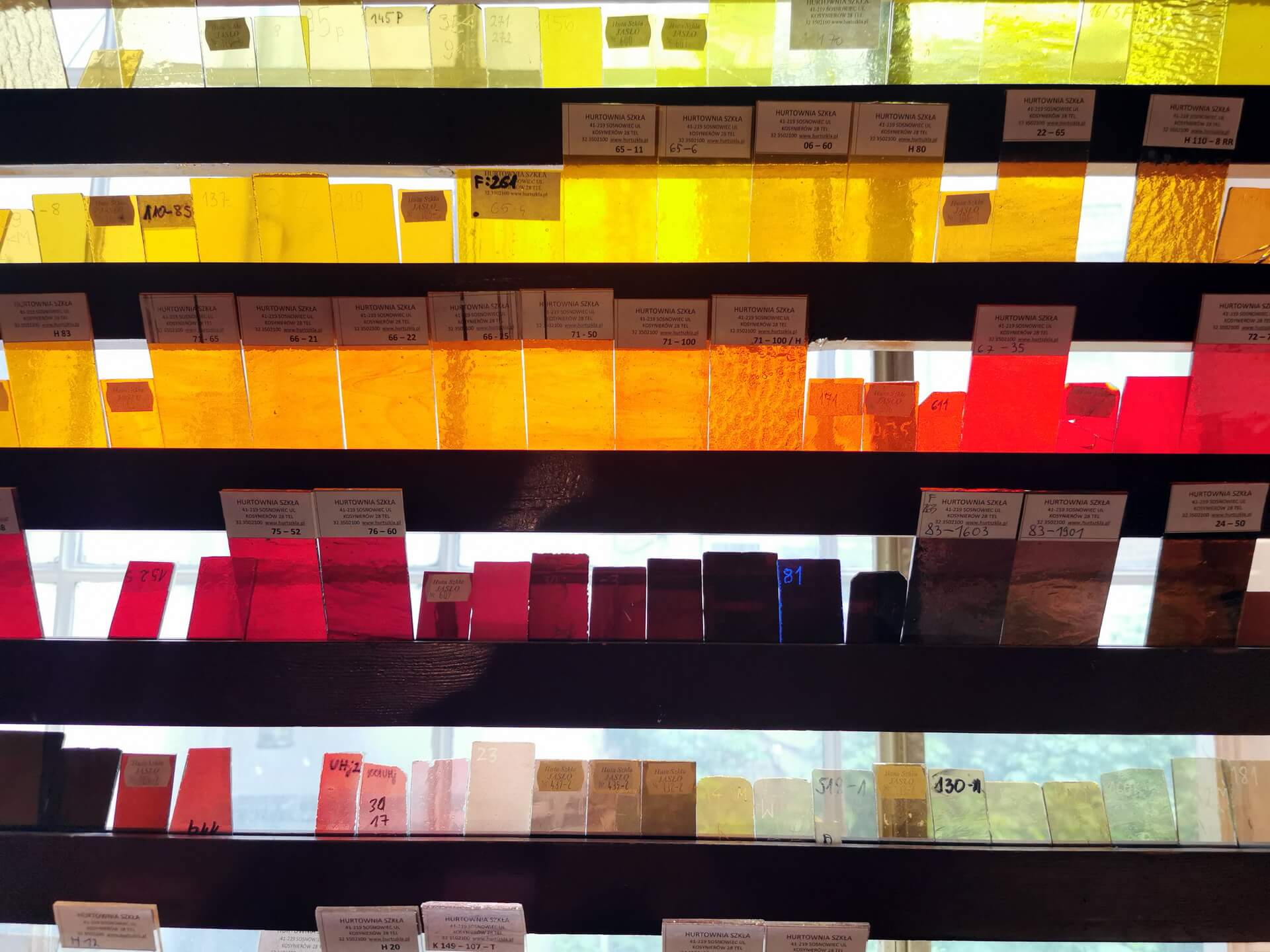
I honestly thought these shelves would look boring in photos. Five minutes later, half the tour group – including me — was standing there taking pictures of coloured glass samples.
The space is unexpectedly quiet – more of a focused environment than a loud factory. While the team numbers around ten people in total, on the weekend of my visit, there were only three artisans present alongside our guide.
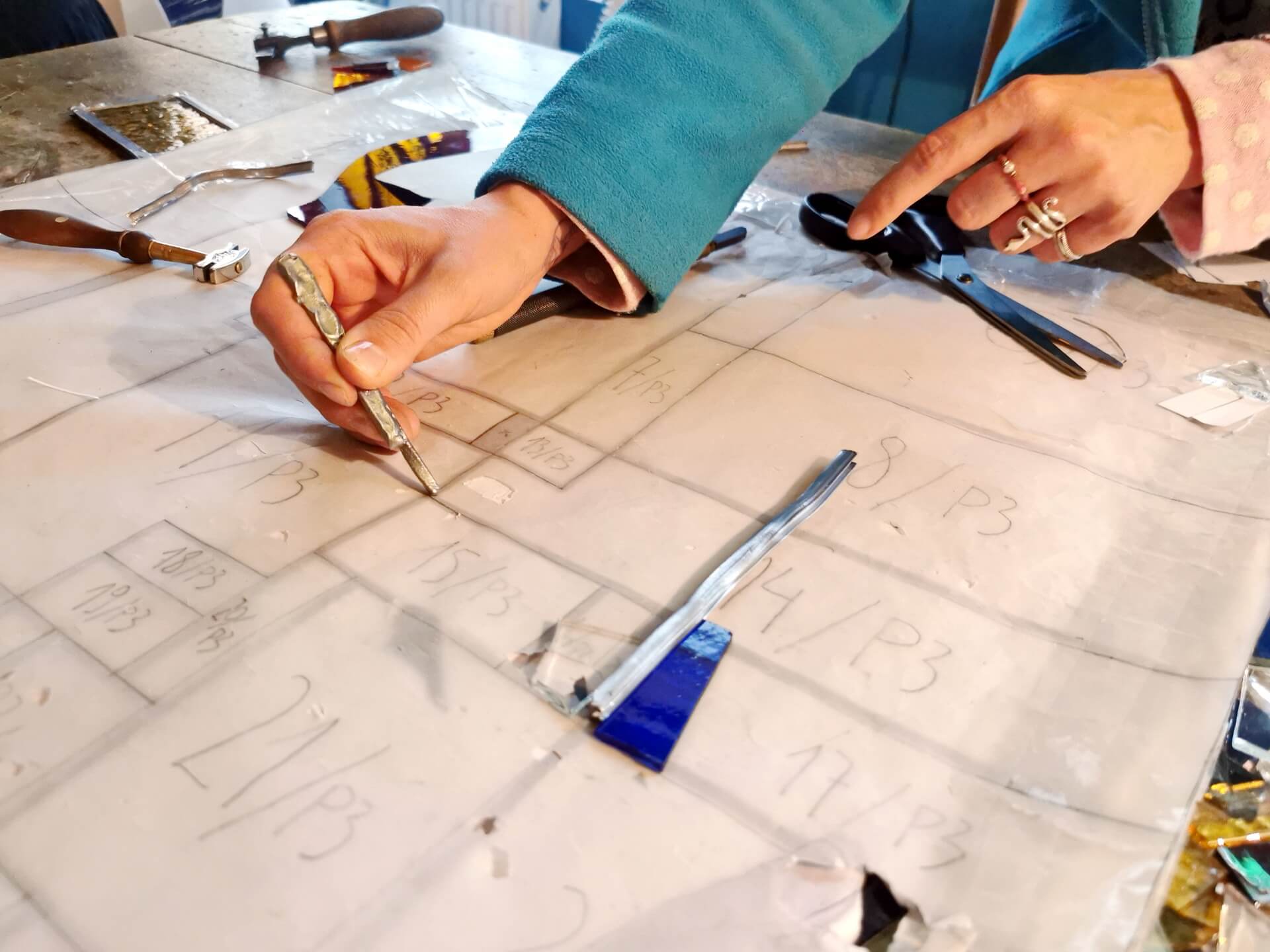
Before the glass even gets cut, every shape has to be traced and numbered by hand – a process that looks strangely calm until you realise how easy it would be to ruin the entire composition.
As we stood there watching them, the air carried the dry scent of old wood, and the sharp scrape of the cutter was the only prominent sound. People here are actually doing their jobs, and we were moving through their space, trying not to get in the way – though judging by the occasional distinctly unimpressed look, we were failing miserably.
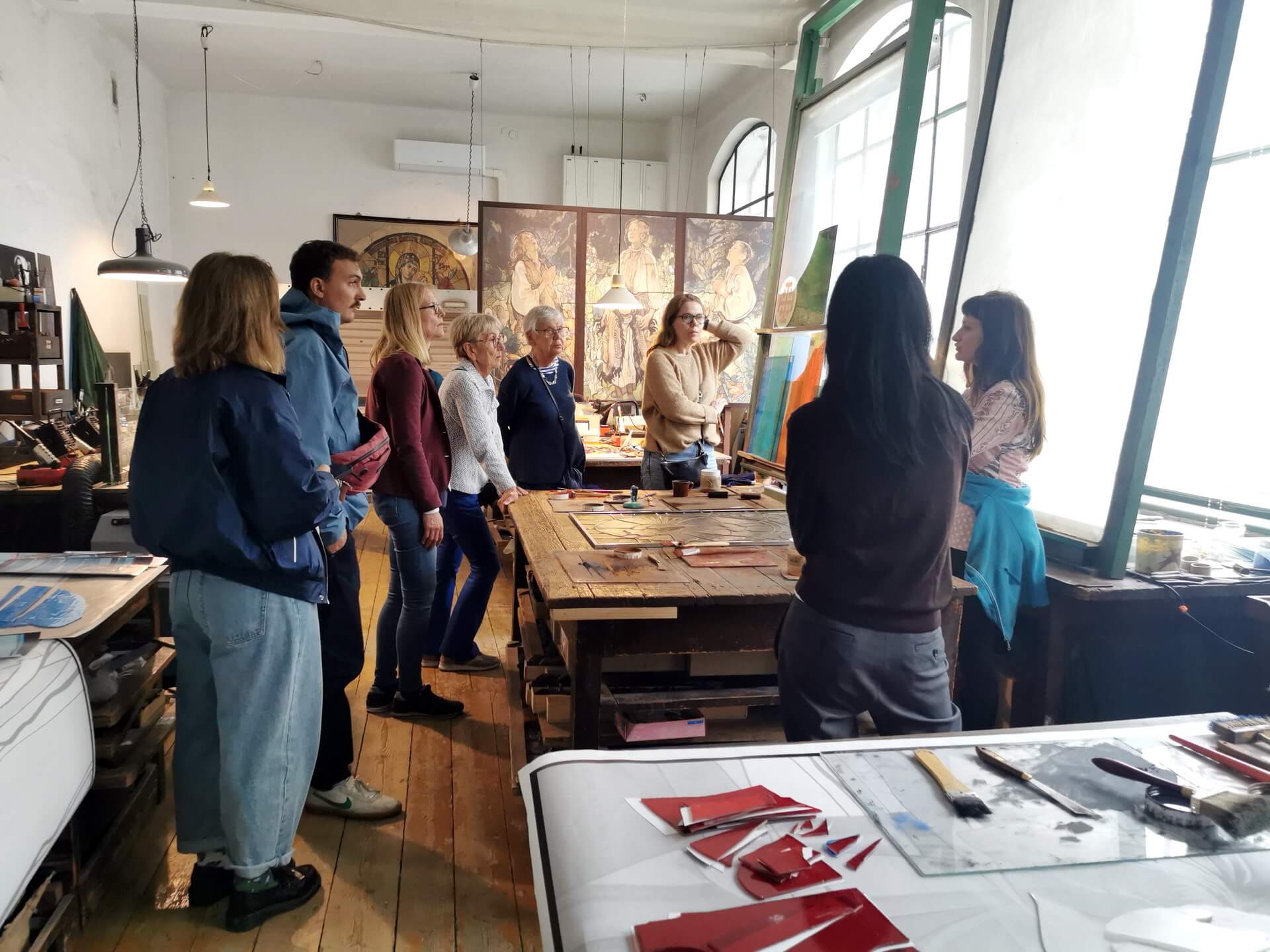
By this point, several visitors had clearly moved from “interesting to watch” to “maybe I should try this myself.
A Century on the Same Worktables
Stained glass workshops are not built to withstand wars. Looking around at the fragile glass and old wooden tables, it is hard to believe the studio survived the 20th century intact.
Established by architect and entrepreneur Stanisław Gabriel Żeleński in 1902, the studio became a major hub for the Young Poland (Młoda Polska) movement – essentially the Polish equivalent of Art Nouveau.
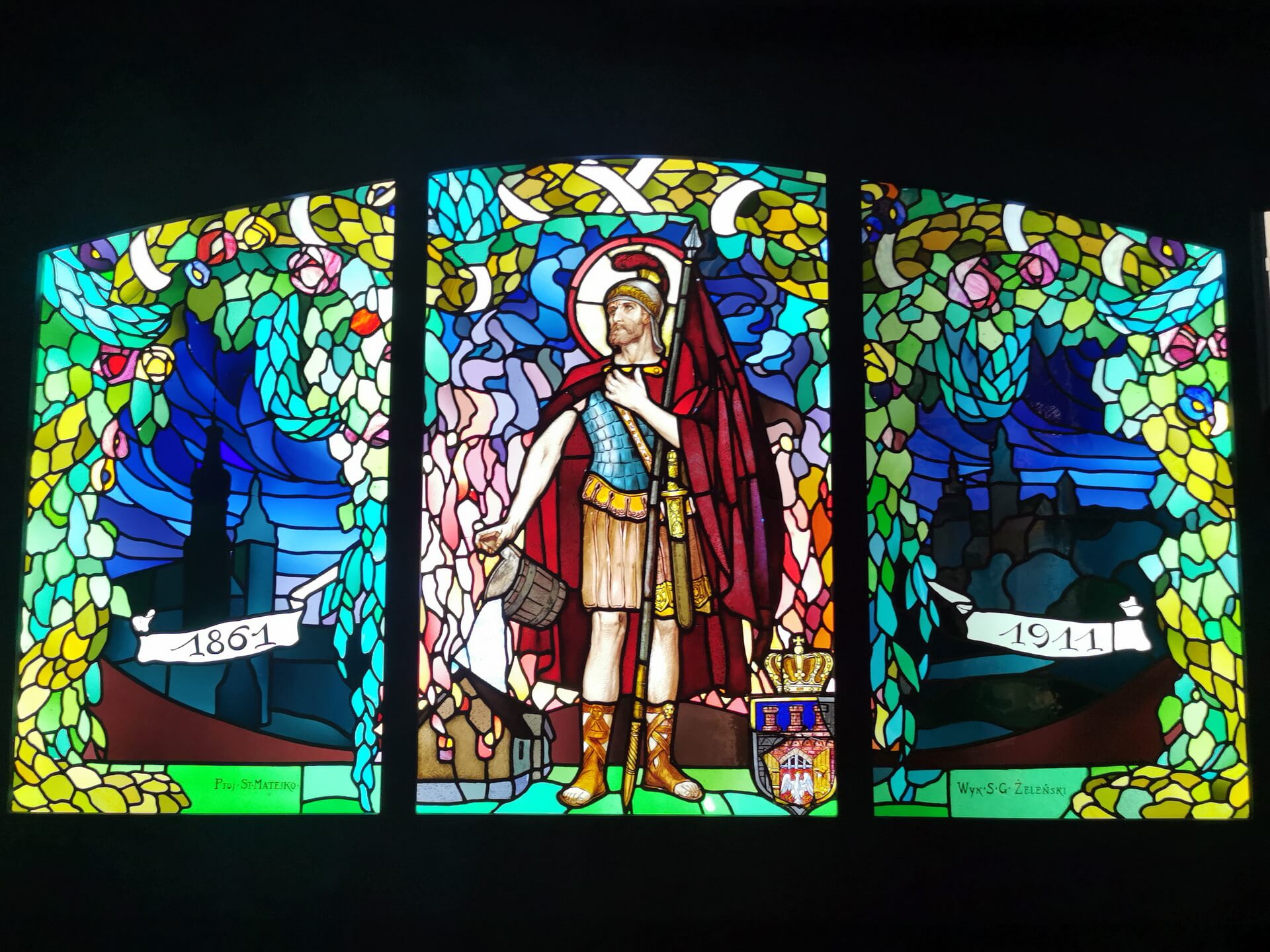
A surviving piece from the Żeleński workshop, created long before the studio itself became a museum.
When Żeleński died in the First World War, his wife, Iza Żeleńska, took over in 1914, managing a factory years before Polish women secured the right to vote.
The studio made it through both World Wars and kept functioning right through the communist era. Following the Soviet era, the workshop was purchased by an artist who preserved its original function rather than letting it close. Today, it operates independently, restoring historic pieces and cutting new glass on the exact same tables used a century ago.
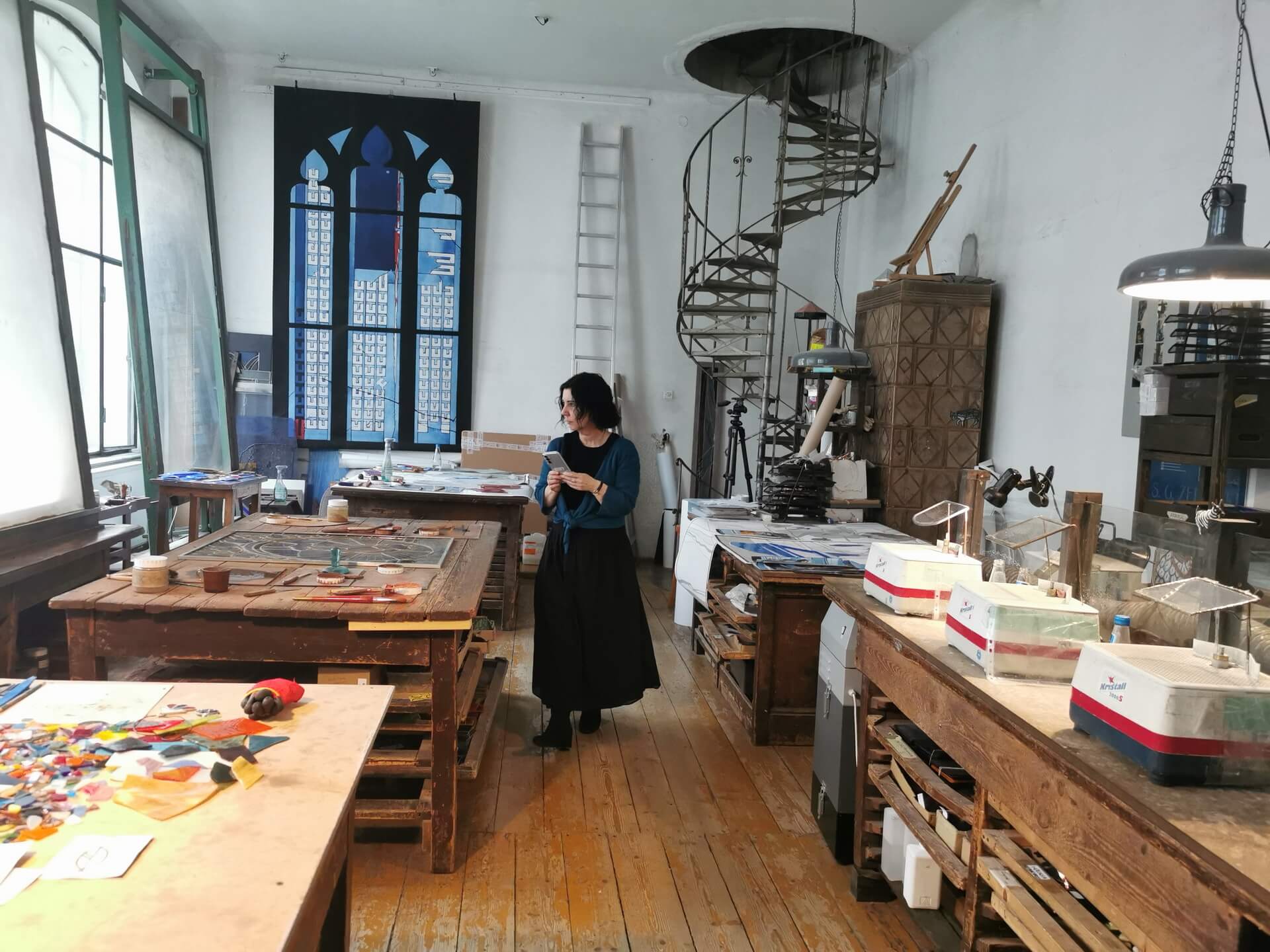
The workshop feels less like a museum reconstruction and more like a place where everyone simply stepped out for lunch.
The Practical Details: What to Expect
Moving around the workshop: While you can only visit with a guide, it does not feel overly restrictive. You are free to walk around and get a close look at the worktables. Just keep your hands to yourself — it is a real workspace full of raw glass and lead. You can take photos (without flash), but they do ask that you do not film the artisans while they work.
Stairs and accessibility: The studio is located in a 1906 building without a lift, and moving between the workshop halls involves a spiral staircase.
Booking your slot: When I visited in May 2026, the English-language tour filled up quickly, so booking a few days ahead online is probably wise – especially during the summer season.
The environment: It is an excellent rainy-day activity in Krakow, especially if you need a break from churches, crowds, and long walking routes. However, keep the season in mind – without modern air conditioning, the rooms can feel quite warm during a summer heatwave.
Who is it for? You absolutely do not need an art history background to enjoy it. If you like seeing the physical mechanics of how things are built, it is a fascinating stop. Surprisingly, well-behaved dogs are welcome; the staff actively accommodate them and even provide water bowls.
Is the museum café worth staying for? Probably not as a standalone destination, but it is a pleasant place to wait for your tour or for less museum-oriented family members to spend an hour with coffee and books while you explore the workshop. The attached shop also sells small, locally made glass items instead of the usual mass-produced souvenirs.
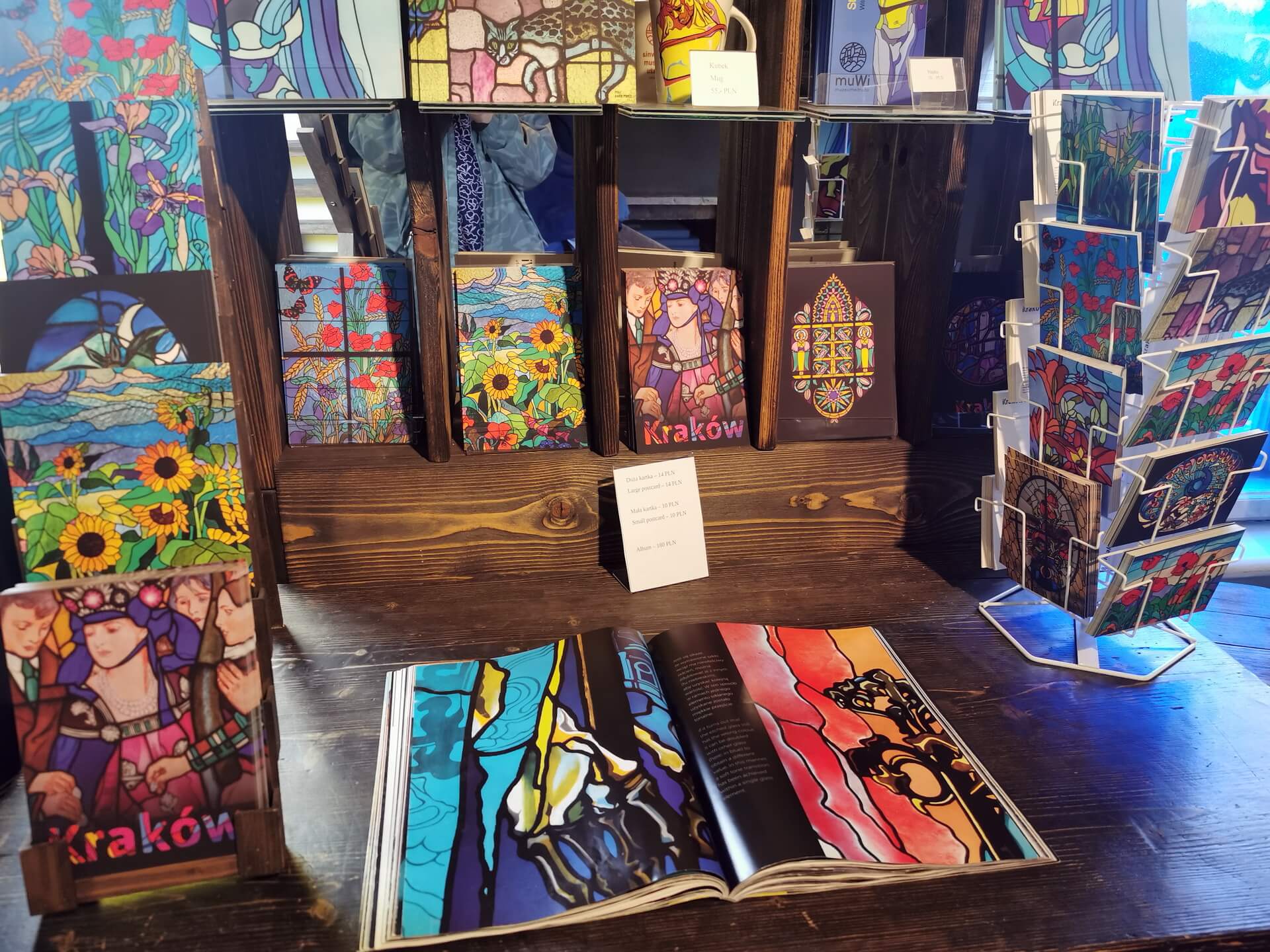
The colours in the shop are almost aggressive after the muted wood-and-glass tones of the workshop upstairs.
Mark Your Landing Spot: Is Muzeum Witrażu Worth It?
If you expect a large interactive museum filled with spectacular finished windows, you may leave slightly disappointed. The experience is smaller, quieter, and far more workshop-oriented than most visitors imagine.
But if you enjoy seeing how things are physically made – and want a break from Krakow’s more crowded attractions — it becomes one of the city’s most unexpectedly memorable visits.
The real appeal is not visual overload. It is the rare chance to step inside a living craft studio that still feels genuinely alive. After an hour here, stained glass across Krakow stops looking purely decorative. You start noticing the labour behind it — the solder, the cuts, the weight of the glass itself.
More From This Trip
If my approach to exploring Poland resonates with you, you might find these guides useful:
- The Big Picture: Read my deep dive into the 9 unexpected realities of modern Poland—a guide to skipping the polished tourist circuits and understanding the actual, unfiltered local life.
- Industrial & Historic Sites: For more hands-on exploration, see my notes on the sheer industrial scale of the Wieliczka Salt Mine or the rural, meditative trails of Kalwaria Zebrzydowska.

