










If you have already navigated Kraków’s main sights – and perhaps my nine defining quirks of Kraków – you inevitably reach a point where you just want to walk a historical street without dodging tour groups and logistical drama.
Tarnów is the antidote. It does not demand a frantic pace or constant ticket-scanning. Instead, it delivers a complex twentieth-century legacy built into the physical reality of its streets, and a city centre that hasn’t been entirely handed over to the souvenir trade.
Tarnów in Brief:
- Distance: 80 km east of Kraków.
- Travel time: 55 minutes by Intercity train, or 80–90 minutes by regional train.
- Ideal duration: 5 to 6 hours.
- Best for: Renaissance architecture, Jewish history, Roma culture, and slow travel.
- Key highlights: The Main Square (Rynek), the Mascaron Trail, the Tarnów Ethnographic Museum, the Bimah, and the Jewish Cemetery.
Why Tarnów Feels Unexpectedly Italian
The 15-minute walk from the railway station to the centre is unremarkable, particularly if it is drizzling. On a Sunday morning, you will quickly notice that shops are firmly shut and local cafés are in no rush to open.
Looking for a morning coffee along the main street, I stepped into a Georgian bakery. Strangely – though not unusually for these hole-in-the-wall bread shops in Poland – they served neither tea nor coffee.
However, their baklava looked so unusual compared to the standard version that I bought a piece out of sheer curiosity.
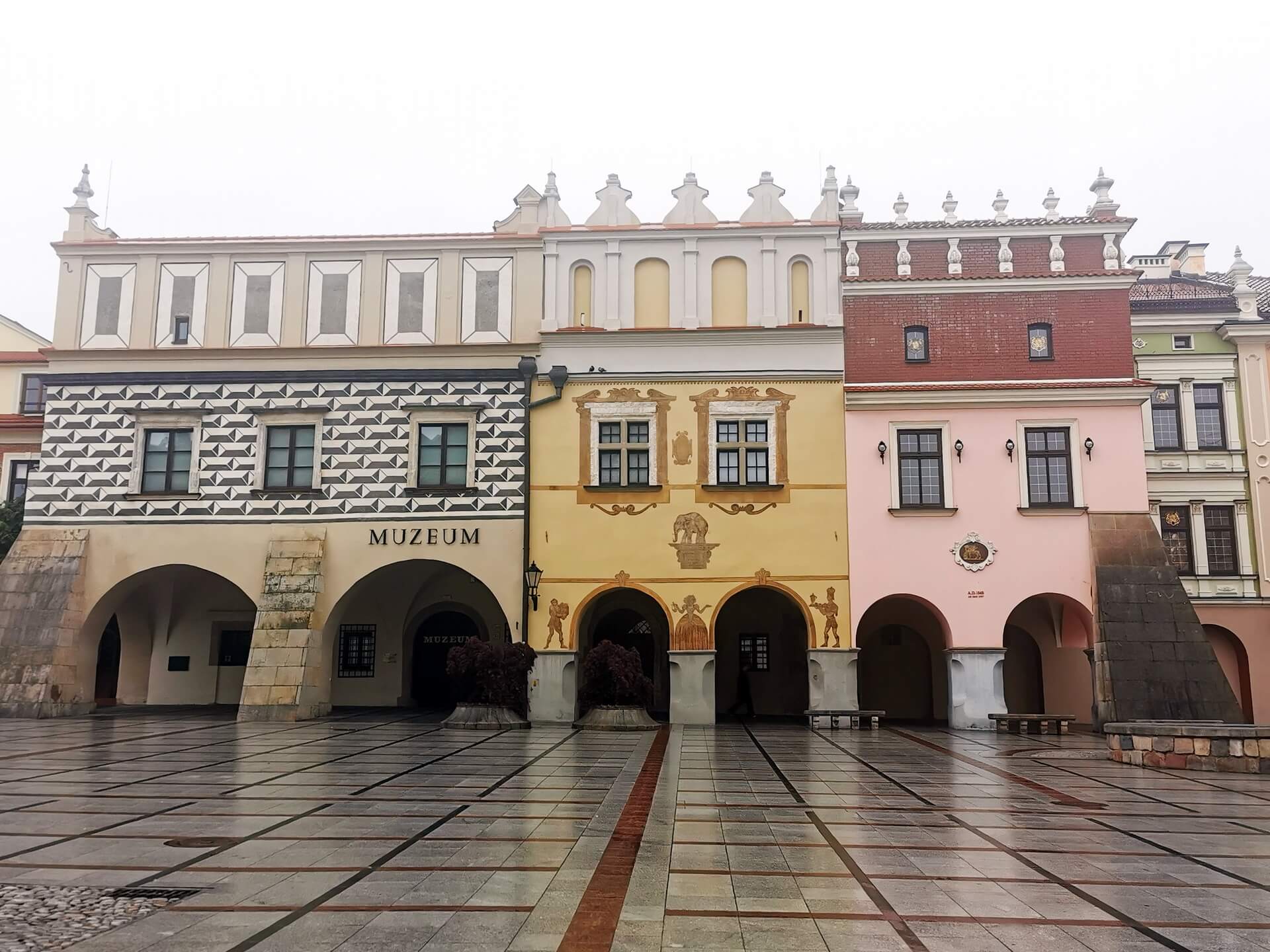
Painted façades and deep arcades give Tarnów’s Rynek its unexpected southern-European mood.
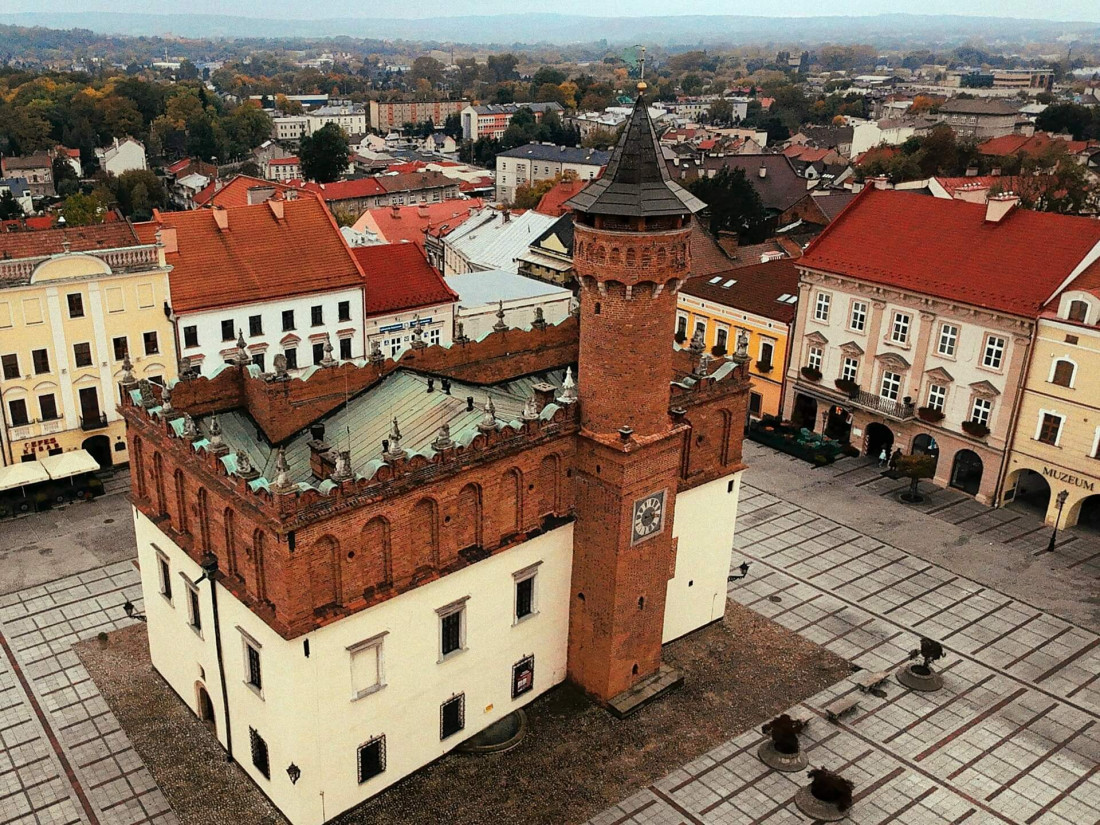
Box of baklava in hand, I finally reached the Main Square (Rynek) – and the picture changed completely. The Rynek feels surprisingly Mediterranean. The Italian architect Jan Maria Padovano helped give the town hall its Renaissance form. Around it, arcaded merchant houses complete the illusion.
Several cafés had outdoor seating, but the tables stood wet and deserted that Sunday morning. I had the entire Renaissance view to myself while waiting for the museums to open.
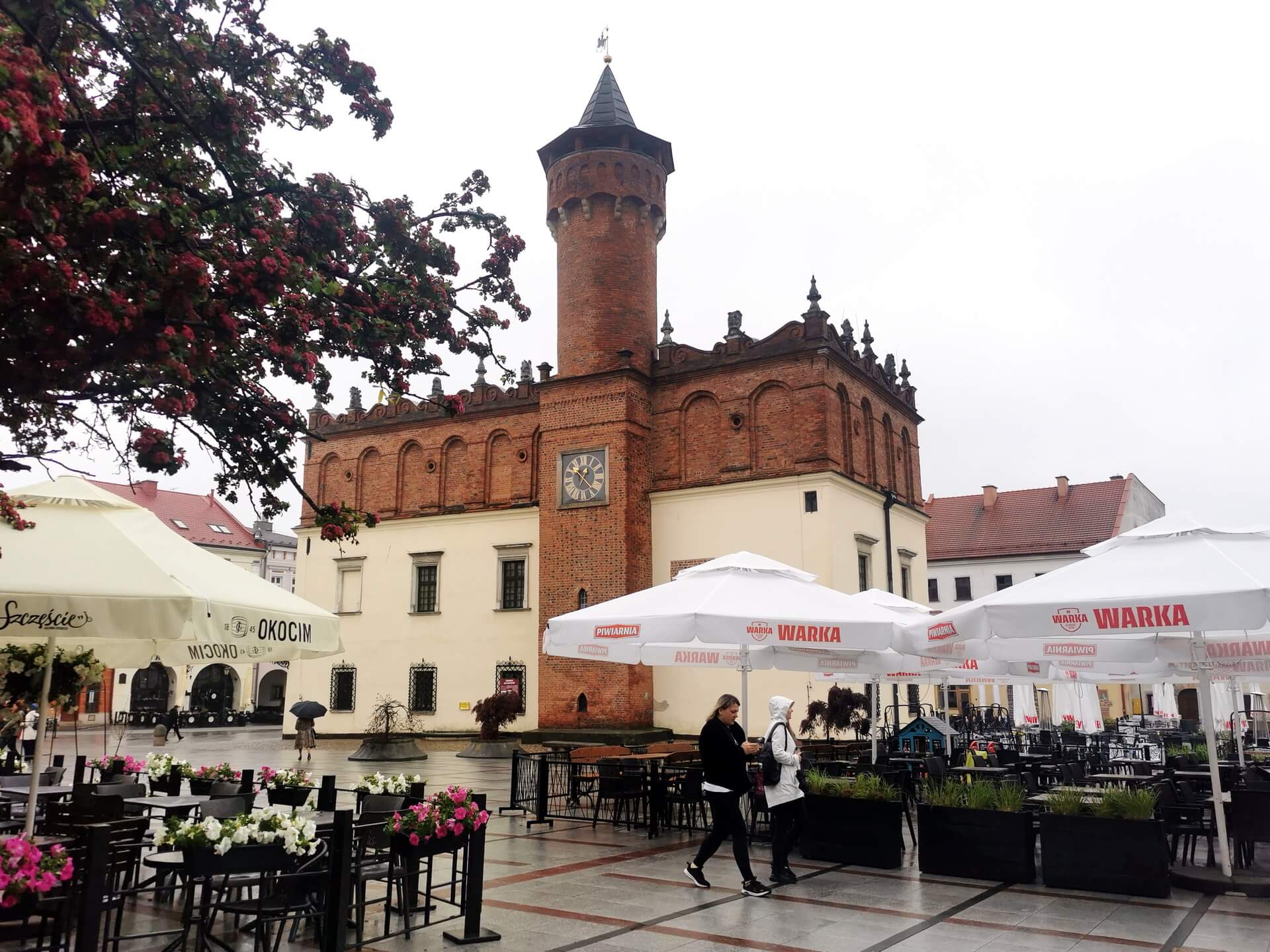
Rain, empty café terraces, and a Renaissance town hall — not the worst way to have a Polish square almost to yourself.
Tarnów’s Mascaron Trail
Tarnów also has its own small street characters. At first glance, they look like the city’s answer to gnomes. Technically, they are maszkarony – small mascaron figures inspired by the grotesque heads on the town hall attic.
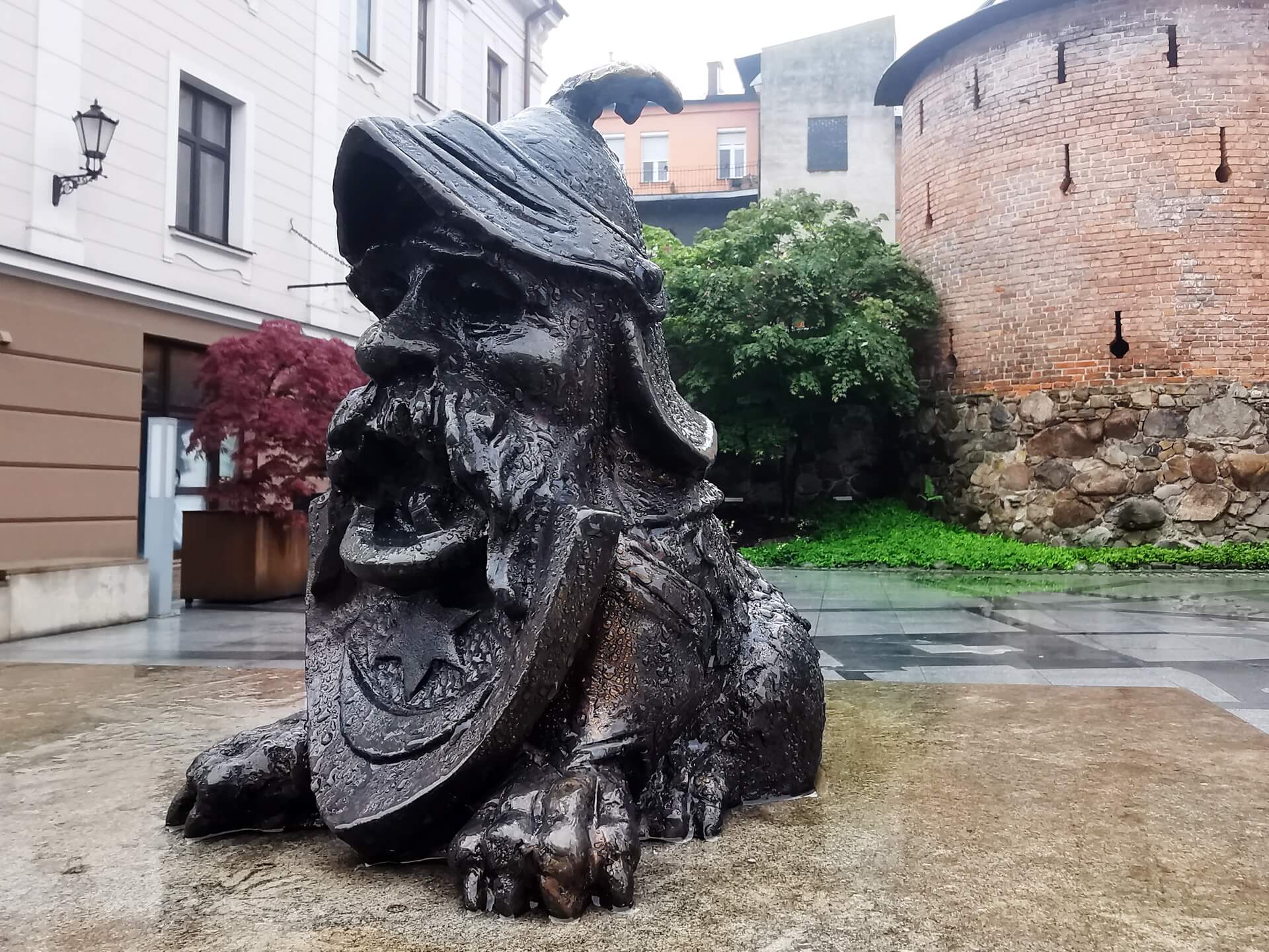
Not quite a gnome, not quite a gargoyle – Tarnów’s mascarons bring a strange little theatre to the old town.
The current Mascaron Trail leads you past 19 stops around the old town. You start noticing them near squares, public buildings, and street corners. They add a playful layer to a city of Renaissance beauty and difficult history.
What to See in Tarnów in One Day
Tarnów does not demand frantic sightseeing. You can comfortably cover the essentials at a walking pace.
Jewish Tarnów and the Bimah
Before the Second World War, Jewish citizens made up nearly half of Tarnów’s population. Just off the main square stands the Bimah – an open-air brick and stone structure marking where the city’s Old Synagogue once stood.
Situated quietly among residential blocks, it is a striking remnant of a lost community.
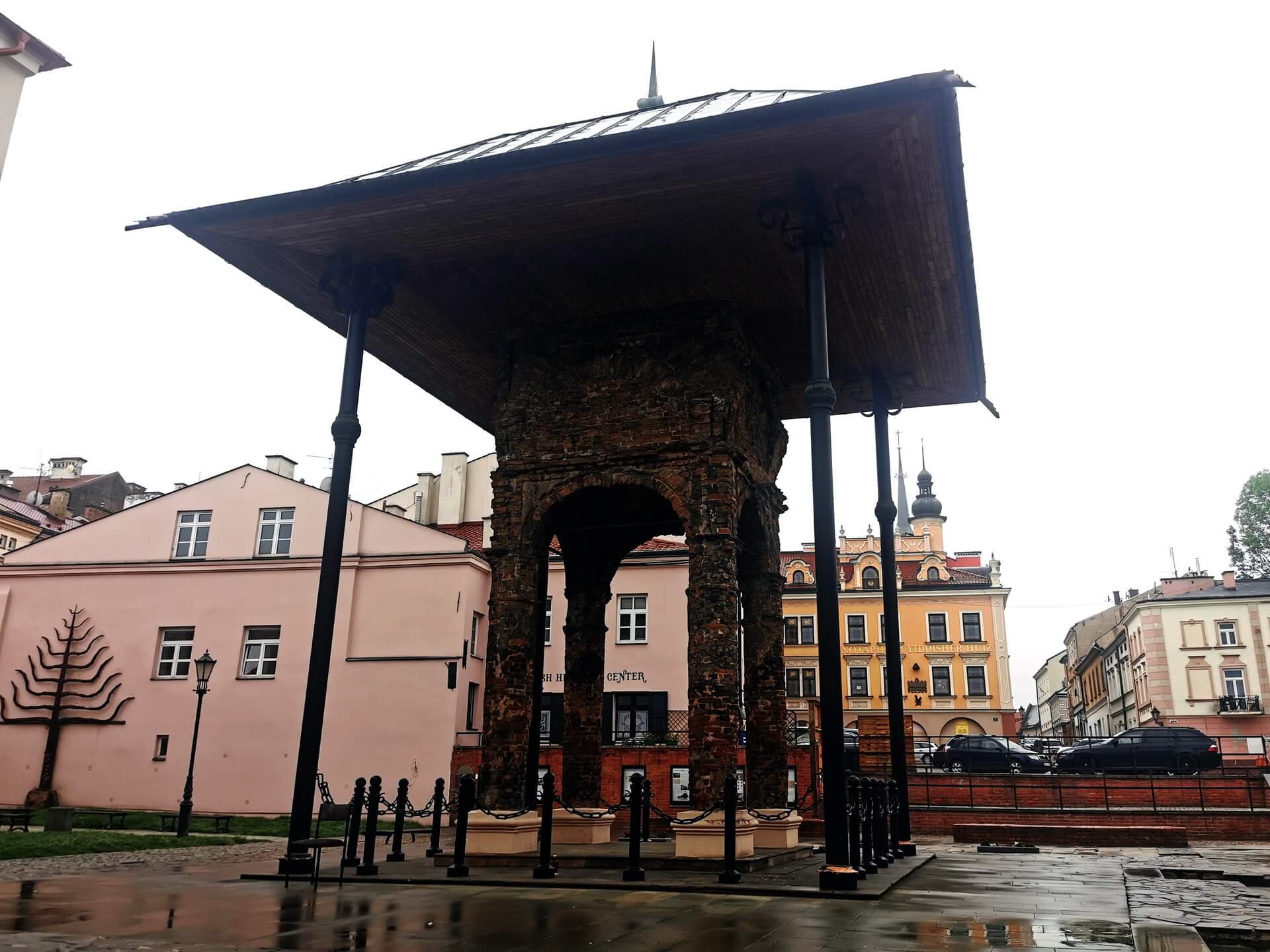
A few steps from the Rynek, this surviving Bimah turns an ordinary square into one of Tarnów’s most sobering stops.
To grasp this history more fully, walk to the Jewish Cemetery (Cmentarz Żydowski). It covers 3.2 hectares and ranks among the largest, oldest, and best-preserved Jewish cemeteries in southern Poland. Around 6,000 tombstones survive here, some dating back to the seventeenth century.
Roma History at the Ethnographic Museum
After the cemetery, the Tarnów Ethnographic Museum shifts the city’s multicultural history into a different register. It occupies a historic manor and ranks among the city’s most distinctive stops.
Its permanent exhibition explores Roma history and culture. It covers nomadic traditions and persecution during the Second World War. Many sources describe it as the first permanent display of its kind in the world.
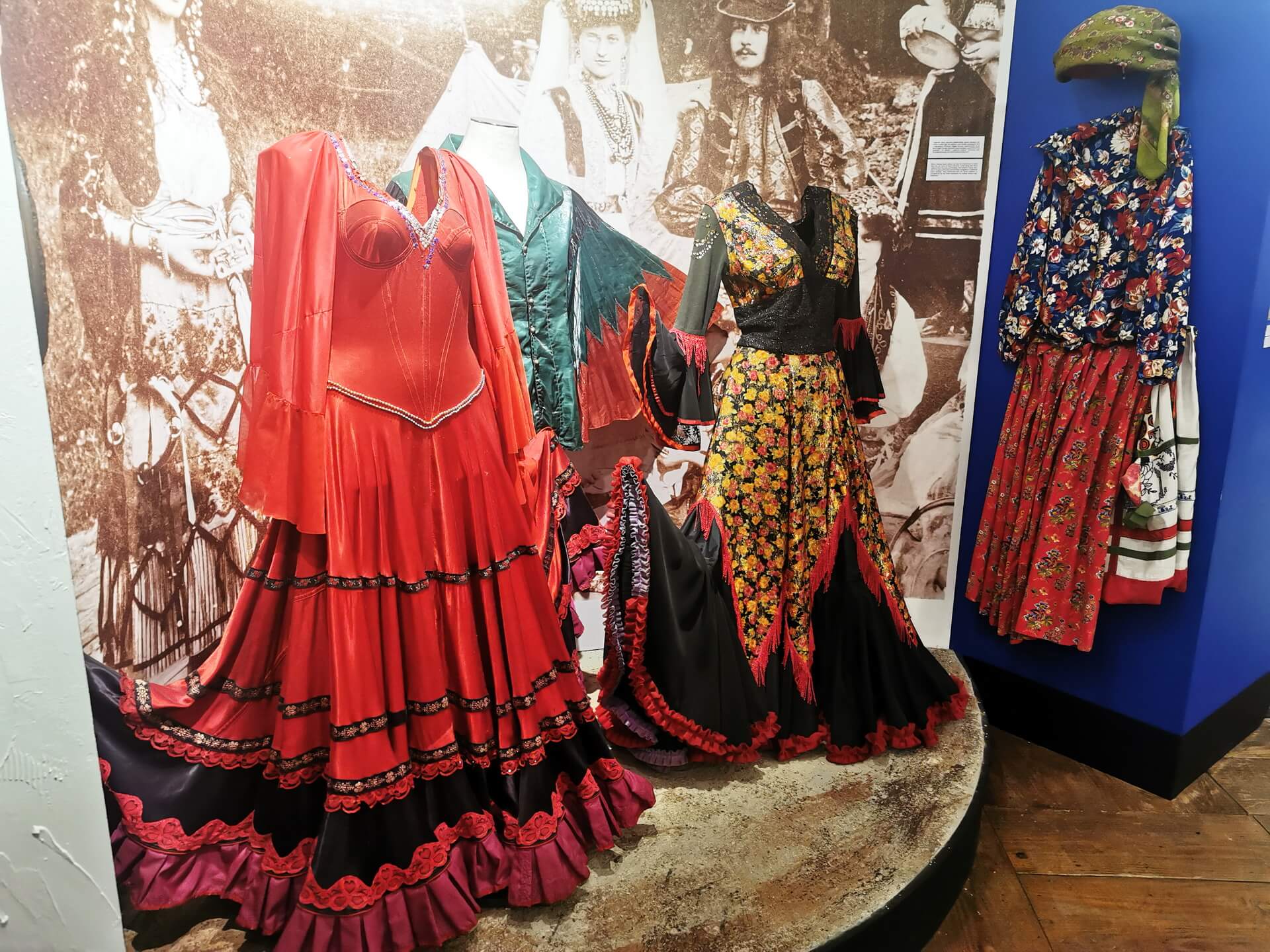
Inside, the exhibition balances colour and loss: textiles, photographs, and objects that point to a culture often reduced to clichés.
In the courtyard, you can inspect historic, brightly painted Romani caravans. You can see the main exhibition in around 20–40 minutes, but it remains one of the city’s most memorable stops.
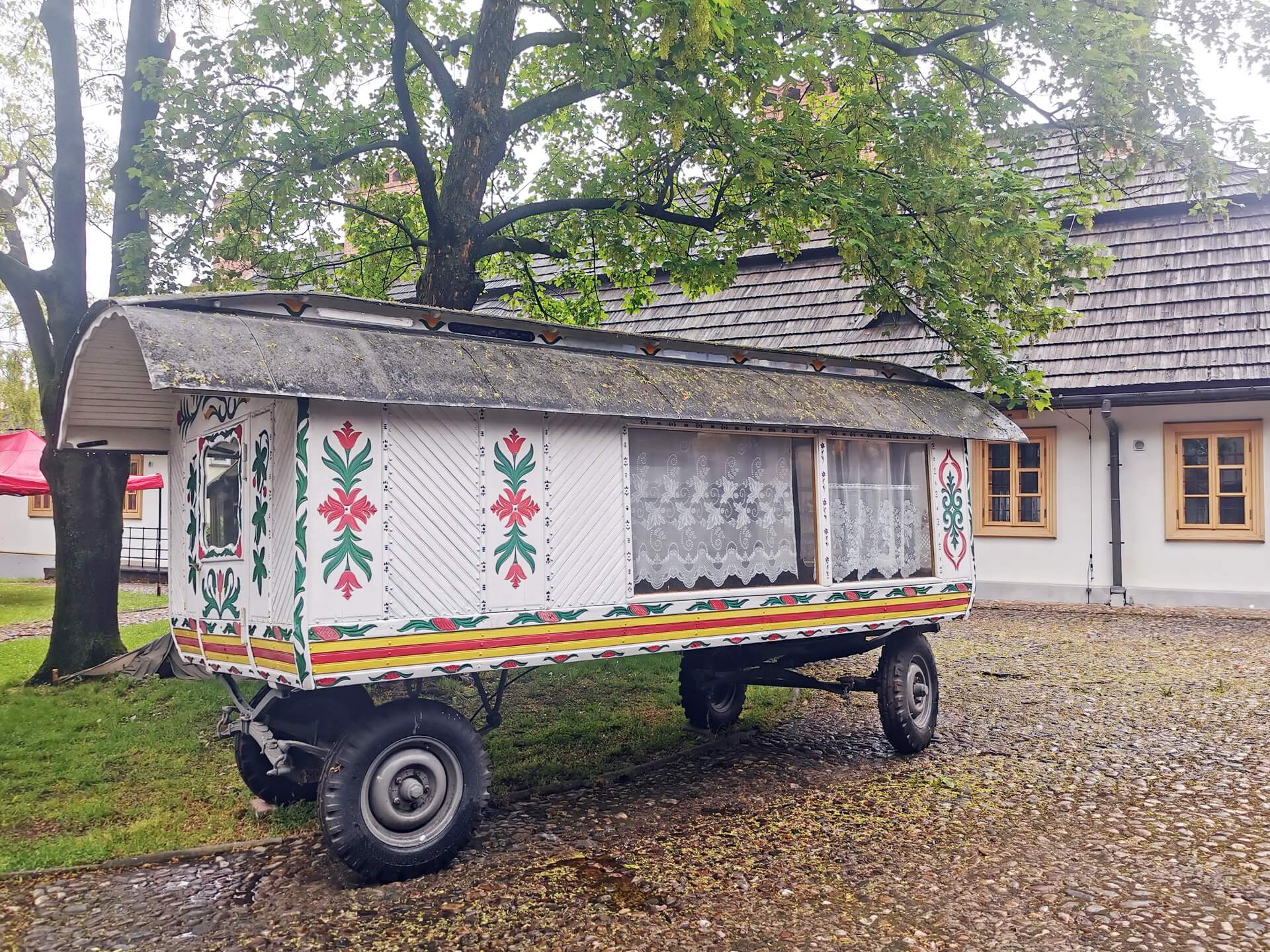
The historic caravans in the courtyard ground the exhibition, turning it into something more tangible than wall text.
Other Historic Stops Worth Considering
If you have extra time, step inside the Cathedral Basilica just off the square to see its monumental Renaissance tombs. You can also visit the Town Hall, now a branch of the regional museum, or stop by the Diocesan Museum, the oldest diocesan museum in Poland.
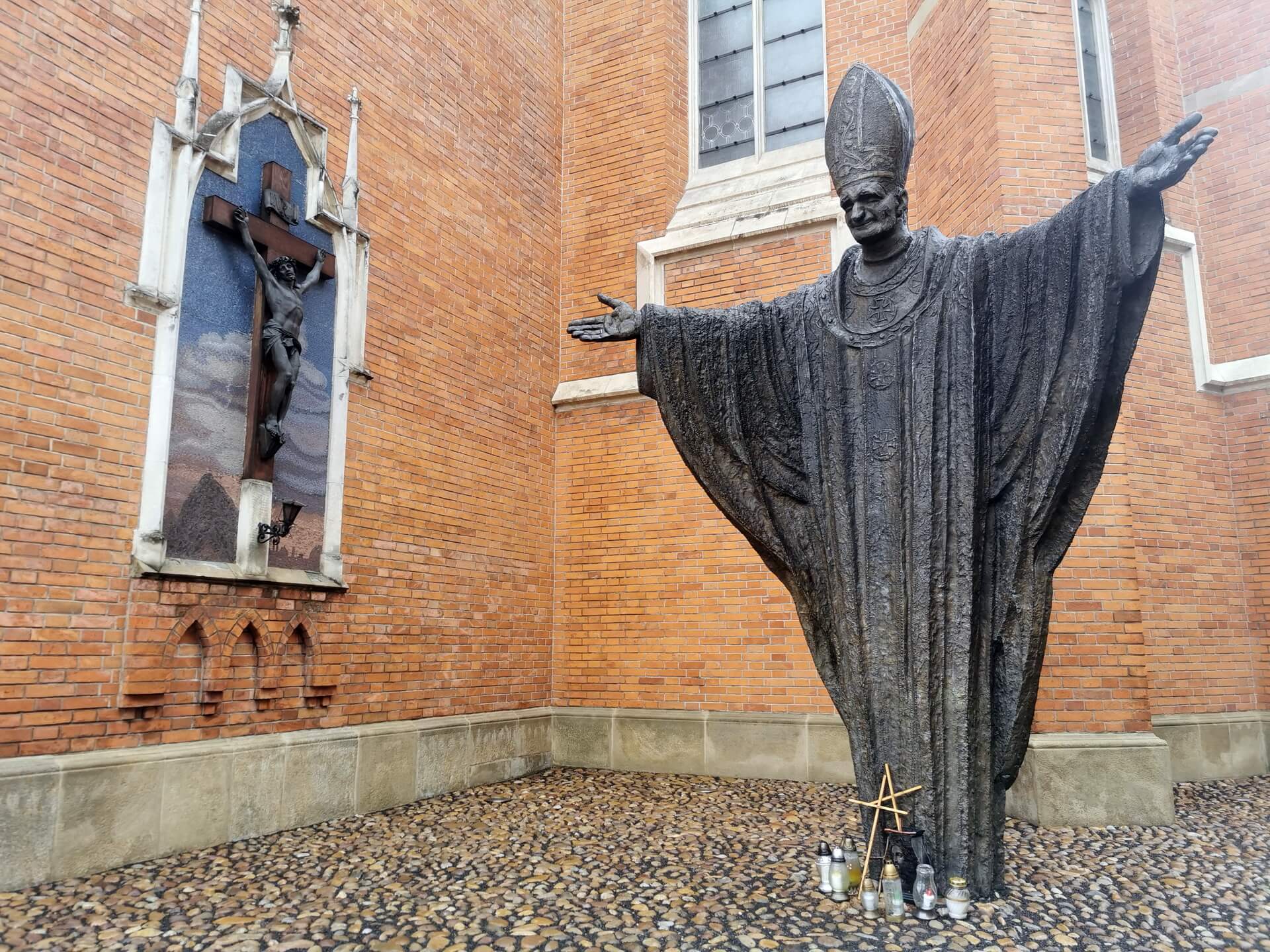
Even if you’re not religious, this sculpture holds your attention longer than expected.
For something slightly more eccentric, continue to Strzelecki Park, where General Józef Bem’s mausoleum stands on a small island in a pond.
The Wooden Church and Local Detours
Walking further out from the centre, I stumbled upon a small flower market. A couple of dozen vendors stood beside buckets of chrysanthemums and tulips. The flowers came in plain plastic wrapping that killed all florist romance. It also told you this was where locals actually shop.
A short five-minute walk from the market brings you to the Church of Our Lady of the Scapular (Kościół Matki Bożej Szkaplerznej). Inside this stunning wooden building, the quiet felt absolute. Only two young men shared the space, praying in silence.
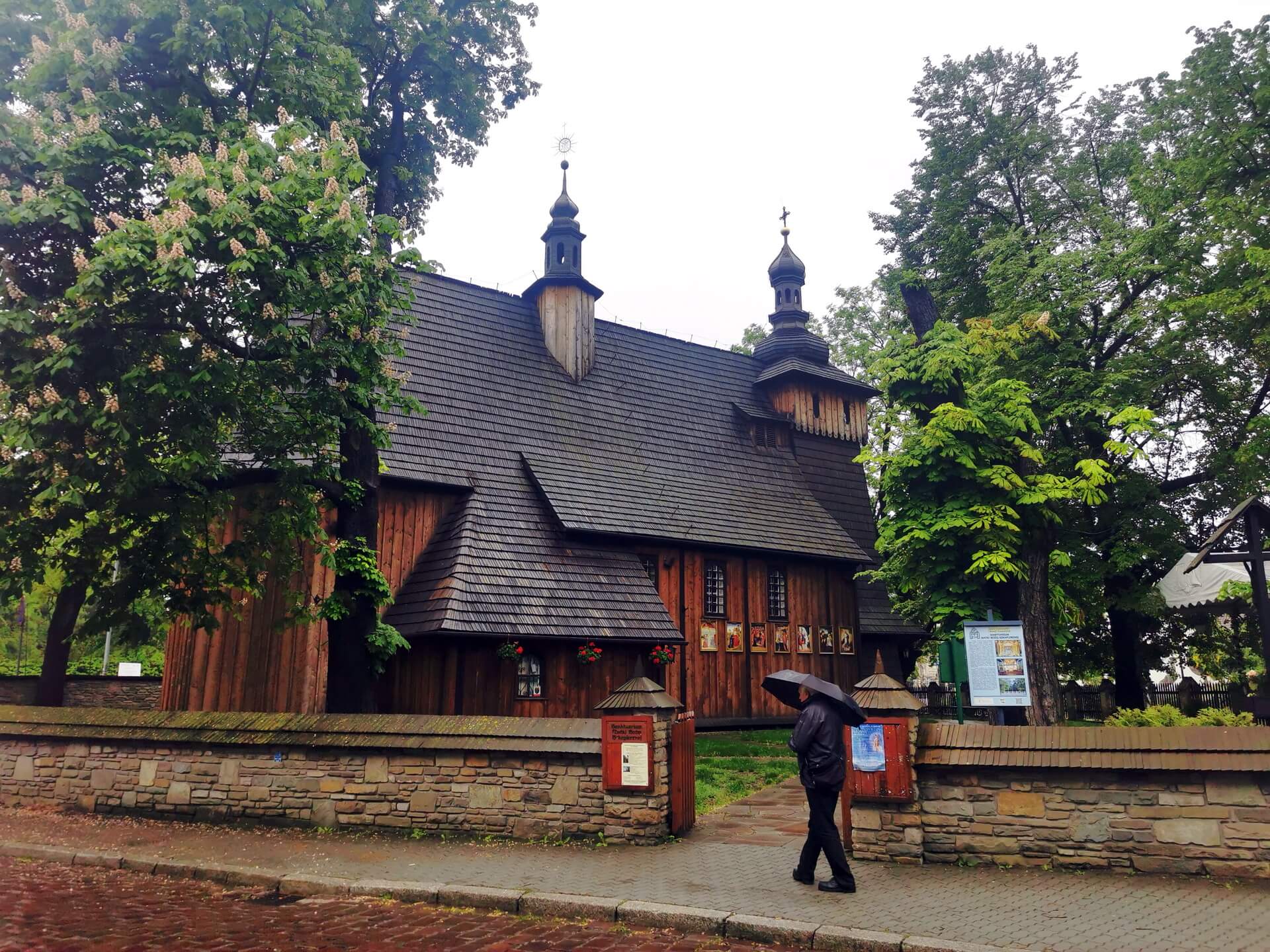
The wooden church sits a little away from the centre, quiet enough to feel like a different Tarnów altogether.
Directly behind it lies the Old Cemetery (Stary Cmentarz). Large war monuments stand prominently just outside the entrance, while the unusually dense historic cemetery itself contains nineteenth-century insurgent memorials and old family tombs.
What to Skip: The Castle Ruins
Local tourist materials often promote the castle ruins on St. Martin’s Hill. In good weather, the ruins justify the climb with beautiful panoramic views from the top. In rain, they become a muddy exercise in optimism that is better skipped in favour of remaining dry in the town centre.
Lunch Without the Lethargy
I first discovered the staggering reality of Polish portion sizes during my Eagles’ Nests Trail castle trip from Kraków, where the meals were clearly designed to sustain a medieval garrison. Attempting a heavy traditional meat platter will likely ruin your mobility for the afternoon.
To avoid post-lunch lethargy, look for a lively local spot with manageable options. I ended up at Bistro PRZEPIS, where the dining room was completely packed. The waitress spoke no English, but we quickly found common ground.

A sensible Tarnów lunch: light enough to keep walking, good enough to remember after the train ride back to Kraków.
I ordered the tzatziki with flatbread. The bread was absurdly good. Perhaps it tasted even better because I secured the very last portion before they ran out. Keep your midday meal light and save the massive dinners for your return to Kraków.
How to Get from Kraków to Tarnów by Train
Do not sprint out of Tarnów station too quickly. The railway building itself is handsome enough to deserve a minute or two, which is more than can be said for many perfectly functional stations.
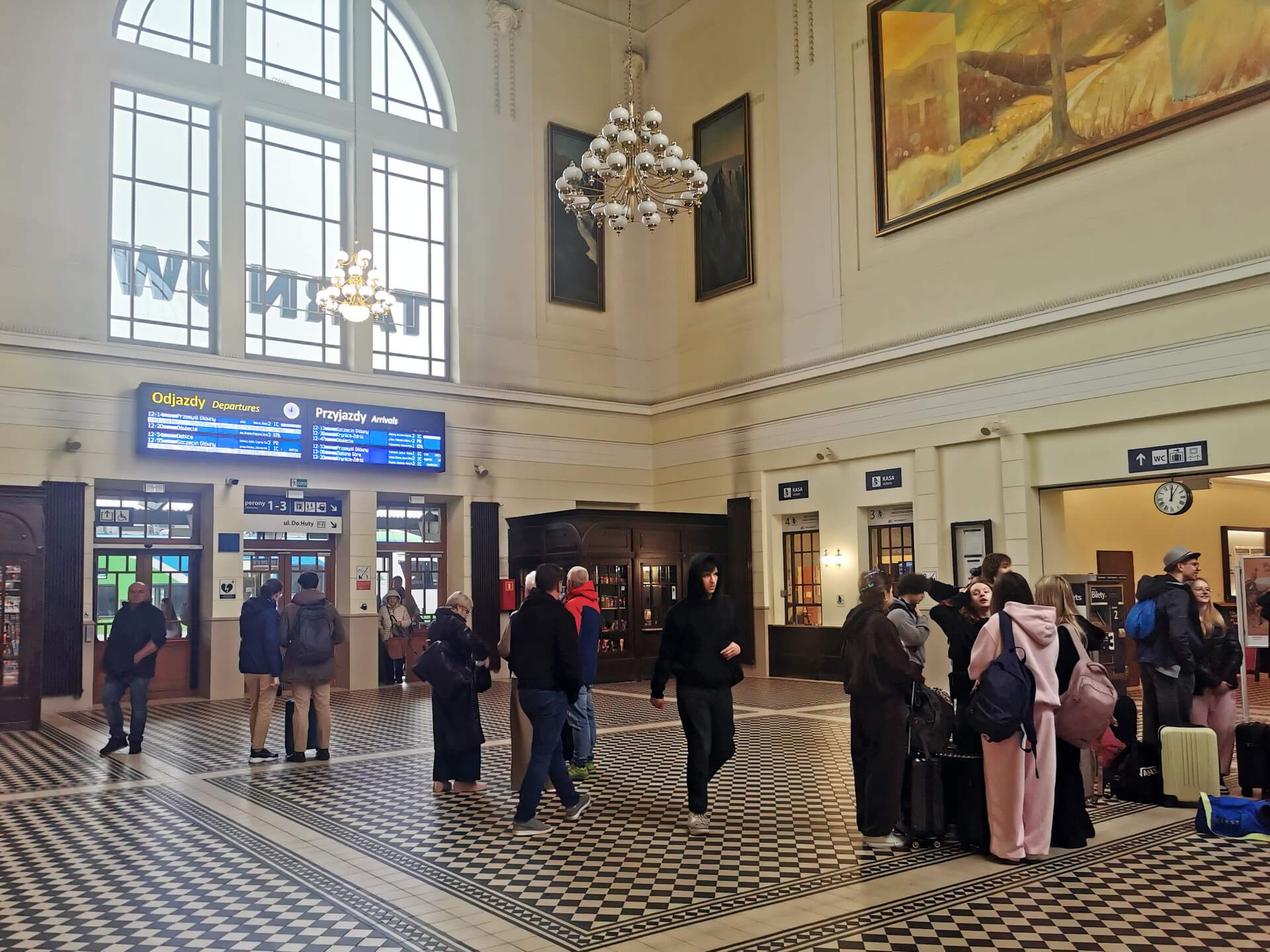
Tarnów station is more elegant than a regional arrival point has any obligation to be.
To make the journey smoother, reconsider your starting point in Kraków. If you are still deciding where to stay in Kraków, Starowiślna and Kazimierz work especially well for this trip.
From there, you can bypass Kraków Główny entirely and walk to Kraków Grzegórzki station for a regional train (80–90 minutes). However, if speed is your priority, head to Kraków Główny and catch a PKP Intercity (IC) train, which covers the distance in roughly 55 minutes.
Buy your ticket in advance via the Koleo app or another official ticketing channel. Ticket inspections on these regional lines are frequent. A digital ticket saves time and awkward fumbling. Aim for a departure that gets you into Tarnów around 10:00.
Mark Your Landing Spot: Is Tarnów Worth a Day Trip from Kraków?
Absolutely, provided you understand what you are getting. A day trip from Kraków to Tarnów is exactly what slow travel should be: low-stress, historically dense without being overwhelming, and free from the pressure-cooker tourism of Kraków’s biggest day trips.
It delivers high-quality architecture and unique museums without demanding a 12-hour commitment.
FAQ
Can you visit Tarnów as a day trip from Kraków?
Yes. Tarnów is one of the easiest day trips from Kraków by train, and its compact historic centre is manageable within 5 to 6 hours.
What is the best way to get from Kraków to Tarnów?
By train. Regional trains take around 80–90 minutes and conveniently stop at both Kraków Główny and Kraków Grzegórzki. For a faster option, PKP Intercity (IC) trains depart from Kraków Główny and take about 55 minutes.
Do you need to book Kraków to Tarnów train tickets in advance?
Usually, no. For regional trains, buying a ticket shortly before departure via an app or official ticketing channel is normally enough, but checking the timetable before you go will save unnecessary station drama.
What are the small figures in Tarnów’s Old Town?
They are maszkarony, small mascaron figures inspired by the grotesque carved heads on Tarnów’s town hall. At first glance, they may look like Tarnów’s answer to city gnomes, but they are actually inspired by Renaissance architectural details, and the current trail includes 19 stops scattered around the old town.
Is Tarnów walkable?
Yes. The historic centre is compact, and most major sights can be reached on foot. The wooden church and Old Cemetery sit further out, but still within a manageable walk if the weather is decent.
Is Tarnów worth visiting if you have already seen Kraków?
Yes. While Kraków is grand and imperial, Tarnów offers an intimate, crowd-free experience. Its Italian-style Renaissance square and unique museums provide a completely different perspective on the region’s history.
What is Tarnów known for?
Travellers come for one of Poland’s best-preserved Renaissance squares, the city’s significant pre-war Jewish heritage, and what is often described as the world’s first permanent exhibition dedicated to Roma history and culture.
How many hours do you need in Tarnów?
A 5 to 6-hour visit is perfect for walking the Old Town, visiting the Ethnographic Museum, and having a relaxed lunch.

