












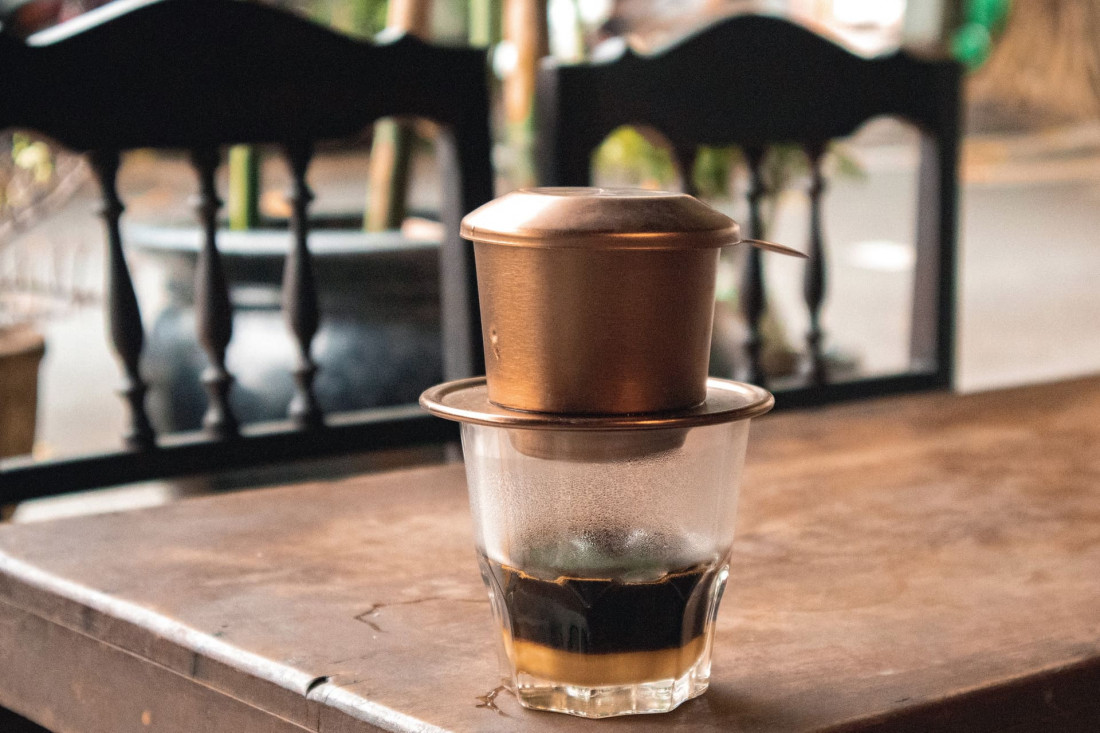
My focus is usually on the cold, utilitarian food of Northern Europe, but absolute culinary pragmatism exists on the other side of the globe, too. Here, coffee is not about delicate aromatics; it is about viscosity and punch.
Vietnam is the world’s second-largest coffee exporter, a powerhouse built almost entirely on Robusta. In the hierarchy of coffee beans, connoisseurs often dismiss Robusta as the harsh, bitter, high-caffeine poor relation to Arabica.
But the Vietnamese didn’t just accept this bean; they engineered an entire brewing culture around its specific properties. They didn’t try to make it taste like Italian espresso. They leaned into its heaviness.
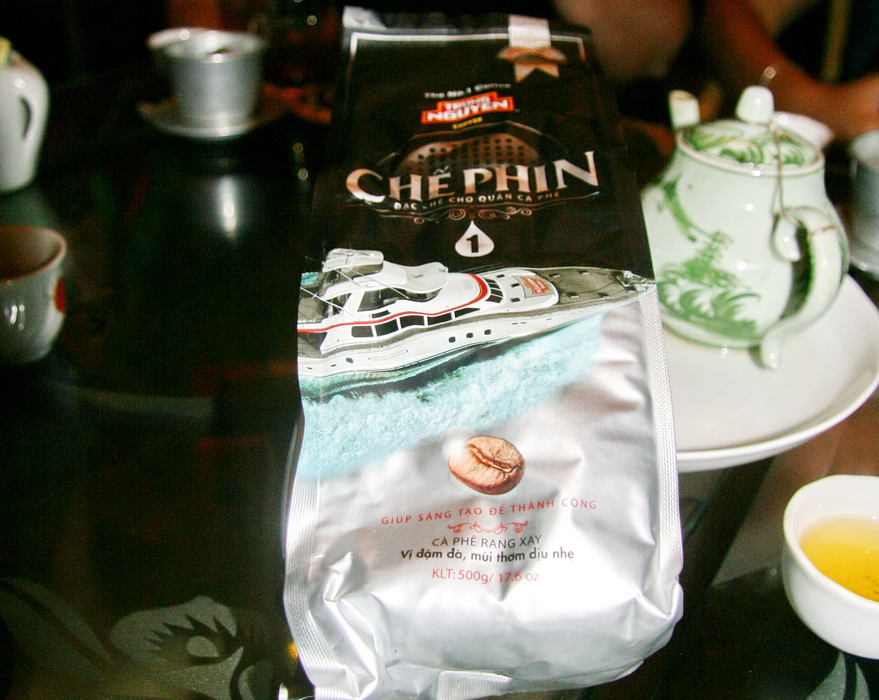
Vietnam didn’t fight Robusta’s harsh, high-caffeine profile—it engineered an entire brewing culture around it.
The Colonial Supply Chain
The French introduced coffee to Vietnam in 1857, but the topography dictated the outcome. The Central Highlands were perfect for Robusta, a crop that is resilient against pests and heat.
However, the French colonists faced a logistical problem: fresh milk was impossible to store in a tropical climate before refrigeration. Their solution was canned sweetened condensed milk.
This logistical necessity accidentally created the perfect chemical counterbalance. Robusta is intensely bitter; condensed milk is intensely sweet. When combined, the sugar masks the harshness, and the fat content of the milk smooths out the texture. What started as a colonial substitute became the defining profile of Vietnamese coffee: the famous Cà phê sữa đá.
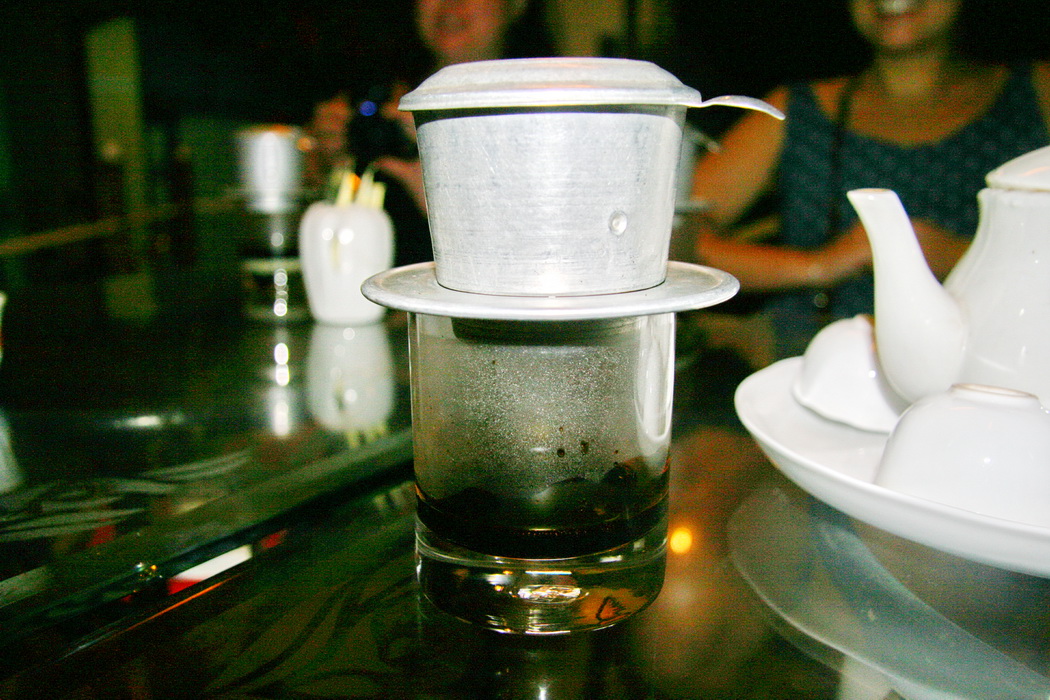
The fat content of the condensed milk smooths out the texture, creating a thick, almost viscous drink. It acts as a heavy, dessert-like counterweight to the humidity outside.
The Gravity Machine
The brewing method is equally pragmatic. While Italian culture relies on steam pressure (espresso) and American culture relies on immersion (French press) or automated drip, Vietnam relies on gravity.
The Phin is a piece of low-tech democratized engineering. It is an aluminum or stainless steel filter that costs less than a dollar. It requires no electricity and no paper filters.
This accessibility means that expensive equipment doesn’t gatekeep coffee in Vietnam; you can find it on every street corner.
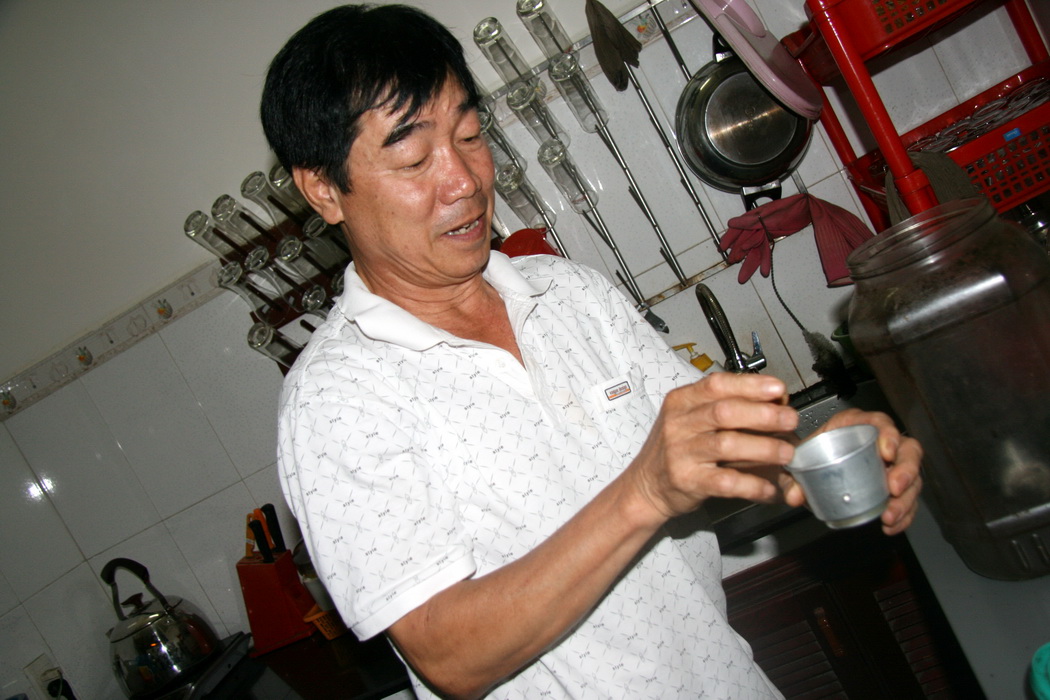
In a regular cafe in Nha Trang, watching the barista demonstrate the mechanics. No electricity, no high-pressure steam, just gravity and patience.
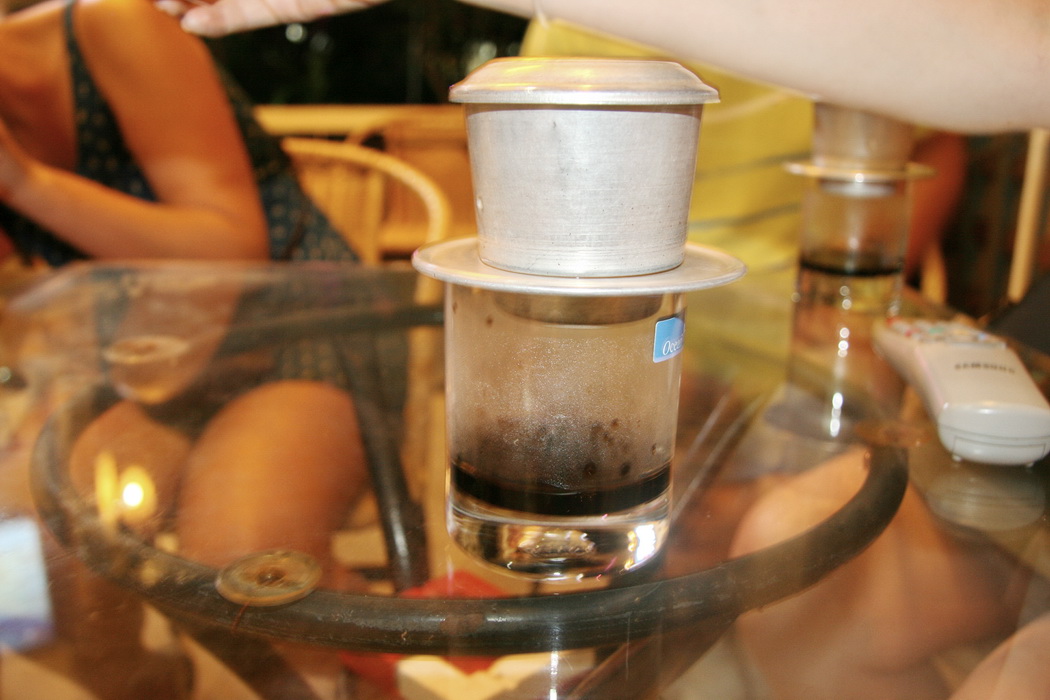
The drip rate is critical. The slowness isn’t just about waiting; it forces a highly concentrated extraction.
The Service Protocol
There is a specific etiquette to the service that often confuses first-time visitors. When you order a coffee, the café almost always serves a glass of iced tea (Trà Đá) alongside it.
This is not a bonus beverage. The coffee is thick, syrupy, and coats the tongue. The weak, unsweetened iced tea acts as a palate cleanser. It is a necessary chaser to wash away the sugar and lingering bitterness, balancing the intensity of the Robusta.

In local cafes, the staff often linger to ensure the drip rate is correct. Too fast means weak coffee; too slow means it goes cold.
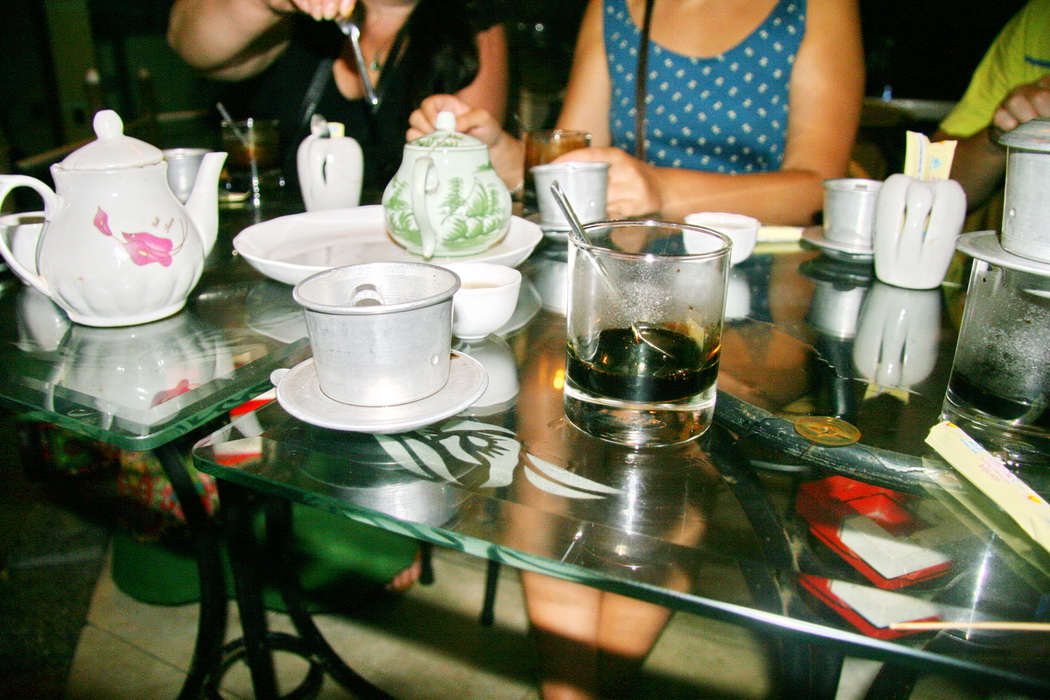
The necessary chaser: iced tea is served alongside the coffee to wash away the lingering sugar and intense bitterness.
Gastronomy Notes
Decoding the Vietnamese Coffee Menu
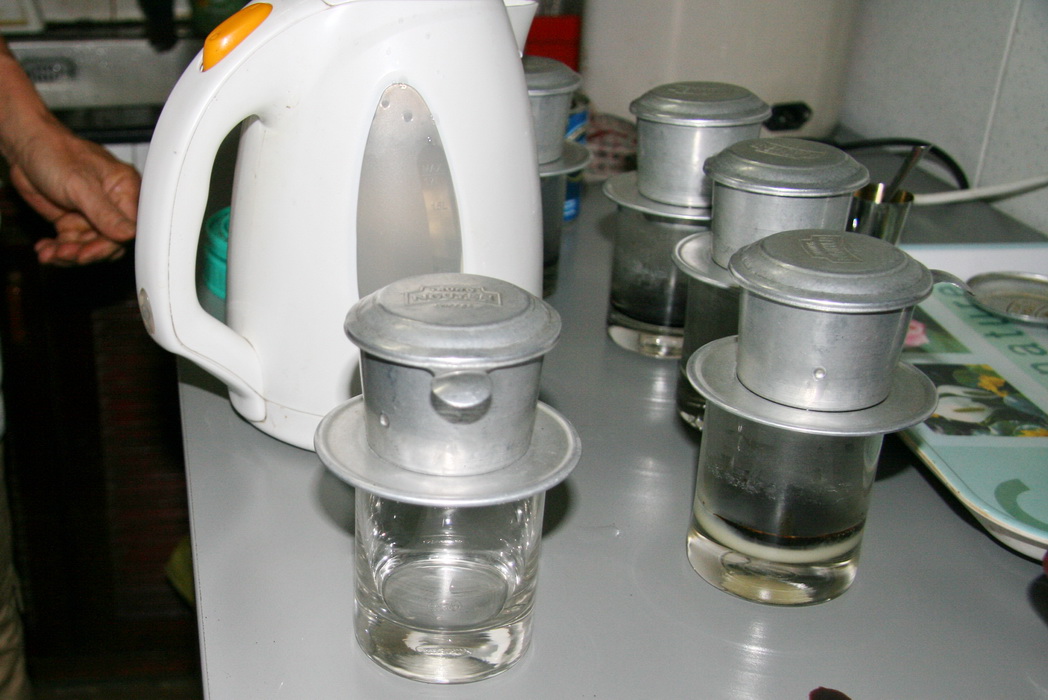
Turns out, it’s quite simple. The complexity is in the bean, not the tools.
If Italian espresso is a feat of engineering, Vietnamese coffee is a triumph of accessibility. In spirit, it is the closest relative to Masala Chai: a colonial product hacked by locals to create something far superior to the original.
It offers an incredibly high ROI (return on investment) for the home brewer. There is no need for a $1,000 chrome machine, high-pressure pumps, or maintenance schedules. The entire mechanism costs less than a sandwich, fits in a pocket, and produces a drink with more texture and density than most coffee shop staples.
It proves that you don’t need technology to make good coffee. You just need the right bean, the right grind, and gravity.

