














Spending 2 days in Tallinn is enough to see the medieval Old Town, walk along the Baltic Sea, and explore the city’s creative districts — if you move through them in the right order.
This is the route I follow every time friends visit. The Lower Old Town, Toompea Hill, Kadriorg Park, the seafront, and Telliskivi all sit within a few kilometres of each other, but they make sense when approached in sequence.
Day 1 stays within the historic centre. Day 2 moves outward toward parks, the coast, and contemporary neighbourhoods. The city feels clearer that way.
For a broader overview of sights, neighbourhoods, and planning details, see → the full Tallinn Travel Guide.
Tallinn in 2 Days — At a Glance
- Best for: First-time visitors
- Pace: Relaxed but efficient
- Total walking distance: ~10–15 km across two days
- Base yourself: Old Town or nearby
- Best months: May–September; winter requires small adjustments
Plan your 2 days in Tallinn:
Day 1:
→ Old Town & Toompea
→ Museum or Rotermann
→ Dinner
Day 2:
→ Parks & Coast
→ Telliskivi
Alternative:
→ Open Air Museum & Kalamaja
→ Practical Tips
→ FAQ
Day 1: Old Town & Toompea
Total walking distance: roughly 5–7 km.
Start in the Old Town. Most visitors enter through Viru Gate. It is scenic but often busy; if it feels slow-moving, walk a few streets deeper toward Müürivahe or Vene Street, where the atmosphere changes quickly.
Everything on Day 1 sits within a compact radius, so you won’t waste time crossing the city.
In summer, cruise ships increase foot traffic between late morning and mid-afternoon. An earlier start makes a noticeable difference.
Morning — Lower Old Town
The Old Town is small enough that you do not need a strict order.
If you prefer historical context rather than navigating alone, a small-group Old Town walking tour can clarify the layers quickly.
Town Hall Square — The historical centre. Plan 15–20 minutes.
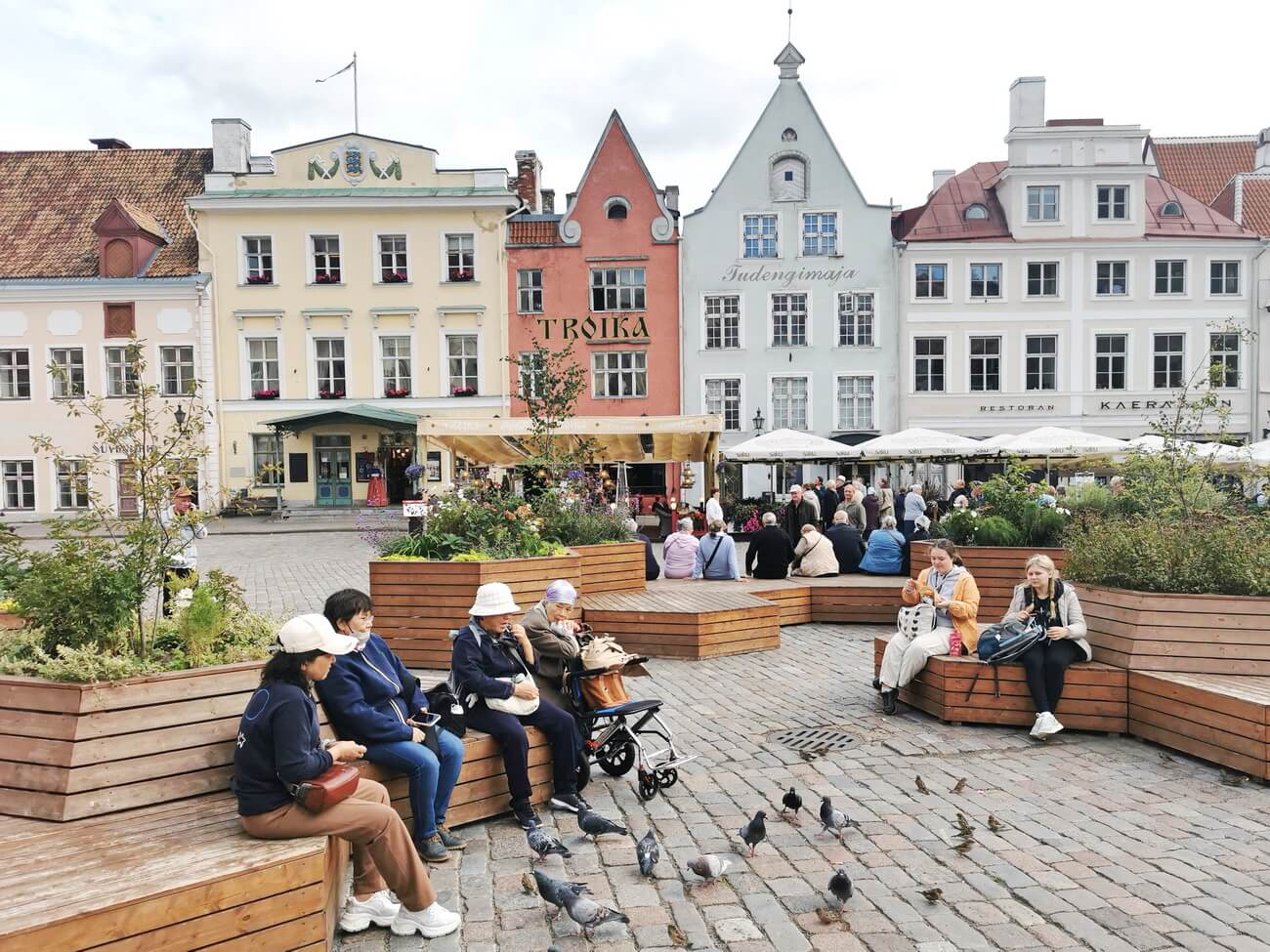
The Old Town begins here — compact, busy, and easy to navigate from this central square.
Raeapteek — One of Europe’s oldest continuously operating pharmacies. A short stop is enough unless you are interested in the small museum upstairs.
Just behind Town Hall Square, on Kullassepa Street, Kofeman is a dependable stop for espresso before the streets fill up.
St. Catherine’s Passage — A narrow medieval lane that still feels slightly hidden despite its fame.
St. Olaf’s Church (optional climb) — The tower offers wide views across the Old Town. Allow 30–40 minutes. The staircase is narrow and steep with two-way traffic. If tight spiral stairs are not for you, use Kohtuotsa Viewpoint instead.
By late morning, you have seen the structural core of the Lower Old Town.
Late Morning — Toompea Hill
Climb once and cover the viewpoints in one sweep.
Toompea Castle — Now home to the Estonian Parliament. Exterior only.
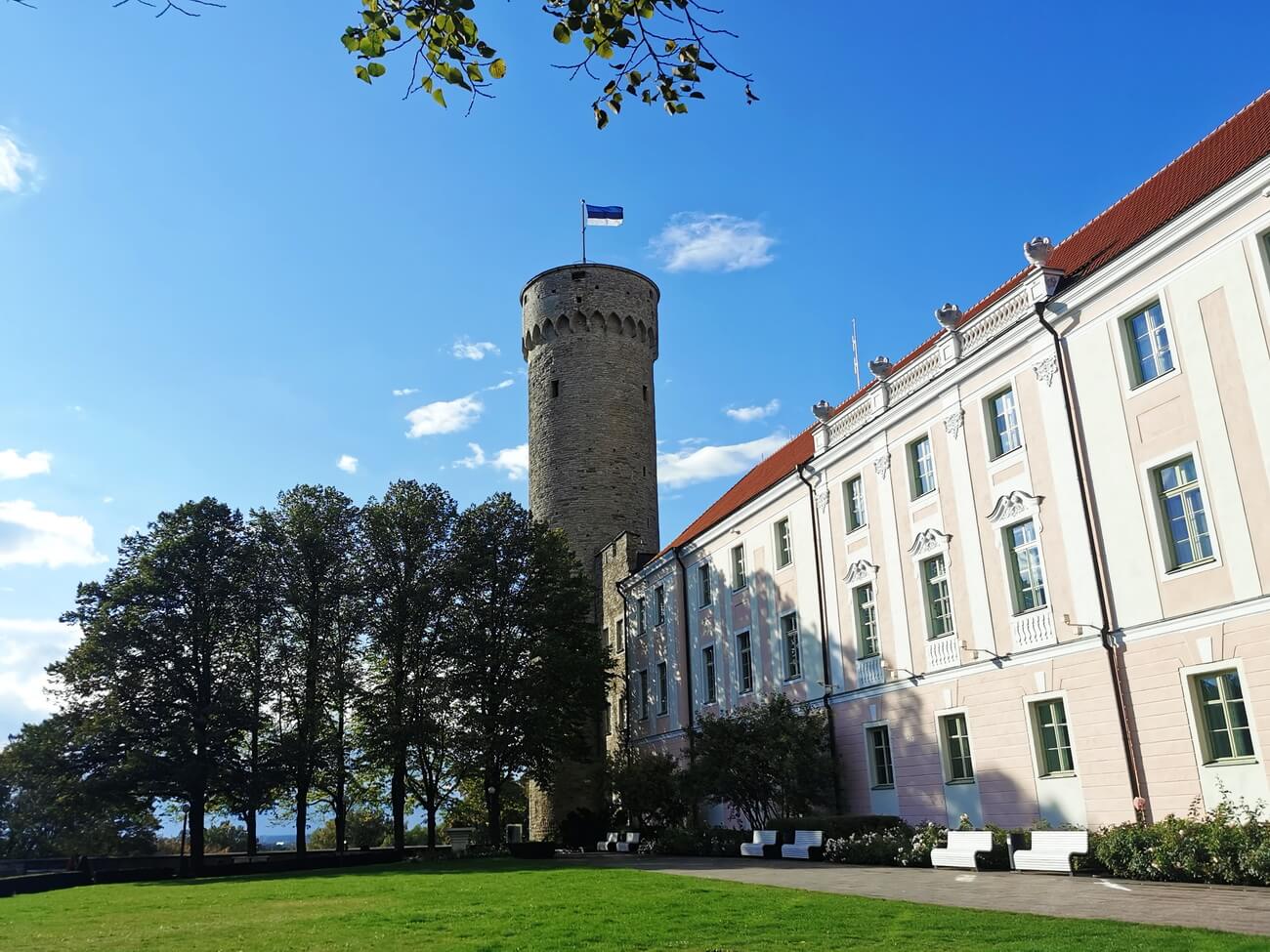
Medieval walls meet later additions here — a layered complex rather than a single castle silhouette.
Alexander Nevsky Cathedral — A late 19th-century Russian Orthodox cathedral, built during the period when Estonia was part of the Russian Empire. A short exterior stop is usually sufficient unless you want to step inside.
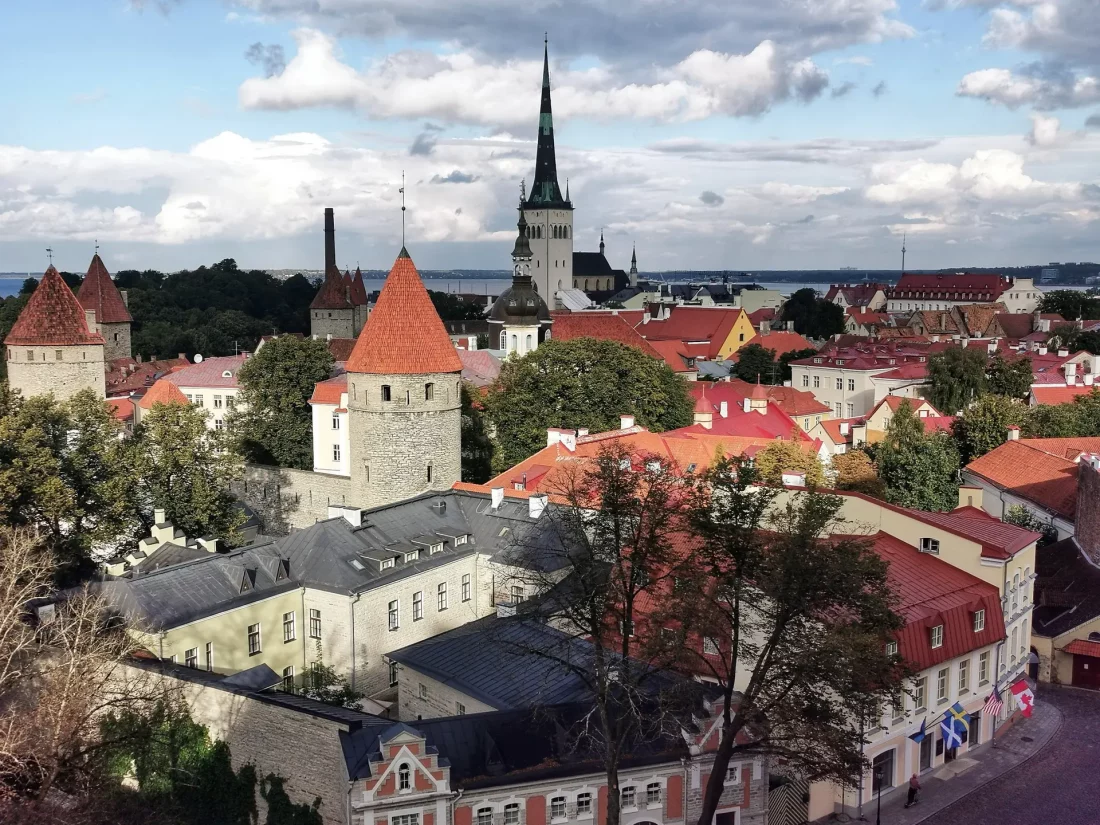
Kohtuotsa Viewpoint — The familiar red-roof panorama. The railing can be crowded at peak times. A seagull that locals jokingly call “Steven” often perches here and regularly appears in visitors’ photos.
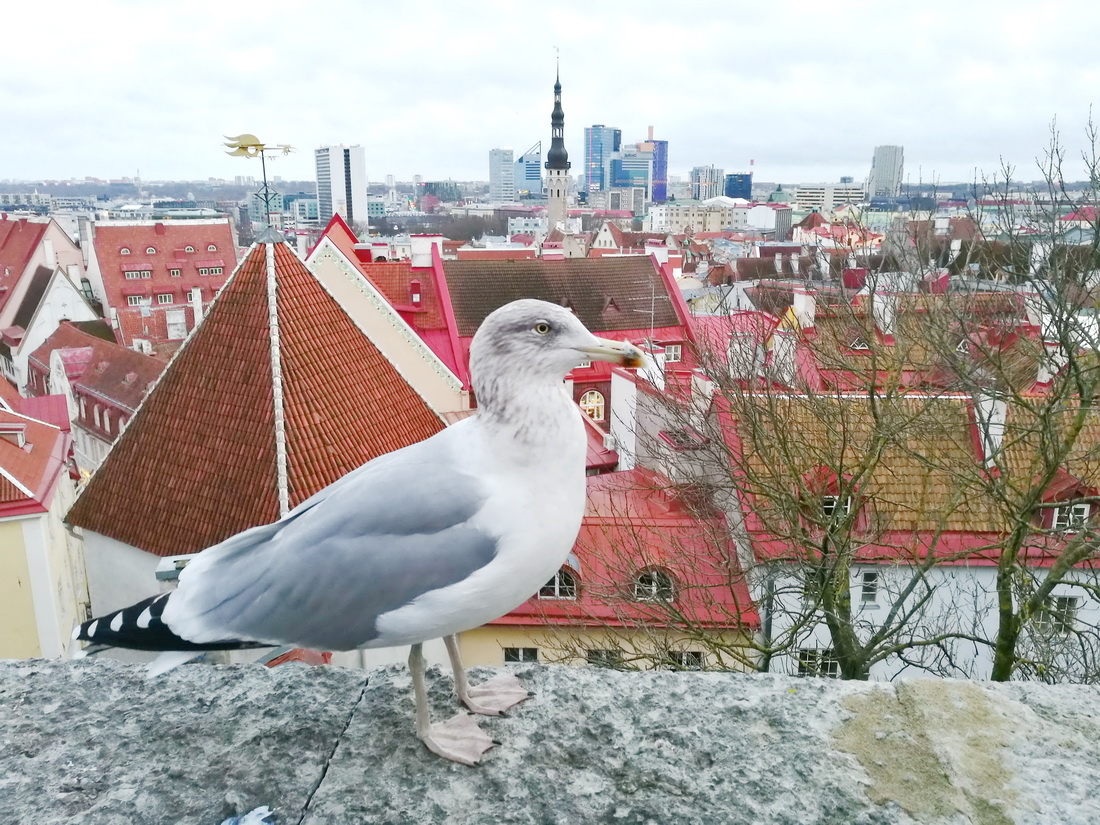
From Kohtuotsa, medieval rooftops fill the foreground while Tallinn’s modern skyline sits quietly in the distance.
Patkuli Viewpoint — A wider view over the city walls and harbour. Viewpoints are exposed and can be windy year-round. Allow 45–60 minutes for the hill overall.
By early afternoon, you have covered the architectural backbone of medieval Tallinn.
Afternoon — One Museum or a Slower Pace
Now choose depth over volume.
Option A — One Museum
Niguliste Museum — Late medieval religious art inside a former church.
Estonian Maritime Museum – Fat Margaret — Maritime history inside a 16th-century defensive tower near the harbour.
Pick one. Even smaller museums take 60–90 minutes including entry and movement between spaces.
Option B — Keep Walking
Walk toward the harbour and continue to the Rotermann Quarter, where 19th-century industrial buildings meet contemporary Estonian architecture. It is compact and easy to explore without a plan.
Evening — Dinner
Dinner in the Old Town is practical after a full day of walking. Reservations are essential on weekends.
If you’re wondering how safe it feels to walk around at night, see this → Tallinn safety guide.
Option A: Full Medieval Setting
Olde Hansa — Candlelight, game meat, staff in period costume. It is a production, not just a meal.
III Draakon — Inside the Town Hall. Faster, cheaper, famous for elk soup and savoury pies. No spoons; drinking from the bowl is part of the concept. It is informal, crowded, and often has a queue.
Option B: Reliable Casual Dining
If you prefer something simpler, places like Margherita Pizzeria & Trattoria are reliable, centrally located options.
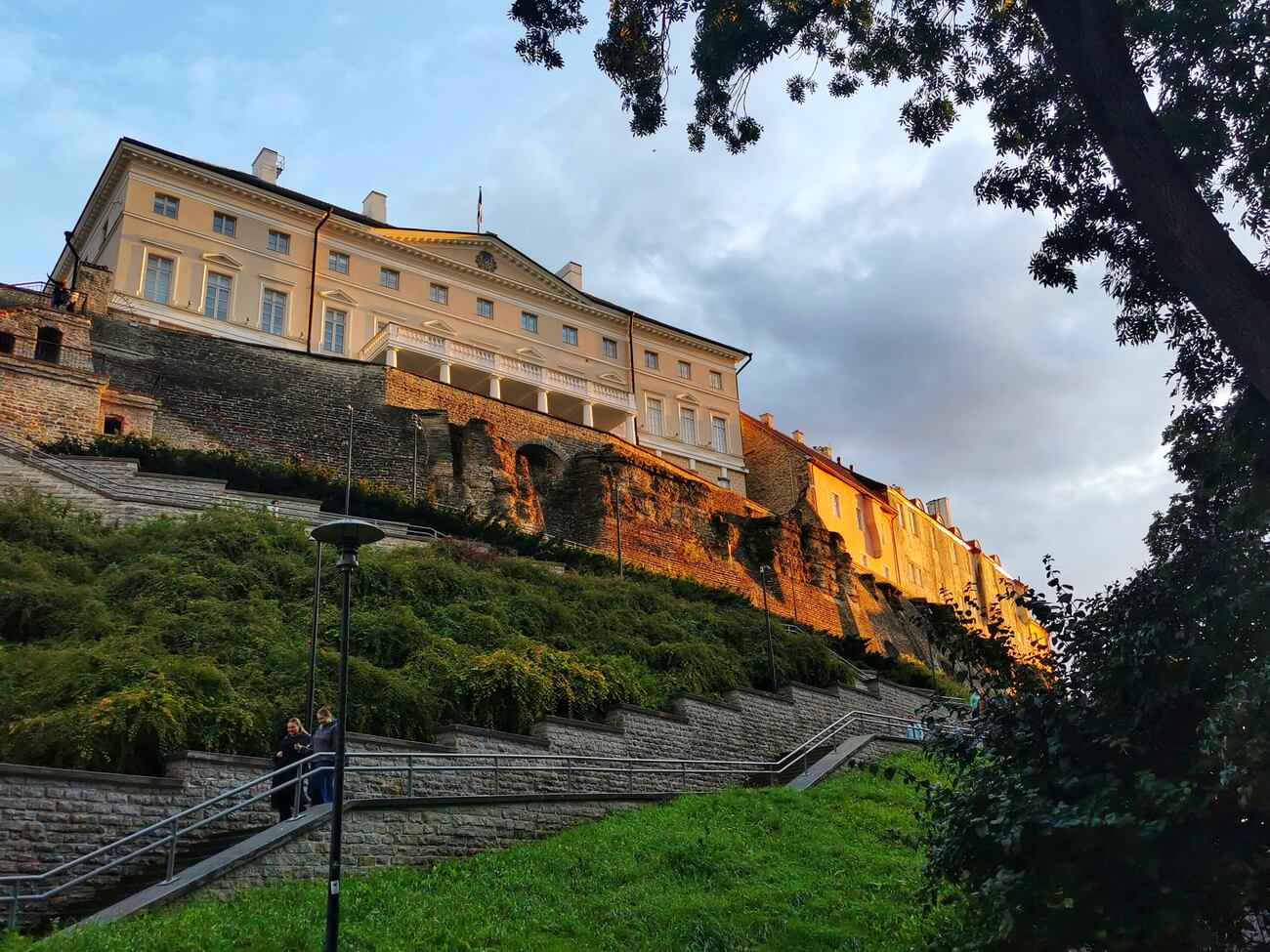
In low light, Toompea’s defensive walls look less austere and more textured.
Day 2: Parks, Coast & Neighbourhoods
Total walking distance: roughly 5–8 km.
Morning — Kadriorg
Kadriorg is about 2 km from the Old Town. It is walkable, but tram 1 or 3 is usually the most efficient way to get there in the morning.
For a deeper look at the district’s villas, museums, and quieter streets, see → my Kadriorg guide.
Kadriorg Palace — An early 18th-century baroque residence built by Peter the Great. Exterior visit takes 20–30 minutes.
Swan Pond — Central open area of the park.
Japanese Garden — A quieter landscaped section with ponds and clean lines. It is typically closed during the winter season (roughly November to April).
KUMU Art Museum (optional) — Estonia’s main art museum, covering classical and contemporary works.
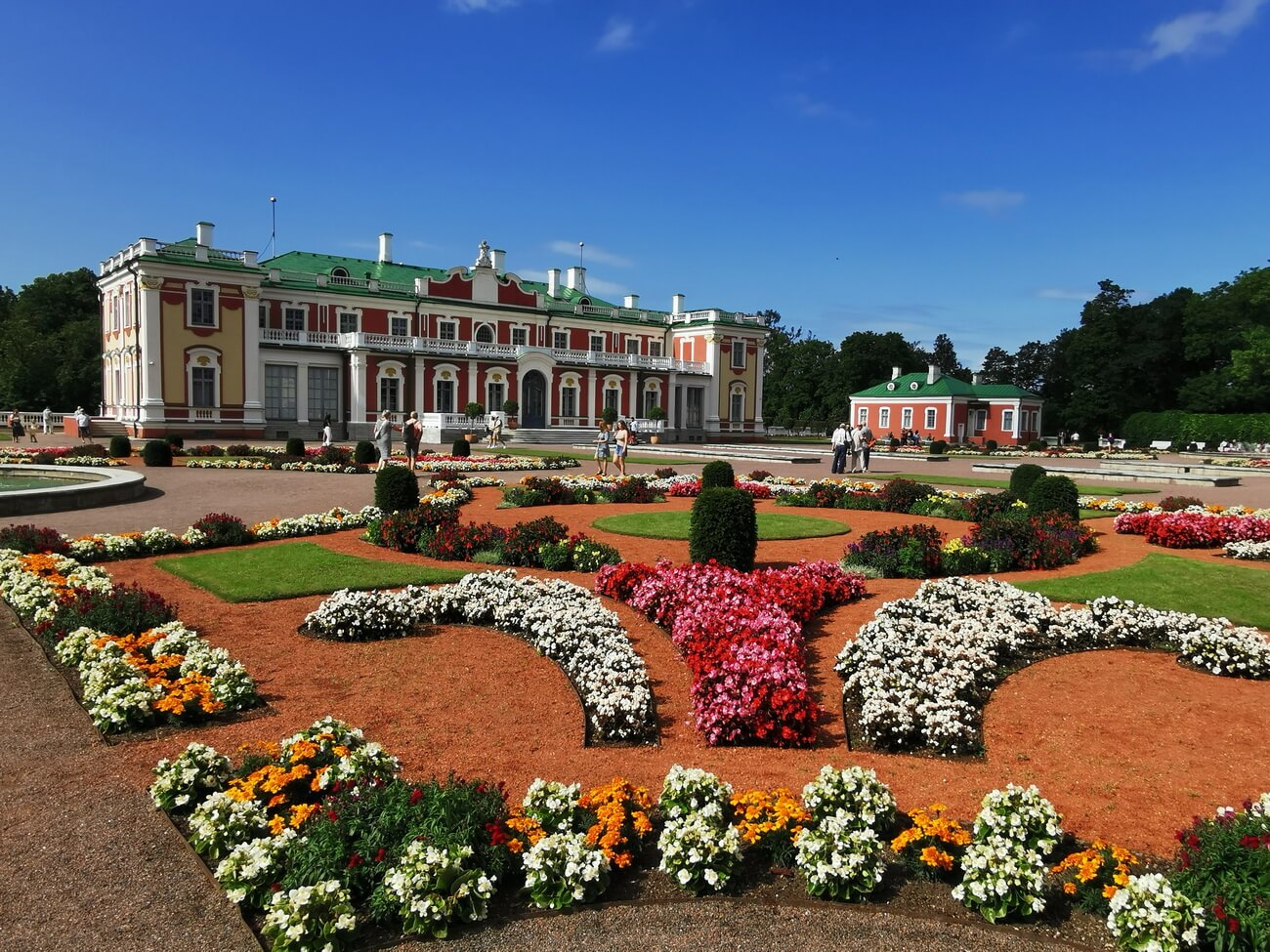
After the density of the Old Town, Kadriorg feels unexpectedly open — long lawns, symmetry, and distance around the palace.
Morning works well here: the park is calmer and cooler in summer. If you have flexibility, Kadriorg also looks particularly good in the hour before sunset, especially in early autumn when low light hits the palace facade.
Plan 60–90 minutes without entering museums.
Midday — Seaside
From Kadriorg, continue toward the coast. The promenade runs along Tallinn Bay and passes the Russalka Monument, a 1902 memorial commemorating the sinking of the Russian warship.
The space opens up here. After the enclosed streets of the Old Town, the horizon feels noticeably wider. Even on sunny days, wind from the Baltic Sea can be strong. A forecast of +15°C may still feel cold along the seafront, so bring a proper layer.
Expect to spend 30–45 minutes. From here, it is usually easier to take a bus back toward the centre rather than walking through Kadriorg again. The ride takes around 10–15 minutes.
Afternoon — Telliskivi
Telliskivi Creative City is a former factory complex turned cultural district. It is filled with galleries, cafés, design shops, and casual restaurants.
If you want context beyond murals and cafés, the Bohemian Tallinn: Kopli & Telliskivi Tram and Walking Tour offers a structured look at the district’s industrial past and present transformation.
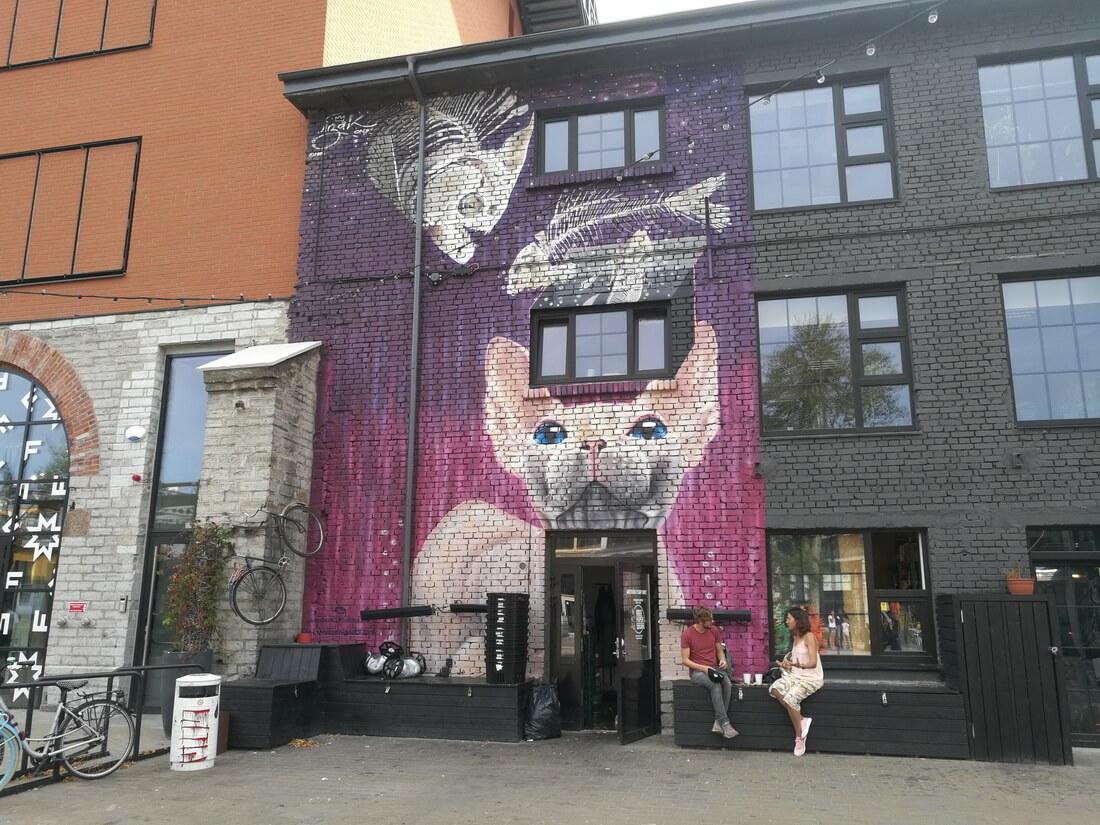
Telliskivi’s industrial past is still visible in brick and steel — the murals simply add another layer.
Street art defines the area. Large-scale murals and rotating graffiti walls appear between brick warehouses and courtyards. You do not need a map; just walk.
Fotografiska (optional) — A contemporary photography museum with international exhibitions and one of the better rooftop restaurants in the district.
Balti Jaam Market — A three-level market combining fresh produce, street food, antiques, and everyday groceries. The market closes earlier than most restaurants (usually around 18:00–19:00 depending on the section), so visit in the afternoon. Plan for about 60–90 minutes.
For a quieter sunset, walk toward the Kalamaja waterfront instead of returning to the crowded Old Town viewpoints.
Alternative — Open Air Museum & Kalamaja
Instead of Kadriorg, consider the Estonian Open Air Museum in Rocca al Mare. It sits directly on the Baltic coast, and the grounds are large enough to require time rather than speed.
This is not a brief visit. It is a gradual walk through farmsteads relocated from across Estonia, with fields, forest edges, and wooden churches spaced widely apart. Plan at least two to three hours. From Vabaduse väljak, bus 21B takes about 20 minutes and stops at the entrance.
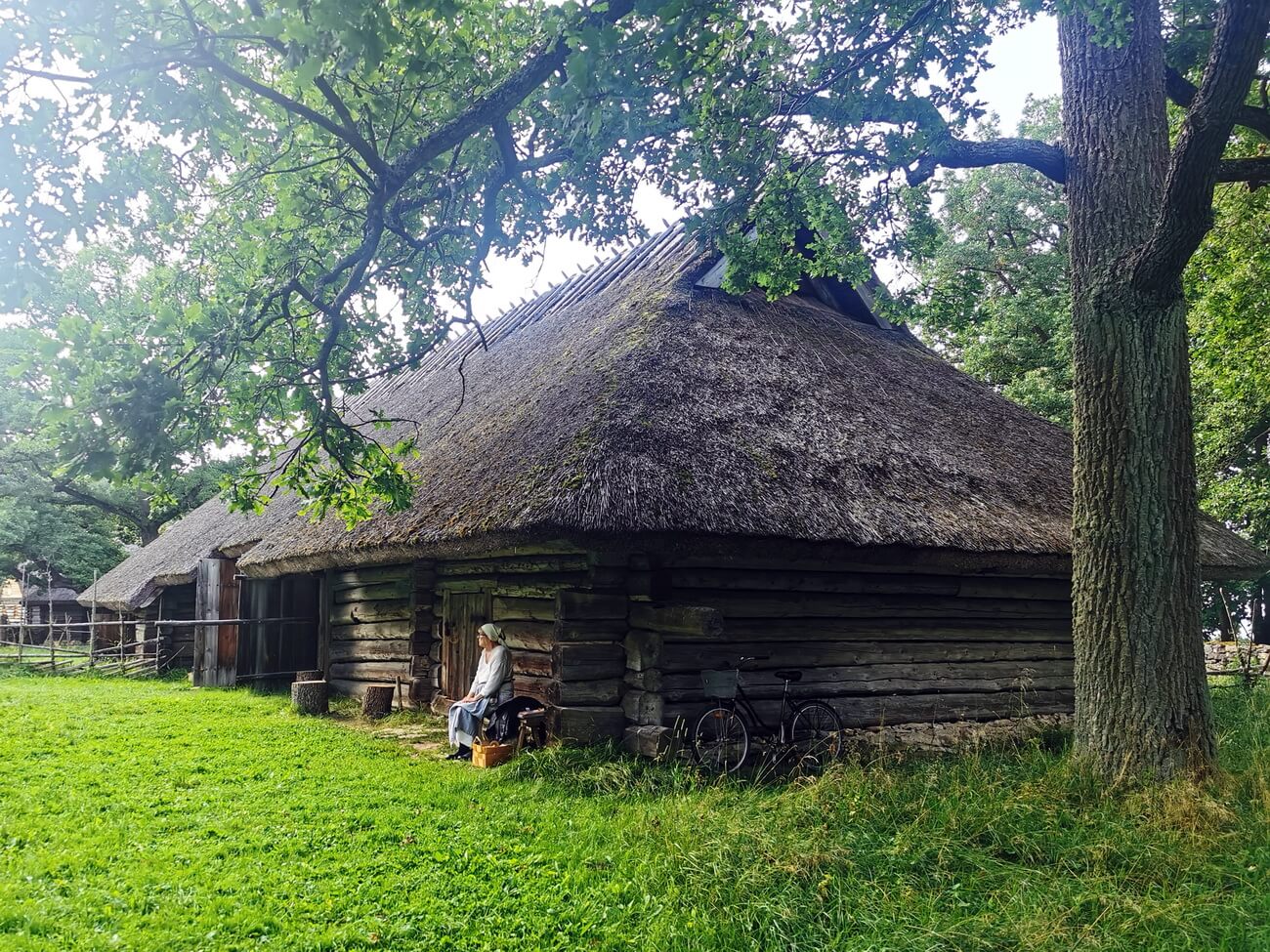
Entire farmsteads were relocated here from across Estonia, preserving regional differences that modern cities have largely erased.
Afterwards, explore Kalamaja, Tallinn’s former fishermen’s district. Restored 19th-century wooden houses stand next to contemporary cafés and apartment blocks. The area feels lived-in rather than curated. Kalamaja and Telliskivi sit side by side and combine easily.
Avoid adding Kadriorg, Telliskivi, and Rocca al Mare to the same afternoon. The distances are manageable, but the pace becomes uneven.
Not sure if Tallinn deserves two full days? Start here → Is Tallinn Worth Visiting?
What Not to Overload
Two days in Tallinn cover the essentials — not everything.
Pick one museum per day. The city’s charm is largely outside: in courtyards, narrow lanes, and shifting views between towers and sea.
You do not need to enter every church. Choose one interior and focus on viewpoints.
Visiting in Different Seasons
Tallinn works year-round, but expectations matter.
Summer (June–August) — Long daylight (up to 18 hours) and increased cruise traffic.
May & September — Moderate temperatures and fewer visitors.
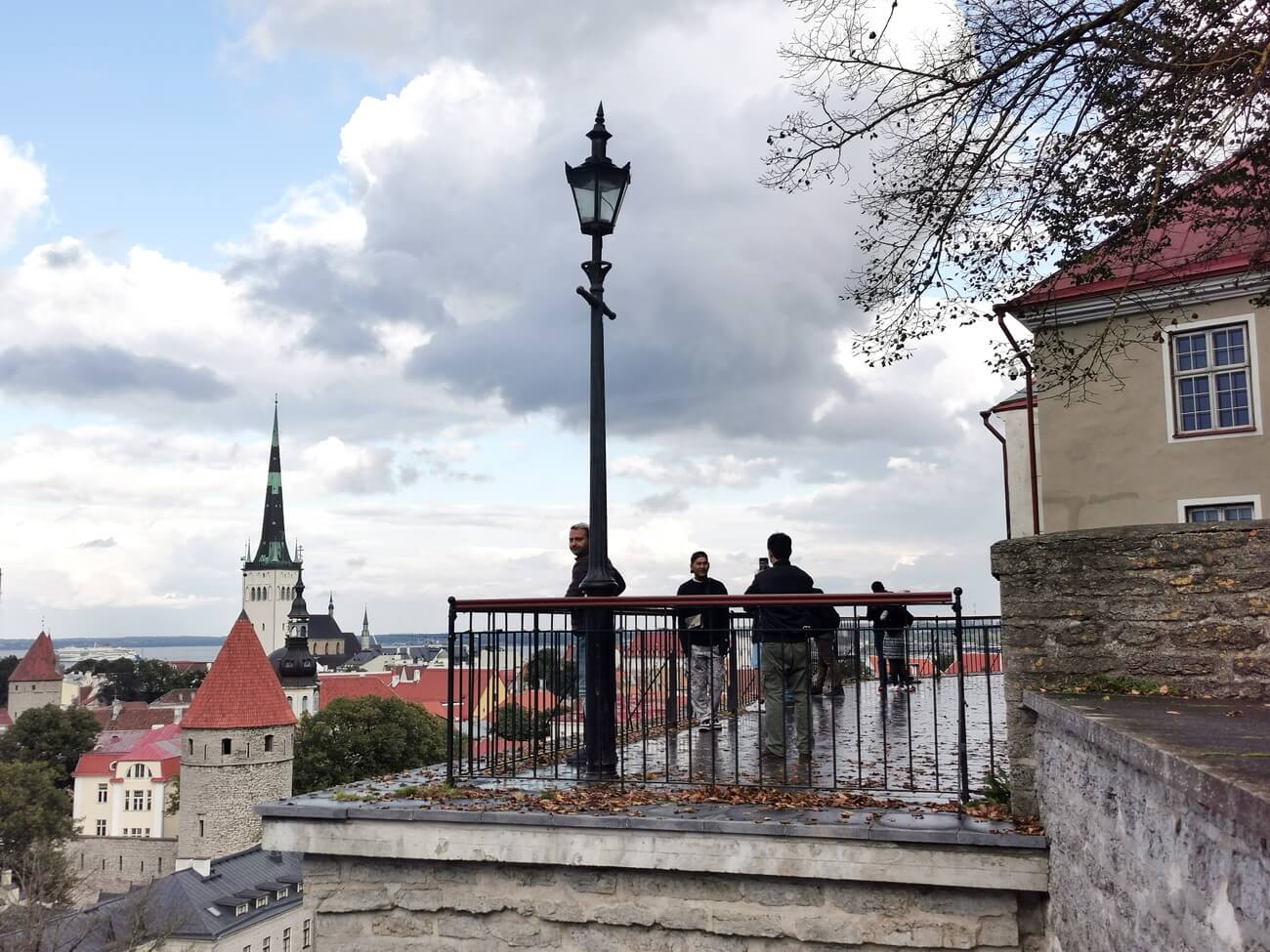
Viewpoints remain exposed year-round — wind and wet stone are part of the experience, not an exception.
November is the darkest month. Daylight is limited, snow is rare, and the Christmas market has not yet transformed the Old Town. Expect grey skies and wind. It is less ideal for long outdoor walks but well suited to museums, cafés, and spa visits. For a detailed breakdown, see → Tallinn in November.
Winter (December–February) — Daylight drops to around six hours, often fading after 15:30–16:00. Plan viewpoints earlier. Snow does not always remain on trees — coastal winds clear it quickly. Streets can be slippery. See → Tallinn in December.
If you are spending 2 days in Tallinn in winter, start earlier than you think you need to. Light disappears quickly.
Where to Eat
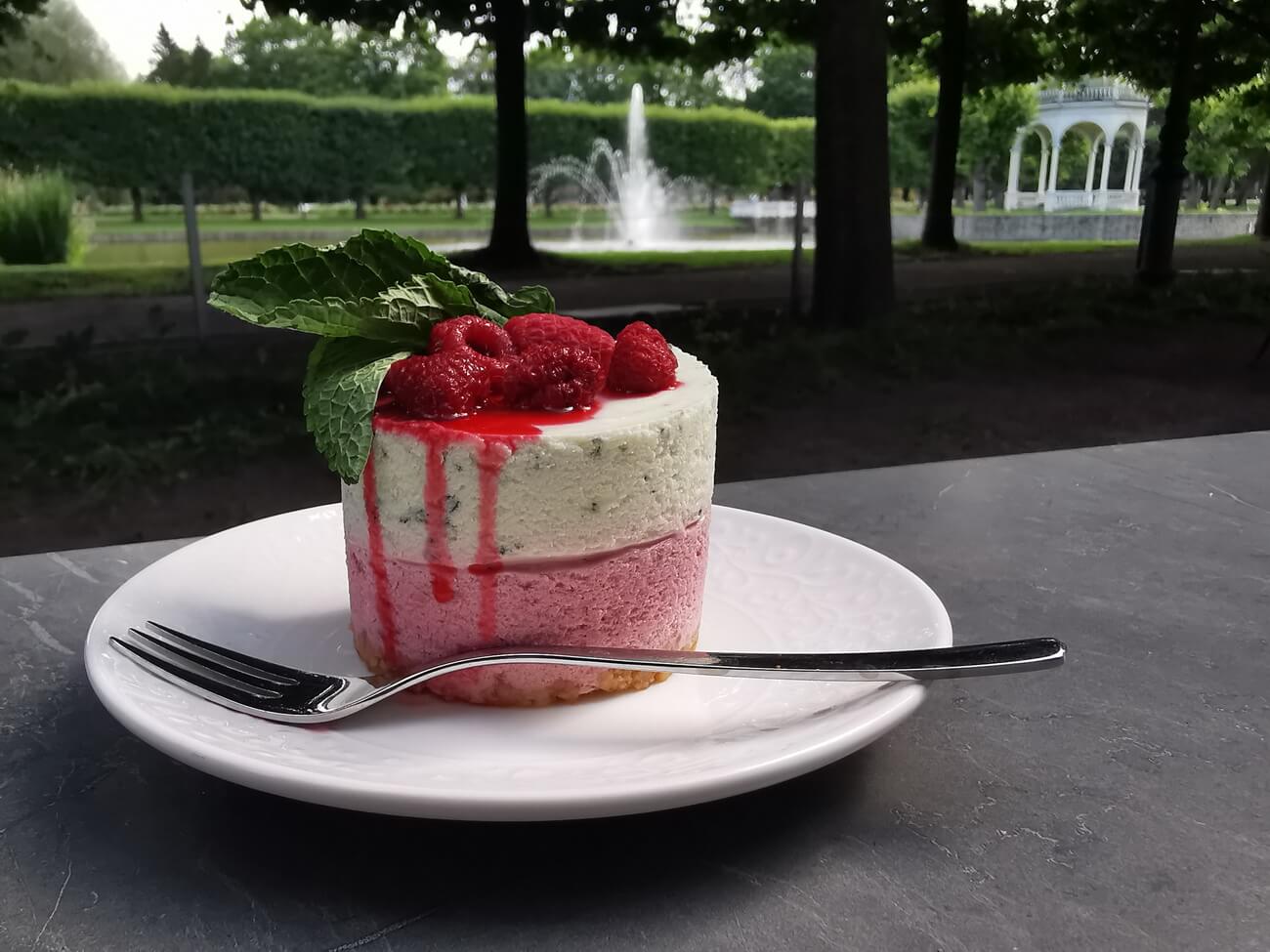
Cafés around Kadriorg are calmer than the Old Town and work well for a slower lunch or dessert break.
Most kitchens begin serving lunch around 11:30–12:00. If you start early, plan coffee first. Espresso quality is generally high, and independent cafés are common.
Service may feel reserved compared to Southern Europe or the United States. Staff typically take your order, bring the food, and give you space. It reflects a local preference for privacy rather than indifference.
Vegetarian options exist but are not dominant; check menus in advance if needed.
Tap water in Tallinn is clean and safe to drink, and it is usually provided free if requested.
Telliskivi and Balti Jaam are particularly good areas for casual meals on Day 2.
Tipping is not mandatory, but rounding up or leaving around 10% is appreciated for good service.
Practical Tips for Spending 2 Days in Tallinn
Keep logistics simple — The city’s scale is very manageable.
Where to Stay
For a first-time visit, stay in or just outside the Old Town. This keeps Day 1 fully walkable and reduces transport time on Day 2.
Getting from the Airport
Tallinn Airport is about 4 km from the centre. Buses 2 and 15 run directly between the airport and central Tallinn from stops just outside the arrivals hall. The ride takes around 20–25 minutes.
Getting Around
The Old Town and centre are walkable. For longer distances such as Kadriorg or Telliskivi, trams and buses are straightforward.
Drivers do not sell tickets. Tap your contactless bank card on the orange validator next to the driver. One card can cover several passengers — select the number on the screen before validating.
Tallinn’s public transport is reliable and compact. Most rides within the centre take 10–15 minutes.
Most state museums, including KUMU, are closed on Mondays.
Arriving via the airport? See → How to Get from Tallinn Airport to City Centre for step-by-step instructions.
FAQ — 2 Days in Tallinn
Is 2 days enough in Tallinn?
Yes — for a first visit. You will see the core highlights without rushing. If you prefer a slower pace or more museums, consider 3 days.
Is Tallinn walkable?
Yes. The Old Town and city centre are concentrated and easy to explore on foot. Most Day 1 sights are within a 2–3 km radius.
Do I need a car in Tallinn?
No. Public transport is reliable, and most highlights are accessible by tram or short rides. A car is only useful if you plan day trips outside the city.
What is the best area to stay for a weekend in Tallinn?
For a short visit, stay in or near the Old Town to minimise transport time. Telliskivi and Kalamaja are good alternatives if you prefer a quieter atmosphere.
Is Tallinn good for a weekend city break?
Yes. Tallinn works particularly well for a 48-hour city break thanks to its compact layout and the clear contrast between medieval and modern districts.
Mark Your Landing Spot. Two days are enough to understand how Tallinn is organised. You can move from the old castle walls to the Baltic shoreline and see how contemporary neighbourhoods sit beside the medieval core. It will not cover everything, but it provides a clear and balanced impression of the city.

