














Located about 2 km east of Tallinn Old Town, along the Gulf of Finland, Kadriorg combines a large historic park, several museums, and some of the city’s most charming residential streets.
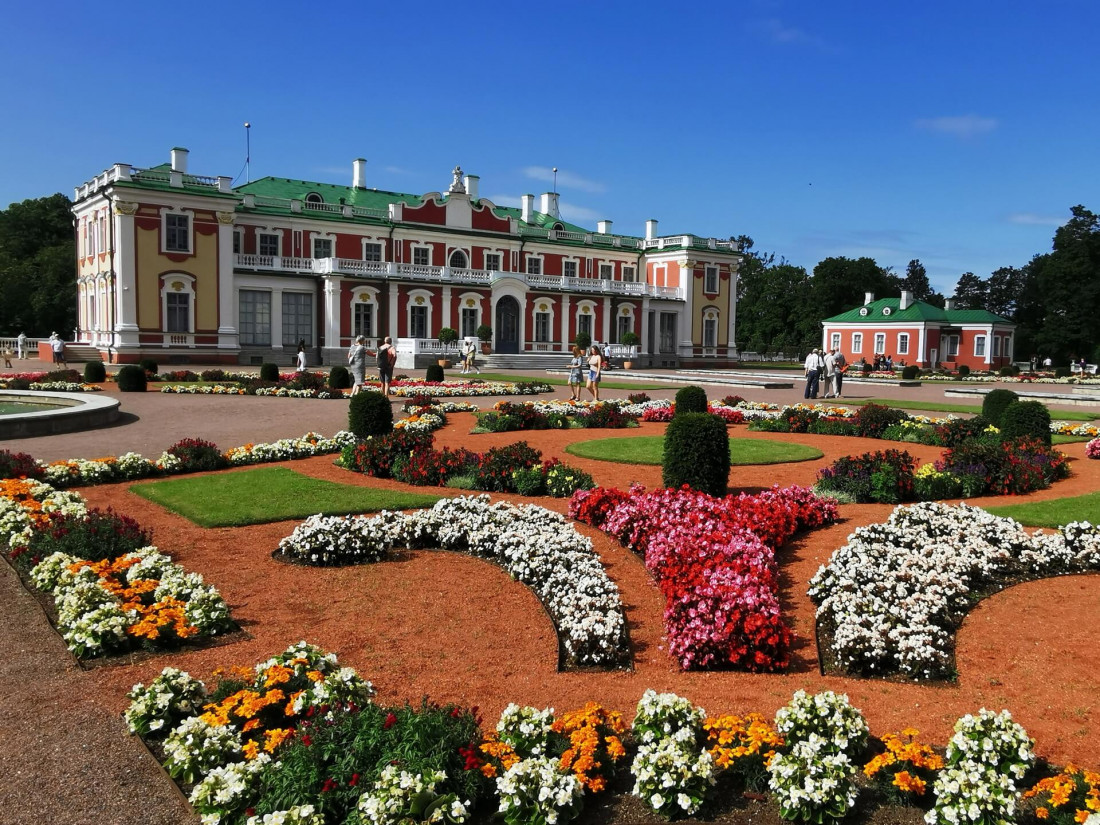
Yet, flip through almost any Tallinn guidebook, and Kadriorg is inevitably described as a piece of “imperial heritage”. The glossy photos highlight the grand pink palace — commissioned by the Russian tsar Peter the Great and named after his wife Catherine I (Kadri in Estonian) — surrounded by manicured lawns and bright geometric flower beds.
Naturally, this leaves visitors expecting a rather stiff, formal “Russian” quarter — somewhere you go to take an obligatory selfie in front of the façade and promptly leave, convinced you’ve “done” Kadriorg.
Ask a local what the park actually feels like, however, and Peter the Great rarely gets a mention. To us, it smells of aged timber, damp autumn leaves, freshly roasted coffee, and roses that stubbornly cling to their blooms well into November. It isn’t just a park or a museum district; it’s a state of mind.
If you are exploring the Estonian capital for the first time, see also → my Tallinn travel guide, where I cover the city’s main districts, museums and viewpoints.
Timber Villas and a President Without a Fence
The real Kadriorg begins the moment you leave the tour bus crowds behind. Veer off the main avenues onto Koidula or Poska streets, and grandiose Baroque quickly gives way to a beautifully domestic world of intricate timber architecture.
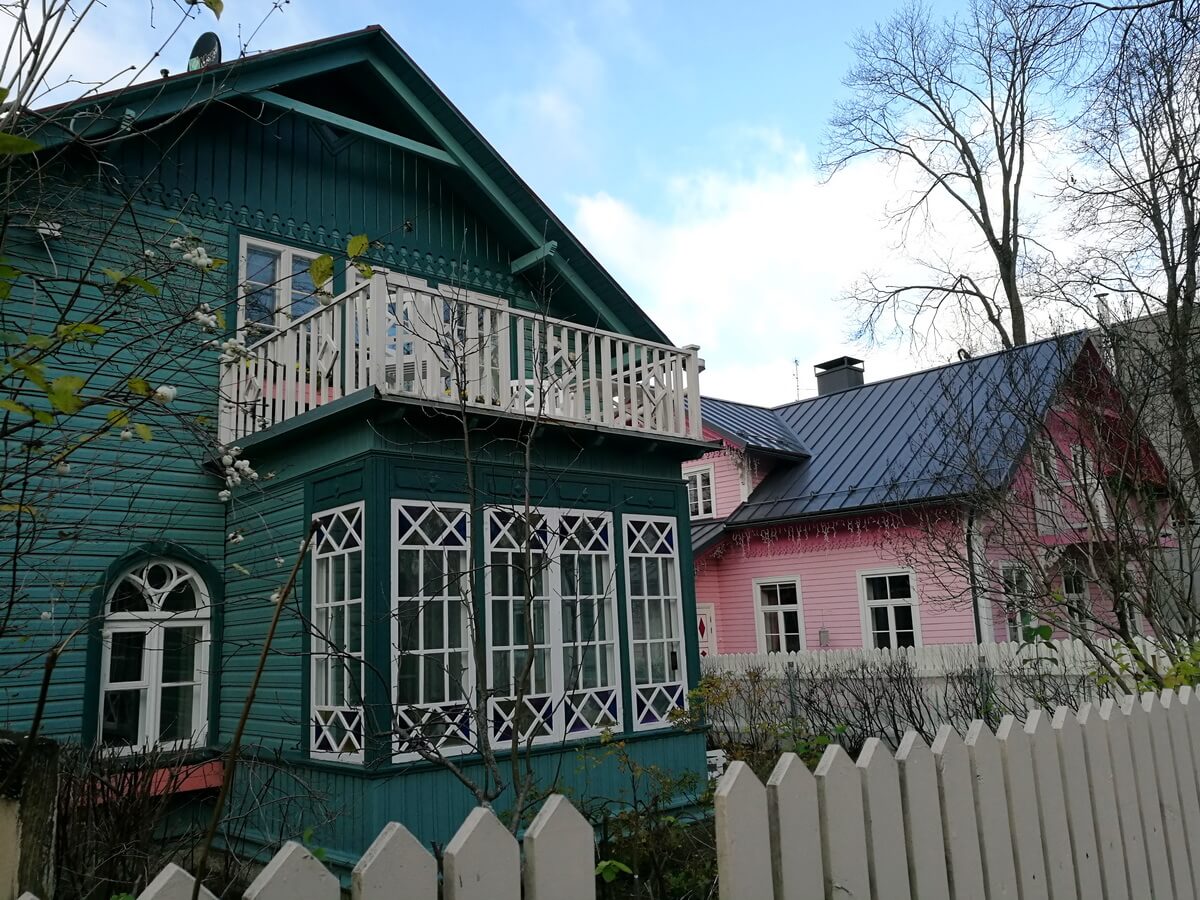
Just a few minutes from the park, Kadriorg turns into a neighbourhood of wooden villas and quiet streets.
These are historic Estonian timber villas — often painted soft yellow or pale pastels — with glazed verandas, quiet gardens and gently creaking staircases (which, despite looking like they belong in a fairy tale, probably cost the GDP of a small island nation to buy).
Amusingly, even the head of state blends right into this unassuming landscape. The Office of the President of Estonia sits right inside Kadriorg, beside the park. What strikes visiting friends most isn’t the building itself, but what’s missing: no high walls, no flashing motorcades, no imposing security cordons.
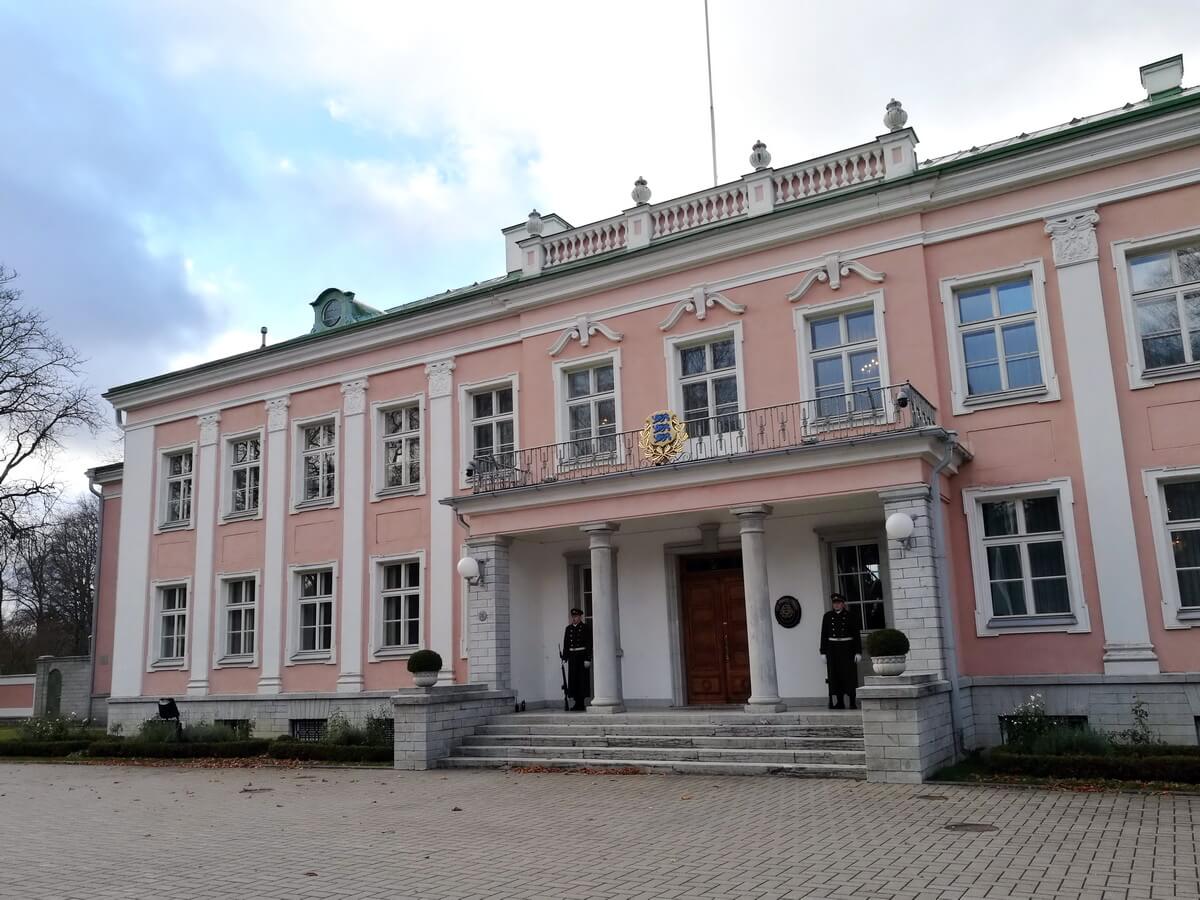
The President’s residence in Kadriorg — just another building along the park, if not for the two guards at the door.
Two ceremonial guards stand by the door, ducks from the nearby Swan Pond waddle across the lawn, and proper working beehives sit right next to the palace. Either it’s a profound statement of Nordic transparency, or we’re just too small a country to bother with high-level paranoia.
A Ten-Minute Time Warp: Inside Kadriorg’s Hidden Museums
Before the Second World War, Kadriorg was one of Tallinn’s most desirable residential districts. Writers, lawyers, doctors and university professors settled here in quiet wooden villas just outside the busy port city centre.
A trace of that world still survives today. Most visitors hurry straight past two modest house-museums belonging to Estonian writers Anton Hansen Tammsaare and Eduard Vilde. Both sit on quiet residential streets just outside the park — Tammsaare on Koidula Street and Vilde on Roheline Aas. The names may not mean much to international guests, but I always suggest popping in, even if just for ten minutes.
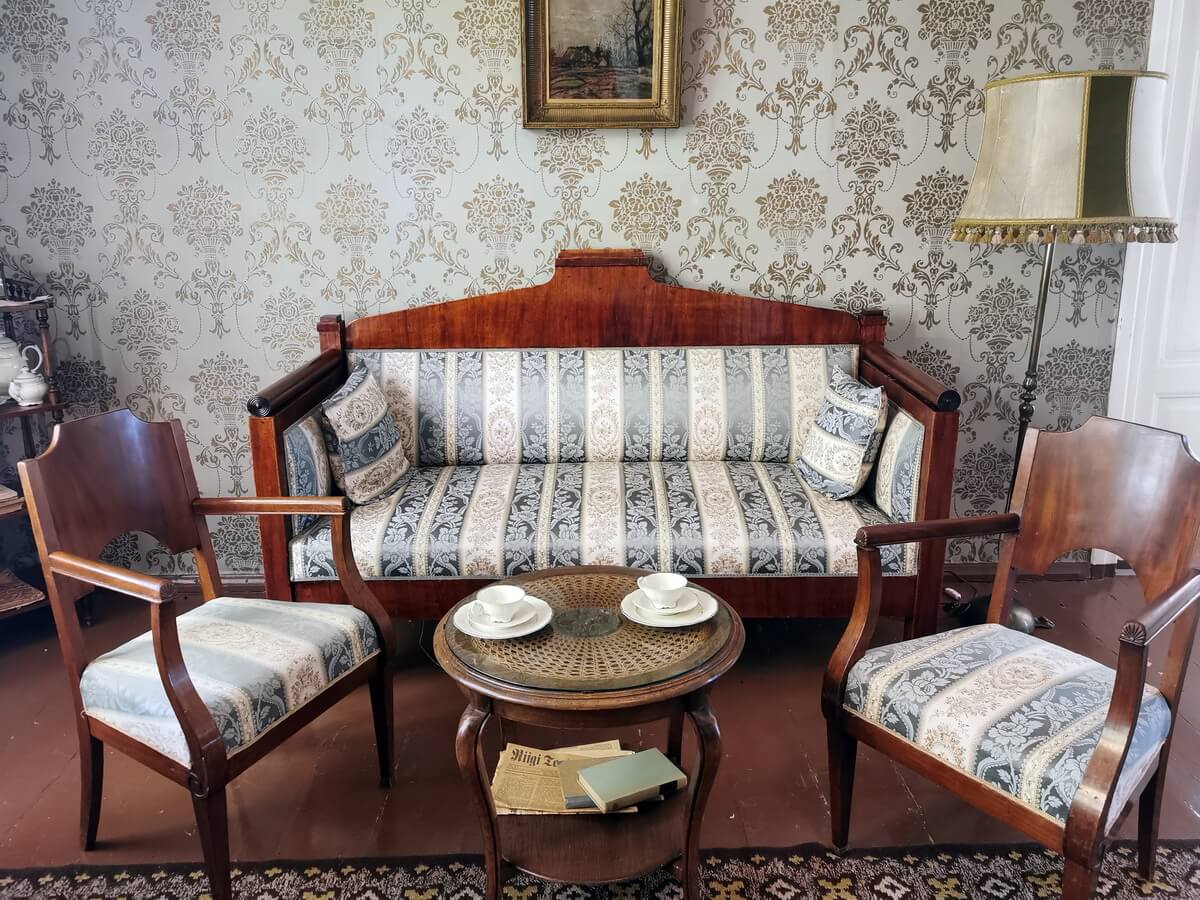
A preserved writer’s apartment — a glimpse of Tallinn’s pre-war intellectual life.
The appeal isn’t really literary history. Instead, these small museums feel like flawless time capsules. You step straight into the meticulously preserved flats of the 1920s–1930s intelligentsia. From the vintage wallpaper to the heavy writing desks and green-shaded lamps, you get a fascinating glimpse into Estonian life before the Second World War — a quieter world of books, tea and long evenings at the writing desk.
From Japanese Zen to a Quirky Lighthouse
Kadriorg is a place of quiet contrasts. One minute you’re strolling down the formal Baroque avenues of the park — laid out in the French style with long, symmetrical sightlines — and the next you’re in a Japanese garden. It’s a brilliant spot to simply sit on the stones by the water, watch the grey heron, and ponder why you live in a climate where winter lasts for half the year.
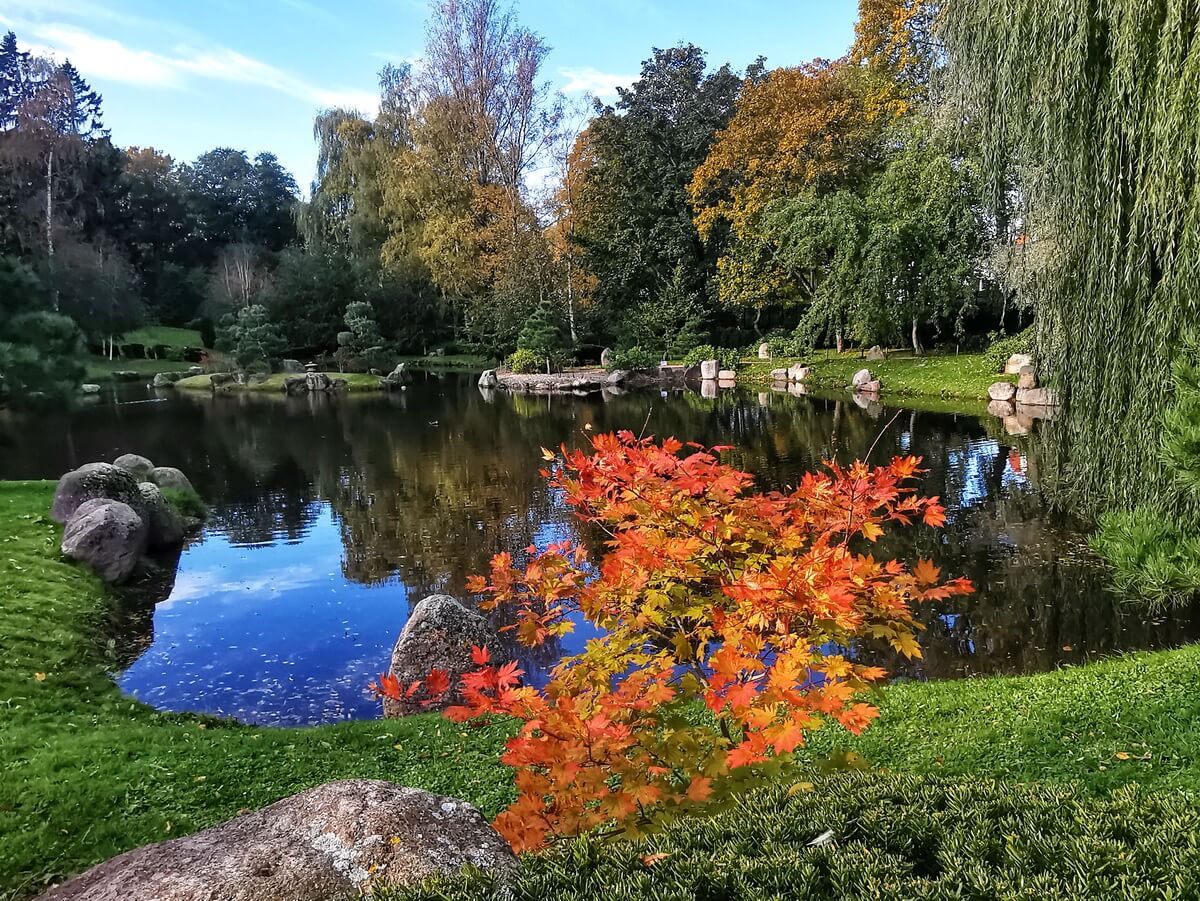
Tallinn’s little pocket of Zen — surprisingly authentic for a park better known for its baroque symmetry.
Alternatively, if you take the steps leading up the hill from Kumu (a striking modern art museum set into the limestone hillside), you’ll soon stumble across the Lower Tallinn Lighthouse. It’s so small and quaint that it almost looks like a garden ornament, but it is a fully functioning, historic lighthouse.
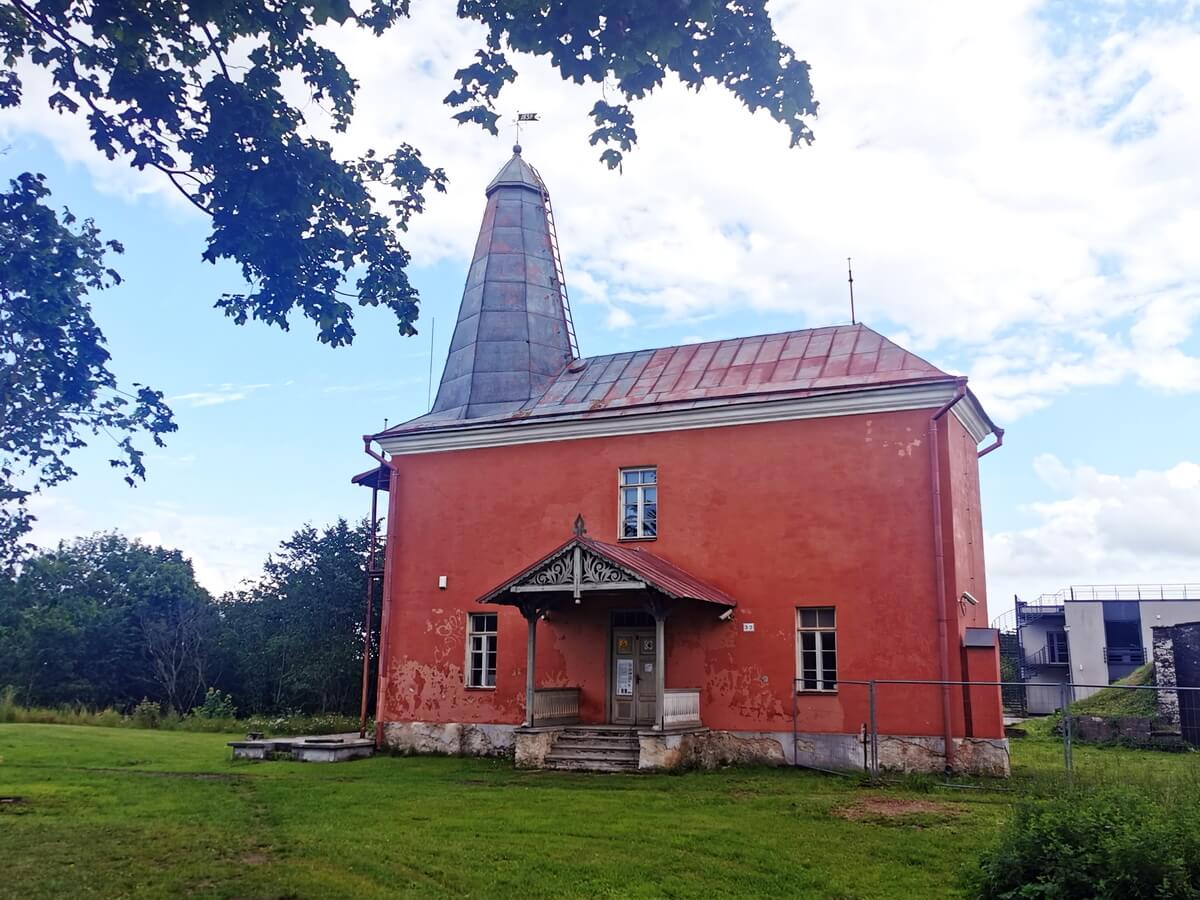
The Lower Lighthouse behind Kumu still guides ships into Tallinn Bay.
Nestled among the trees, it’s a gentle reminder that the Gulf of Finland is just a short walk away. Before the war, local teenagers would head down the leafy avenues to the beach on warm days (bearing in mind that the Estonian definition of “warm” is anything above 16 °C). It is still barely a five-minute stroll to the water, where the crisp sea breeze constantly mingles with the scent of pine.
Autumn Traffic Jams and Kadriorg’s Unofficial Superhero
I’d be painting a false picture if I claimed Kadriorg was always sleepy. Come the first crisp, golden weekend of autumn, it seems the entire population of Tallinn descends on the park. It’s an annual ritual that feels less like a tranquil walk and more like a competitive sport. The gravel paths experience genuine pedestrian traffic jams, and you will have to fight for your overpriced flat white. But still, it’s a wonderful moment of collective gathering before the long dark sets in.
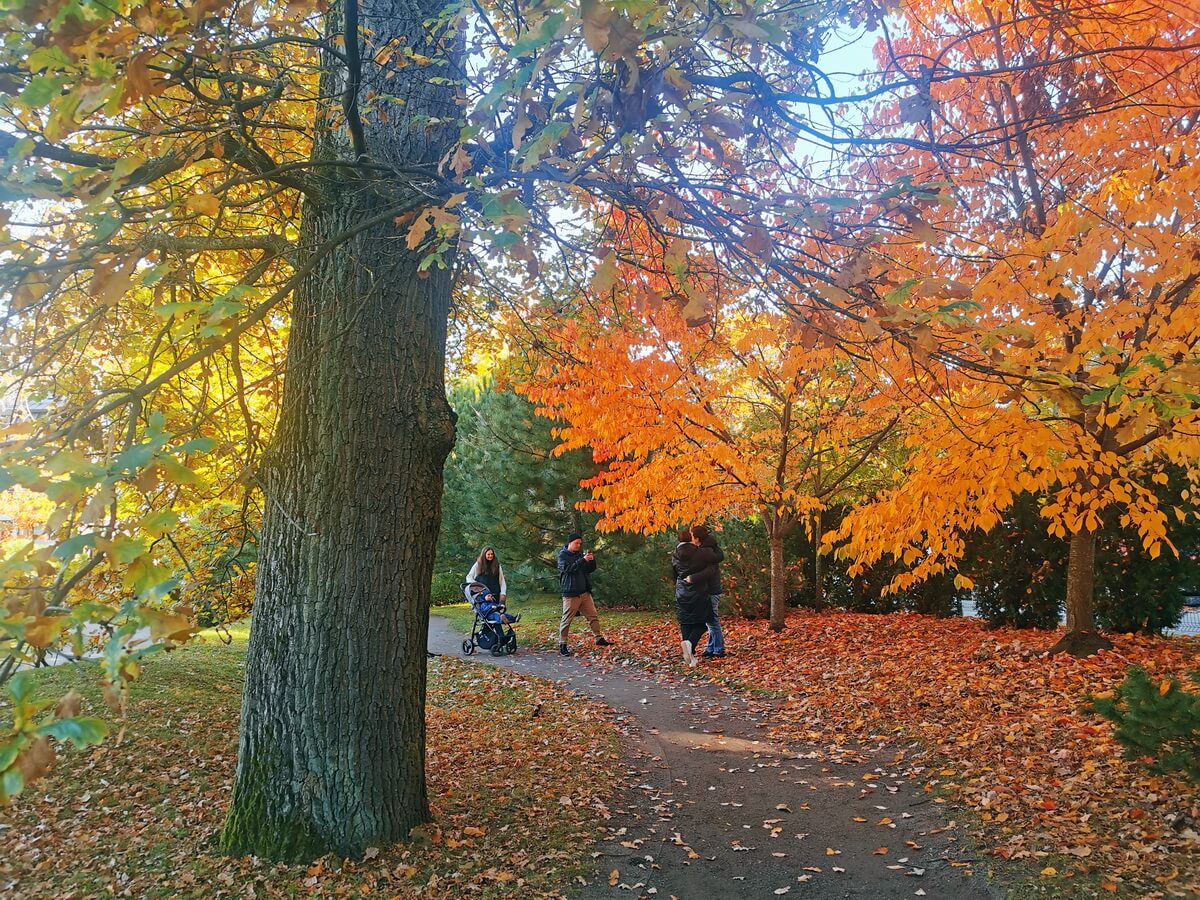
A quiet autumn afternoon in Kadriorg Park — the kind of slow walk locals come here for.
Once winter does arrive, the park reveals its unofficial symbol of local resilience. When the temperature drops below zero and the wind cuts through the park, most of us are wrapped up in heavy puffer jackets and beanies. Meanwhile, you might spot a local chap out for his daily jog… entirely shirtless. He runs past, breath steaming in the freezing air, while onlookers watch with a mix of deep respect and a mild urge to groan for making everyone else feel so inadequate.
That, in many ways, is the true essence of Kadriorg. It may remember emperors, but it belongs to ordinary, occasionally eccentric, but wonderfully genuine people.
If you’re ready to discover this for yourself, here is a practical guide to exploring Kadriorg like a pro.
What to See in Kadriorg
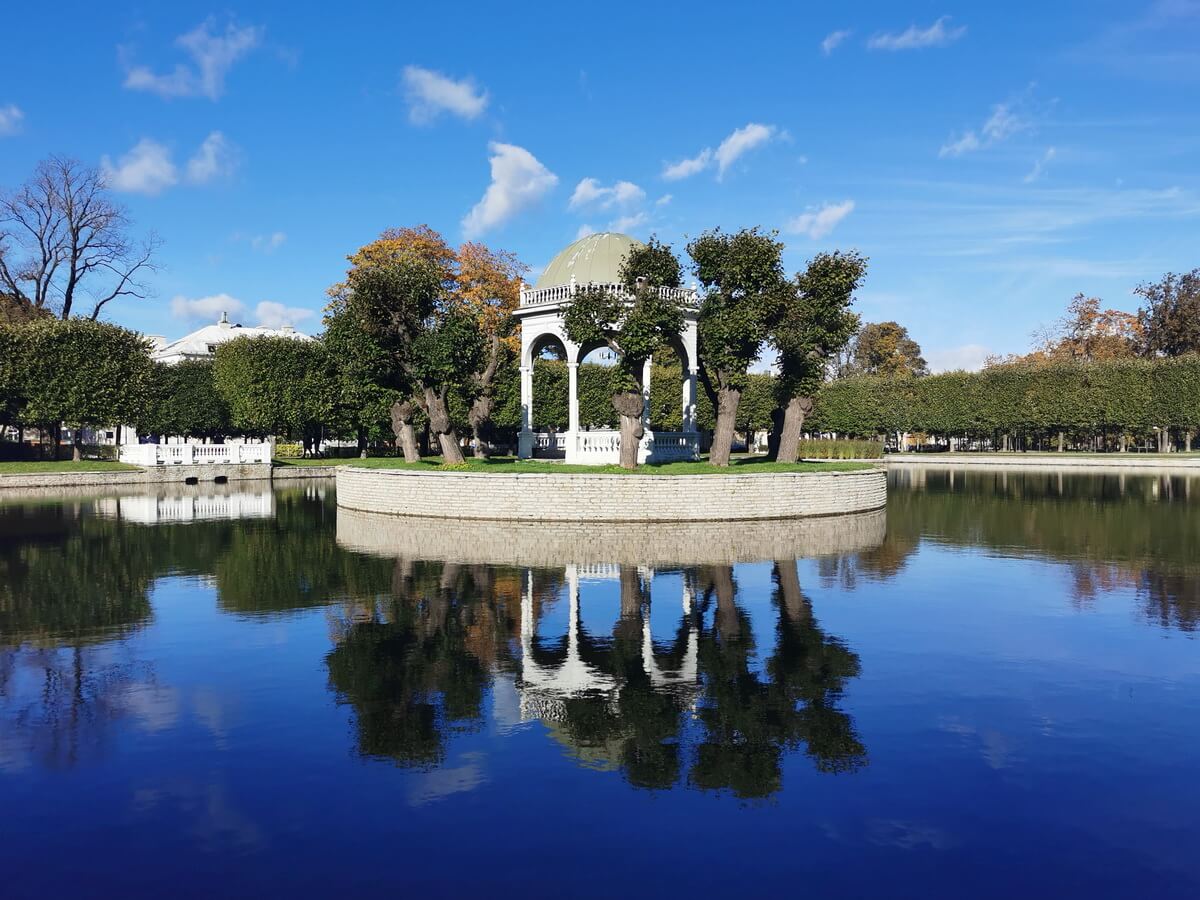
The Swan Pond in Kadriorg, where most walks through the gardens eventually lead.
If you’re walking through the neighbourhood, these places are definitely worth a look:
- Kadriorg Palace — An elegant 18th-century Baroque palace commissioned by Peter the Great. Today it houses an art museum, so you can actually go inside and see the grand interiors.
- Kumu Art Museum — Estonia’s main art museum. It showcases both contemporary exhibitions and a massive collection of Estonian art.
- Kadriorg Park — One of Tallinn’s most beautiful historic parks, featuring long Baroque avenues and the well-known Swan Pond.
- Japanese Garden — A quiet, authentic Japanese garden opened in 2011. Note that it is usually closed during the winter months.
- Tammsaare and Vilde House Museums — The beautifully preserved homes of two Estonian writers. Perfect for seeing what an intellectual’s apartment looked like in the early 20th century.
- Lower Tallinn Lighthouse — A tiny historic lighthouse hidden among the trees behind Kumu. You can’t climb it at the moment, but it’s a charming curiosity to stumble across.
If you’d rather explore Kadriorg with a guide, some Tallinn city tours include the district as part of the route — for example the Tallinn Classic: Old Town and Kadriorg District Guided Tour or the Panoramic Tour over Tallinn by vehicle.
Where to Eat in Kadriorg
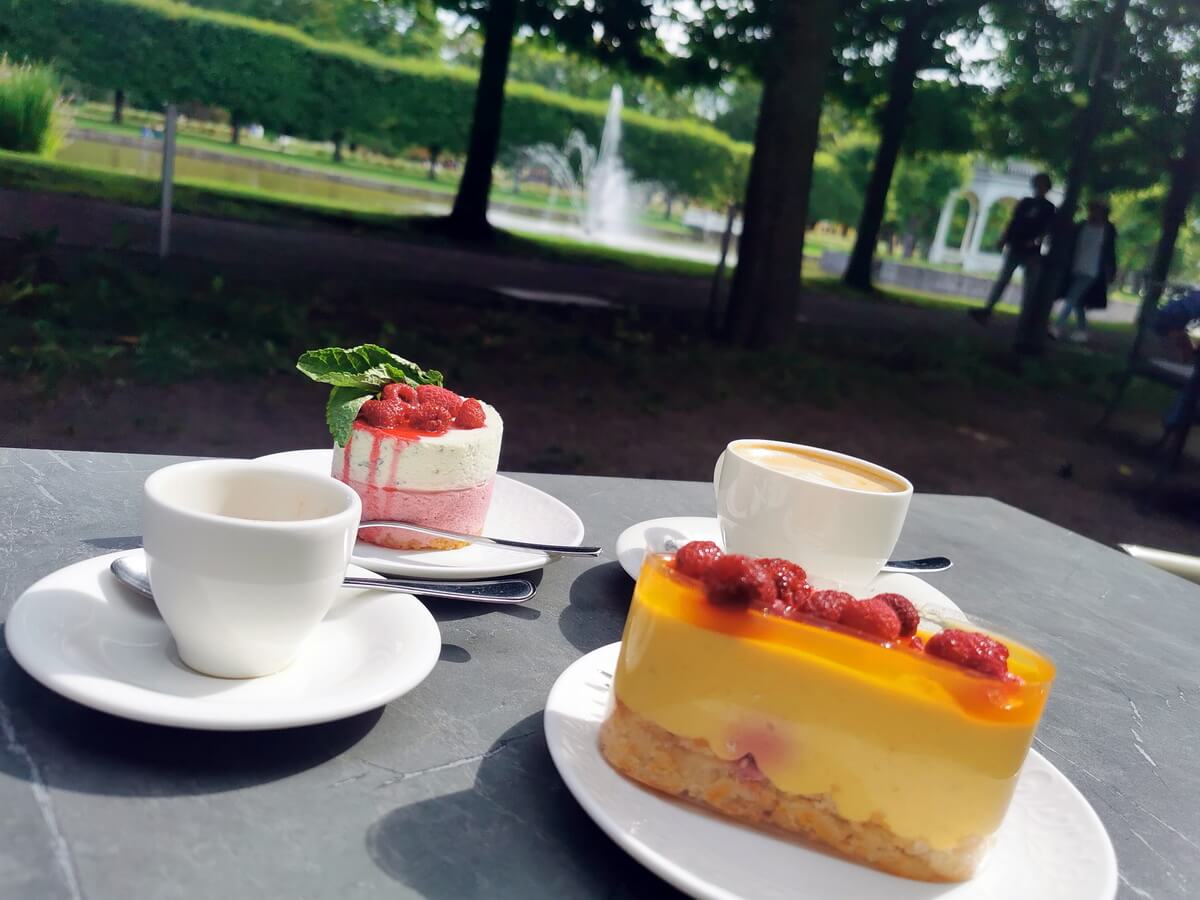
Coffee and cake after a walk through the park — a small Kadriorg ritual.
After a walk through the park, Kadriorg is a surprisingly pleasant place to stop for food or coffee.
- For dinner: Mantel & Korsten is a lovely restaurant set in a cosy wooden villa (they have a Michelin Bib Gourmand). If you want something easy and cheerful, Cantina Carramba serves hearty Mexican food.
- For coffee & cake: Head to Gourmet Coffee Kadriorg, or grab a seat at Katharinenthal Café — in summer, its terrace looks straight over the Swan Pond.
- For a quick bite: There’s a Reval Café inside the Kumu Art Museum. You can go in without needing a museum ticket.
How to Get to Kadriorg
Kadriorg is incredibly easy to reach from Tallinn Old Town. Tram lines 1 and 3 connect the city centre with the park (Kadriorg stop) in about 10 minutes.
Many visitors simply walk along Narva Road, but a much more pleasant route is to turn into the quieter side streets like J. Poska, F. R. Kreutzwaldi or Koidula. These leafy avenues take you past Kadriorg’s charming wooden villas and give you a much better sense of the neighbourhood than the busy main road.
A Walk from the Old Town to Kadriorg
One of the best ways to explore Kadriorg is to walk there from the Old Town and make a slow loop through the park. This route takes about 2 hours at an easy pace (longer if you stop at the museums).
The Route: Viru Gate → Narva Road → turn into the quieter streets of J. Poska / Koidula → Tammsaare and Vilde House Museums → Swan Pond and the rose garden → Kadriorg Palace → Kumu Art Museum → Lower Tallinn Lighthouse → continue down through the park to the Japanese Garden → walk to the seaside promenade and the Russalka Memorial → bus back to the Old Town.
Kadriorg fits perfectly into a short visit. If you’re planning a quick trip, see → my 2 Days in Tallinn itinerary.
FAQ: Visiting Kadriorg in Tallinn
What is Kadriorg in Tallinn?
Kadriorg is a historic, upscale district and park area located about 2 km east of Tallinn Old Town. It is best known for the Baroque Kadriorg Palace, the Kumu Art Museum, and having one of the most beautiful urban parks in Estonia.
Is Kadriorg worth visiting?
Absolutely. Kadriorg perfectly combines world-class museums, historic wooden villas, and a large landscaped park. It offers a completely different, much greener vibe compared to the medieval Old Town, and it’s only a short tram ride away.
How long should you spend in Kadriorg?
Most visitors spend about 2 to 3 hours here. This is enough time to walk through the park, visit either Kumu or the Kadriorg Palace museum, and stop at a local café for a coffee and a pastry.
Mark Your Landing Spot
Kadriorg is often presented simply as Tallinn’s “imperial park”, but that description only tells a fraction of the story. Beyond the palace walls and museum galleries, it remains a lived-in, deeply Estonian neighbourhood of wooden lace, quiet streets, and the reassuring, slow rhythm of everyday life.

